


I thought I was well prepared for my day at Château de Chenonceau. I had my ticket printed, train times saved to my phone and a plan to wander through the famous arches over the Cher before a long lunch in the gardens. In reality, I still made some timing mistakes, underestimated the crowds in the gallery and nearly skipped the audioguide that ended up making the whole visit come alive. Here is exactly how my visit unfolded in 2026, what it cost, how long it took and the specific things I wish I had known before stepping through the gates of this château over the river.
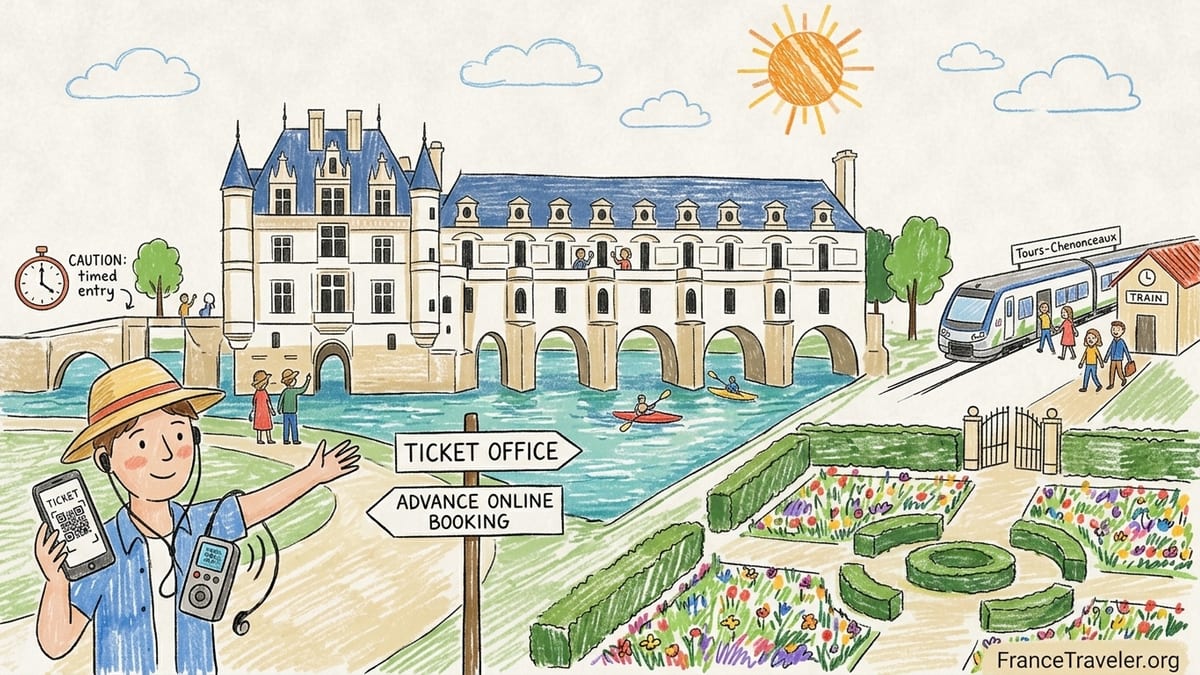
Booking Tickets: What I Chose and What I Would Do Next Time
I visited Château de Chenonceau in 2026, when adult tickets cost 19 euros with a printed guide leaflet or 24 euros with an audioguide. Those are the official individual prices for the year, and they were clearly displayed both online and at the ticket office. I booked directly through the château’s own online ticketing system a week in advance, which allowed me to choose a specific arrival slot and avoid the on-site ticket queues that were already building by late morning when I arrived.
For this first visit, I chose the basic 19 euro ticket with the guide leaflet because I thought I would rather wander at my own pace and read the panels inside the rooms. At the time, the extra 5 euros for the audioguide felt unnecessary. I later changed my mind halfway through the visit and upgraded at the dedicated desk near the entrance hall of the château. The staff simply scanned my original ticket and charged the difference up to the 24 euro audioguide price, which took less than two minutes. I wish I had just selected the audioguided ticket from the start and saved myself the small detour and the initial feeling of missing context in the first rooms.
When you buy online, you receive a timed ticket that indicates a specific entry window. During periods of higher attendance, the château asks visitors to respect these slots, and on the day of my visit they were quite strict: a staff member at the main gate checked both the time and the QR code on my phone before letting me into the park. The advantage was clear inside. Although Château de Chenonceau is open every single day of the year, the flow of people is regulated enough that rooms rarely felt dangerously crowded, even if there were definite bottlenecks.
If I were booking again, I would still use the official site, choose the audioguide from the start and aim for the earliest opening time available for that day’s schedule. In 2026 the opening hours change with the seasons, ranging from around 9:30 to 16:30 in the shorter winter days to 9:00 to 19:00 during peak summer. Knowing that my entire visit ended up lasting just over four hours including lunch, I would anchor my ticket for the first half-hour of opening so I could enjoy the gardens and exteriors with much fewer people.
Getting There: Train to Chenonceaux and the Short Walk In
I decided not to drive and instead took the regional train from Tours to the small station of Chenonceaux, which is one of the easiest rail approaches to any Loire château. The château’s official practical information confirms that it sits in Touraine, on the Cher River, about 214 kilometers from Paris, and it is directly served by local trains that stop just a few hundred meters from the entrance. My morning TER was far from empty; at least half the passengers in my carriage were clearly headed to the château, some already holding printed tickets.
The train ride from Tours Saint-Pierre-des-Corps took roughly 25 minutes. On arrival at Chenonceaux station, there was no need for a shuttle or taxi. You simply walk straight down the small village street, past a cluster of houses, a bakery and a couple of small hotels, and in about five to seven minutes you reach the main entrance of the estate. The path is flat and well signed, and even pulling a small suitcase would not be a problem, although I was glad I had traveled light because luggage storage inside the domaine is limited.
For comparison, I spoke with a couple in the ticket line who had driven from Amboise and parked in the main visitor lot. Parking for private cars was free at the time of my visit, and the lot was already filling by 10:30 in the morning, with coaches lined up in a separate area for groups. They told me they had spent an extra twenty minutes queuing to enter because several coach groups arrived at the same time. By contrast, the flow from the train side felt more staggered, and there was barely any wait to get through the park gate with my pre-booked ticket.
Based on that comparison, I would choose the train again unless I was combining several châteaux in a single day. For travelers coming from Paris, a common pattern I saw was a morning Intercités or high-speed train to Tours or Saint-Pierre-des-Corps, followed by the short local connection to Chenonceaux. It is entirely feasible as a day trip, but I was glad I dedicated almost the entire day just to this one site. The château and its gardens deserve unhurried time.
First Impressions: Entry, Ticket Check and the Walk Up Through the Park
The first formal check of my ticket took place at the outer gate to the domaine, not at the door of the château itself. Down a short lane from the village, a simple entrance grid marks the transition into the wooded part of the estate. Staff members equipped with handheld scanners verified my QR code, and a small notice reminded visitors that the last admission to the ticket office is half an hour before closing time, with the château itself closing another thirty minutes later and the gardens staying open slightly beyond that.
Stepping through the gate, the atmosphere changed immediately. A straight, tree-lined alley draws your eye forward, but you do not see the arches over the Cher right away. Instead, you pass by the ticket office and information center on the right, where on-site buyers were forming a separate queue. Panels here repeated the 2026 individual prices and explained that the château and gardens are open daily all year, with detailed schedules by date for those who had not checked ahead. I was quietly relieved to walk past this line with my phone ticket already accepted.
The walk from the gate to the first full view of the château takes about five to ten minutes if you stroll. Signs point toward the château, Catherine de Medici’s gardens, Diane de Poitiers’ gardens, the flower garden and the labyrinth. I chose to head straight for the main façade first, planning to loop back through the gardens afterward. That strategy meant I saw the exteriors and interior rooms before the biggest midday wave of visitors, and it turned out to be one of the few timing decisions I would not change.
As the path opened, the château finally came into view, its pale stone reflecting in the calm water of the Cher. From this angle, you first see the older part of the building set on the bank, then the long gallery stretching across the arches that span the river. Several visitors stopped to take photos here, which created the first small congestion as people tried to line up for the classic postcard shot. If you are patient, a gap does appear, but be aware that tour groups also pause in this exact spot for introductory explanations, so it can feel busy.
Inside the Château: Rooms, Flow and Where the Crowds Build Up
The entry into the château itself is from the side facing the formal gardens, up a small flight of stone steps. Inside, staff checked my bag cursorily for large items; bulky backpacks were asked to be worn on the front or left in the cloakroom area to protect furniture and narrow passages. Once inside the entrance hall, you collect the guide leaflet if you chose that ticket type, or the audioguide device if you paid the higher rate or upgrade on site.
The interior visit follows a largely fixed route. You move first through the ground floor rooms that establish the history of the château and its famous women, then up a staircase to the royal bedrooms and salons, before eventually reaching the long gallery over the river. In each room, discreet ropes and furniture arrangements channel the crowd along a specific line. While this keeps things organized, it also creates clear bottlenecks in popular spaces such as the kitchens and the bedchamber of Diane de Poitiers.
On my visit, the most crowded sections were the staircase landings and the narrower rooms that precede the gallery. At one point on the first floor, the line of visitors slowed to a shuffle as a group tour stopped right by a doorway to listen to their guide. There are no express lanes or alternate routes at that stage, so patience is your only real option. This is one of the scenarios where having an audioguide in your own language helps, because you can occupy yourself with richer explanations while you wait rather than simply standing in silence.
In terms of atmosphere, the château feels more like an inhabited home than a vast palace, which is part of its appeal. However, this domestic scale also means corridors and doorways are not wide. If you strongly dislike crowds, you will want to avoid late morning and mid-afternoon in peak months. When I returned briefly to the interior after lunch, I noticed significantly shorter lines in the same spaces, which reinforced my sense that starting either right at opening or much later in the day is the most comfortable approach.
The Gallery Over the Cher: Worth Taking Your Time
The moment you step into the famous gallery that spans the Cher is the emotional high point of the visit. After moving through smaller, richly decorated rooms, the space suddenly opens into a long, light-filled hall with a checkerboard stone floor, tall windows on both sides and the gentle sound of the river beneath you. It is here that the historical stories of Chenonceau as a place of courtly festivities, a hospital during the First World War and a discreet crossing point during the Second World War really come together.
When I first entered the gallery, it was busy but not overwhelming. Visitors naturally congregated at the central windows to photograph the arches, the river and the green banks on either side. Tripods are not allowed, and bags must be kept close to your body to avoid bumping into other people or the walls. I noticed that many people simply walked from one end to the other, snapped a few photos and moved on, spending perhaps five minutes in the space. That felt rushed to me.
With the audioguide in hand, I deliberately made a second slow pass along the gallery. The device explained how this room had been used over the centuries, the scenes of dances and masked balls under the Valois queens, and later the transformation into a hospital ward during the First World War. Looking out one window, I could imagine boats passing underneath, and below another, I watched actual kayaks gliding past, part of the small modern boat activity on the river that now offers visitors on the water a different view of the château’s arches.
The other advantage of lingering is that the crowd ebbs in waves. Because groups come in clusters, if you simply lean against the wall for a few minutes, there will be a moment when the gallery briefly empties at your end. That is the time to cross to the window, find a spot without jostling and really take in the reflection of the stone in the water. This slower approach, guided by the stories in the audioguide, turned the gallery from a quick photo opportunity into the emotional core of my visit.
Gardens, Grounds and Hidden Quiet Corners
After exiting the château through the lower level and kitchens, I followed the signs into Diane de Poitiers’ gardens, which unfold on a large terrace by the river. Even with many visitors on the paths, the scale of the parterres meant it did not feel as crowded as the interior. From here, you get one of the best ground-level views of the arches across the Cher, framed by flower beds and carefully clipped hedges. Several benches face the river, but they fill quickly at midday when many people leave the interior for fresh air.
I then crossed toward Catherine de Medici’s gardens on the opposite side of the château. This space feels slightly more enclosed, with a layout that draws the eye back constantly to the building. From one angle, the reflection of the gallery in the water is almost perfectly mirrored, and this is where I found it easiest to take unobstructed photos. Many visitors followed the same looping circuit, but because there are multiple paths, we naturally spread out more than in the rooms inside.
One of my favorite parts of the grounds was actually the quieter walk through the woodland paths leading to the labyrinth and the flower garden. Here, the crowds thinned noticeably. I could hear birds and the distant murmur of visitors rather than the constant rustle of jackets and camera bags. The official visitor information mentions a labyrinth, but it is only once you reach it that you understand how child friendly this section is, with families weaving in and out while others simply sit on the edges of the hedges. The flower garden and the floral workshop building nearby also give insight into the behind-the-scenes work that keeps the château’s interior bouquets so lush.
If you have the time, it is worth circling down toward the riverbank paths for alternative views of the arches. At one point near a small boat landing area, I could see the full length of the gallery from slightly below, the water catching the late-morning light. Signs along the way quietly remind visitors that the entire domaine is non-smoking due to fire risk, and on hot days extra water fountains and misting stations are installed in shaded spots. These thoughtful details made the overall experience feel well managed, even with significant visitor numbers.
Eating on Site: From Orangerie to Simple Snacks
I planned my day around having lunch on site, and I am glad I did. Château de Chenonceau offers several food options, from a fine-dining restaurant in the Orangerie to more casual cafés and kiosks. I chose the Orangerie restaurant located within the grounds, near the gardens, for a proper sit-down meal. The atmosphere inside felt like a contemporary nod to the château’s refined lifestyle, with white tablecloths, large windows overlooking greenery and a menu influenced by regional products and seasonality.
Because I had not booked a table in advance, I arrived just as they opened for lunch and managed to get one of the last unreserved tables. By 13:00, every table I could see was full, and later walk-ins were turned away or asked to wait at least half an hour. If a longer, more gastronomic lunch is important to you, I would strongly recommend reserving a table when you book your tickets, especially on weekends or during school holidays. Prices reflected the fine-dining setting, and while I will not quote exact dish costs since these can change, it is safe to say that lunch there will significantly increase the total budget for your day.
For travelers on a tighter schedule or budget, there are simpler options, including a café with sandwiches, salads and pastries, as well as outdoor stands selling drinks and snacks in high season. I stopped at one of these later in the afternoon for a coffee and found the line manageable, though again, peak lunchtime saw short but steady queues. What I appreciated most was that seating was scattered throughout the gardens, so you did not feel confined to a single crowded terrace.
All told, my lunch and coffee break added about an hour and a half to my total time on site. I did not feel rushed, and it provided a welcome break between the intense interior visit and the longer, more wandering exploration of the grounds. If I visited again, I would still eat on site but might opt for a slightly lighter and quicker meal, then finish the day with a more elaborate dinner back in Tours or another nearby town.
How Long the Visit Really Takes and What I Would Change About My Timing
From the moment I stepped through the outer gate to the moment I left, I spent just over four hours at Château de Chenonceau. That included roughly ninety minutes inside the château, a little more than an hour in the gardens and grounds, about an hour and a half for lunch and breaks, and a final half-hour revisiting my favorite outdoor viewpoints. I arrived a bit after 10:00 in the morning and left close to 14:30, catching a mid-afternoon train back toward Tours.
In hindsight, this schedule worked, but it was not ideal. Arriving after 10:00 meant I was entering the château just as many tour groups were starting their guided visits. That contributed to pinch points in narrow rooms and on the staircases. When I later walked past the same entrance around 15:00, the line was noticeably shorter, suggesting that both early morning and later afternoon offer calmer access than late morning.
If I were planning the day again, I would either catch an earlier train to arrive for opening time, say 9:00 during the longer spring and summer days, or I would deliberately aim for a mid-afternoon entry, around 15:00, and stay until closing. Both strategies would offer softer light in the gardens, fewer people in the interiors and a more relaxed pace. In winter, with shorter hours that can see ticket sales ending around 16:30, I would definitely favor the earliest slot to avoid feeling rushed as closing time approaches.
I would also build in a small buffer for train connections. Although my return train was on time, regional services can sometimes experience minor delays. Since the station is only a short walk away, you can safely leave the château twenty minutes before departure, but I would not cut it closer than that. For drivers, exit traffic from the parking lot seemed mild on the day I visited, but during big holiday weekends, the château indicates that online reservations and timed entries are mandatory, which suggests that both the car park and the paths can get very busy.
Did the Audioguide Really Improve the Visit?
I went into the visit skeptical about the value of an audioguide, since the château offers a printed leaflet with the 19 euro ticket and many rooms feature written explanations in multiple languages. After experiencing both, I can say without hesitation that the extra 5 euros for the audioguide made a tangible difference in how much I understood and remembered. The device was available in a wide range of languages and came with a simple keypad and headphones. Volume controls were straightforward, and I had no technical issues during my visit.
At first, walking through the entrance hall and the early rooms with only the leaflet, I found myself glancing down at the printed text and then back up at the walls, missing some visual details as I read. Once I picked up the audioguide, I could keep my eyes on the tapestries, painted ceilings and river views while listening to the commentary. That freed me to notice small elements like the carved initials, the patterns in the floor and the placement of fresh flower arrangements that echo the château’s historic love of decoration.
The audioguide also excels in the moments when you are forced to wait. Standing in a slow-moving line before the gallery or pausing while others take photos, I could advance to optional tracks that delved into particular stories, such as the rivalry between Diane de Poitiers and Catherine de Medici or the role Chenonceau played as a crossing point between occupied and free zones during the Second World War. These narrative layers transformed idle waiting into some of the most engaging parts of the visit.
The only caveat is that you need to manage your time. It is easy to become so absorbed in the commentary that you extend your indoor visit well beyond what you planned. If you are visiting with children or on a tight schedule, it may be wise to choose key rooms where you will listen fully and others where you rely on the shorter basic explanations. For most adult travelers who enjoy history, though, I would now recommend choosing the 24 euro audioguided ticket from the beginning rather than hesitating as I did.
The Takeaway
Looking back at my 2026 visit to Château de Chenonceau, a few lessons stand out clearly. Booking directly through the official ticketing system, selecting the audioguide from the start and timing your arrival for early morning or later afternoon will all significantly improve your experience. The official prices for the year are straightforward, with adult admission at 19 euros including a guide leaflet or 24 euros with an audioguide, and the château is open every day of the year with hours that adjust by season. Knowing these basics helps you plan with confidence, but the details of how you move through the site matter just as much.
The château itself rewards a slower pace: pausing in the gallery over the Cher rather than rushing through, seeking out the quieter woodland paths beyond the main gardens and allowing time for at least one sit-down break. Whether you arrive by train to the small Chenonceaux station or drive and park in the free lot, budgeting roughly four to five hours on site will let you appreciate both the interiors and the grounds without feeling hurried.
Above all, what I wish I had known is that Chenonceau is not just another château to check off a Loire Valley list. Its scale, history and location over the river make it a place where logistics, timing and small ticket choices can noticeably shape your day. With a bit of preparation and the insights of one imperfect but rewarding visit, you can step through the gate better prepared than I was and let the arches over the Cher leave exactly the impression they deserve.
FAQ
Q1. How much does it cost to visit Château de Chenonceau in 2026?
Adult admission in 2026 is 19 euros with a guide leaflet or 24 euros with an audioguide, according to the château’s official ticket prices for individual visitors.
Q2. Do I need to book Château de Chenonceau tickets in advance?
Advance booking is strongly recommended, especially in high season and on holiday weekends when timed entry slots may be mandatory and on-site ticket lines can grow quickly.
Q3. What are the opening hours for Château de Chenonceau?
The château and gardens are open every day of the year, with ticket office hours ranging from about 9:30 to 16:30 in winter up to 9:00 to 19:00 in peak summer, and the monument closing shortly after ticket sales end.
Q4. How long should I plan for a visit to Château de Chenonceau?
Based on my experience, you should allow at least four hours to see the château interiors, walk through the gardens, take photos and have a break or light meal without feeling rushed.
Q5. Is the audioguide worth the extra cost?
In my view, yes. The audioguide adds context and stories that are difficult to absorb from panels alone, makes waiting in crowded spots more interesting and turned my visit from a simple walk-through into a richer experience.
Q6. What is the best time of day to visit to avoid crowds?
The calmest periods I observed were around opening time in the morning and later in the afternoon after about 15:00, when group visits tapered off and interior bottlenecks eased.
Q7. How do I get to Château de Chenonceau without a car?
You can take a regional train to Chenonceaux station, which is about a five to ten minute walk from the château entrance along a flat village street, making it one of the easiest Loire châteaux to reach by rail.
Q8. Is there parking available if I drive?
Yes, there is a large visitor car park close to the entrance, with separate areas for coaches. At the time of my visit private car parking was free, although arrival queues can build in late morning.
Q9. Can I eat at Château de Chenonceau or should I bring food?
You can eat on site. Options range from the fine-dining Orangerie restaurant, which benefits from advance reservations, to simpler cafés and snack stands serving sandwiches, salads, pastries and drinks.
Q10. How accessible is the château for visitors with limited mobility?
The grounds and some areas are accessible, but upper floors involve stairs and historic spaces can be narrow. The château offers free entry for visitors with a disability card, with a small supplement if they choose an audioguide, so it is best to consult staff on arrival for the most suitable route.