


The French Riviera is one of the most hotel-heavy coastlines in Europe, yet choosing where to stay can be surprisingly tricky. Prices fluctuate with every festival, beaches range from silky sand to chunky pebbles, and many famous “waterfront” hotels are actually separated from the sea by a wide promenade or coastal road. This guide breaks the coast down by town and by travel style, so you can match the right hotel in the right location to the kind of Riviera break you actually want, whether that is a Belle Époque palace, a quiet boutique hideaway, somewhere easy with kids, or the rare luxury of walking straight from your room onto the sand.
How French Riviera Hotels Really Meet the Sea
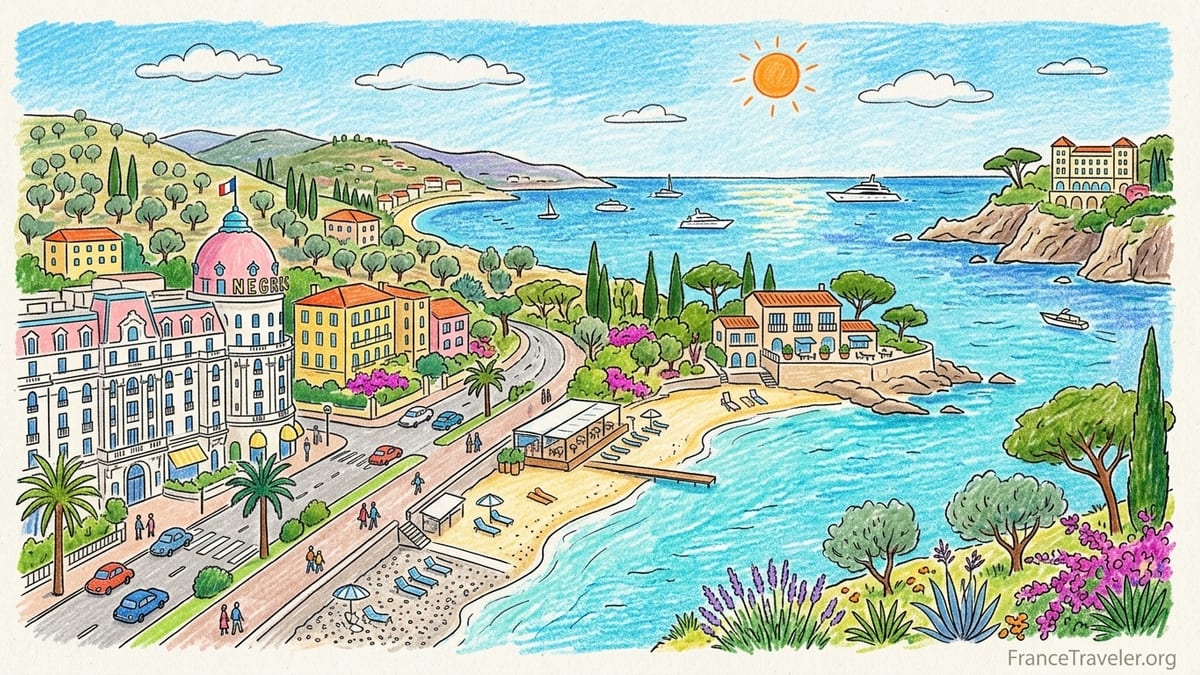
Before you book anything on the Côte d’Azur, it helps to understand one subtle but crucial distinction. Many of the Riviera’s most famous “seafront” hotels sit on the water side of town but are separated from the actual beach by a busy road or wide promenade. In Nice, for example, icons such as the Negresco line the Promenade des Anglais, with sweeping views of the Baie des Anges, yet guests still cross the promenade to reach the pebbly public and private beaches below. In Cannes, the palaces on the Croisette, including long-established five-star addresses, face the Mediterranean across several lanes of traffic and a sequence of beach clubs that operate more like independent businesses than extensions of the hotel itself.
Hotels that sit directly on the sand or rocks with no road to cross are far rarer, and this scarcity is part legal, part historical. Strict coastal regulations and a long tradition of public access mean private entities are rarely allowed to block or privatize the shoreline. As a result, truly direct-access beach hotels, such as Cap d’Antibes Beach Hotel on La Garoupe or the Royal Riviera’s beachfront at Saint-Jean-Cap-Ferrat, are sought after and often priced accordingly, particularly from late June through early September when the sea is warm and Paris decamps to the south.
This distinction matters because it shapes the kind of stay you will have. If you picture wandering barefoot from your room to the shore, focus on a handful of specialized addresses in Antibes, Cap-Ferrat and around Saint-Tropez’s Pampelonne Bay. If a balcony view is enough and you are happy to cross a promenade or take a hotel shuttle to a partner beach club, then the grand hotels of Nice, Cannes and Menton open up a wider range of budgets and atmospheres while still offering that shimmering Riviera seascape.
In the following sections, the coast is organized geographically from west to east and by travel style within each town: luxury, boutique, family friendly, romantic and beach-focused. Nightly rates quoted are approximate and can rise sharply during major events such as the Cannes Film Festival in May or the Monaco Grand Prix nearby.
Nice: Grand Promenades, City Energy and Pebble Beaches
Nice works particularly well as a base if you want to combine city life with day trips. The international airport sits on the edge of town and the coastal train line connects easily to Antibes, Cannes, Villefranche-sur-Mer, Èze-sur-Mer and Menton. For luxury, the best-known address is the Hôtel Negresco, a privately owned Belle Époque landmark on the Promenade des Anglais with museum-like interiors, period suites and a Michelin-starred restaurant. Standard rooms here often start around 450 to 600 euros in high season, with front-sea rooms and suites climbing well into four figures, especially in July and August.
Boutique travelers who want something fresher and more intimate than a palace hotel might look at newer four-star openings tucked just behind the seafront. Properties such as Hotel Nice Côte d’Azur, a compact, design-forward hotel near the station, or smaller members of local collections like La Villa Hôtels, tend to offer modern rooms, good soundproofing and a strong breakfast for roughly 180 to 300 euros per night in summer, depending on exact dates. They do not usually sit directly on the water but are a short walk from the promenade and the tram line to the airport.
For families, Nice’s combination of playgrounds along the promenade, shallow pebbly beaches and casual restaurants is a solid match. Larger chain properties on or just off the Promenade des Anglais, including familiar international brands with family rooms and connecting options, make logistics simple. Expect family-size rooms in late June to start around 250 to 400 euros, with small extra charges for baby cots or rollaway beds. Many of these hotels offer deals outside school holidays, so late May or early October can deliver better value while keeping sea temperatures pleasant.
Nice is not the best choice if your priority is soft sand or direct beach access. The main city beaches are pebbled and even high-end hotels work with private beach clubs located across the road. If you are happy with loungers on a decked beach and clear turquoise water, this setup works beautifully. If you truly want to step from your room onto sand, it is worth continuing west or east to Antibes, Saint-Jean-Cap-Ferrat or further along the coast.
Cannes: Classic Croisette Glamour and Private Beach Clubs
Cannes delivers the Riviera that many travelers picture from film and television: a curving bay lined with imported sand, superyachts anchoring offshore, and a long row of palace hotels and beach clubs along the Boulevard de la Croisette. For luxury, Hôtel Martinez and its peers remain the reference points, with vast lobbies, marble, and wide terraces facing the Mediterranean. Rooms in high summer or during the Cannes Film Festival can easily reach 800 to 1,500 euros per night or more, but shoulder months such as late April or early October often see standard rooms drop closer to the 400 to 600 euro range.
Most of these Croisette hotels operate or partner with private beach clubs that sit directly on the sand below the road. Guests typically have priority reservations and can charge food, drinks and loungers to their room, but the beach is technically separate from the hotel building itself. This is the key Cannes compromise: you get a sandy bay and strong beach infrastructure, yet you still cross at least one lane of traffic to reach the shoreline. It feels luxurious and social, especially for couples and groups of friends, but it is less convenient with toddlers or anyone with mobility issues.
Boutique and mid-range options, such as Hôtel Barrière Le Gray d’Albion tucked just behind the Croisette, softens the price point without sacrificing style. Refurbished rooms, smaller footprints and contemporary design are typical, with nightly rates from around 220 to 350 euros in shoulder season. These hotels often grant access to a partner beach club, so you still get the Cannes experience, just with a more intimate base and fewer in-house facilities than at the larger palaces.
For families, Cannes can work well if you plan mostly beach days and evenings on the promenade. Larger resort-style properties on the edge of town often include pools, kids’ menus and family rooms, making life easier than in the historic centers of smaller coastal villages. If your budget is tight and you do not need the status of the Croisette address, staying a few blocks inland or even in neighboring suburbs and driving into town for beach days and dinners can keep nightly costs closer to 150 to 250 euros while preserving access to the same public coastline.
Antibes & Cap d’Antibes: Sand, Charm and Rare True Beach Hotels
Antibes and the Cap d’Antibes peninsula sit between Nice and Cannes and balance old-town charm with some of the Riviera’s most coveted waterfront addresses. Within Antibes itself, smaller boutique hotels near the ramparts and around the port are ideal for travelers who want markets, local restaurants and a feeling of living in a real town rather than a resort. Three and four-star properties like Hotel Alexandra or members of regional boutique collections typically start around 140 to 250 euros per night in summer and give easy access to the sandy beaches of nearby Juan-les-Pins.
Cap d’Antibes is where the coastline becomes more exclusive and where a few rare hotels truly meet the sea. Cap d’Antibes Beach Hotel, a Relais & Châteaux property on La Garoupe, is often cited as one of the very few French Riviera hotels that sit directly on a sandy beach with no road in between. Guests walk out from sea-facing suites and the restaurant terrace straight onto the sand, which is especially appealing for couples and families who do not want to navigate traffic with young children. Entry-level rates in high season generally begin around 800 to 1,000 euros, reflecting that rarity.
Also on the peninsula, Hôtel du Cap-Eden-Roc, set in extensive gardens on the rocks, does not front a sandy beach but instead offers dramatic seawater pools, platforms and ladders cut into the stone. It is one of the Riviera’s classic luxury addresses, popular with high-profile guests and especially busy during events in nearby Cannes. Rooms often sell out months ahead for May and early June, with rates frequently well above 1,500 euros per night, making it a choice for travelers who specifically want that storied Riviera atmosphere rather than simple beach convenience.
For families or travelers mixing budgets, a practical strategy is to stay in or near Antibes town for more modest nightly rates and then book day access to beach clubs on the Cap or in Juan-les-Pins. This keeps accommodation spending to a more manageable 200 to 300 euros per night but still grants access to the area’s clear water, sandy coves and offshore views of the Lérins Islands. Trains from Antibes also connect easily to Nice and Cannes, making it a good central base for exploring the wider coast.
Saint-Tropez Area: Pampelonne, Beach Clubs and Hidden Boutiques
Saint-Tropez sits slightly apart from the more urban string of Riviera towns, and reaching it generally involves a long, often congested road transfer from Nice or Marseille or a seasonal boat connection. The reward is a village-like harbor center ringed by vineyards and some of the region’s best sandy beaches, including Pampelonne’s long curve, which is dotted with beach clubs ranging from laid-back to ultra-exclusive. In the village, luxury hotels like Cheval Blanc Saint-Tropez, set by the water near the port, offer refined rooms, high-end dining and polished service aimed squarely at affluent leisure travelers. Summer rates often start around 1,200 to 1,500 euros a night, climbing higher in August and around major events.
If your priority is a boutique-style hideaway with easy access to the beach but a quieter feel than the port, small hotels on the road between the village and Pampelonne or tucked behind the coastline work well. Properties such as Le Pré de la Mer, a low-rise four-star address with gardens and a pool a short walk from the sea, deliver intimate design, generous breakfasts and friendly staff with rates that are high but not stratospheric by local standards, often around 450 to 700 euros per night in high season.
Families often choose the Saint-Tropez area specifically for the sandy beaches, shallow water and choice of casual beach clubs where you can spend a full day with sun loungers, parasols and a restaurant on hand. Because most hotels are not right on the sand, you will typically rely on a car or hotel shuttle for transfers to Pampelonne. Parking and beach club reservations are essential in July and August. For more value and breathing room, early June and September are attractive, offering warm water but lighter traffic and accommodation prices that can be 20 to 30 percent lower than peak August.
Travelers who want the Saint-Tropez beach experience without staying in the eye of the storm sometimes base themselves in nearby villages such as Ramatuelle or La Croix-Valmer, where a mix of family-run hotels and small resorts sit within a short drive of quieter coves like l’Escalet or Gigaro. Nightly rates here are often in the 250 to 400 euro range in summer, and while the hotels rarely sit directly on the sand, many offer shuttles and reserved loungers at partner beach clubs.
Cap-Ferrat & Èze: Cliffside Romance and Refined Seaside Luxury
East of Nice towards Monaco, the coast folds into headlands and cliffs, creating some of the Riviera’s most dramatic viewpoints and exclusive hotels. Saint-Jean-Cap-Ferrat is a lush peninsula dotted with grand villas and a small village center. The Grand-Hôtel du Cap-Ferrat, now a Four Seasons property, sits at the peninsula’s tip in extensive gardens. It combines a historic main building with a contemporary wing, a seawater pool on the rocks accessed by funicular and a beach club with direct access to the sea. Rooms typically start around 700 to 900 euros per night in the shoulder seasons and rise significantly in midsummer.
On the opposite side of the peninsula closer to the village, the Royal Riviera offers a different style of luxury with a smaller scale and a prized sandy cove just below the gardens. Guests move easily between the pool, the lawn and the beach without crossing a public road, making this one of the Riviera’s most practical upmarket choices for travelers who genuinely prioritize being by the water. Summer rates usually sit in the 600 to 900 euro range for standard rooms, with family suites and sea-view categories higher.
Èze, perched high above the sea between Nice and Monaco, has long attracted honeymooners and travelers seeking romance more than beach time. Hotels such as Château de la Chèvre d’Or occupy medieval buildings threaded through the village lanes, with terraced gardens and infinity-style pools overlooking the sea hundreds of meters below. Rooms are few, atmospheric and expensive, with summer rates often above 900 euros a night for sea-view categories. This is the place to book if your priorities are candlelit dinners, sweeping views and village charm rather than easy swims.
Down at sea level in Èze-sur-Mer and nearby coves, smaller hotels and guesthouses line the railway and the narrow strip of beach. These properties tend to be simpler, sometimes with pebbly beaches just across the road or a few steps away. They work better for budget-conscious travelers or those combining a few nights of splurge in the cliffside villages with a more relaxed, modest stay closer to the shore. Trains along this stretch make it relatively easy to day trip to Monaco, Nice, Menton and even back to Antibes without a car.
Menton: Garden City, Gentle Climate and Softer Prices
Menton lies near the Italian border and has a softer, more residential feel than much of the rest of the Riviera. It is known for its lemon groves, Belle Époque villas and a microclimate that keeps temperatures slightly milder in winter. For travelers who want sea views without Côte d’Azur price extremes, Menton can be a smart choice. Several seafront hotels face the bay across a relatively quiet coastal road, offering balconies and terraces overlooking the water. Nightly rates in high season for four-star properties often fall in the 180 to 300 euro range, sometimes less outside August.
Boutique options in and around the old town appeal to travelers looking for character more than flash. Smaller hotels and guesthouses, including recently refreshed three-star addresses like Hôtel de Londres, often occupy historic buildings with high ceilings and decorative details. They may not have the full-service spa or grand lobby of larger Riviera hotels, but they make up for it with personal service, walkable locations and more approachable pricing.
Families often appreciate Menton’s promenade, playgrounds and relatively calm beaches, which can feel less crowded than Nice or Cannes in midsummer. The town’s location on the regional rail line makes day trips to Monaco or even into Italy straightforward, and the compact center keeps walking times manageable with children. Hotel pools are less common here than in big resorts, so if swimming is a priority, look carefully at photos and descriptions or aim for a property that works closely with a nearby beach club.
For couples, Menton pairs well with a few nights in a more obviously glamorous destination such as Saint-Tropez or Cap-Ferrat. A common pattern is to spend the first part of a trip exploring places like Cannes, Antibes and Monaco, then retreat to Menton for quieter final days among gardens and seafront cafes, with hotel bills that feel gentler at the end of the journey.
The Takeaway
Choosing the best hotel on the French Riviera is less about finding a single “top” property and more about intersecting three factors: which town suits your pace, which style of hotel matches your trip, and how close you truly need to be to the water. Nice and Cannes offer city energy and big-brand choices, with promenades and roads separating even their most famous hotels from the sea. Antibes and Cap d’Antibes strike a balance between real-town character and exclusive waterfront addresses, including some of the coast’s rare direct-access beach hotels. Saint-Tropez builds its appeal around sandy bays and high-end beach clubs, while Cap-Ferrat and Èze specialise in hushed, view-heavy luxury. Menton rounds things off with gentler prices and a softer atmosphere at the Italian border.
As you compare options, be clear with yourself and your travel companions about what matters most. If children and convenience are the priority, a hotel where you can move easily between pool, garden and beach without crossing a busy road may justify a higher nightly rate. If you plan to day-trip extensively by train, a base in Nice or Antibes might be more valuable than a more remote but glamorous headland. And if this is a once-in-a-decade romantic escape, splurging for a terrace at a clifftop hotel in Èze or a balcony at a palace in Cannes may be what you remember long after the credit card bill fades.
Whatever you choose, booking early for peak season, reading recent guest reviews with a focus on beach access and transport, and comparing several towns rather than defaulting to the most famous names will help you find the stretch of Riviera that feels right for you rather than for someone else’s dream trip.
FAQ
Q1. What is the difference between a seafront hotel and a true beachfront hotel on the French Riviera?
On much of the Riviera, “seafront” means the hotel faces the sea but is separated from the beach by a promenade or coastal road. A true beachfront hotel sits directly on the sand or rocks with no road in between, allowing you to walk straight from the property to the water. Because of coastal regulations, these direct-access hotels are relatively rare and usually more expensive.
Q2. Which town is the best base for first-time visitors to the French Riviera?
Nice is often the most practical base for first visits thanks to its airport, major train station and wide choice of hotels in all price ranges. From Nice you can easily day trip to Antibes, Cannes, Èze, Monaco and Menton by train or bus. If you prefer a smaller town feel, Antibes is a strong alternative that still offers good transport links and access to sandy beaches.
Q3. Where can I find hotels with direct beach access on the French Riviera?
True beachfront hotels are scattered rather than concentrated in one town. Around Antibes, Cap d’Antibes Beach Hotel sits directly on La Garoupe’s sand, while in Saint-Jean-Cap-Ferrat the Royal Riviera enjoys a sandy cove below the gardens. In and around Saint-Tropez, several high-end properties and small resorts are set either on or very close to sandy coves, often with only a short path or garden between your room and the shore.
Q4. Is Cannes or Saint-Tropez better for a beach-focused holiday?
Cannes offers a long curve of sandy beach lined with hotels and beach clubs, all very walkable from the center, which suits travelers who like a city buzz and easy logistics. Saint-Tropez and its surrounding villages offer more natural-feeling sandy bays, particularly along Pampelonne and quieter coves nearby, but you will usually need a car or shuttle to reach them and summer traffic can be heavy.
Q5. Are Riviera beach clubs suitable for families with children?
Many Riviera beach clubs welcome families and provide loungers, parasols and restaurants that make a full beach day easy. In places like Juan-les-Pins, Antibes and parts of Saint-Tropez, the water is shallow and calm, which helps with younger children. It is worth checking in advance whether a specific club offers children’s menus, shaded areas and flexible booking policies before committing to a full day.
Q6. When is the best time of year to get good value on Riviera hotels?
Late May, June and September usually strike the best balance between pleasant weather, warm sea and more manageable prices. July and especially August see higher rates and fuller hotels as French and European school holidays begin. Major events such as the Cannes Film Festival and Monaco Grand Prix can push prices up sharply in May, so checking dates carefully before booking helps avoid surprises.
Q7. Do I need a car to enjoy the French Riviera?
You can comfortably explore much of the Riviera without a car if you base yourself along the coastal train line in towns such as Nice, Antibes, Cannes, Villefranche-sur-Mer or Menton. Trains and buses cover most major sights and beach towns. A car becomes more useful if you want to reach more remote coves, inland villages or the beaches around Saint-Tropez, where public transport is limited and timetables sparse.
Q8. Which Riviera towns are most suitable for a quiet romantic trip?
For couples who value quiet and views, Èze, Saint-Jean-Cap-Ferrat and parts of Cap d’Antibes stand out. These areas offer cliffside or garden-set hotels with sea views, refined dining and calmer evenings than busier centers like Nice or Cannes. Menton also works well for a gentler, garden-filled atmosphere with easier prices and fewer party-focused crowds.
Q9. How high are typical nightly rates at top luxury hotels on the French Riviera?
In peak season, entry-level rooms at many of the most famous five-star and palace-level hotels, including properties in Cannes, Cap-Ferrat, Antibes and Saint-Tropez, often start between 700 and 1,500 euros per night. Sea-view rooms and suites, or dates during major events, can be considerably higher. Rates drop notably in April, early May and October, when you can sometimes find the same hotels for half or two-thirds of their August prices.
Q10. Are there good options for travelers on a moderate budget who still want a Riviera experience?
Yes, but you will need to be flexible about exact location and travel dates. In cities like Nice, Antibes and Menton, well-run three and small four-star hotels a few streets back from the seafront can often be found in the 150 to 250 euro range in shoulder season. Pairing these with occasional paid access to beach clubs, using public transport instead of taxis and travelling outside late July and August can deliver a very satisfying Riviera holiday without palace-level spending.