

Brittany rewards travelers who plan around its calendar. This Atlantic-facing region in northwest France has long daylight in summer, powerful tides, wild autumn storms and a surprisingly gentle, often bright winter on the coast. Conditions can shift quickly between the Channel ports around Saint-Malo, the exposed Atlantic of Finistère and the milder inland cities. Choosing when to visit is less about finding a single “best month” and more about matching your priorities to the season, the tides and how busy you are comfortable with.
Understanding Brittany’s Climate, Light and Tides
Brittany has an oceanic climate, moderated by the Gulf Stream and exposed to winds from the Atlantic. Coastal towns such as Brest and Saint-Malo are milder in winter and cooler in high summer than much of inland France. Average annual temperatures in Brittany’s main weather stations sit in the low teens Celsius, with relatively small differences between seasons compared with continental regions. Rain is frequent but usually arrives as passing showers and fronts, rather than continuous drizzle all day, and there are plenty of bright breaks, especially in spring and early autumn.
Daylight is a major advantage in the travel season. In June and early July, the sun sets after 22:30 around Saint-Malo and Brest, and usable twilight extends even later, which makes coastal walks and long dinners on a café terrace feel unhurried. By late September, sunset shifts closer to 20:00, and in December it drops to roughly 17:15 on the north coast and a little later in the west. Travelers coming from southern Europe or the United States in winter often remark that even short days feel brighter than they expected because cloud cover changes quickly.
Tides are one of the defining features of Brittany. The Channel coast around Saint-Malo and the bay of Mont-Saint-Michel experiences some of the largest tidal ranges in Europe, with water retreating hundreds of meters at low tide and then climbing dramatically against granite seawalls at high tide. French tide tables use a coefficient scale from about 20 to 120 to indicate the amplitude. Coefficients around 45 signal moderate neap tides, while 95 and above indicate powerful spring tides. Local tourist offices and ports publish daily timetables so visitors can see exactly when beach access, causeways and certain coastal paths are passable.
These tides change the character of the coastline. In Saint-Malo, at low tide in a large spring you can walk out to Fort National and broad expanses of sand open in front of the walled city. Six hours later, the same beach can be almost entirely under water, with waves breaking against the ramparts. In Morbihan, low tide reveals oyster beds and mudflats between the islands, while high tide turns them back into a maze of navigable channels for kayaks and excursion boats. When planning, think about tides as carefully as you would sunrise and sunset times, especially if your trip revolves around beaches, islands or photography.
Spring (March to May): Flowers, Variable Skies and Expanding Schedules
Spring in Brittany gradually builds from cool, sometimes stormy March days to the softer, flower-filled landscapes of May. Average daytime highs on the coast climb from around 11 to 13 degrees Celsius in March to the mid-teens by May, with inland Rennes slightly warmer. Rainfall is spread through the season, but you increasingly get sunny intervals, and gorse, camellias and hydrangeas begin to color country lanes and village gardens. By late April, many coastal paths around the Pink Granite Coast, Crozon peninsula and Quiberon feel lush and green, which is ideal for walkers who do not mind some wind.
Daylight grows quickly through spring. In late March, after the clock change, you still have early evenings, but by May it is light well past 21:00. That extra light combines with cooler air to make coastal hiking particularly appealing. Classic stretches such as the GR34 around Cap Fréhel, the Pointe du Raz or the Côte de Granit Rose are less crowded than in July and August, and you can often park close to major viewpoints without difficulty. Trails can be muddy in places after winter rain, so waterproof footwear and a windproof layer are more important than heavy cold-weather gear.
Ferry and island access begins to step up in spring. On routes such as Quiberon to Belle-Île-en-Mer or Lorient to Groix, the regional BreizhGo Océane service typically moves from a reduced winter timetable to more frequent sailings from around April, with between roughly six and a dozen daily round trips on the busiest lines from September to June and additional departures layered on in high season. Smaller operators to islands like Bréhat and Batz usually add more mid-morning and late-afternoon crossings around Easter and the May public holidays. Schedules still respond to weather and demand, so travelers visiting in March or early April should plan for fewer evening return options.
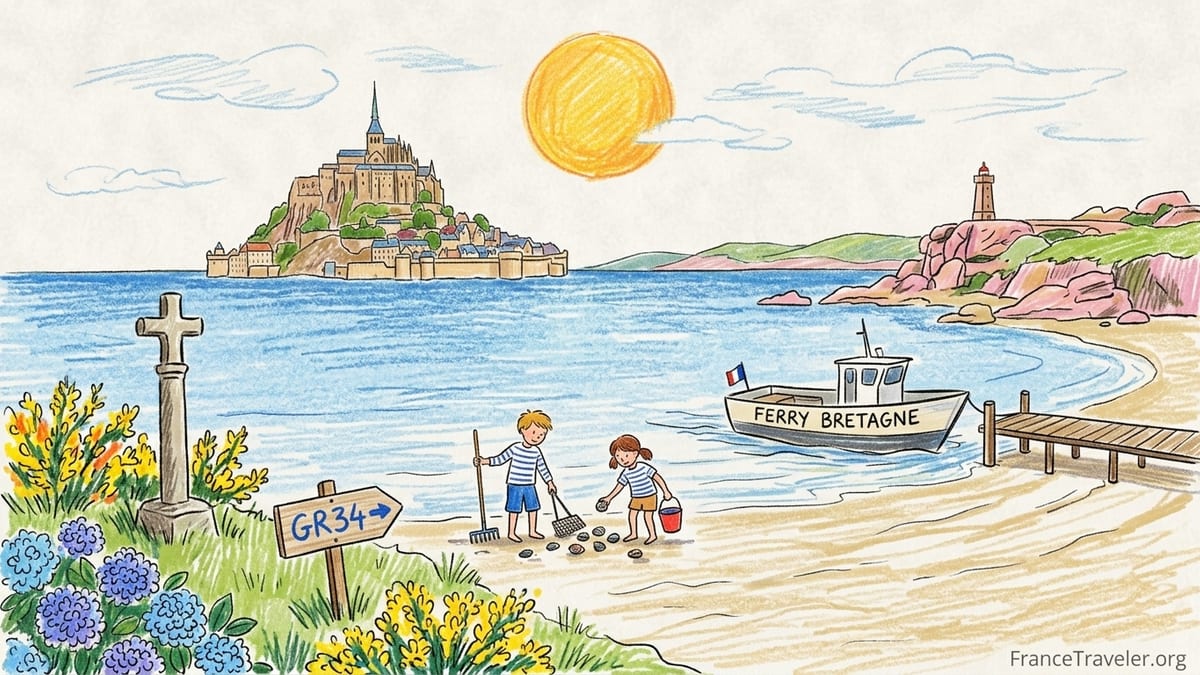
Spring tides are striking in this period. Around the equinoxes in March and again in late September, tidal ranges reach annual highs. On the north coast that can mean beaches that almost disappear at high tide and vast expanses of rippled sand at low tide. Walks in the bay facing Mont-Saint-Michel or across exposed sandbars near Saint-Jacut-de-la-Mer are strictly tide dependent and, in some cases, require a licensed local guide. These very low tides are also popular with locals gathering shellfish, so visitors will see families out on the flats with buckets and rakes, a reminder that tides are part of daily life here, not only a spectacle.
Early Summer (June): Long Days, Warming Seas and Growing Buzz
June is often considered the sweet spot for many Brittany trips. Daytime temperatures on the coast usually sit around 18 to 21 degrees Celsius, with occasional warmer spells inland. The sea is still cool after winter, often in the mid-teens Celsius, but by late June hardy swimmers and wetsuited surfers are common along beaches such as La Torche in Finistère or Sables-Blancs near Concarneau. Rainfall tends to be moderate, and there are many days of bright or partly sunny weather, especially along the south-facing shores of Morbihan and southern Finistère.
The long daylight transforms how you use the region. In early June, sunrise comes shortly after 06:00 and sunset around 22:15, which gives generous windows for road trips, coastal hiking and photography. You can spend the morning exploring Pont-Aven’s riverside paths, drive to the Quiberon peninsula for a late-afternoon walk on the wild côte sauvage, and still have time for dinner outside in Carnac or Auray. Winds are generally lighter than in winter and early spring, although breezy days remain common on exposed capes and islands.
Crowds begin to build in June, but the peak summer rush has not yet arrived. Many French families still wait for school holidays in July and August, so availability in hotels, gîtes and campgrounds is better than later in the summer, particularly in the first half of the month. Ferry services to islands such as Belle-Île, Groix, Ouessant and Sein already run at or close to summer frequencies, which means more choice of departure times and same-day excursion possibilities. For example, summer-season timetables on major lines often include early morning boats suitable for hikers who want to maximize time ashore and late-evening returns that let you enjoy dinner in island harbors like Le Palais or Port-Tudy before heading back to the mainland.
Tides in early summer are ideal for mixing beach time with coastal walking. On neap-tide days, the difference between high and low water is more modest, so smaller family beaches around Saint-Briac, Dinard or the Gulf of Morbihan may keep usable sand throughout most of the day. On large spring tides, the sea may cover some beaches completely for a few hours at high water, but walking options expand at low tide as wider intertidal zones emerge. Checking tide tables for Saint-Malo, Brest or Lorient when planning each day helps you decide whether to prioritize cliff-top sections like Cap Sizun, where the view is dramatic at any tide, or wide bays such as Saint-Brieuc, where low water reveals huge feeding grounds for birds.
High Summer (July and August): Beach Season and Peak Seaside Demand
July and August bring Brittany’s full summer, along with the highest demand for coastal stays. Air temperatures along the shore often settle in the low to mid-twenties Celsius on warm days, with occasional hot periods, though extremes are less common than in the French south. Sea temperatures usually climb to around 18 to 20 degrees Celsius in late July and August, warm enough that locals and visitors enjoy long swims without wetsuits in sheltered bays like Dinard, Morgat and the family beaches of the Gulf of Morbihan.
This is the core beach season. Lifeguard posts open on major beaches such as Saint-Malo’s Plage du Sillon, Carnac’s main strand and La Baule further east. Beach clubs and sailing schools operate full programs, and seaside towns run evening markets, music festivals and fireworks around the 14 July and 15 August holidays. Island ferries run at maximum frequency, sometimes with departures every 30 to 45 minutes at peak hours on short crossings such as Pointe de l’Arcouest to Bréhat or Roscoff to Batz. Longer routes to Ouessant, Molène, Sein and Belle-Île add extra sailings to handle day-trippers as well as overnight guests.
Crowds and prices, however, reflect that popularity. Regional statistics and ferry company data show that July and especially August account for a significant share of annual tourist nights and passenger traffic to Brittany. Coastal accommodation around Saint-Malo, Perros-Guirec, Quiberon and the Crozon peninsula often books out months in advance for these weeks, and weekly rental prices for gîtes and apartments rise noticeably compared with May, June or September. Restaurants on harbor fronts in Concarneau, Vannes or Cancale are busy in the evening, and advance reservations are advisable if you want specific places or terrace tables.
Tides and schedules require more careful planning in high summer. Because passenger numbers are high, operators may shift certain departures slightly or add extra crossings, but they still have to respect tidal constraints on shallow harbors. In ports like Saint-Cado or the smaller Morbihan islands, some jetties are only usable for a window around high tide. That means a midday low tide may create a long break in sailings and require you to return later than expected. On the beach, high coefficients in summer can make for spectacular scenes when waves crash against seawalls in Saint-Malo or when Mont-Saint-Michel briefly regains its island character a few dozen days per year. Travelers with children should pay close attention to posted signs about rip currents and avoid walking onto tidal flats without checking both the time and the tide coefficient.
Autumn (September to November): Warm Seas, Quieter Roads and First Storms
Early autumn is one of the most rewarding times for travelers who prioritize walking, islands and road trips over packed beaches. September on the coast often feels like a slower, gentler extension of summer. Air temperatures commonly stay near or just below 20 degrees Celsius in the first half of the month, and the sea remains at or close to its annual temperature peak after warming all summer. Many locals consider early September the most pleasant time to swim at beaches around Lorient, Quiberon and Concarneau.
Crowds thin significantly once French schools return in early September. Seaside towns such as Perros-Guirec, Saint-Malo, Bénodet and La Trinité-sur-Mer become easier to navigate, and parking in harbor areas that felt impossible in mid-August suddenly opens up except on sunny weekends. Rates for hotels and rentals usually drop compared with peak season, and last-minute stays become easier to find. Ferries continue to operate busy schedules in September, although some routes begin to reduce evening crossings toward the end of the month as days shorten.
By October, the atmosphere turns more clearly autumnal. Average daytime highs fall into the low to mid-teens Celsius, rain fronts become more frequent, and the first real Atlantic storms can sweep in, especially along the Finistère headlands. These weather systems are part of Brittany’s character. At viewpoints like Pointe du Raz, Pointe de Pen-Hir or the wild side of the Quiberon peninsula, big swells and powerful gusts produce dramatic seascapes, which appeal strongly to photographers and landscape lovers. At the same time, trails can become slippery, and authorities occasionally close the most exposed paths or warn visitors away from cliffs when gusts exceed safe limits.
Tides and island access change in late autumn. Some seasonal excursion boats and small-scale services wind down from late October, particularly cruises inside the Gulf of Morbihan or tourist-focused circuits that run only from spring to the Toussaint holidays. Public-service ferries that serve year-round island communities, such as Belle-Île, Groix, Ouessant, Molène, Arz and Sein, continue to run in November, but with fewer daily departures and more sensitivity to storms. On very rough days, crossings may be delayed or cancelled, especially to exposed islands in the Iroise Sea. For walkers and photographers, planning a flexible itinerary and avoiding tight same-day connections is wise in this part of the year.
Winter (December to February): Quiet Harbors, Short Days and Selective Closures
Winter in Brittany is milder than many first-time visitors expect, especially along the coast. Average daytime temperatures in towns like Brest and Saint-Malo often hover around 9 to 11 degrees Celsius, with frost and snow relatively rare by French standards. The air can feel raw in strong winds, and storms roll in from the Atlantic at intervals, but there are also clear, crisp days when low sunlight strikes granite villages and empty beaches with striking clarity. Rain is frequent in this season, yet it tends to arrive in showers and passing fronts rather than continuous downpours.
Daylight is short from December to early February. Around the winter solstice, the sun rises close to 09:00 and sets around 17:15 on the north coast. For visitors, this encourages a slower rhythm: a late-morning walk on the ramparts of Saint-Malo or around the harbor in Roscoff, lunch in a creperie or seafood brasserie, and then a mid-afternoon coastal stroll before darkness. Winter is not the time for long beach days or extended island hikes, but it can be very atmospheric for storm watching, photography and food-focused trips.
This is the quietest period for tourist infrastructure. Many coastal hotels, campsites and seasonal restaurants close from roughly November to March, especially in smaller resorts and on islands that depend heavily on summer visitors. Some attractions, such as small museums or aquariums, may open only on weekends or during the Christmas and winter school holidays. However, larger towns including Rennes, Brest, Vannes and Quimper stay lively year-round, and ferries that are part of the regional public transport network maintain core services to populated islands, albeit with reduced frequencies compared with summer.
Winter highlights for travelers who embrace the season include Christmas markets in larger towns, hearty seafood platters based on local oysters, mussels and scallops, and dramatic high-tide events. During large winter spring tides with high coefficients, high water can reach the base of Saint-Malo’s seawall or pour over certain harbor quays, while a few hours later at low tide the sea retreats far out across the sandbanks. Storm warnings and local advice should be respected, but from a safe vantage point, the combination of rough seas, low sun and empty promenades can provide some of the most memorable images of Brittany.
How Tides Shape Beaches, Islands and Coastal Walks
Across Brittany, tides are not only a background phenomenon but an active part of travel planning. The region experiences a semidiurnal pattern, with roughly two high tides and two low tides each lunar day, and a fortnightly cycle between stronger spring tides and weaker neap tides. This means that the same beach can look and feel radically different from morning to afternoon and from one week to the next. Travelers who consult tide tables for their area will be able to time beach visits, clifftop walks and island crossings to make the most of conditions.
On the Channel coast around Saint-Malo, Dinard and the bay facing Mont-Saint-Michel, tidal ranges on strong springs can exceed ten meters of vertical difference between low and high water. At low tide, beaches widen dramatically, and in specific, signposted places, sand bars allow access to forts and islets near the shore. At high tide, in contrast, some of those beaches all but disappear, with waves reaching the seawall or steps. This affects where families can spread towels and how long you can stay on a given stretch of sand, so reading timing boards posted at beach entrances is important.
Islands and walking routes also depend on tide and coefficient. Islands such as Bréhat, Batz, Arz and Île aux Moines have ferries that run throughout most of the day in the main season, but some small inlets and secondary jetties are only accessible for a window around high tide. In the bay between Saint-Jacut and the islet of Ebihens, for example, a sand causeway appears at low tide and disappears completely a few hours later. On the Crozon peninsula and in the Iroise Sea, certain coastal sections become inaccessible at high tide, either because the sea covers boulder fields or because waves break close to cliff bases. Local tourist offices and hiking guides usually highlight these constraints so visitors can plan around them.
For photographers, tides are as important as sunset times. Low tide reveals ripples in the sand, reflections in shallow pools and long lines of seaweed and rocks that lead the eye into the frame. High tide brings reflections of medieval walls in Saint-Malo, fuller harbors in places like Douarnenez or Camaret, and a sense of energy when swells hit seawalls during storms. A common approach is to visit a location twice, once at low tide and once at high tide, to understand and capture both moods. Using tide tables for main reference ports, then adjusting slightly for nearby beaches and inlets as indicated by local signage, is usually sufficient for planning at travel scale.
Matching Seasons to Your Style of Trip
Because Brittany’s seasons differ in daylight, sea temperature, crowds and the reliability of island access, the best period depends on what you want from the trip. Broadly, July and August suit visitors whose priority is warm water, lively beach towns and full ferry schedules, while the shoulder months of May, June, September and early October better serve hikers, road trippers and travelers seeking quieter harbors and lower prices. Winter and early spring reward those who enjoy weather drama, cultural visits and food-focused itineraries more than those seeking long days outdoors.
Families with school-age children often gravitate toward late July and the first half of August because French school calendars and many other European holidays cluster then. That is when lifeguarded beaches, sailing schools, kids’ clubs and festival programs are all fully active. However, for families whose schedules allow, late June or the first half of July can offer a good balance of services and smaller crowds. Evening light lasts almost as long, the sea is already usable for most swimmers in sheltered bays, and accommodation options are broader.
Travelers primarily interested in coastal hiking and road trips through villages and historic towns tend to prefer May, June, September and early October. Temperatures are comfortable for walking, and humidity feels lower than in midsummer. On routes such as the GR34 around the Pink Granite Coast, the cliffs of Crozon or the wild coast of Belle-Île, you will share the path with other walkers but rarely feel overwhelmed. Car journeys between major sights such as Saint-Malo, Dinan, Dinard and Cancale or along the Morbihan coast are also less congested outside peak holiday weekends.
Island-focused trips require special attention to seasonal schedules. Some islands, such as Belle-Île, Groix, Ouessant and Arz, have year-round ferry links that mainly serve residents, with more sailings in summer and around school holidays. Others rely more heavily on seasonal tourism, adding numerous day-trip departures only between roughly April and late September. If your goal is to hike across Ouessant or cycle around Batz with plenty of daylight and flexibility, target late May to early July or early September, when timetables are generous but boats are not yet full of day-trippers. In winter, it may still be possible to visit for a night or two, but expect very limited departure times and a greater risk of weather-related disruption.
The Takeaway: Tailored Recommendations by Interest
For beach-focused travel, the heart of the season is from late June through August, when sea temperatures are highest and lifeguard services are in place on major strands. Families seeking classic beach weeks in resorts such as Saint-Malo, Dinard, Carnac or La Baule often choose the last week of July or first half of August, accepting higher prices and busier promenades in exchange for warm water and a full range of activities. Those who prefer more space on the sand might opt for the first half of July or early September in towns like Perros-Guirec or Bénodet, when conditions are still pleasant but crowds have thinned.
For hiking and coastal walking, May, June, September and the first half of October stand out. Spring brings wildflowers and fresh green landscapes on the GR34, while early autumn offers warm seas below the cliffs and softer light for photography. Planning walks around the tide tables allows you to safely explore variable sections such as bays and tidal causeways. Winter hikes can also be rewarding on clearer days, particularly on sheltered stretches of path near Vannes, Saint-Pol-de-Léon or Concarneau, but require more flexibility around storms and short daylight.
For island-hopping, late May to early July and early September combine frequent ferries with moderate visitor numbers. Routes to Belle-Île, Groix, Bréhat, Batz and Ouessant are all running extensive schedules by June, and harbor cafés and bike-rental shops are open, yet accommodation is easier to secure than in August. In the depths of winter, islands shift toward a resident-focused rhythm. A traveler seeking solitude and authentic everyday life might still enjoy a February visit to a place like Groix or Ouessant, but should be ready for limited restaurant openings, reduced sailings and the possibility that wind or swell may disrupt the planned return.
For food-centered trips, cooler seasons work particularly well. From late autumn through spring, Brittany’s oyster beds and shellfish harvests support abundant seafood platters in towns like Cancale, Concarneau and Lorient, and reservations are easier to secure than in August. Pairing market visits in Rennes, Vannes or Quimper with lunches in traditional creperies or contemporary bistros works in any season, but winter and shoulder months create more space to linger, and you are less likely to compete with beach-going crowds.
For family travel, the choice often hinges on school calendars. If you must travel in July or August, consider splitting time between one busy seaside hub, which provides ready-made activities and supervised beaches, and a quieter inland or estuary base such as Auray, Pont-Aven or riverside towns along the Rance, where evenings can feel calmer. If your schedule is flexible, late June or the early July weeks before the national holiday allow you to enjoy near-peak services with more manageable occupancy, especially for road trips that hop between the north and south coasts.
For photography and quieter road trips, late September, October and even winter can be ideal. Autumn brings lower sun angles, changing foliage in river valleys like the Aulne and Odet, and dramatic sea conditions during storms. Winter emphasizes textures in granite villages, empty promenades and the contrast between rough seas and sheltered harbors. Roads and parking areas are easier almost everywhere outside the July and August peaks, and you can more easily time visits to tide-dependent sites like Saint-Malo’s ramparts, the bay facing Mont-Saint-Michel or the Pink Granite Coast to capture both low- and high-tide scenes without crowds.
FAQ
Q1. What is the overall best month to visit Brittany?
There is no single best month. July and August suit warm-water beach holidays, while May, June and September are often better for walking, islands and road trips with fewer crowds.
Q2. When is the sea warmest for swimming in Brittany?
Sea temperatures usually peak in late July and August, often reaching around the high teens to about 20 degrees Celsius in sheltered bays along the south and north coasts.
Q3. How important are tides when planning a trip?
Tides are crucial if you plan to use beaches, walk near cliffs or visit islands. Large spring tides can cover beaches at high water and expose wide sand flats at low tide, so checking tables daily is advisable.
Q4. Are July and August unbearably crowded?
Coastal hotspots such as Saint-Malo, Perros-Guirec, Carnac and Quiberon are busy in July and especially August, but they rarely feel as congested as major Mediterranean resorts. Booking early and avoiding peak weekend changeover days helps.
Q5. Do island ferries run year-round?
Yes for main inhabited islands like Belle-Île, Groix, Ouessant, Molène, Arz and Sein, though winter timetables offer fewer sailings and are more vulnerable to weather disruptions. Some smaller excursion services are limited to roughly April to October.
Q6. Is Brittany really rainy all the time?
No. Brittany does see regular showers and Atlantic fronts, but these are interspersed with bright spells. The region’s oceanic climate means changeable skies rather than continuous rain, especially from late spring to early autumn.
Q7. When is the best time for coastal hiking?
May, June, September and early October are ideal for coastal hiking. Temperatures are comfortable, paths are less crowded than in high summer, and daylight is still generous, especially in late spring and early autumn.
Q8. Are many places closed in winter?
Yes, numerous seaside hotels, campsites, seasonal restaurants and some attractions close from roughly November to March, particularly in smaller resorts and on tourist-oriented islands. Larger towns remain active year-round.
Q9. What months are best for a photography-focused trip?
Late September through April work very well. Lower sun angles, dramatic weather systems, big tides and quieter beaches provide varied light and subjects, especially on the north and west coasts.
Q10. How far in advance should I book for July and August?
For peak season stays in popular coastal areas or on islands, booking accommodation three to six months ahead is sensible, particularly for family rooms, gîtes and campsites close to major beaches.