


France is one of the few places where you can spend the morning in a royal château, the afternoon in lavender fields or vineyards, and still be back in a village square in time for an aperitif. The question for many travelers is not whether to go, but how: escorted tour, small group, private guide or fully independent trip. This guide compares real-world options for the Loire Valley, Provence and France’s major wine regions so you can decide when organized travel is worth the price and when you are better off on your own.
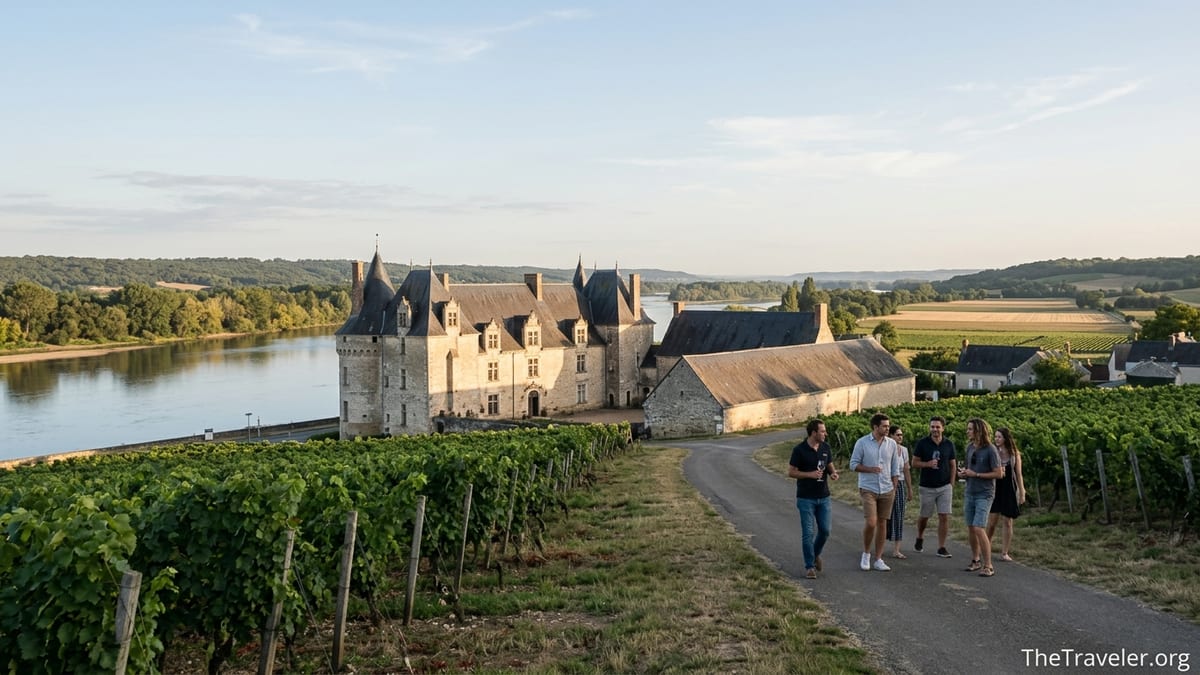
How to Choose Between Escorted, Small-Group, Private and Independent Travel
Most trips to the Loire Valley, Provence and France’s wine regions can be done in four basic ways: fully escorted coach tour, small-group tour, private guiding or independent travel using trains, rental cars and local guides. Each model has a different price point and delivers a different type of experience. Thinking about how you actually like to travel is the first step before comparing specific itineraries.
Escorted group tours are usually run by large operators using 30 to 45 seat coaches, with a set multi-day route that might combine Paris with Normandy and the Loire Valley, or Provence with the Riviera. Per person prices for an 8 to 10 day France itinerary often start around the mid four figures excluding flights, with most transport, some meals and major sights included. They suit travelers who want logistics handled, do not enjoy planning, and are comfortable moving at the group’s pace.
Small-group tours trim the group size, often to 6 to 16 guests, and typically focus on one region in more depth. For example, one specialist Provence operator runs 6 day small-group itineraries in 2025 priced around 5,500 US dollars per person based on double occupancy, with a maximum of about 16 guests and boutique hotels. These trips cost more than large coach tours but buy you quieter villages, more flexible days and guides who can adjust to group interests.
Private tours and independent trips sit at the most flexible end of the spectrum. A private day of wine touring in Bordeaux or Burgundy with a driver guide often falls somewhere in the low to mid hundreds of euros per day for guiding alone, and more like the high hundreds once you include vehicle, tastings and lunch. Multi-day custom itineraries across regions can reach several thousand euros for a couple, especially in high season. Independent travelers who rent a car, book their own stays and then add the occasional local tour can keep costs closer to mid-range while retaining freedom to linger in places they love.
Loire Valley: Castles and Wine, With or Without a Tour
The Loire Valley is one of the easiest regions in France to visit either on a guided excursion from Paris or independently with a rental car and a base in a town like Amboise or Tours. High speed trains from Paris reach the main Loire stations in about an hour, which opens up a wide range of day tours and multi-day options. This flexibility is why the Loire is often a traveler’s first experiment with combining guided days and self-guided time.
For those short on time, small-group day tours from Paris bundle transport, castle visits and wine tasting into one long but manageable outing. A typical small-group Loire day trip might depart Paris around 7 a.m., drive or train to the valley, then visit Chambord, Chenonceau and a third château or winery before returning to the city late evening. Prices commonly start somewhere in the low to mid hundreds of euros per person, reflecting the long driving hours, entrance fees and guiding. This can be good value for first-time visitors who want to see the headline castles without navigating country roads or ticket systems in French.
Travelers who are more interested in wine than palaces have a growing number of Loire wine specialists to choose from. One well known local operator based near Tours, for example, runs small-group Loire wine discovery days with groups capped at about six people. Guests take a morning high-speed train from Paris, are met at the station, visit several family wineries, enjoy a farm-style lunch and taste a range of wines from across the valley. As of the 2025 season, pricing for this type of day typically sits in the mid hundreds of euros per person, and departures run on most days between April and late October.
If you prefer to travel independently, the Loire is particularly friendly to a mix of self-drive and prebooked tickets. Pair a three night stay in Amboise with advance online reservations for Château de Chenonceau and Château de Chambord, then add a half-day local wine tour in appellations such as Vouvray or Savennières. Many wineries such as small estates around Rochefort sur Loire or near Savennières welcome visitors for tastings by prior appointment and charge modest tasting fees, which can be offset if you purchase bottles. This hybrid approach uses tours where they add real value, but leaves you free to explore villages, markets and river walks at your own pace.
Provence: Lavender, Hill Towns and When a Guide Makes Sense
Provence has more complex logistics than the Loire, which makes the choice between organized travel and going it alone especially important. Distances between Luberon hill towns, lavender plateaus and coastal villages may look short on a map, but winding roads, summer traffic and limited public transport can catch independent visitors by surprise. That is one reason Provence is one of the most popular regions in France for small-group and private touring, particularly in peak lavender season from late June into July.
Several boutique operators offer week-long small-group Provence tours timed to the lavender bloom. One culinary and wine-focused itinerary in 2026, for instance, is priced around 5,500 euros per person for double occupancy and limited to a dozen or so travelers. Another long-running Provence specialist prices 6 day small-group tours at just over 5,000 US dollars per person in 2025, with a maximum of roughly 16 guests. These packages usually include boutique guesthouses, most breakfasts and many dinners, daily excursions to villages like Gordes and Roussillon, visits to lavender fields on the Valensole plateau, and curated winery visits for rosé and Rhône-style reds.
Day tours also make sense in Provence, especially if you are staying car-free in Aix en Provence, Avignon or Marseille. Reputable local companies run small-group wine days to appellations such as Côtes de Provence Sainte Victoire or Bandol, typically visiting two or three estates with a driver guide. Prices for these shared tours often start in the low hundreds of euros per person for a full day, with tastings included. Private day trips, such as a lavender and village circuit in a comfortable vehicle, may start around the mid hundreds of euros per group, increasing with vehicle size and the length of the itinerary.
Self-driving remains a viable option for confident drivers who prefer independence, especially in shoulder seasons from April to early June and September to October. Pair a rental car with a base in a village with services, such as Saint Remy de Provence or L’Isle sur la Sorgue, and you can string together Roman sites, markets and vineyard visits without the structure of a tour. The trade off is that someone must always be the driver and limit wine tasting, and you need to be comfortable with rural navigation, parking and sometimes narrow lanes. Travelers who want to photograph sunrise over lavender fields or linger late over dinner often find the combination of a rental car plus one or two booked wine or lavender tours delivers the best of both worlds.
Wine Tours Across France: Bordeaux, Burgundy, Rhône and Beyond
Beyond the Loire and Provence, specialized wine tours in Bordeaux, Burgundy and the Rhône Valley offer deeper immersion in specific regions and grape varieties. These can range from simple half-day tastings to multi-day connoisseur trips visiting blue-chip châteaux. Prices vary widely depending on guide qualifications, vehicle standard and whether you visit famous estates or smaller family properties.
In Bordeaux, for example, the official tourism office and private operators both organize day trips to areas such as Saint Emilion, Médoc or Pessac Léognan. A private driver guide taking a couple or small group to three estates with tastings and a bistro lunch often runs somewhere between the mid to upper hundreds of euros for the day, and can exceed the thousand dollar mark if you request prestigious first growth properties with more elaborate tasting formats. Shared small-group tours are cheaper, with per person prices typically in the low hundreds of euros for visits to a selection of classified or quality lesser-known châteaux.
Burgundy and the Rhône Valley follow similar patterns. A full day private wine tour around Beaune or the Côte de Nuits typically costs a few hundred euros per person once vehicle, guide and tasting fees are included. In the southern Rhône, operators based in Avignon or Orange run shared group days through appellations such as Châteauneuf du Pape and Gigondas, offering you 6 to 10 wines to taste across several cellars. Keeping to small groups, often between 6 and 8 travelers, allows guides to offer more context on topics such as the impact of recent vineyard price trends or changing climate conditions on styles of wines.
If your main goal is to experience French wine without overfocusing on status labels, independent travelers can build their own tasting routes using local tourist offices and wine bars. Many villages maintain a “maisons des vins,” essentially a collective tasting room, where multiple producers are represented and you can sample flights at reasonable prices. Combining one organized wine day to get oriented with one or two self-planned tasting days is often enough for a first visit, and you can save more intensive private guiding for a second or third trip when you have more specific cellar wish lists.
Comparing Costs and Value: When Organized Travel is Worth It
Choosing the right style of France tour is ultimately a value question: not just what you pay, but what you receive in return in saved time, comfort and access. While exact prices shift with demand and exchange rates, several patterns emerge when you compare escorted, small-group, private and independent options across Loire Valley, Provence and wine regions such as Bordeaux.
Large escorted tours that bundle several regions into one itinerary tend to offer the lowest per day headline price, especially when you include transport between cities and a substantial number of meals. A mid-range 8 day coach tour visiting Paris, Normandy and the Loire Valley might work out at a few hundred US dollars per person per day before flights. That can be competitive when compared with organizing the same route yourself with point to point trains, hotels and entry fees. The trade off is that you will share your guide with dozens of others, and the pace and hotel choices are set in advance.
Small-group regional tours cost more per day but often offer better per experience value if you prioritize in depth exploration. A 6 day Provence tour at around 5,000 US dollars per person, for instance, may sound steep, but when you break down boutique lodging, most meals, daily excursions to villages and sites, and door to door transport from a regional rail station or airport, the effective cost per included experience can be reasonable. This is especially true in regions where self-driving can be stressful or less safe for visitors who want to enjoy wine freely.
Private tours and independent travel sit at opposite ends of the customization spectrum. Fully private multi-day itineraries in France, arranged by specialists, can easily reach four figures per day for a couple once you include custom planning, upscale hotels, private drivers and special access experiences. At the other extreme, two travelers renting a compact car for a week in the Loire Valley or Provence, staying in midrange guesthouses and booking only a couple of guided days, might spend only a few hundred euros per person per day overall. For many readers, the sweet spot is an independent backbone of trains or rental cars with targeted use of high-quality daily tours where they add safety, depth or access.
Hybrid Strategies: Mixing Tours and Independence in One Trip
One of the most effective ways to make the most of France’s tour offerings is to think in terms of a hybrid trip rather than choosing a single model. Instead of an all-inclusive escorted journey or a completely self-planned route, many travelers now combine short small-group or private tours with a mostly independent itinerary anchored by train travel and a few well-chosen bases. This approach works particularly well in the Loire Valley and Provence.
For example, you might begin with four nights in Paris, then take a high-speed train to Tours and spend three nights exploring the Loire Valley. During that stay, you could book one small-group château and wine day tour, one independent day visiting nearby gardens and villages using a rental car, and one more relaxed day in Amboise. From there, an onward train to Avignon followed by a rental car allows a five-night base in Saint Remy de Provence, with a private lavender and hill town excursion scheduled for one day and a shared wine tour to Châteauneuf du Pape on another. The rest of your time remains unstructured for markets, walks and local restaurants.
This layering of experiences keeps costs predictable while avoiding the fatigue that can come from being in a group every day. It also allows you to adapt quickly to changing conditions such as heat waves or train strike risks, since you only have a handful of fixed tour commitments. Booking cancellable accommodations and tours with clear refund policies is wise, especially if you are traveling in busy months like June and September when demand is high. When assessing hybrid itineraries, ask yourself which specific days would cause the most stress to self-plan and consider outsourcing just those to trusted local guides.
Another virtue of a hybrid strategy is that it suits multi-generational groups or couples with different travel styles. One partner might prefer guided experiences and the other values long unplanned afternoons. In that case, scheduling a small-group wine tour on one day and leaving the following day free at a country inn with a pool can satisfy both. In the Loire, this might look like booking a castle and wine excursion one day and spending the next cycling between villages or visiting a local market without any fixed schedule.
The Takeaway
France’s most celebrated regions, from the château dotted Loire Valley to the sun washed landscapes of Provence and the vineyards of Bordeaux and Burgundy, are all accessible by a range of touring styles. There is no single right choice for every traveler. Escorted tours can be efficient ways to sample several areas on a first visit, while small-group regional trips offer depth and convenience for those willing to pay a premium for local expertise and curated days. Private guiding delivers maximum flexibility and tailored experiences, but at a cost that makes most sense for special occasions or highly focused interests.
Independent travel remains the most budget friendly and flexible way to see France, provided you are comfortable managing logistics and, in some regions, driving. Many travelers find that the most satisfying itineraries combine an independent backbone with carefully chosen guided elements in places where a local expert genuinely enhances the experience. Before booking, make a realistic assessment of your budget, your tolerance for planning and navigation, and how much structure you enjoy on vacation. With that clarity, you can confidently decide whether to step onto a coach, join a small group, hire a private driver or simply pick up a rental car and follow the river or the vines.
FAQ
Q1. Is it better to visit the Loire Valley on a day trip from Paris or stay overnight?
For most travelers, at least one or two nights in a Loire town such as Amboise or Tours provides a more relaxed experience, but a small-group day trip from Paris works well if you are short on time.
Q2. Do I need a car to explore Provence properly?
A car gives you the most freedom in Provence, especially for sunrise and sunset photography or remote villages, but staying in hubs like Avignon or Aix en Provence with day tours can work well if you prefer not to drive.
Q3. How far in advance should I book lavender or wine tours in Provence?
For peak lavender season and popular wine days, aim to book at least three to six months ahead, particularly for small-group tours with limited spaces or any private excursions.
Q4. Are private wine tours in Bordeaux or Burgundy worth the cost?
Private wine tours are worth the higher cost if you have specific estates you want to visit, limited time, or need a driver so everyone in your party can taste freely and travel safely.
Q5. Can I visit Loire Valley châteaux without a tour?
Yes, you can visit major châteaux independently by renting a car or using local transport and prebooking tickets, though a guided tour often helps with context and efficient routing.
Q6. What group size should I look for in a small-group France tour?
Many travelers find groups of 6 to 16 guests ideal, as they are small enough for flexibility and personal attention but large enough to keep per person costs reasonable.
Q7. Are organized tours in France suitable for families with children?
Many escorted and small-group tours welcome older children or teens, but families often do best with private guiding or independent travel, which allow for flexible meal times and downtime.
Q8. How much French do I need to book wineries and small hotels on my own?
Basic polite phrases and a translation app are usually enough, especially in areas used to international visitors, but having confirmations and addresses written in French is helpful.
Q9. Is it safe to drive in the Loire Valley and Provence as a foreign visitor?
Driving is generally safe if you are comfortable with manual transmissions, roundabouts and occasional narrow roads, and if you avoid alcohol when you are the designated driver.
Q10. How can I tell if a France tour company is reputable?
Look for clear pricing, detailed itineraries, transparent cancellation policies, professional communication and, ideally, registration with French or European tourism authorities or recognized associations.