


Few travel dilemmas are as tempting as choosing between a Paris city break and a sun-soaked escape on the French Riviera. One offers grand boulevards, world-famous museums and café terraces; the other promises Mediterranean light, beaches and glamorous seaside towns from Nice to Saint-Tropez. Both are unforgettable, but they deliver very different holidays. Here is how they compare when you are deciding where to focus your time and budget.
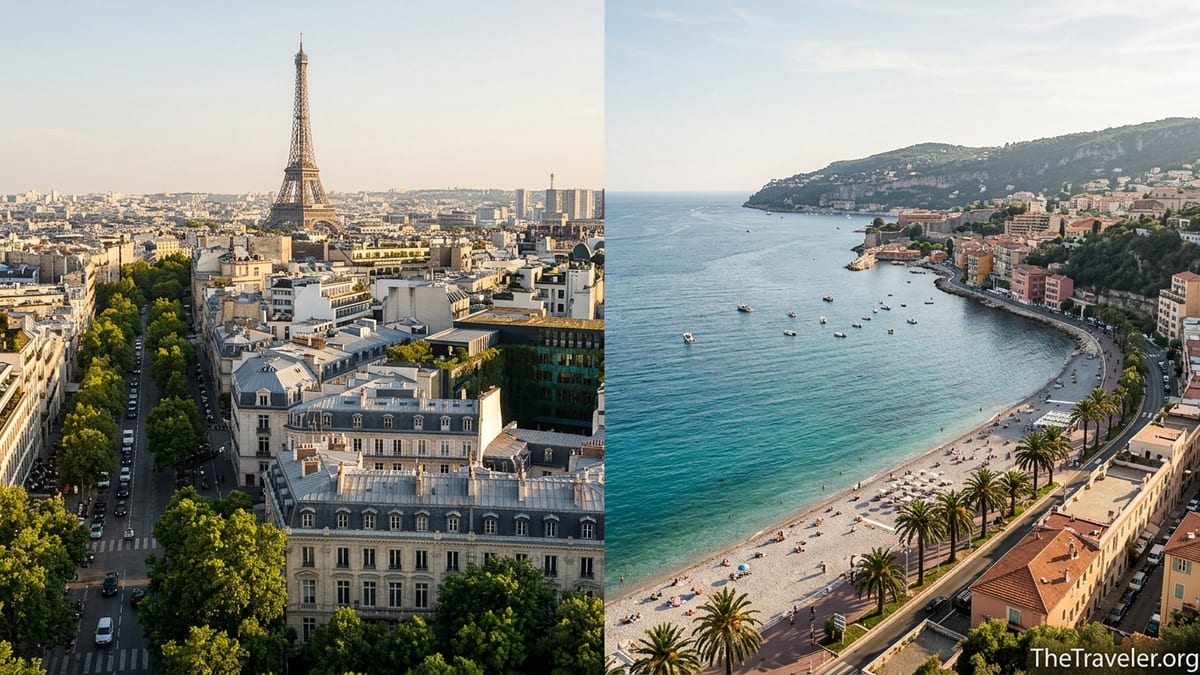
Overall vibe: urban icon vs coastal playground
Paris is an intense, walkable capital where your days are shaped by metro rides, museum queues and long café stops. A typical first-time visit might include mornings at the Louvre or Musée d’Orsay, an afternoon wandering Le Marais or Montmartre, and an evening cruise on the Seine capped with wine in Saint‑Germain. You are surrounded by Haussmann facades, grand avenues and dense neighborhoods, and nightlife usually means bars, wine bistros or ticketed shows rather than beach clubs.
By contrast, the French Riviera, or Côte d’Azur, stretches along the Mediterranean from roughly Cannes and Antibes through Nice to Monaco and often as far as Saint‑Tropez. Here the backdrop is palm-lined promenades, pastel old towns, harbors full of yachts and hills tumbling into the sea. It feels more like a string of relaxed resort towns than a single city. Daily rhythms revolve around beach time, coastal walks, boat trips and long lunches outdoors, with much more focus on the sea and open sky.
In practice, Paris suits travelers who crave iconic sights, galleries and neighborhoods to explore on foot, even if that means crowds and higher stress. The Riviera suits those who would rather trade museums for swims, coastal viewpoints and leisurely dinners by the water. If you are choosing a single base, it comes down to whether you want the energy of a global capital or the laid-back pace of a coastal holiday.
Sightseeing: landmarks vs landscapes
Paris is unmatched for headline attractions packed into a small area. Classic city-break days might pair a timed-entry visit to the Eiffel Tower or Louvre with a stroll along the Seine, people-watching on the Île de la Cité and shopping in the covered passages near Grands Boulevards. Many major sights cluster near the river, including Notre‑Dame, Sainte‑Chapelle, the Orsay and Orangerie museums, so you can see a lot on foot if you plan your route carefully.
On the French Riviera, the “sightseeing” is far more about landscapes and town‑hopping than individual blockbuster monuments. In Nice, you might climb Castle Hill for views over the Baie des Anges, then wander the Italianate lanes of the Old Town and the flower market on Cours Saleya. From there, day trips by train or bus open up Cannes, Antibes, Villefranche‑sur‑Mer, Menton and Monaco within about an hour. Typical excursions include the Picasso Museum in Antibes, the hill villages of Èze or Saint‑Paul‑de‑Vence, or a boat ride to the Îles de Lérins off Cannes.
If you enjoy structured days ticking off famous sites with clear “must‑dos,” Paris is easier to plan. You can prebook timed tickets for the Louvre, Orsay, Eiffel Tower and Catacombs, and buy multi-day metro passes to link everything up. The Riviera rewards slower, less structured days: linger in one town, then decide over coffee if you feel like hopping a local train to another resort or simply staying put on the beach.
Beaches, promenades and outdoor time
The starkest difference between the two is the beach question. Central Paris has no natural coastline. In high summer, the city stages temporary “Paris Plages” along the Seine and Bassin de la Villette, with deckchairs and pop-up bars, but you are still in an urban environment. Outdoor time in Paris is more about strolling the Tuileries or Luxembourg Gardens, picnicking by the Canal Saint‑Martin or sitting outside a café.
The French Riviera is a true beach destination. Nice’s main city beaches are wide and covered in smooth pebbles; you will want proper sandals or water shoes, especially with children. The shore is split between free public stretches and private beach clubs where a sun lounger and umbrella for the day might cost around 25 to 40 euros in peak summer, often with table service and changing facilities. For softer sand, many travelers base in or day-trip to sandy coves at Villefranche‑sur‑Mer, the long sandy Croisette beach in Cannes, or the famous Pampelonne Beach near Saint‑Tropez, lined with upscale clubs.
If daily swims, sunset walks along a palm-lined seafront and boat trips to offshore islands sound essential, the Riviera clearly wins. Paris is better if you prefer parks, river views and café terraces to sand between your toes, or if you are traveling in cooler months when the Mediterranean is not warm enough for most visitors to swim comfortably.
Food and dining: bistros vs seaside kitchens
Food is a highlight in both destinations, but the atmosphere differs. In Paris, much of the joy is in classic bistro culture. A simple menu du jour at a neighborhood restaurant might run 18 to 25 euros at lunchtime for two or three courses, with wine extra, while more atmospheric brasseries around the grands boulevards or Saint‑Germain will be higher. Budget travelers often rely on bakery lunches, with baguette sandwiches in the 5 to 8 euro range and takeaway crêpes around 4 to 6 euros. Splurge nights might involve a traditional address such as a Montparnasse brasserie or a modern neo‑bistro in the 11th arrondissement, where three-course dinners commonly land around 35 to 50 euros per person before drinks in 2026.
On the Riviera, the food scene leans maritime and Mediterranean. You will see socca (crispy chickpea pancake) stands in Nice, salade niçoise on almost every menu, and more grilled fish and seafood platters in seafront restaurants than in Paris. Beachfront meals on the main promenades often come with a view markup: expect around 20 to 30 euros for a main course at a midrange restaurant along Nice’s Promenade des Anglais or Cannes’ La Croisette, with higher prices at fashionable beach clubs in Saint‑Tropez or Cap d’Antibes. It is still possible to eat well for less in backstreet bistros away from the water or in local markets like Nice’s Liberation market, where snacks and picnic ingredients are far cheaper.
If your priority is trying classic French dishes, Paris has broader variety, from traditional bistros to North African couscous, Vietnamese canteens and contemporary tasting‑menu restaurants. If you are happiest with grilled fish, chilled rosé and sea views, the Riviera is more satisfying. Either way, self-catering picnics from markets and supermarkets are a practical way to keep costs down in both destinations.
Nightlife and atmosphere after dark
Paris nightlife is diverse and highly neighborhood‑dependent. Around the Canal Saint‑Martin, Oberkampf and Bastille, evenings mean casual wine bars, packed terraces and small music venues. In Pigalle and the Grands Boulevards area you find traditional cabarets and cocktail bars. Most nights out involve bar‑hopping, late dinners and perhaps a concert or jazz club, with the metro and night buses making it relatively easy to move between districts until late.
On the French Riviera, nightlife is more concentrated along the waterfronts and in specific resort towns. Nice has bars around the Old Town and the port, with a mix of casual pubs and cocktail spots that spill onto terraces in warm weather. Cannes and Saint‑Tropez tilt more glamorous, especially in summer when beach clubs transform into late‑night venues with DJs, bottle service and dress codes. Clubs in Cannes around the Croisette or in Saint‑Tropez’s old port routinely host seasonal party crowds, particularly in July and August.
If you like a wide range of music venues, cultural events and non‑touristy bars, Paris has more depth, especially outside peak tourist season. If your dream night is sunset drinks followed by dancing in an open‑air beach club or harbor-side lounge, the Riviera delivers that setting in a way Paris cannot match.
Weather and best times to go
Paris has a temperate climate with four distinct seasons. Summer days in July often average around the high teens to low 20s Celsius in the morning and high 20s at midday, but heatwaves can push temperatures above 35 degrees. Winters are chilly rather than bitter, with average January days around 5 degrees and frequent grey skies and rain. Spring and autumn are popular for city breaks because café terraces are open, trees are green and crowds are thinner than in high summer.
The French Riviera is noticeably milder and sunnier. Nice and the surrounding coast typically see average summer highs around the mid to high 20s Celsius, with sea breezes and many more sunny days than inland. Even in January, average daytime temperatures around 9 degrees feel relatively gentle compared with much of northern Europe, which is why the region became a winter escape for aristocrats long before it was a summer hotspot. Summer rain is rare and often concentrated in short bursts.
For a city-first trip, late April to early June and late September to October are excellent in Paris: long days, café culture in full swing and slightly lower hotel prices than in July and during key events. For the Riviera, June and early September strike a balance between warm sea temperatures and more manageable crowds, especially around Nice, Antibes and Cannes. July and August suit travelers who want guaranteed heat, late-night buzz and do not mind higher prices and packed beaches.
Hotels, neighborhoods and typical costs
Both destinations are among the more expensive parts of France, but their patterns differ. In Paris, current averages suggest a typical double room in a midrange hotel near central sights often runs in the 180 to 250 euro range per night, with comfortable but simple three-star options sometimes found around 140 to 170 euros in less central arrondissements outside peak periods. Small boutique hotels near the Louvre, Saint‑Germain or the Marais generally cost more, while basic hostels with dorm beds might start around 35 to 50 euros per person per night.
On the Riviera, prices vary widely by town and month. A standard three-star hotel in Nice outside peak summer might cost around 130 to 180 euros per night, rising in July and August. Cannes and Saint‑Tropez see sharper swings: during the Cannes Film Festival in May or peak August weeks, rates in central Cannes or along Pampelonne Beach can multiply compared with shoulder seasons. Travelers trying to moderate costs often base in Nice or Antibes, where there is a larger spread of accommodation, and day-trip to more expensive areas like Monaco and Saint‑Tropez.
Daily budgets reflect similar patterns. In Paris, a comfortable but not luxurious traveler might plan roughly 100 to 225 euros per person per day including accommodation, public transport, food and one or two paid attractions, depending on hotel choice and dining habits. On the Riviera, a comparable traveler often spends a similar amount outside peak season but needs to allow more in high summer or if planning multiple days at private beach clubs. Self‑catering apartments on both sides can reduce costs if you are happy to cook some meals or picnic.
Couples, families and different types of trips
Paris is naturally romantic, but it is not always relaxing. Couples often love sunrise walks around the Île Saint‑Louis, sunset views from the Trocadéro or Montmartre, and long dinners in candlelit bistros. Yet the crowds at the Eiffel Tower or Versailles, plus metro stairs and busy streets, can feel draining. It suits pairs who enjoy sightseeing, galleries and urban wandering together more than couples looking purely to switch off on a sun lounger.
For couples, the Riviera shifts the focus to shared downtime: lazy mornings on the beach, scenic drives along the corniche roads, wine with sea views in evening light. A long weekend in Nice with a day trip to a hill village like Èze or a boat ride to the Îles de Lérins off Cannes can feel noticeably slower and more restorative than a similar-length Paris stay. Towns such as Antibes or Villefranche‑sur‑Mer are especially popular with couples who want charm, sea access and enough restaurants to mix things up without big‑city intensity.
Families face a similar trade‑off. Paris offers endless educational and cultural appeal: climbing the Eiffel Tower, exploring the Natural History Museum, day‑tripping to Disneyland Paris and picnicking in the Luxembourg Gardens. At the same time, long queues, busy metros and compact hotel rooms can be challenging with younger children. On the Riviera, apartment rentals with balconies, pram‑friendly promenades and the simple pleasure of a daily swim can make life easier, provided you factor in sun protection and perhaps choose sandier beaches for toddlers.
Solo travelers and friends’ groups often gravitate to Paris for its museums, nightlife variety and well-connected public transport. The Riviera works well for those who are happy with quieter evenings or beach‑club socializing, especially in July and August when nightlife peaks in Nice, Cannes and Saint‑Tropez but smaller towns stay more subdued.
The Takeaway
If you are choosing between Paris and the French Riviera rather than combining both, your decision should turn on what you want your days to look like. If your ideal trip is packed with world‑class art, iconic landmarks, café culture and late‑night city energy, prioritize Paris. You will trade sea views for museum queues and metro rides, but there is nowhere better for a dense, culture‑rich city break.
If you picture yourself waking to sea air, spending unhurried hours by the water, hopping between pretty coastal towns and dining outdoors in warm evenings, the Côte d’Azur is the better primary base. Nice, Antibes and their neighbors give you the Mediterranean holiday atmosphere that Paris simply cannot replicate, especially from June to September.
For many travelers with the time and budget, a smart compromise is to split a week, with three or four nights in Paris followed by three or four nights in Nice or Antibes, using the fast train between them. If you must choose one, pick Paris when culture, architecture and urban life come first, and the French Riviera when sunshine, swimming and relaxed seaside living matter more than ticking off famous monuments.
FAQ
Q1. Is Paris or the French Riviera cheaper for a one-week trip?
In broad terms, both are on the expensive side for France, but overall costs often end up similar if you travel outside peak periods and avoid major events. Paris can feel pricier day to day because of central hotel rates and paid attractions, while the Riviera becomes more expensive in July and August and in hotspots like Saint‑Tropez and central Cannes. Choosing apartments, staying a few streets back from the sea on the Riviera or outside the very center in Paris, and eating one picnic or bakery meal a day can significantly reduce costs in both.
Q2. Which is better in winter: Paris or the French Riviera?
In winter, Paris offers more indoor attractions and feels busy year‑round, with Christmas markets, exhibitions and performances. It will be cold and often grey, but cafés, museums and shops keep the city lively. The Riviera is milder, with more sun and gentler temperatures, which suits travelers who want walks, outdoor terraces and sea views rather than swimming. However, some beach clubs close for the season and smaller coastal towns can feel quiet. For culture-focused trips, winter favors Paris; for light, outdoor strolls and a calmer pace, the Riviera works well.
Q3. Are the beaches on the French Riviera suitable for small children?
Many are, but beach type matters. Nice’s main city beaches are pebbly and slope fairly quickly into deeper water, which can be awkward for toddlers. Families often prefer sandy stretches such as Villefranche‑sur‑Mer, parts of Antibes and Juan‑les‑Pins, or the shallow, sandy coves around the Esterel coast and near Saint‑Tropez. Wherever you go, bring beach shoes for children on pebbles, and consider renting loungers at a family‑oriented beach club for shade, toilets and changing facilities.
Q4. How many days do I need in Paris versus the French Riviera?
For a first-time city break, three full days in Paris lets you see key sights like the Eiffel Tower, Louvre or Orsay, Montmartre and at least one less-touristed neighborhood. Four or five days allow a more relaxed pace or a side trip to Versailles or Disneyland Paris. On the Riviera, three full days based in Nice give time for one beach day and one or two day trips to places like Antibes, Monaco or Èze. A week on the Côte d’Azur allows a mix of resort time, hill villages and boat outings without rushing.
Q5. Is it realistic to visit both Paris and the French Riviera in one trip?
Yes, if you have at least seven to ten days. High‑speed trains typically connect Paris and Nice in around six hours, and flying takes about one and a half hours plus airport time. A common pattern is three or four nights in Paris for city sights, then three or four nights in Nice, Antibes or Cannes for the coast. With less than a week, switching bases can eat into your time, so it is usually better to choose one region and explore it more deeply.
Q6. Do I need a car on the French Riviera?
You do not need a car if you stay primarily along the main coastal strip between Cannes, Nice, Monaco and Menton, where frequent trains and buses connect the towns. A car becomes more useful if you want to explore smaller hill villages inland, remote coves, or the countryside behind Saint‑Tropez and the Esterel. Keep in mind that parking in resort centers can be expensive and tight in summer, and many travelers are happy to combine public transport with the occasional taxi or rideshare instead of renting a car for the entire stay.
Q7. Which destination is better for nightlife: Paris or the French Riviera?
For variety and year‑round options, Paris easily wins, with everything from neighborhood wine bars and jazz caves to big clubs and concert venues spread across the city. The Riviera’s nightlife is highly seasonal and concentrated, with the biggest scenes in July and August in Nice, Cannes and Saint‑Tropez, especially at beach clubs and harbor-side lounges. If nightlife is central to your plans outside peak summer, choose Paris. If you want a few glamorous, warm‑evening parties in July or August, the Riviera’s coastal clubs can be hard to beat.
Q8. Is the French Riviera only for luxury travelers?
The Riviera has a luxury reputation, and there are certainly five‑star hotels, designer boutiques and high‑end beach clubs. However, it is not exclusively for luxury travelers. By basing in larger towns like Nice, choosing guesthouses or apartments a few streets back from the sea, using public beaches and eating in local bistros off the main promenades, you can enjoy the region on a more moderate budget. It will not be “cheap,” especially in high season, but it does not have to be reserved only for high‑spend trips.
Q9. For a family with teenagers, which is better: Paris or the Riviera?
It depends on your teenagers’ interests. Paris offers famous landmarks, big‑name museums, shopping districts and day trips to Disneyland Paris, which often appeal to older kids. The Riviera, on the other hand, offers beaches, water sports, coastal bike rides and boat excursions that active teenagers may love. If your teens are curious about history, art and fashion, Paris will keep them engaged; if they mainly want to swim, socialize and be outdoors, the Riviera may be the better choice.
Q10. If I have already visited Paris once, is it worth returning or should I try the French Riviera next?
If your first Paris trip felt rushed or focused only on major landmarks, a return visit can be rewarding, especially if you explore less central neighborhoods and smaller museums. However, if you are curious about a very different side of France and want a holiday built around the sea, new scenery and a slower rhythm, shifting your focus to the French Riviera is an excellent next step. Many repeat visitors alternate: one trip centered on Paris and other cities, the next centered on the Riviera and Provence.