


Choosing the best time to visit France is less about finding a single “perfect” month and more about matching specific regions to the season. Paris behaves very differently from Provence, the Riviera is on a separate calendar from the Alps, and wine regions or northern France have their own rhythms for harvest, festivals and prices. This guide walks through France month by month, comparing what to expect in Paris, Provence, the Riviera, the Alps, wine regions and the north for weather, crowds, hotel prices, lavender, skiing, swimming and sightseeing.
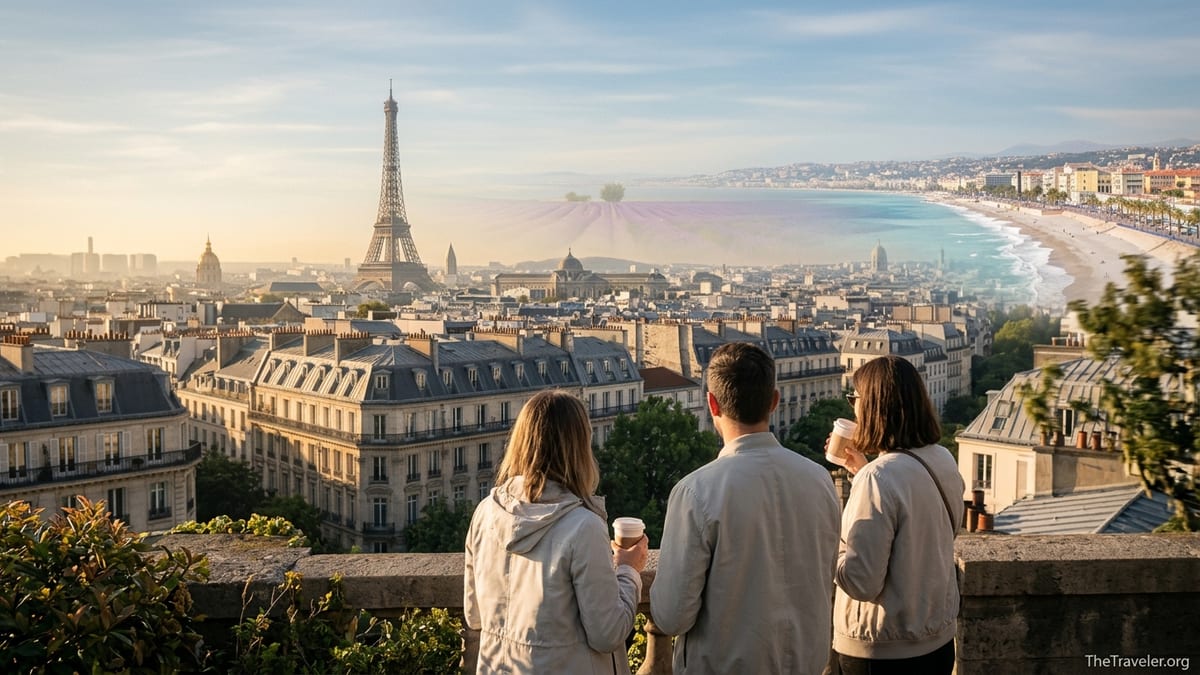
How France’s Seasons Really Work
France spans several climate zones, from the mild Atlantic coast to the Mediterranean south and the snowbound Alpine peaks. In practice, this means you can sit on a café terrace in Nice in a light jacket in January while ski lifts are running at full speed in Val Thorens and Parisians are sheltering from cold rain. Average summer highs in Paris sit in the mid-20s Celsius (around the mid-70s Fahrenheit), while Marseille and Nice on the Mediterranean run several degrees warmer with far more sun throughout the year.
Seasonality matters just as much as temperature. July and August are peak vacation months for the French themselves, when many Parisians decamp to the coast or countryside. Cities can feel quieter at street level but key attractions are busy and prices along the Riviera or in classic Provence hill towns respond accordingly. By contrast, November through early March are generally the cheapest months for hotels across the country, especially for city breaks in Paris, Lyon, Bordeaux or Strasbourg, when business travel dips and leisure demand is low.
Regional micro-seasons add another layer. Lavender in Provence is typically at its best from mid-June to mid-July, shifting earlier or later depending on altitude and that year’s weather. Ski resorts in the French Alps usually run lifts from December into April, with the most reliable snow around January to March but the best combination of sun and quieter slopes most often in March. Along the Riviera, sea temperatures are warmest for swimming in July and August, though many locals still enjoy the water in September when crowds thin but the Mediterranean remains comfortably above 20 degrees Celsius.
January to March: Winter Cities, Ski Slopes and Low Prices
January and February are prime value months if your priorities are museums, food and low hotel bills rather than outdoor lounging. In Paris, daytime highs often hover around 6 to 8 degrees Celsius, with frequent cloud and drizzle, but hotel prices tend to sit at the lower end of the annual range outside of New Year and special events. You might find a well-located three-star near Gare de Lyon or Montparnasse for significantly less than in May or September, and luxury properties that sell out in summer often advertise winter weekend packages that include breakfast or spa credits.
These same months are peak season in the French Alps. Resorts like Chamonix, Val d’Isère, Les Arcs and Les Deux Alpes usually have their most reliable snow base between January and early March. School holidays in France and neighboring countries, often concentrated in February, drive up prices and crowd levels, especially in family-oriented resorts. If you can travel in mid-January or early March, you often get a sweet spot of good snow and slightly more competitive hotel and chalet rates compared with the core holiday weeks.
Elsewhere, Provence and the Riviera are quiet but not closed. Nice, Marseille and Aix-en-Provence generally see daytime temperatures in the range of 10 to 13 degrees Celsius, with many clear days and much more winter sun than Paris. You will not be swimming, but you can walk the Promenade des Anglais in Nice in a sweater, enjoy crowd-free visits to the Mucem in Marseille, and take day trips inland to villages like Cassis or Saint-Paul-de-Vence without parking stress. On the cost side, Riviera hotels that might charge summer premiums often have off-season discounts, making January or February interesting for travelers who prefer sightseeing and restaurants to beach clubs.
In the wine regions and northern France, winter is firmly off-season for vineyards and châteaux. Cellars in Burgundy or Bordeaux are open by appointment, and you might find more time to talk with winemakers, but landscapes are bare and many smaller countryside hotels close for part of the season. Strasbourg, Reims and Lille see some of their lowest visitor numbers after the Christmas markets end, which translates into affordable city breaks for travelers comfortable with cold, grey days and early nightfall.
April and May: Spring Blossoms, Shoulder-Season Crowds
By April, parks across Paris begin to green up and days grow longer. Temperatures commonly rise into the mid-teens Celsius, ideal for walking between the Louvre, the Marais and the Canal Saint-Martin without the heat of summer. Easter holidays and spring break for both French and international visitors create spikes in hotel demand, so Paris rates in late April can already resemble early summer. If you aim for the first half of April, you may catch decent value before May’s long holiday weekends bring surges in both crowds and prices.
In Provence, April is the start of comfortable outdoor weather, especially in cities like Avignon, Arles and Aix-en-Provence. Vineyards around Châteauneuf-du-Pape are budding, markets fill with asparagus and strawberries, and hiking trails in the Luberon or Verdon Gorge are pleasant without heat stress. May is especially attractive: days are often warm enough for lunch outdoors, but lavender has not yet bloomed and high summer crowds are still weeks away. Hotel prices in inland Provence during May are typically lower than in July yet higher than in winter, a classic shoulder-season compromise.
Along the Riviera, including Nice, Cannes and Antibes, April and May mark a gradual ramp-up toward high season. Sea temperatures remain cool, yet by late May hardy swimmers start to appear and beach restaurants reassemble their decks. Events distort the picture here. The Cannes Film Festival and the Monaco Grand Prix, both usually in May, can send hotel prices in Cannes, Nice and Monaco itself far above seasonal averages, with even midrange hotels charging high rates and requiring multi-night minimum stays. Travelers not attending these events should consider avoiding that specific window or staying slightly inland to keep costs in check.
For wine regions like Bordeaux and Burgundy and for northern France, April and May are gentle months. Vineyards are green but not yet busy with harvest activity, so tastings are often relaxed and roads are quiet. In Champagne, Reims and Épernay are lively without the peak-season tour bus convoys. Further north, places such as Normandy’s D-Day beaches and Mont-Saint-Michel become more appealing as wind chill drops and daylight stretches, yet prices have not climbed to their July heights. If your priority is sightseeing and moderate hotel rates, May is one of the most balanced months across much of the country.
June to August: Lavender, Riviera Beaches and Peak Holiday Energy
Summer in France splits into several distinct stories. In Paris, June is often considered one of the most pleasant months, with long daylight, average highs around the low to mid-20s Celsius and a cultural calendar full of open-air events. Crowds are significant but not yet at July’s peak. July itself is busy and occasionally very hot, with some years seeing heatwave spikes. Surprisingly, August can bring slightly lower hotel prices in certain central districts, as business travel almost disappears and many Parisians leave on vacation. You may find signs in neighborhood bakeries or small boutiques announcing seasonal closures, yet major museums and attractions remain fully open.
In Provence, June and early July are magic for travelers hoping to see lavender. Lower-altitude plateaus, such as around Valensole, often peak from late June into early July, while higher fields in the Luberon and Albion plateau typically follow a little later. This is when the postcard scenes of endless purple rows under blue skies become real, and when small roads around villages like Sault or Roussillon fill with rental cars pulled over for photos. Hotel and rental prices in popular bases such as Gordes, Bonnieux or Uzes climb sharply for these few weeks, and properties with pools command premiums. Booking months ahead is advisable if lavender is a priority.
On the Riviera, July and August are firmly high season. Nice, Cannes, Saint-Tropez and Menton are busy from morning to late night, beach clubs operate at full capacity, and sea temperatures are typically at their warmest, with averages in Nice often in the mid-20s Celsius by August. This is the ideal window for travelers who want to swim daily, rent loungers on private beaches and enjoy a late-night restaurant scene. Prices follow suit: even simple two-star hotels in central Nice or Cannes can command rates that feel high relative to spring or autumn, while upscale resorts along Cap-Ferrat or in Saint-Tropez often sell out entirely.
In the Alps, July and August are hiking and mountain-biking season. Resorts like Chamonix, Megève or Les Deux Alpes pivot from skiing to trail activities, with lifts running for hikers and mountain bikers. Temperatures in the valleys are pleasant and nights are cool, making this a worthwhile escape from lowland heatwaves. Accommodation prices are lower than in winter high season, though big events like the Tour de France can temporarily boost demand in specific valleys or stages. For wine regions and northern France, summer means reliably warm days, longer opening hours for châteaux and gardens, and higher prices in particularly scenic spots such as the Loire Valley or Normandy’s coastal towns.
September and October: Wine Harvest, Quieter Beaches and Smart Savings
September is one of the most attractive months for an all-round French trip. In Paris, weather often remains comfortably warm but no longer hot, perfect for café terraces and evening walks along the Seine. However, business travel and conferences resume after the August lull, and this pushes hotel prices back up. Central neighborhoods around the Opera district or major convention venues can see rates as high as, or higher than, early summer, even though the city feels less tourist-heavy. For budget-conscious visitors, choosing slightly more residential districts or mixing hotel nights with apartment rentals can help keep costs manageable.
Provence and the Riviera shift into a more relaxed gear from early September. Crowds thin significantly once European school holidays end, yet sea temperatures remain inviting for swimming, especially along the Riviera where the Mediterranean retains summer warmth. Beach clubs in Nice or Antibes normally stay open through at least part of September, and you can often walk into restaurants that required reservations in August. Inland, markets are full of late-summer produce and grapes, and hotel rates begin to slide downward. If you are not chasing lavender but want warm weather with less pressure on prices, early to mid-September is one of the best bets for southern France.
September and October are also key months in wine regions. In Bordeaux, Burgundy, the Rhône Valley and Champagne, harvest typically takes place sometime between late August and early October, depending on the year and grape variety. This brings a particular energy: vineyards are busy, small roads fill with tractors and seasonal workers, and some estates close their doors temporarily to focus on picking and fermentation. Others, however, welcome visitors for harvest-themed tastings or walks through the vines, and local villages often host food and wine festivals. Hotel prices around famous wine towns such as Beaune, Saint-Émilion or Reims can spike during key weekends, so it pays to book early or base yourself in less-known nearby towns.
In northern France more broadly, including Brittany, Normandy and the Hauts-de-France region, September can feel like an extended summer but with more available parking and shorter lines for sights like Mont-Saint-Michel or the D-Day landing beaches. By October, temperatures cool noticeably, trees turn color, and some coastal businesses close for the season. City destinations such as Lille, Rouen or Rennes remain lively year-round, and autumn hotel rates are typically more forgiving than those of high summer, especially outside of major festival weekends.
November and December: Christmas Markets, Culture and Budget Appeal
As November arrives, much of France moves into a quieter phase. In Paris, days are short and often damp, with average highs just under 10 degrees Celsius. Yet this can be an appealing moment for travelers focused on museums, shopping and food. Airfares between North America and Europe often drop in November compared with summer, and hotel rates in many central Paris districts trend toward their annual lows outside of big events. Queues at major attractions like the Musée d’Orsay or Sainte-Chapelle are shorter, and restaurant reservations are easier to secure, especially on weekdays.
In eastern and northern France, December brings one of the country’s most atmospheric experiences: Christmas markets. Strasbourg in Alsace is especially renowned, with its historic center filled with wooden stalls, lights and mulled wine stands, and smaller towns across the region adding their own markets and illuminations. Hotel prices in Strasbourg rise accordingly across key December weekends, but many visitors choose secondary towns like Colmar or Obernai, or even base in nearby Germany and day-trip by train to balance cost and atmosphere. Elsewhere in the north, cities such as Lille, Arras and Amiens also host markets, which create localized peaks in demand but still generally lower room rates than peak summer.
In Provence and the Riviera, November and December are off-season but not lifeless. Marseille’s Old Port and Nice’s seafront remain atmospheric, with locals out walking even on brisk but sunny days. Some seaside hotels close until spring, but those that remain open often run attractive rates, and coastal trains along the Riviera are far less crowded than in August. Inland hill towns are very quiet, with some restaurants taking extended winter breaks, so basing in a larger city such as Nice, Cannes or Aix-en-Provence makes practical sense for access to open services.
For the Alps, December is the start of ski season. High-altitude resorts like Val Thorens, Tignes and Val d’Isère often open first, sometimes from late November, with early-season snow conditions that can vary from excellent to patchy depending on the year. Christmas and New Year weeks are among the most expensive times of the entire ski calendar, with package deals and chalets selling out months ahead and prices reflecting peak demand. If you seek both snow and savings, early December before school holidays begin can be a better compromise, though you accept more uncertainty about snow coverage.
Balancing Weather, Crowds and Prices by Region
For Paris, the sweet spots depend on your tolerance for weather and your budget. Late March to June and September to mid-October offer the most pleasant conditions for walking and café culture, but they are also the periods with high demand and higher average hotel prices, particularly September when business travel surges. Travelers prioritizing lower prices might instead target January, February or November and build an itinerary around indoor attractions: think the Louvre, the Musée de l’Orangerie, covered passages and long dinners in classic bistros. Realistically, that is when you are more likely to find central three-star rates that feel competitive even in popular neighborhoods such as the Latin Quarter or Bastille.
In Provence, timing revolves around what you want to see. For lavender, aim for the period from roughly the last week of June through the first half of July, and choose your base according to altitude. Lower plateaus like Valensole generally bloom earlier, while higher areas toward Sault hold their color a little later. Rates in characteristic village hotels or stone guesthouses soar in these weeks, and rental cars can book up around local festival dates. If you prefer lower prices, easier driving and milder heat, consider May or late September, when fields are green rather than purple but markets, vineyards and villages are all fully functioning.
On the Riviera, the main trade-off is between swimming and savings. July and August give you the warmest seas and the full set of seasonal services, from boat rentals to every beach bar and restaurant open, but at the highest accommodation prices. June and September offer a compromise: sea temperatures are usually good enough for swimming, especially from mid-June onward, hotels remain open, but you have a better chance of finding reasonable rates, particularly during midweek stays. For example, a midrange hotel a block behind the Promenade des Anglais in Nice might price significantly lower in late September than in the first week of August, even though beach weather can still be excellent.
For the Alps, two main seasons dominate: skiing from December to April and hiking from late June to September. Within winter, January and early March often pair decent snow with less intense holiday crowds than late December or February’s school vacations, which is when both lift lines and accommodation rates spike. During summer, prices are generally lower than in winter, and you can use valley towns like Bourg-Saint-Maurice or Sallanches as more affordable bases for day hikes into the higher slopes, taking advantage of cable cars that operate for walkers as well as skiers.
Targeting Lower Prices Without Sacrificing Too Much
If your main goal is value, think in terms of micro-shoulder periods rather than just low or high season. In Paris, that might mean late February into early March, when the worst of winter is usually over, days are a bit longer, but spring holiday waves have not yet pushed up occupancy. During this window, it is often possible to secure good deals at central boutique hotels, and airfares from long-haul markets can be significantly lower than Easter or summer prices. Similarly, the first half of November, after the autumn school holidays but before Christmas markets and festive lights appear, can deliver low room rates with manageable weather.
In Provence and along the Riviera, late April, early May and the second half of September are particularly strong for budget-conscious travelers who still want decent warmth. Restaurant terraces in Aix-en-Provence or on Nice’s Cours Saleya are already busy in late April on sunny days, yet hotel prices are softer than in June or July. Car rentals, too, often price out cheaper in these windows than in peak lavender or beach season. In wine regions, weekdays in shoulder months such as April, early June and October generally offer fair rates and more availability than weekends, when weddings, local festivals and city-dweller getaways all increase demand.
Northern France, including Brittany and Normandy, rewards flexible timing. While July and August are the classic holiday months with the highest prices, early June and early September often combine reasonable room rates with comfortable weather for coastal walks and historic sightseeing. Visitors who can handle cooler temperatures and occasional showers might even consider late March or October for trips focused on culture rather than beaches, taking advantage of lower car rental and accommodation costs while building in indoor options like museums in Rennes, Rouen or Caen.
Whatever your regional focus, one practical tactic is to monitor hotel rates across a few different months before booking flights, using flexible-date searches. You may find, for instance, that shifting a Paris and Provence itinerary from early June to mid-May trims several hundred euros off a ten-night stay while still delivering pleasant weather, blooming markets and long evenings on café terraces. In many French destinations, that kind of date adjustment has more impact on your budget than trading one hotel class down, especially during peak demand weeks.
FAQ
Q1. What is the single best month to visit France if I want a bit of everything?
There is no universal best month, but September comes close for many travelers: Paris is pleasant, Provence and the Riviera are still warm enough for swimming, wine regions are active with harvest and crowds are thinner than in July and August, though hotel prices in central Paris can still run high.
Q2. When is the best time to visit France for lavender in Provence?
Lavender generally blooms from mid-June to mid-July, with lower plateaus like Valensole often peaking in late June and higher areas near Sault reaching full color in early July, though exact timing shifts each year with altitude and weather.
Q3. When are hotel prices lowest in Paris?
Average hotel rates in Paris tend to be lowest from roughly mid-November through February, excluding the Christmas and New Year period and major events, making winter city breaks attractive for budget-conscious visitors who prioritize museums and restaurants.
Q4. Which months are best for warm sea swimming on the French Riviera?
Sea temperatures on the Riviera are typically warmest in July and August, often remaining comfortable into September, so if daily swimming is important, aim between mid-June and late September, with peak warmth in high summer.
Q5. When should I visit the French Alps for the best skiing conditions?
Ski resorts in the French Alps usually operate from December into April, with the most reliable snow between January and early March; to balance snow quality, crowds and price, many skiers favor mid-January or early March over the busy Christmas and February school holiday weeks.
Q6. What is the best time to visit French wine regions like Bordeaux and Burgundy?
Late May through June and September through early October are excellent for wine regions, offering green vines, comfortable temperatures and active cellars, while harvest itself, often in September, brings special events but can also mean higher prices and limited availability at some estates.
Q7. Is August a bad time to go to Paris because everything is closed?
August is not a bad time for visitors: major attractions, museums and most restaurants in central areas stay open, though some small neighborhood shops and bakeries close; crowds at iconic sights remain significant, but hotel prices in some business districts can be slightly lower than in June or September.
Q8. When is the best time to visit northern France, including Normandy and Brittany?
June and September are strong choices for northern France, providing milder temperatures, long days and fewer crowds than July and August, while still offering generally good conditions for visiting coastal towns, historic sites and countryside villages.
Q9. What months offer the best balance of weather and lower prices across most of France?
Late April, May, early June and the second half of September often deliver a solid balance of decent weather and more moderate prices in many regions, provided you avoid major events such as the Cannes Film Festival or local holiday weeks.
Q10. When should I travel to France if I dislike heat but want to avoid winter gloom?
If you prefer mild conditions, target late April to mid-June or late September to mid-October, when most of France enjoys comfortable temperatures suitable for walking and sightseeing without the intense heat or crowds of high summer or the short days of winter.