

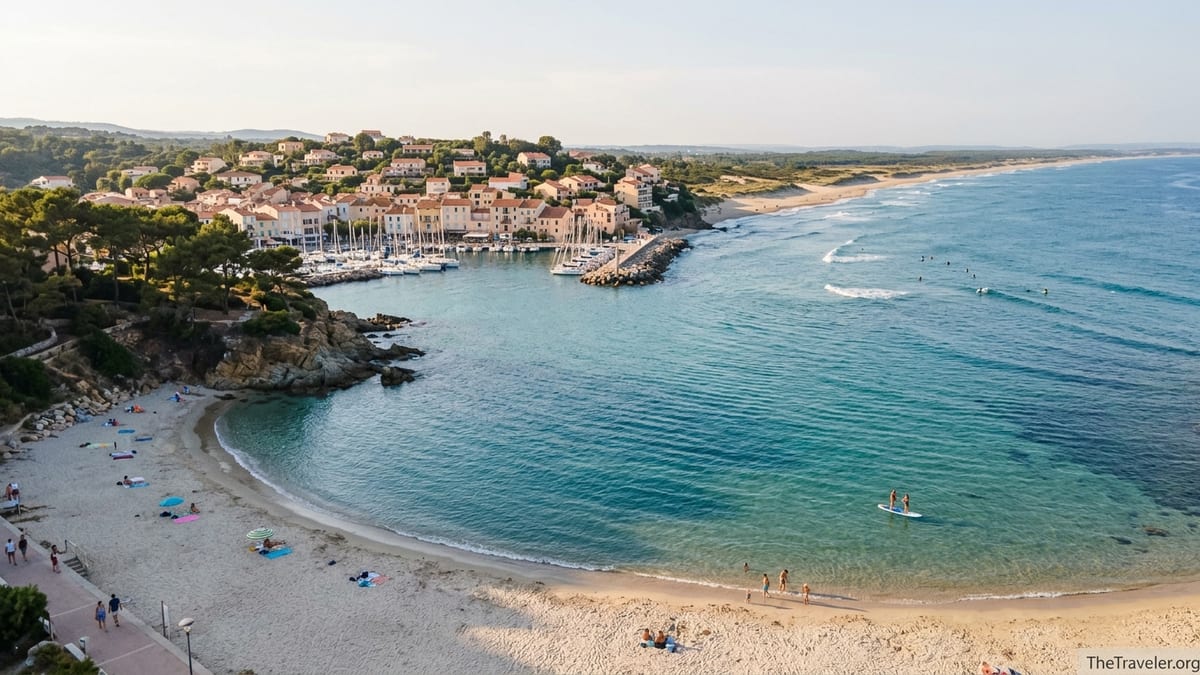
From Riviera glam to Atlantic surf towns and wild Corsican coves, France’s coastline is remarkably varied. Choosing the right stretch of sand depends less on “the best beach” and more on what kind of holiday you want: a polished resort stay, beginner-friendly surf, a romantic hideaway or a quiet family escape. This guide compares France’s main seaside regions with concrete examples so you can decide where to book your next trip.
How to Choose the Right French Coastline for Your Trip
France has more than 5,000 kilometers of coastline, but most international visitors end up choosing between the French Riviera, Corsica, the Atlantic Coast, Brittany, Normandy or the less-famous Mediterranean stretches west of Marseille. Each area has a distinct personality, climate and price level. Before falling in love with a single Instagram photo of turquoise water, it helps to match the region to your priorities: resort comfort, surfing, nightlife, kids’ facilities or crowd-free peace and quiet.
In practical terms, a week in a midrange hotel on the Riviera or in Corsica in July can easily cost twice what you would pay for a similar room on the Atlantic Coast in the Landes or in parts of Brittany. Beach style is different too. Around Nice and Cannes you will find private beach clubs with sun loungers, cocktail service and music, while in southwest Atlantic towns like Hossegor or Biarritz the scene leans to surf schools, casual bars and long unbroken sands backed by pine forest. Further north in Brittany and Normandy, you are as likely to see families building dams in tidal pools as people posing by superyachts.
Transport is another deciding factor. If you want to arrive by direct flight and transfer quickly to your hotel, the French Riviera and Biarritz areas offer good international connections. Corsica often involves a connection or a ferry. For those planning road trips, the Atlantic Coast is ideal, with countless small resorts between Bordeaux and the Spanish border where you can stop for a night or two, rent boards, or simply enjoy uncrowded dunes.
This guide walks through each major coastline, highlighting who it suits best, typical beach experiences, the kind of resorts you will actually find on the ground and some sample price ranges to set expectations. Think of it as a destination-selection tool rather than a ranking of individual beaches.
French Riviera: Glamorous Resorts and Easy Family Comfort
The French Riviera, or Côte d’Azur, runs roughly from Menton near the Italian border through Nice, Antibes and Cannes to Saint-Tropez and beyond. This is where you find the classic image of French beach holidays: promenades lined with palms, Belle Époque hotels and beach clubs with neatly spaced loungers. Many beaches are pebbly, especially around Nice and Villefranche, but you also have sandy stretches such as Juan-les-Pins, Cannes and Pampelonne near Saint-Tropez.
For resort-style stays, the Riviera is hard to beat. In Cannes or Antibes, four-star seafront hotels with pools and kids’ clubs typically start from around mid three-figure nightly rates in July and August, with sea-view rooms and access to private beach clubs costing more. Families often choose bases like Juan-les-Pins or Mandelieu-la-Napoule where the beaches are shallow, and you can rent pedal boats and paddleboards directly on the sand. In Saint-Tropez’s Pampelonne Bay, famous beach clubs line a long sandy beach, where lunch at a chic restaurant can easily approach what many travelers might spend on a day’s food budget elsewhere in France.
If you prefer a quieter Riviera base, look at smaller towns such as Théoule-sur-Mer or the Îles de Lérins off Cannes. Beaches like Plage du Camp Long near Saint-Raphaël offer protected coves with soft sand and gentle entry to the water, ideal for younger children to swim while parents relax on the shore. Car-free Porquerolles Island, reached by boat from Hyères, has some of the Riviera’s prettiest natural beaches, such as a long arc of white sand backed by pine trees where bicycles replace cars and simple beach restaurants serve grilled fish.
The trade-off on the Riviera is cost and crowds. In July and August, even midrange places can sell out months in advance, and popular beaches quickly fill with loungers from private concessions. If you want the Riviera experience for less, consider late May, June or September, when sea temperatures are swimmable, hotel prices drop, and you can still enjoy the outdoor terraces and evening promenades without peak-season congestion.
Corsica: Wild Scenery, Clear Water and Quiet Luxe
Corsica, often called the Island of Beauty, suits travelers who want dramatic landscapes and clear water rather than a continuous strip of urbanized seafront. Much of the coastline is still relatively undeveloped, with beaches framed by maquis shrub, mountains in the background and, in many places, no concrete high-rises in sight. The island is especially popular with couples, hikers who mix trekking and swimming, and families seeking a slower pace than the mainland Riviera.
The south and southeast of Corsica host the most famous beaches, including Palombaggia and Santa Giulia near Porto-Vecchio, where shallow turquoise water laps fine sand and wooden beach bars rent sun loungers by the day. In high summer, loungers on these marquee beaches often cost a moderate two-figure sum per person, and waterfront suites or villas can reach premium nightly rates similar to upscale Riviera towns. A more relaxed alternative is Calvi in the northwest, where a long, gently shelving sandy bay sits below a citadel, and family-run hotels and campsites stretch behind the pines. Here you can rent kayaks, small sailboats or paddleboards directly on the beach and walk into town for dinner.
Travelers seeking true quiet should look at the less-built-up coasts, such as the Desert des Agriates between Saint-Florent and Île Rousse, where remote beaches like Saleccia or Loto are accessed by boat shuttles or bumpy tracks. These coves offer clear water and white sand without rows of umbrellas, but they also lack services, so you need to bring shade, water and food. On the west coast, small bays near places like Porto or Piana mix pebble and sand under towering cliffs, ideal for those who like snorkeling and scenic boat trips more than classic resort life.
Reaching Corsica usually involves a short flight from cities like Paris, Marseille or Nice, or overnight ferries from mainland ports. Once on the island, renting a car makes a big difference, as public transport between beach areas is limited and roads are winding. Prices for midrange accommodation are generally higher than on the Atlantic Coast or in much of Brittany, reflecting the island’s short season and the cost of logistics. For value without sacrificing beauty, look at late June or early September, when sea temperatures are still pleasant and many French families have returned home.
Atlantic Coast: Surf Towns, Long Beaches and Laid-back Vibes
The French Atlantic Coast from La Rochelle down through the Gironde, Landes and Basque Country is the country’s surf heartland. Here you find endless sandy beaches backed by dunes and pine forests, plus towns built around surf shops, campgrounds and bike paths rather than formal promenades. Resorts like Lacanau-Océan near Bordeaux, Biscarrosse, Hossegor, Seignosse and Biarritz attract a mix of surfers, families and younger travelers who want a casual beach holiday.
Southwest Atlantic beaches are perfect if you want consistent waves and room to spread out. In Hossegor and Seignosse, multiple patrolled beaches stretch for kilometers, with surf schools offering group lessons and board rental directly on the sand in summer. Daily group lessons for beginners commonly run at a moderate two-figure price per person, including equipment, making it realistic for a family to sign kids up for a week-long course. Accommodation ranges from simple mobile homes in large campgrounds near the dunes to modern four-star hotels around Hossegor’s lake with spa facilities and heated pools, generally at lower prices than Riviera equivalents.
For beginners and families interested in learning to surf, the Basque Country is particularly attractive. Biarritz combines urban comforts, a food scene and two central beaches popular with surf schools, while Hendaye, near the Spanish border, offers one of the safest and most forgiving beach breaks in France. On big swell days, when some Landes beaches are closed to swimmers because of strong currents and heavy shore breaks, Hendaye often remains manageable. This flexibility is valuable if you are planning a once-a-year surf-focused holiday and want options whatever the ocean is doing.
Surf conditions peak from late summer into autumn, but July and August still offer plenty of smaller waves for lessons, warm water and full resort services. Outside school holidays, many beach bars and seasonal surf camps close, so if you want the full atmosphere of night markets, events and open surf schools, plan for late June through early September. Access is straightforward by train or plane to Biarritz or Bordeaux, followed by local trains or buses to the coast, although having a car gives you more freedom to chase the best sandbank or explore quieter stretches of dunes.
Brittany: Tidal Drama, Family Resorts and Quieter Shores
Brittany, projecting into the Atlantic in northwest France, offers a very different feel from the southwest surf coast. Here the sea is cooler, the tides are dramatic and the coastline alternates between sheltered estuaries, small sandy coves and wild cliffs. It appeals to travelers who enjoy coastal walks, lighthouses, seafood and historic stone towns, and who are less concerned with guaranteed heat and surf culture. Families with younger children often appreciate the combination of safe bays, rock pools and a gentler pace of life.
Popular beach areas include the north coast around Saint-Malo and Dinard, the so-called Pink Granite Coast between Perros-Guirec and Trébeurden, and the more rugged western peninsulas like Crozon. Resorts such as Dinard have Belle Époque villas, covered promenades and supervised sandy beaches where kids play in tidal pools at low tide. Self-catering apartments or small hotels within walking distance of the sea can often be found at prices noticeably below equivalent Riviera or Corsican stays in peak summer, although the best sea-view properties still command a premium.
Water temperatures in Brittany are cooler than further south, so a light wetsuit is common even in high season if you plan to swim for long. Surfing exists but is less consistent than in the southwest; spots near Quiberon or La Torche in Finistère can deliver good waves, yet many visitors come for sailing, kayaking and stand-up paddle in calmer waters. Sailing schools are widely available and reasonably priced, often providing week-long multi-activity courses for children that combine dinghy sailing, windsurfing and sea safety.
Weather is more variable, and a week in August can include a mix of sunny beach days and windier, cooler periods. This makes Brittany ideal if you like variety: one day swimming in a sheltered bay, the next exploring a medieval town or following a signposted coastal path. If your top priority is sunbathing every single day, you are safer further south. But for travelers who do not want to feel surrounded only by tourists, Brittany’s blend of French holidaymakers and foreign visitors, plus authentic year-round communities, is a strong draw.
Normandy and the Northern Coasts: Wide Sands and Short Breaks
Normandy and the adjoining northern coasts around the Somme Bay and Pas-de-Calais are the closest French beaches to Paris and much of northern Europe. They are well suited to shorter breaks, self-drive trips and travelers who want wide, open sands, often with historical interest, rather than tropical colors. Expect long tidal beaches, cliffs and a mix of fishing towns and modest resorts that come alive on sunny weekends.
Normandy’s most famous beaches are those linked to the D-Day landings, where visitors combine history with seaside walks. For pure beach holidays, towns such as Deauville and Trouville offer wide sandy bays with boardwalks, colorful parasols and traditional beach cabins. Upmarket hotels around Deauville’s waterfront and casino can reach prices in line with better-known Riviera resorts during summer events, but in nearby villages and inland you can find charming guesthouses at more accessible nightly rates.
Families appreciate the shallow gradients and supervised areas on many Normandy beaches, which make paddling and sandcastle building straightforward at low tide. The sea is cooler than in the south, and weather can change quickly, so most visitors plan a mix of beach time and indoor activities such as visits to local markets, cider farms or war museums. Surfing is limited and inconsistent; those who want reliable waves tend to head to the southwest coast instead.
Because of their proximity to major ferry ports and to Paris, Normandy and the northern shores work well as a first or last stop on a longer European trip. You can land in Caen or Le Havre in the morning and be on the sand before lunch, then continue to Brittany, the Loire or even the Alps in subsequent days. This makes the region particularly attractive for travelers who have only two or three days to spare and do not wish to fly on to the Mediterranean.
Southern Mediterranean Beyond the Riviera: Calmer and Often Better Value
While the Côte d’Azur is the Mediterranean’s superstar, the coast stretching west from Toulon through the Var, the Camargue and Occitanie into the Spanish border offers a very different experience. Here you find a mix of modern family resorts, long sandy beaches, traditional fishing towns and, in the Camargue, wild wetlands with flamingos and horses near the sea. The mood is generally more relaxed and less showy than around Cannes or Saint-Tropez, and prices for accommodation and beach services are often lower.
Examples include Hyères and the Giens Peninsula, where windsurfing and kitesurfing thrive alongside sheltered family beaches, and the long sands of La Grande-Motte and Le Grau-du-Roi east of Montpellier, which host large holiday complexes with pools and kids’ clubs. Further southwest, towns such as Collioure and Argelès-sur-Mer near the Spanish border combine pebble and sandy coves with a backdrop of the Pyrenees, attracting families, hikers and food lovers. Beachfront campsites and three-star hotels here can undercut Riviera equivalents, especially outside the French school holidays.
For those seeking quieter Mediterranean beaches, the Camargue stands out. Around Saintes-Maries-de-la-Mer, wide, largely undeveloped beaches stretch beyond the town limits, backed not by high-rises but by dunes and lagoons. Services are more limited once you leave the central area, so this suits travelers who do not mind walking or cycling a little for more space. In most of these southern Mediterranean areas, water sports like kitesurfing, sailing and stand-up paddle are widely available in season, though you will not find the same concentration of high-end designer beach clubs as on the Côte d’Azur.
This part of the coast is a strong option if you want warm Mediterranean swimming, casual beach restaurants and family facilities without paying Riviera premiums or navigating extreme crowding. It is also practical for rail or road trips, with good train connections to cities like Montpellier, Sète and Perpignan, and nearby airports served by a mix of full-service and low-cost carriers.
Matching Destinations to Travelers: Resorts, Surf, Couples and Quiet Escapes
When you compare France’s coasts, it helps to think in terms of traveler profiles rather than just geography. For classic resort holidays with full services on the doorstep, the French Riviera, selected southern Mediterranean resorts and parts of the Atlantic Coast around Biarritz and Hossegor stand out. Here you will find seafront hotels, pools, organized kids’ clubs and easy access to restaurants and beach equipment rental. Corsica offers resort comfort too, but often in smaller, more secluded packages such as boutique hotels on hillside terraces above coves.
For surfing, the choice is clearer. The southwest Atlantic Coast, especially between La Rochelle and the Spanish border, is where you will find the most consistent waves and infrastructure: surf schools, rental shops and lifeguard presence. Towns like Hossegor, Seignosse, Biarritz, Anglet and Hendaye are repeated recommendations among surfers for good reason. Beginners usually do best in more sheltered spots like Hendaye or central Biarritz beaches, while advanced surfers time trips for autumn swells on the stronger beach breaks.
Couples and honeymooners often favor Corsica or quieter corners of the Riviera and southern Mediterranean, where small hotels or guesthouses overlook sheltered bays, and evenings revolve around harbor-side dinners rather than big nightlife. Places like Bonifacio and Porto-Vecchio in Corsica, or the coastal villages around Cassis and Porquerolles, balance scenery, swimming and good restaurants. For peaceful escapes, especially in July and August, remote Corsican coves, Brittany’s wilder peninsulas or stretches of Landes dunes away from main access points are more promising than central Nice or Saint-Tropez.
Families with younger children may prioritize gently shelving beaches, supervised swimming areas, shade and easy food options over dramatic scenery. In that case, look closely at Riviera spots such as Juan-les-Pins, Antibes and Île de Porquerolles, Atlantic resorts like Lacanau-Océan or Biscarrosse, and Brittany towns with central sandy bays like Dinard or Benodet. For older kids keen to surf, consider Biarritz or Seignosse, where you can combine surf lessons, bike rides through the pines and day trips to Basque villages or Spain.
The Takeaway
No single stretch of French coast is objectively “best.” Instead, each region plays to different strengths. The French Riviera and parts of Corsica deliver polished resorts, designer beach clubs and a high chance of sunshine, at prices that reflect their fame. The southwest Atlantic Coast mixes world-class surf with long beaches and more casual, outdoorsy towns. Brittany and Normandy reward those who value character, food and coastal walks as much as swimming, while the wider Mediterranean coast to the west offers warmth and family facilities with less showiness.
To choose well, start with three questions: how important is guaranteed warmth, how much structure and services do you want around you, and how sensitive is your budget to peak-season prices. If you crave hot sun, chic evenings and do not mind paying for the setting, focus on the Riviera or southern Corsica. If learning to surf on a big sandy beach sounds more exciting than reserving a sunbed in a beach club, the Atlantic Coast from Lacanau to Biarritz is your natural playground. For quieter holidays centered on walks, markets and small coves, Brittany, Normandy or lesser-known Mediterranean stretches like the Camargue and Collioure may surprise you.
Whichever coastline you choose, booking early for July and August, prioritizing walking distance to the beach and being realistic about your preferred pace of travel will matter more to your enjoyment than chasing a single “secret” cove you saw in a photo. France’s variety means you can return many times, trying a different region each trip until you find the stretch of sand that feels like your personal best beach in France.
FAQ
Q1. Which French region is best for a first-time beach trip to France?
For a first visit, many travelers choose either the French Riviera for easy resort comforts and good transport or the southwest Atlantic Coast around Biarritz for a mix of beaches, food and character. If you prefer cooler weather and quieter towns, Brittany is a strong alternative.
Q2. Where should I go in France for the best surfing combined with a holiday atmosphere?
The southwest Atlantic between Lacanau and Hendaye offers the best combination of surf and holiday infrastructure. Hossegor and Seignosse attract experienced surfers, while Biarritz and Hendaye are more forgiving for beginners and still have lively summer atmospheres.
Q3. Is Corsica or the French Riviera better for couples seeking a romantic beach break?
Corsica generally feels wilder and more secluded, with small hotels near coves and mountain views. The Riviera offers glamorous promenades, beach clubs and nightlife. Couples who enjoy nature and quieter evenings often favor Corsica, while those who want chic restaurants and people-watching tend to choose the Riviera.
Q4. Which areas are most suitable for families with small children?
Look for gently shelving beaches with lifeguards and nearby facilities. Good examples include Juan-les-Pins and Antibes on the Riviera, Lacanau-Océan and Biscarrosse on the Atlantic, Dinard in Brittany and central beaches on Corsica such as Calvi, where the water stays shallow close to shore.
Q5. Where can I find quieter beaches in France in July and August?
To escape crowds in peak season, avoid the busiest parts of Nice, Cannes and central Biarritz. Instead, consider remote stretches of the Landes dunes away from main car parks, Corsica’s less accessible coves, Brittany’s wilder capes or the wide beaches of the Camargue beyond town centers.
Q6. Is the water warmer on the Mediterranean or the Atlantic side of France?
In summer, Mediterranean waters along the Riviera and southern coasts are generally warmer than the Atlantic, often remaining comfortable into September. The Atlantic, especially in Brittany and Normandy, feels cooler, and many swimmers use light wetsuits if they stay in long.
Q7. Are French beach resorts affordable for budget travelers?
Yes, with careful choices. Prices on the Riviera and in Corsica can be high, but Atlantic resorts like Seignosse or smaller Brittany and Normandy towns offer more budget-friendly campgrounds, guesthouses and rentals, especially if you avoid the peak weeks of late July and early August.
Q8. Do I need a car for a French beach holiday?
A car is very helpful in Corsica, in the Landes dunes and in parts of Brittany where public transport is limited. On the Riviera and around Biarritz you can manage without one by using trains, trams and local buses, especially if you stay close to the beach and town centers.
Q9. When is the best time to visit France for both beach weather and fewer crowds?
Late June and early September usually balance warm sea temperatures, open services and fewer visitors than in the peak school-holiday weeks of late July and most of August. Surfers often prefer September and October on the Atlantic for better swells and milder air.
Q10. How far in advance should I book accommodation in popular French beach areas?
For July and August on the Riviera, in Corsica or in major Atlantic resorts, it is wise to book several months ahead, especially for sea-view rooms or family apartments. For June and September, you often have more flexibility, though booking earlier still gives you a better selection and prices.