


The French Alps remain the classic choice for a European ski holiday, with huge linked ski areas, reliable infrastructure and options from budget apartments to full-service luxury hotels. For travelers trying to lock in a week on the snow, the real challenge is not whether to go, but how to book: a fixed-price package holiday, or a build-it-yourself combination of flights, accommodation, transfers, lift passes and ski hire. This guide focuses on transaction details and real numbers so you can choose the right resort, dates and booking method for your budget and style.
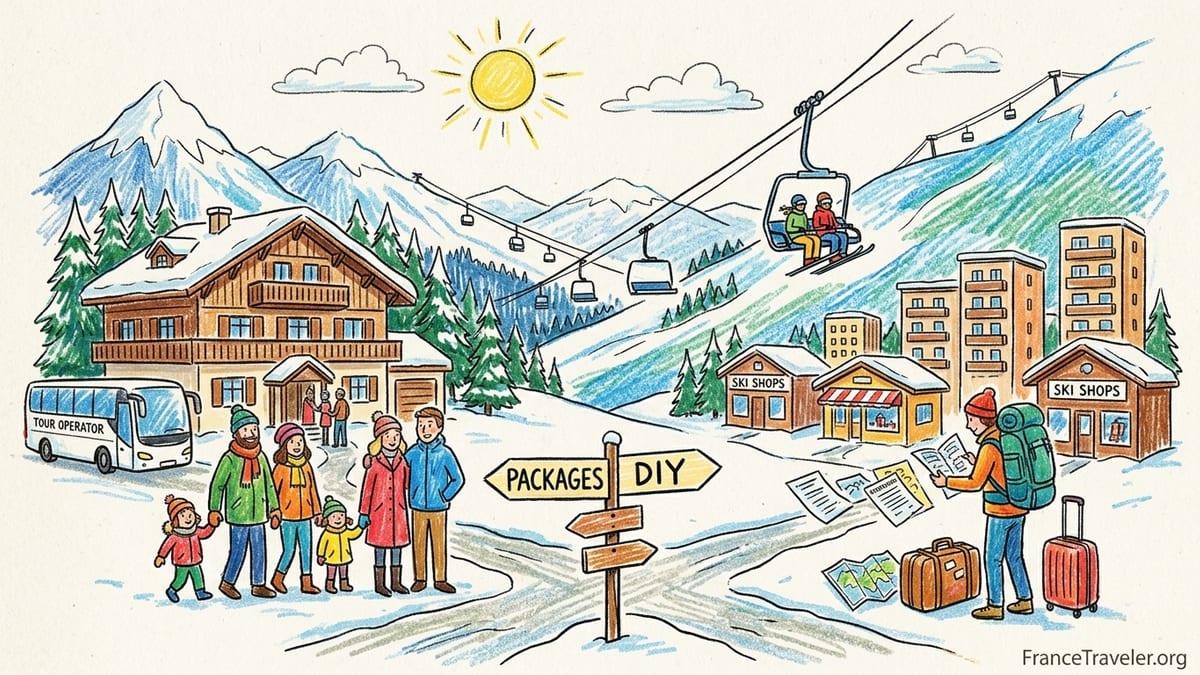
Package Holidays vs DIY: Which Really Saves Money?
In the French Alps, British and European skiers still lean heavily on tour operators that bundle charter flights, transfers and accommodation. Companies such as Crystal Ski or TUI typically offer seven-night packages to mainstream French resorts including Val Thorens, La Plagne, Les Arcs and Tignes. A January package from a major UK airport to a mid-range three-star apartment in La Plagne might run in the region of 950 to 1,300 euros per person including flights and coach transfers, but not lift pass or equipment. Booking the same week yourself with scheduled flights, private transfer and a similar apartment can come out slightly cheaper for four adults sharing, but often more expensive for a couple once you factor in baggage and transfer costs.
The key advantage of a package is that big operators contract entire hotels and apartment blocks in bulk, often locking in better per-bed prices for peak dates like Christmas and February half-term. For example, a family of four traveling in the UK school holiday week in February might see a tour operator package to a three-star catered chalet in Les Arcs priced around 1,400 to 1,800 euros per person including flights and shared transfers. Trying to book the same standard of catered chalet direct with a small chalet company, plus separate flights and transfers, can easily push that above 2,000 euros per person once limited flight availability and higher transport costs bite.
DIY booking tends to work best in three cases: you can travel off-peak in January or late March; you are flexible on airports and flight times; or you want something the big operators rarely package, such as a high-end five-star hotel in Courchevel 1850 or a large independent chalet in Morzine. In these situations you can pair a competitive flight with a direct booking discount from the hotel or chalet and sometimes save several hundred euros on a week. DIY also gives access to smaller, good-value resorts such as Valmorel or Les Menuires that have a mix of locally run apartments and hotels at lower prices than headline names.
Transaction risk and convenience are the final deciding factors. With a package, you have one contract and one payment schedule, often with clear financial protection. DIY requires multiple bookings, from airline and transfer company to accommodation, equipment hire and lift passes, each with its own cancellation terms. For first-time visitors or families juggling school holidays, that alone can justify paying a modest premium for a package. Experienced skiers who know the resorts and can react quickly to off-peak flight deals are more likely to benefit from piecing everything together themselves.
Understanding Real French Alps Costs: Lift Passes, Hire and Transfers
Beyond flights and accommodation, the biggest line items on a French ski holiday are lift passes, ski hire and transfers. In a flagship area like Les 3 Vallées, which links Courchevel, Méribel and Val Thorens, a six-day adult lift pass for the full 3 Vallées domain for the 2025 to 2026 season is priced in the region of 395 euros when bought online in advance. That covers access to one of the largest interconnected ski areas in the world, with around 600 kilometers of pistes, but it is a significant share of a week’s budget for each skier.
Many French resorts offer smaller, cheaper passes that are important for value-focused trips. In Les Gets, part of the Portes du Soleil, beginners and families can opt for restricted-area passes around the gentle Chavannes sector rather than the full international domain. These local passes typically save dozens of euros per person over six days and are often paired with family discounts or beginner-focused deals. In mid-size family resorts such as Valmorel or Praz de Lys Sommand, six-day adult passes are generally well below the big-name prices, which is one reason these areas attract value-conscious families.
Equipment hire is another place where real numbers help. Booking ski and boot rental in advance online in a mainstream resort often lands in a band of about 120 to 180 euros per adult for six days for mid-range equipment, with children’s gear cheaper. High-end skis or snowboard setups, or in-resort walk-in bookings in peak weeks, can push this figure up. Package operators frequently bundle discounted hire, especially in January, so it is worth comparing their inclusive hire costs with independent shop prices before deciding how to book.
Transfers can make a surprising difference to overall value. A shared coach transfer from Geneva to high-volume resorts such as Morzine or Les Gets might be 50 to 80 euros per person each way, while a private door-to-door minibus for four to six people can easily exceed 400 euros each way to more distant resorts like Val Thorens. Package holidays usually include coach transfers in the base price, which often undercuts booking equivalent seats separately. DIY travelers can save by choosing resorts with shorter transfers from major hubs, such as the 75 to 90-minute run from Geneva to the Portes du Soleil versus the three hours often needed to reach the upper Tarentaise.
Choosing the Right Resort by Traveler Type
Beginners and nervous intermediates are usually best served by resorts with broad nursery slopes, plentiful green and easy blue runs and compact village layouts. Les Gets in the Portes du Soleil is repeatedly highlighted by regional tourism bodies as one of the gentlest introductions to skiing, with reserved beginner zones around the Chavannes sector and family-friendly areas separated from faster traffic. La Plagne and its linked neighbour Les Arcs are also strong beginner and progression choices, with high-altitude gentle terrain, modern lifts and varied village bases.
Families with children typically look for short transfers, dependable ski schools and off-slope activities. Resorts like Avoriaz, which is pedestrian and largely ski-in ski-out, or La Plagne, where many residences are built right on the slopes, remove daily logistics stress. In these destinations, parents can walk children to ski school meeting points in a few minutes, then ski straight out themselves. Resorts such as Valmorel and Les Gets add a traditional village feel and lower crowd levels, making it easier to keep track of children and enjoy quieter evenings.
Couples and small adult groups often prioritize atmosphere, dining and nightlife. For them, Chamonix and Val d’Isère remain classics, with vibrant après-ski, high-end restaurants and serious ski terrain. Morzine offers a softer version of the same idea: a real town with bars and restaurants, yet access to the vast Portes du Soleil ski area. Ski-in ski-out is less critical here than having a characterful base and the option to spend a night in a good wine bar or bistro.
Luxury travelers and serious skiers are naturally drawn to Courchevel 1850, Val d’Isère and Val Thorens. Courchevel’s upper village is known for its five-star hotels, designer boutiques and high-end chalets, while Val d’Isère pairs steep pistes with a strong off-piste culture and premium accommodation. Val Thorens, the highest village in Les 3 Vallées, combines ski-in ski-out convenience with a growing portfolio of four and five-star properties, including hotels and serviced apartments that sit directly on the slopes.
Accommodation Types: Chalet vs Hotel vs Apartment
Where you stay shapes both your budget and your daily experience on the mountain. Self-catered apartments are the backbone of French ski lodging, especially in purpose-built resorts like Val Thorens, Tignes and La Plagne. In January, a basic but functional two-bedroom apartment sleeping four in Les Menuires or La Plagne might cost around 1,200 to 1,800 euros for the week if booked early, rising sharply over Christmas and February. These units are usually small but put you close to or directly on the pistes, which means more skiing and less commuting.
Catered chalets remain a favourite with British visitors, although supply has tightened as some operators shifted to hotel or club hotel models. A typical catered chalet week in a mid-level resort such as Les Arcs or La Rosière includes breakfast, afternoon tea and dinner with wine on most evenings. In low season, prices might begin around 900 to 1,100 euros per person excluding lift pass, while over New Year or half-term that can climb well beyond 1,500 euros. The advantage is predictability of food costs and the social atmosphere of sharing a chalet with other guests.
Hotels are increasingly important, particularly in higher-end destinations. In Val Thorens, for example, you will find ski-in ski-out residences such as Le Chamois d’Or or Village Montana’s serviced apartments, which blend the convenience of hotel services with the space of an apartment. Four-star ski-in ski-out hotels in Val Thorens or Val d’Isère can start near 2,500 to 3,500 euros for a double room for a January week, and significantly more in peak weeks, yet they provide wellness facilities, on-site ski rental and immediate access to the slopes.
Picking between these options is largely about trade-offs. Self-catered apartments and basic hotels give you more control over food costs and work well for families willing to cook or eat simply. Catered chalets reduce daily decisions and can be effective value when the price includes generous meals, particularly in pricey resorts where eating out every night would quickly add up. High-end hotels and residences are a logical choice for short breaks, couples prioritizing comfort and those who see the hotel itself as part of the holiday.
Ski-in/Ski-out vs Village Stays: How Much Convenience Matters
Ski-in ski-out access is heavily marketed in the French Alps for good reason: it removes the morning and evening trudge with skis and children. Resorts like Avoriaz and Val Thorens were designed around this idea, with many properties either directly on the pistes or within a very short glide of a lift. In Val Thorens, ski-in ski-out residences such as Montana Premier or Le Chamois d’Or offer direct slope access from the building, while hotels like the Pashmina or the Hotel Marielle position themselves with immediate ski departure from the terrace.
In more traditional villages, such as Les Gets, Morzine or Samoëns, you often trade slope-side lodging for a more atmospheric centre with shops, bakeries and non-skiing activities. Accommodation might be a five to ten-minute walk or a quick shuttle ride from the main lifts. For many families, this is an acceptable compromise, especially when children enjoy an evening stroll through a real village. For serious skiers intent on clocking up vertical metres, or parents with small children in ski school, the premium for true ski-in ski-out can feel justified.
Cost-wise, direct slope access usually commands a noticeable premium. In Val Thorens or Tignes, ski-in ski-out apartments and hotels of similar star ratings to those a short walk away can be 15 to 30 percent more expensive during peak weeks. However, outside Christmas and February, the gap narrows and last-minute deals occasionally bring ski-in ski-out prices close to non-slope-side alternatives. DIY bookers should pay close attention to property maps and descriptions: “near slopes” can mean anything from crossing a car park to a genuine glide to the nearest lift.
The right choice depends on how you ski. If your group plans to be on the mountain from first lift to last, minimizing transitions, prioritizing ski-in ski-out accommodation in purpose-built resorts like Val Thorens, La Plagne or Avoriaz delivers tangible benefits. If you expect to mix skiing with leisurely lunches, spa time and shopping, then a central hotel or apartment in a village such as Chamonix, Megève or Morzine may offer a better balance between character and convenience.
Timing Your Trip: Peak Weeks vs Cheaper January and Late Season
When you travel can be almost as important as where. In the French Alps, the most expensive weeks are Christmas to New Year, the main February school holiday periods and occasionally Easter if it falls late with good snow. During these weeks, flights, accommodation and lift passes are at their highest combined cost and many properties insist on Saturday to Saturday stays. A family of four in a mid-range apartment in Val Thorens over New Year can easily see total trip costs reach several thousand euros more than an equivalent week in mid-January.
By contrast, the weeks immediately after New Year and into late January are traditionally the best for value. Tour operators often advertise discounted packages to fill capacity in this period, with price drops of several hundred euros per person compared with peak dates. Snow conditions in high-altitude resorts such as Tignes, Val Thorens or Val d’Isère are generally reliable in January, and pistes are quieter, which benefits beginners and children who need space and time.
Late-season trips from mid-March into early April can also provide good value, especially when targeting high or north-facing resorts. Accommodation prices in a place like Les Menuires or Arc 1950 often soften in March, and last-minute package deals sometimes appear when tour operators need to fill planes. For lower resorts such as Les Gets or Morzine, late March can offer sunny, enjoyable skiing but with a higher risk of soft snow in the afternoons, so these weeks suit intermediate skiers who prioritize long lunches on terraces over perfect snow.
Booking strategy should follow your flexibility. If you are tied to school holidays, secure peak weeks as early as possible, ideally by late spring or early summer of the previous year, especially for sought-after chalets in family-friendly resorts. If you can travel in January or late March, monitoring package operator sales and flight prices six to ten weeks before departure can uncover strong deals. DIY travelers should also watch for early-bird lift pass discounts and bundle offers that combine passes with equipment hire or lessons to shave costs.
How to Build Your Trip Around Your Ski Profile
Once you know your priorities, you can quickly narrow down both resort and booking method. A cost-conscious beginner family might choose Les Gets or Valmorel for their gentle terrain, family zones and lower lift pass prices, then look at January packages from a mainstream tour operator that include flights, transfers and a self-catered apartment. The same family could instead build a DIY trip by booking a local family pass, reserving a self-catered apartment near the beginner slopes and arranging a shared shuttle from Geneva.
For couples seeking a mix of skiing and atmosphere, the decision might skew towards Morzine, Chamonix or Megève. Here, DIY can work particularly well: booking a boutique hotel or apartment direct, choosing flights that fit a long weekend itinerary and pre-purchasing lift passes for the relevant sector rather than the entire ski domain. Examples include a three or four-night stay in a central Morzine hotel with a local Portes du Soleil sector pass, or a short break in Chamonix paired with a multi-day Mont Blanc Unlimited or local valley pass depending on ability.
Serious skiers aiming to maximize mileage can orient themselves around major domains like Les 3 Vallées, Paradiski or the Espace Killy region of Tignes and Val d’Isère. In these areas, full-domain lift passes and ski-in ski-out accommodation make sense, even at a premium. A group of advanced skiers might book a catered chalet in Les Menuires or a slope-side residence in Val Thorens to keep per-person costs lower than Courchevel, while still enjoying the entire 3 Vallées area. Booking early is crucial here to secure the most conveniently located properties.
Luxury travelers should decide first whether they want a high-profile, glamorous base such as Courchevel 1850 or a more discreet but still premium setting like Val d’Isère or Megève. At this level, DIY booking via direct contact with five-star hotels or top-end chalet operators often gives the greatest flexibility on room types, spa access and concierge services. Some still choose packages with business-class flights and private transfers bundled, but most will want the control to align dates, suite categories and additional services with their preferences.
The Takeaway
Putting together a French Alps ski holiday is essentially about aligning three decisions: booking style, resort choice and timing. Package holidays offer one-contract simplicity and competitive value in peak weeks, especially for families flying from major European airports to high-volume resorts. Building your own trip can unlock better prices in low season, access to smaller or more characterful resorts and a broader range of accommodation, from simple village apartments to top-tier hotels in Courchevel or Val d’Isère.
Start by deciding what matters most for your group: gentle slopes and short transfers for beginners, ski-in ski-out convenience for young families, nightlife and dining for couples, or vast terrain and challenging pistes for expert skiers. From there, match a handful of resorts to that profile, then run real calculations that include flights, transfers, lift passes, equipment hire and food. With a clear budget and the right timing, the French Alps can deliver anything from a smart-value January week in a family resort to a once-in-a-lifetime luxury stay with skis clipped on at your hotel’s doorstep.
FAQ
Q1. Is a package holiday or DIY booking usually cheaper for a French Alps ski trip?
In peak weeks such as Christmas and February school holidays, packages often work out cheaper because tour operators secure bulk rates on flights and beds. For off-peak January or late-March trips, flexible travelers who can hunt for flight deals and book accommodation direct sometimes save more with DIY.
Q2. How much should I budget for a six-day lift pass in a major French ski area?
In major domains like Les 3 Vallées, adult six-day passes are typically around the high 300 euro range. Smaller or local areas, such as restricted sectors in Les Gets or Valmorel, tend to be noticeably cheaper and can be better value for beginners.
Q3. Which French Alps resorts are best for complete beginners?
Les Gets, La Plagne, Les Arcs and Valmorel are consistently recommended for their wide beginner zones, gentle green and blue runs and strong ski school infrastructure. These resorts also offer family-friendly lift pass options and accommodation near learner slopes.
Q4. What are the best French resorts for families with young children?
Avoriaz, Les Gets, La Plagne and Valmorel stand out for families. They combine gentle terrain with convenient layouts, good ski schools and off-slope activities like sledging, swimming pools or pedestrian village centres where children can wander safely.
Q5. Where should advanced or expert skiers focus in the French Alps?
Serious skiers typically look to Val d’Isère and Tignes, the full Les 3 Vallées area including Val Thorens and Courchevel, and the off-piste terrain around Chamonix. These destinations offer extensive steep pistes, itineraries and access to guided off-piste routes.
Q6. How important is ski-in/ski-out accommodation for a first-time family trip?
It is not essential but can make mornings and afternoons much easier, especially with younger children. In ski-in ski-out resorts like Avoriaz or Val Thorens, you avoid walking in ski boots or waiting for shuttle buses, which can be worth paying extra for on a first trip.
Q7. When is the cheapest time to ski the French Alps with decent snow?
Mid-January is usually the best balance of price and snow reliability, especially in higher resorts. Late-March and early April can also be good value with longer days, though lower resorts may have softer afternoon snow.
Q8. How far in advance should I book for Christmas or February half-term?
For peak dates, aim to secure flights and accommodation at least eight to twelve months in advance, especially for popular family resorts and catered chalets. Waiting until autumn generally leads to higher prices and reduced choice.
Q9. Are catered chalets still good value compared with self-catering?
In expensive resorts where eating out is costly, catered chalets can still offer good value because breakfast, afternoon tea and most dinners are included. In cheaper or more self-catering-oriented resorts, cooking for yourself in an apartment may be more economical.
Q10. Do I need to pre-book ski hire and lift passes, or can I wait until I arrive?
Pre-booking is strongly recommended, particularly in busy weeks. Buying lift passes and equipment hire online in advance often brings small discounts and guarantees availability, while waiting until arrival can mean higher prices and limited choice of equipment or lesson times.