

The French Alps stretch from Lake Geneva to the Mediterranean, a huge mountain playground of glaciers, high-altitude ski resorts, turquoise lakes and stone villages perched above deep valleys. For first-time visitors, the choice can be overwhelming: Haute-Savoie, Savoie, Isère or the sun-baked Southern Alps; Annecy’s lakefront charm or Chamonix’s big-mountain drama; the prestige of Courchevel or the high-altitude reliability of Val d’Isère and Tignes. This guide breaks down the main regions and resorts, how to get there, what to do in each season, and how to choose the corner of the Alps that fits your style and budget.
Understanding the Four Main French Alps Regions
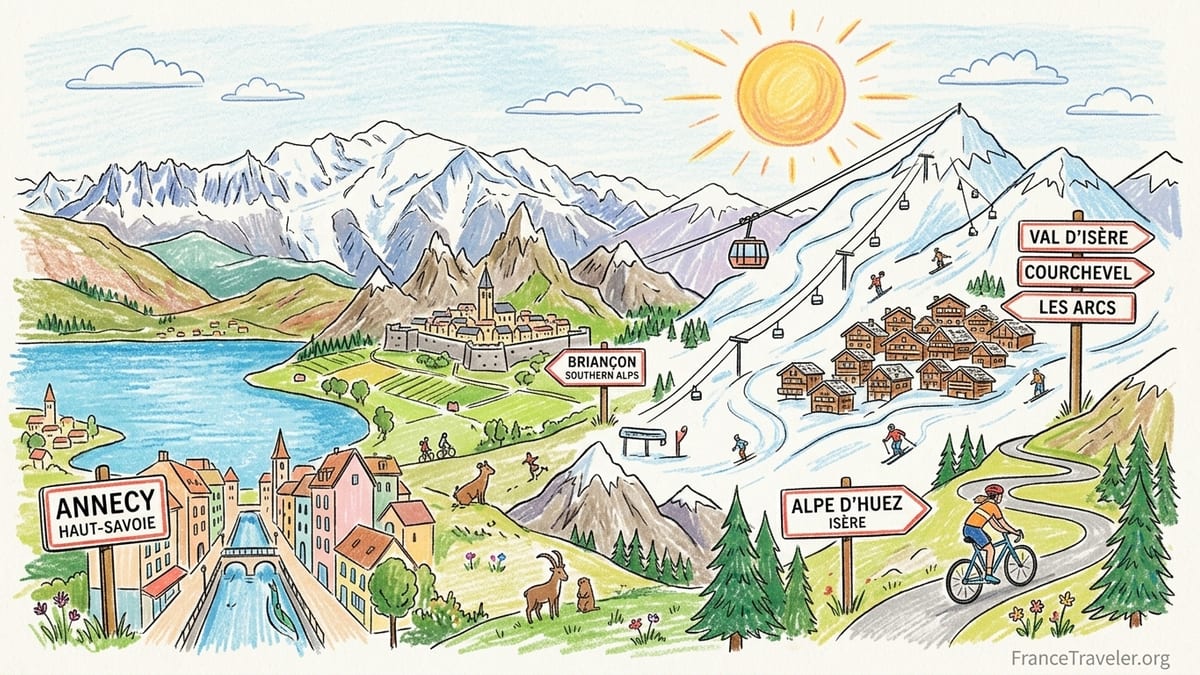
For trip planning, it helps to divide the French Alps into four main areas: Haute-Savoie, Savoie, Isère and the Southern Alps. Haute-Savoie wraps around the southern shore of Lake Geneva and includes Mont Blanc, Chamonix and Annecy, so it combines serious alpine peaks with easy access and beautiful lakes. Savoie lies just to the south and covers much of the Tarentaise and Maurienne valleys, home to some of the world’s biggest interconnected ski areas, including Courchevel, Méribel, Val d’Isère, Tignes and Les Arcs. Isère sits further west and south, with Alpe d’Huez and a cluster of high, sunny ski domains above traditional valleys. The Southern Alps spread across Hautes-Alpes, Alpes-de-Haute-Provence and Alpes-Maritimes, running almost to the Mediterranean and offering a mix of rugged national parks and high-altitude but often quieter ski resorts.
Haute-Savoie feels compact and accessible. From Geneva Airport, it is common to be in central Annecy or Chamonix in about one hour by road, traffic permitting, which makes it ideal for short breaks or first-time visitors who do not want a long transfer. Savoie is more about big ski mileage and classic mountain villages: from the valley town of Bourg-Saint-Maurice you can ride a direct cable car up to Les Arcs, while further along the Tarentaise road you climb towards Tignes and Val d’Isère. Isère’s flagship, Alpe d’Huez, rises from steep south-facing slopes above the Romanche Valley and is reachable in roughly 1.5 to 2 hours from Grenoble by road. The Southern Alps around Briançon and Serre Chevalier are a little further again, but reward you with more sunshine and a slightly wilder mountain feel.
Price and atmosphere vary between these regions. Savoie’s big-name resorts such as Courchevel 1850 can feel polished and exclusive, with five-star hotels and designer boutiques, while nearby villages like Bozel or Brides-les-Bains offer more modest apartments and family hotels. In Isère, Alpe d’Huez and nearby valley towns such as Bourg-d’Oisans typically offer a broader spread of mid-range options, with winter self-catering apartments and summer cycling chalets. In the Southern Alps, many visitors find that lift passes and accommodation are often a little cheaper than in the Tarentaise, and the character tends to be more low-key, with stone villages like those around Briançon mixing local life with tourism.
For a first trip, think in terms of what you value most. If you want a combination of lake, city-sized amenities and accessible mountains, base yourself around Annecy in Haute-Savoie. If your priority is skiing or snowboarding in the biggest possible domain, Savoie and Isère are your natural targets. If sunshine, quieter slopes and wild national parks appeal, seriously consider starting with the Southern Alps. Each region offers year-round possibilities, but the balance of lakes, glaciers, ski areas and parks differs enough that your choice of base will shape the feel of your whole trip.
Iconic Towns and Resorts: From Annecy to Briançon
Annecy is one of the most appealing gateways to the Alps for newcomers. Its old town is a tight knot of pastel houses and canals at the northern end of Lake Annecy, with mountain walls rising steeply on both sides. In summer, visitors rent stand-up paddleboards along the lakeside promenade, then drive 30 to 40 minutes to nearby hiking areas such as La Clusaz or the Semnoz plateau. Accommodation ranges from small pensions in the old streets to modern lakefront hotels and family apartments in surrounding villages like Sévrier or Talloires, making it easy to combine urban comfort with mountain day-trips.
Chamonix has a very different energy. Sitting directly below the north face of Mont Blanc, it is a year-round town of guides, climbers and skiers. Even if you are not an expert, the rack-and-pinion train up to Montenvers or the cable car to the Aiguille du Midi give close-up views of glaciers and 4,000-meter peaks. Many first-time visitors stay in central Chamonix for the cafés and nightlife, then use the local bus network to reach nearby ski and hiking areas like Les Houches or Argentière. Prices for food and lodging can be higher than in smaller villages, but the trade-off is a huge choice of restaurants, gear shops and guiding offices in one compact place.
Further into Savoie, Megève, Courchevel, Méribel, Val d’Isère, Tignes and Les Arcs form a corridor of big, lift-linked resorts. Megève blends luxury hotels and designer boutiques with older farmhouses and a medieval-style square, and is popular for long weekends among French and Swiss visitors. Courchevel and Méribel anchor the Three Valleys ski area, one of the world’s largest continuous ski networks, so in winter you can practically ski from village to village all week without repeating a route. In summer, these same lifts carry mountain bikers, hikers and families to high meadows for picnics and panoramic walks.
Val d’Isère and Tignes, higher up the Tarentaise, are known for their altitude and reliable snow cover. Many British and northern European skiers choose one of these for a first trip specifically because they can book a package including flights, transfers and self-catering accommodation in a purpose-built village a few minutes’ walk from the slopes. Les Arcs, reached by funicular from Bourg-Saint-Maurice, offers a cluster of car-free, modern villages at different altitudes, along with easier access by train from Paris. Alpe d’Huez, in neighboring Isère, has its own extensive ski domain and is famous in summer as a cycling mecca thanks to the 21 hairpins of the Tour de France climb from Bourg-d’Oisans.
In the Southern Alps, Briançon is a striking base: an 18th-century fortified town surrounded by high peaks, with ski lifts from the valley into the Serre Chevalier ski area. Many visitors arrive on an overnight train from Paris, waking up in a high valley rather than facing a long bus transfer, then stay in family-run hotels or apartments in villages like Chantemerle or Villeneuve. The nearby Ecrins National Park and Queyras Regional Natural Park make Briançon an excellent choice if you want to mix skiing or biking with long, quiet day hikes in summer or autumn.
National Parks, Lakes and Classic Alpine Landscapes
The French Alps are not just about ski resorts. They are also home to several major protected areas, each giving a different feel to a trip. The Vanoise National Park in Savoie, bordering the Italian Gran Paradiso park, protects a high plateau of glaciers and peaks between valleys like the Tarentaise and Maurienne. In practice, that means that from villages such as Pralognan-la-Vanoise or Termignon you can access waymarked hiking routes where motor vehicles and ski lifts are restricted, and where it is relatively common to see ibex and chamois grazing above the tree line in late afternoon.
Further south, the Ecrins National Park spreads around the high peaks between Grenoble and Briançon. It feels rugged and less developed than the big ski valleys, with deep, U-shaped glacial valleys and stone hamlets that function mainly as summer hiking bases. Places like La Grave draw experienced off-piste skiers in winter and mountaineers in summer, while family visitors might focus on easier walking routes near villages such as Vallouise or Le Bourg-d’Oisans. Even if you are staying in Alpe d’Huez or Serre Chevalier, a day trip into the park by car to picnic beside a high valley river can be a highlight of a first visit.
Close to the Italian border near the Mediterranean, Mercantour National Park extends the Alpine chain southwards into a gentler, more Mediterranean climate. This is still high country, but in late spring you may drive from olive groves near Nice into snowy passes in the space of three hours. Many hikers base themselves in villages such as Saint-Martin-Vésubie or around the Allos and Serre-Ponçon lakes. While Mercantour lies just outside the core ski belt most first-timers think of, it is a good option if you are planning an extended summer road trip that mixes Côte d’Azur beaches with mountain hiking.
Lakes are a major part of the year-round appeal. Lake Annecy and Lake Geneva frame Haute-Savoie with long promenades, boat services and well-marked cycle paths. In summer, a typical day for visitors might combine a morning hike from Col de la Forclaz to a balcony viewpoint, lunch in a lakeside restaurant, and an afternoon swimming or paddleboarding from a public beach such as those at Saint-Jorioz. Further south, reservoirs such as Lac de Serre-Ponçon and mountain lakes like Lac d’Allos offer sailing, kayaking and lakeside campsites, making them ideal stops for families road-tripping through the Alps in July or August.
Winter: Skiing, Snowboarding and Mountain Villages
For many, the French Alps are synonymous with skiing. The main season runs from early or mid-December into April, though exact opening and closing dates vary by altitude and snow conditions. High resorts such as Tignes and Val d’Isère typically aim to operate through late April thanks to glaciers and north-facing slopes, while lower, tree-lined areas like Megève or some Southern Alps resorts tend to focus on a core period from just before Christmas to late March. First-time visitors often underestimate how different these resorts feel on the ground. In Courchevel, you may step out of a hotel straight onto a groomed piste with heated chairlifts and upscale restaurants, while in smaller villages like Les Houches or Vaujany you are more likely to ride a single gondola from the valley and ski mainly forested runs.
Lift passes and rentals are a major part of winter budgets. As a loose example, a one-week adult pass in a major interconnected domain can easily cost several hundred euros, while more modest local areas sometimes offer smaller, cheaper passes for beginners or short stays. Equipment rental shops are found in almost every resort, with options ranging from basic packages suitable for complete beginners to high-performance skis and boots for advanced riders. In big-name resorts, it is common to pre-book online and then collect in-village, while in smaller towns prices may be a little lower but choice more limited, so booking early for peak weeks such as New Year or February school holidays is wise.
Village character matters just as much as ski statistics. Chamonix, Val d’Isère and Briançon function as real towns, with year-round residents, schools and supermarkets, so you can combine a ski day with errands, shopping or simply people-watching in a café. Purpose-built high-altitude stations like Tignes or parts of Les Arcs put you closer to the lifts but can feel quieter and more utilitarian outside the main holiday weeks. Many first-time visitors split the difference by choosing mid-altitude satellite villages within big ski areas, such as Méribel Village in the Three Valleys or Montchavin above the Tarentaise, where you get access to a vast domain but stay somewhere compact and walkable.
For non-skiers or mixed groups, winter still offers plenty to do. Many resorts now promote snowshoeing, sledging, ice skating and spa days as alternatives or complements to downhill skiing. In Megève, for example, you can combine a morning on beginner slopes with an afternoon horse-drawn sleigh ride through the old streets. In Alpe d’Huez, non-skiers often buy a pedestrian lift pass to ride up to panoramic terraces for lunch and views of the Oisans peaks. If you are traveling with older relatives or very young children, ask your accommodation about nursery care, ski schools with English-speaking instructors, and accessible winter walking routes before you book.
Summer and Shoulder Seasons: Hiking, Cycling and Lakes
From late May to October, the French Alps transform into one of Europe’s best outdoor playgrounds. Snow retreats to the highest ridges, lifts begin running for hikers and mountain bikers, and lakeside promenades fill with families and cyclists. In June and September, temperatures in valley towns such as Annecy, Bourg-Saint-Maurice or Briançon often feel pleasantly warm during the day and cool at night, which is ideal for hiking and road biking. July and August bring hotter afternoons and busier trails, particularly around popular lakes and near famous viewpoints like the Aiguille du Midi or Lac Blanc above Chamonix.
Hiking is accessible at many levels. A family staying in Les Arcs in July might ride a gondola to a mid-mountain station, then follow a signed loop trail through meadows dotted with bell-wearing cows, stopping at a farm café for tartiflette or blueberry tart. More experienced hikers gravitate towards multi-day routes such as the Tour du Mont Blanc, which circles the Mont Blanc massif through France, Italy and Switzerland, typically over a week or more, staying in mountain refuges and small hotels along the way. In the Southern Alps, classic day hikes include balcony paths above Vallouise in the Ecrins or lakeside trails in Queyras Regional Natural Park where marmots are often visible near the paths.
Cycling and mountain biking have grown rapidly. Road cyclists flock to climbs like Alpe d’Huez, the Col du Galibier and the Col de l’Iseran, many of which are occasionally closed to motor vehicles on certain summer mornings so that bikes can use the whole road. In resorts like Tignes, Les Arcs and Les Deux Alpes, ski lifts are equipped with bike racks in summer, giving access to purpose-built downhill tracks rated by difficulty, a bit like ski pistes. Rental shops provide hardtail or full-suspension bikes by the day, along with helmets and body armor, and many destinations also rent electric bikes so that less experienced riders can tackle longer routes.
The shoulder seasons of spring and autumn are increasingly attractive for those who do not need guaranteed high-mountain access. In October, for example, Annecy’s lakeside trees turn shades of gold and red, and daytime temperatures often stay mild enough for hiking up to mid-altitude viewpoints without snow, but crowds are far lighter than in mid-summer. In May and early June, valley floors explode with wildflowers and quieter roads make self-drive itineraries through passes like the Route des Grandes Alpes feel more relaxed. The trade-off is that some high lifts, mountain refuges and seasonal restaurants will still be closed, so flexible planning is important.
Getting There and Getting Around: Airports, Trains and Driving
Several airports serve the French Alps, and your choice can significantly affect transfer times. Geneva is the main gateway for northern resorts such as Chamonix, Megève and the Portes du Soleil; shared shuttle vans regularly carry travelers from the arrivals hall directly to resort accommodation on fixed schedules in winter. Lyon-Saint Exupéry and Grenoble Alpes-Isère airports are logical gateways for Savoie and Isère resorts, with winter bus services to hubs such as Bourg-Saint-Maurice or directly to Alpe d’Huez and Les Deux Alpes. Chambéry Airport handles seasonal flights aimed almost entirely at skiers bound for big Tarentaise areas, while Nice Airport is best for those combining the Southern Alps or Mercantour with the Riviera.
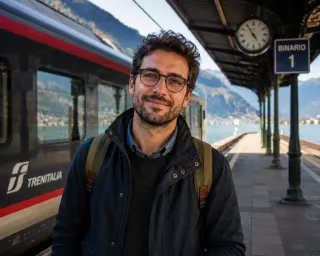
France’s high-speed rail network makes train travel a realistic alternative to flying from within Europe and even from the United Kingdom via Paris. Direct TGV services from Paris Gare de Lyon routinely serve cities such as Annecy, Chambéry and Grenoble, from where regional trains or buses continue into the valleys. For example, you can travel by TGV from Paris to Bourg-Saint-Maurice in around five hours, then catch the valley cable car up to Les Arcs without needing a car. Briançon in the Southern Alps is served by an overnight train from Paris and by connections via regional hubs like Valence or Grenoble, which is convenient if you prefer to sleep through the long transfer rather than sit on a bus.
Driving offers the most flexibility, particularly if you want to explore several regions in one trip. Motorways and dual carriageways bring you close to the mountains, then smaller departmental roads climb into each valley. In winter, you must be prepared for snow and ice: many French regions now require winter tires or snow chains during colder months, and police can enforce these rules near resorts. In practice, that means having chains you know how to fit, allowing extra time for climbs on busy Saturdays in February, and considering underground parking in resorts where on-street spaces fill quickly with snow.
Once in the mountains, local buses, ski shuttles and lifts form a practical network. In large ski domains, free resort buses shuttle between different village hubs so that you can ski in one area and dine in another without moving your car. In summer, many valleys offer discounted or free public transport if you show a guest card from your accommodation. For example, guests in some Chamonix hotels receive passes that cover local buses and certain lifts, which encourages leaving the car parked and reduces traffic. When planning, check if your chosen base offers such benefits, as they can save both money and stress.
How to Choose Your First French Alps Base
With so much choice, the key to a successful first trip is matching your base to your priorities and travel style. If you value easy access and a mix of town life with mountain scenery, Annecy, Chamonix or Grenoble make strong starting points. From Annecy you can day-trip to Aravis ski areas or summer hiking while returning each evening to a city with year-round restaurants and cultural events. Chamonix suits those who want big-mountain views, technical hiking options and a lively après-ski scene. Grenoble, though more of a university city than a resort, is an affordable base for exploring Isère and the Vercors and Chartreuse ranges.
If your main goal is downhill skiing or snowboarding in winter, consider the structure of the ski area as much as the name. Large, fully linked domains like the Three Valleys or Tignes–Val d’Isère allow you to ski for a full week without repeating runs, which appeals to confident intermediates and experts. Beginners and families may prefer slightly smaller, more contained areas where it is harder to get lost and where gentle slopes are closer to the accommodation. Examples include village sectors of Alpe d’Huez, parts of Les Arcs close to ski schools, or Southern Alps resorts like Serre Chevalier where tree-lined blue runs lead back to valley villages.
Budget also shapes your decision. Within the same ski area, prices between a prestige address and a satellite village can differ substantially. In Courchevel, for instance, accommodation in the highest, most famous sector is often priced at a premium, while staying in lower-altitude villages linked by lifts or buses can reduce costs while preserving access to the same slopes. Similarly, choosing a self-catering apartment in Tignes or Les Arcs and doing a supermarket shop in a valley town like Bourg-Saint-Maurice before heading up can keep daily expenses down compared with relying solely on resort restaurants.
For summer and shoulder-season trips, focus less on ski branding and more on access to trails, lakes and public transport. A first-time visitor who dreams of Alpine lakes and relaxed walks might be happier staying in a lakeside village near Annecy or in a valley town like Briançon, then using buses or a rental car for day hikes, than in a purpose-built ski station that feels quiet once the lifts close. Think about whether you want to move every few days or prefer a single base for a week. One practical approach is to start in a town with good train connections, such as Annecy or Grenoble, then rent a car for three or four days in the middle of your stay to explore more remote valleys before returning by train.
The Takeaway
The French Alps are vast, varied and surprisingly accessible, even for first-time visitors. Understanding the basic differences between Haute-Savoie, Savoie, Isère and the Southern Alps helps narrow your search, while a little clarity about your priorities makes choosing a base much easier. Whether you are picturing yourself strolling along the quays of Annecy at sunset, riding a cable car from Bourg-Saint-Maurice to Les Arcs, skiing tree-lined runs above Briançon or hiking to a balcony view of glaciers in the Vanoise or Ecrins, there is a corner of the Alps that fits almost every kind of traveler.
Plan around seasons, transport and your tolerance for travel time. Short breaks pair well with easily reached hubs like Geneva to Chamonix or Lyon to Alpe d’Huez. Longer itineraries can combine several regions, from lakeside towns to high-altitude resorts and southern national parks. Whichever route you choose, allow some unscheduled time in your plan: a spare morning to sit beside a lake, wander a weekly market or take a spontaneous cable car ride often becomes the memory that stays with you long after the snow has melted or the summer sun has faded.
FAQ
Q1. What is the best time of year for a first trip to the French Alps?
The choice depends on your priorities. For skiing, mid-January to late March usually offers the best balance of snow and daylight in most resorts. For hiking, lakes and milder temperatures, June, early July and September are ideal, with July and August busier and warmer but good for family holidays.
Q2. Which area of the French Alps is best if I only speak English?
Major resorts like Chamonix, Courchevel, Méribel, Val d’Isère, Tignes, Les Arcs and Alpe d’Huez are very accustomed to international visitors and you will regularly find English spoken in hotels, ski schools, rental shops and restaurants. In smaller Southern Alps villages you may encounter less English, but basic communication is usually still possible with a mix of simple phrases and gestures.
Q3. Should I base myself in a town like Annecy or in a high-altitude resort?
If you want nightlife, shops and flexibility to do different activities, a town such as Annecy or Chamonix is a great base, particularly outside peak ski season. If your priority is to ski as much as possible with minimal commuting, a high-altitude resort like Tignes, Val d’Isère or Les Arcs places you closer to the lifts but usually in a more purely holiday-focused environment.
Q4. Do I need a car to enjoy the French Alps?
No, a car is not essential, especially in big, well-served resorts and towns. You can reach many destinations by train or airport shuttle, then use local buses and lifts. However, having a car increases flexibility for day trips to lakes, smaller villages and trailheads, and is particularly useful if you plan to combine several regions in one itinerary.
Q5. How expensive are ski trips in the French Alps compared to other destinations?
Costs vary widely. Flagship resorts in Savoie and Haute-Savoie can be relatively expensive for accommodation and dining, while smaller areas in Isère or the Southern Alps often cost less. Lift passes in major interconnected domains are a significant expense, but you can control the overall budget by choosing self-catering apartments, cooking some meals and avoiding peak holiday weeks.
Q6. What is the difference between Haute-Savoie and Savoie for visitors?
Haute-Savoie combines lake scenery with dramatic peaks and easy access from Geneva, making it ideal for mixed city-and-mountain stays. Savoie is more focused on large interconnected ski areas and classic valley villages in the Tarentaise and Maurienne, which appeals strongly to keen skiers and snowboarders in winter.
Q7. Is the Southern Alps region a good choice for a first-time visitor?
Yes, especially if you value sunshine, quieter slopes and access to national parks like the Ecrins and Mercantour. Resorts around Briançon and Serre Chevalier tend to feel less crowded than some northern giants, and prices for accommodation and food can be slightly lower. The main trade-off is longer travel times from major international airports.
Q8. How far in advance should I book accommodation in the French Alps?
For peak winter weeks such as New Year and February school holidays, booking several months in advance is advisable, particularly in famous resorts or if you need ski-in ski-out apartments. For summer, you usually have more flexibility, but lakeside towns like Annecy and popular hiking hubs can still fill up during July and August.
Q9. Are the French Alps suitable for travelers who do not ski or hike?
Yes. Many visitors come for spa hotels, scenic drives, lakeside promenades, mountain railways and cable cars that require no technical skills. Towns such as Annecy, Chamonix and Briançon also offer historic centers, markets and cultural events, making them enjoyable even if you never set foot on a ski slope or hiking trail.
Q10. What should I pack for a first trip to the French Alps?
Pack in layers. In winter, focus on waterproof outerwear, thermal base layers, warm gloves, hats and snow-ready footwear, even if you do not plan to ski. In summer, bring light hiking clothes, a warm layer for evenings, a waterproof jacket, sturdy shoes, sun protection and swimwear for lakes. Year-round, a small daypack and reusable water bottle are very useful.