


Southern France is where fragrant lavender fields meet glittering Mediterranean bays, and where medieval hill towns sit a short drive from chic beach clubs. Planning a trip here, though, can quickly become overwhelming. Should you book a multi day small group tour through Provence and the French Riviera, string together day trips with private drivers, or rent a car and explore independently? This guide compares the main options for Southern France tours, from lavender and wine routes in Provence to coastal boat trips along the Riviera, using real world examples to help you choose what fits your budget, travel style and timeframe.
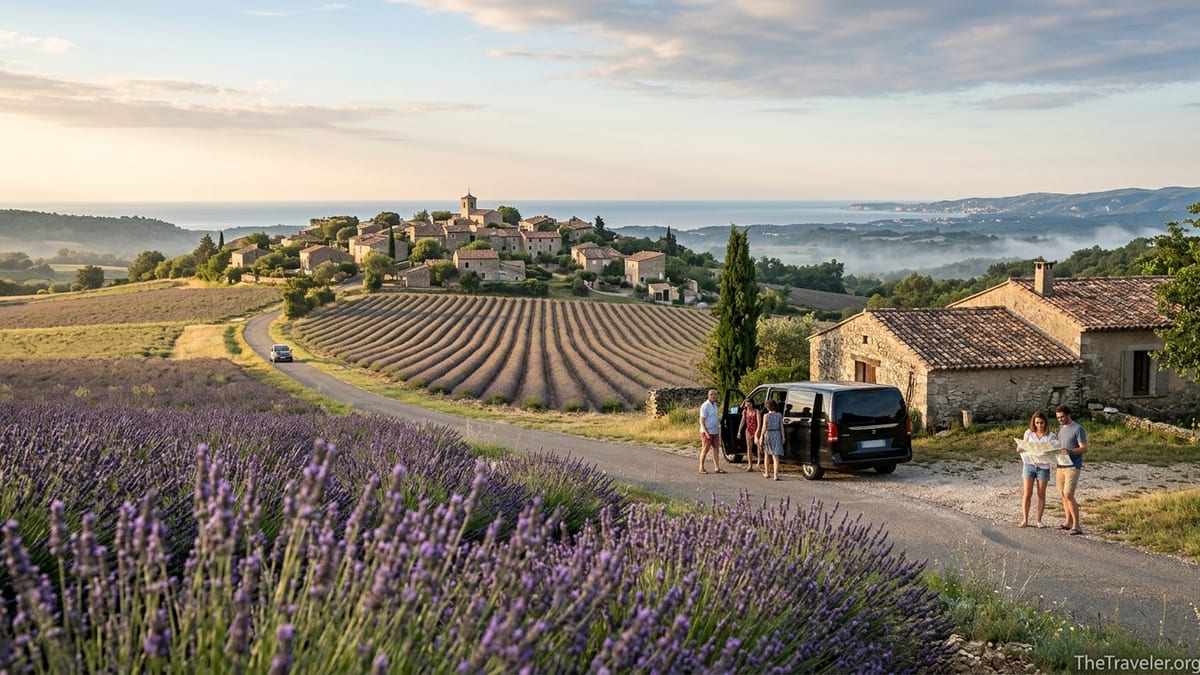
How Southern France Is Typically Structured for Travelers
Most travelers base a Southern France itinerary around two anchor regions: inland Provence and the coastal French Riviera. Provence usually means areas like the Luberon villages near Gordes and Roussillon, the Alpilles around Saint Rémy and Les Baux, the lavender plateau of Valensole, and wine regions such as Châteauneuf du Pape and Bandol. The French Riviera typically refers to Nice, Cannes, Antibes, Monaco and the smaller seaside towns between them. It matters because tours are often sold region by region: a Provence day tour from Avignon looks very different from a coastal excursion from Nice.
Distances between the two are greater than they appear on a map. For example, driving from Nice to the Valensole lavender plateau takes roughly 2.5 to 3 hours each way, which is a very long day trip, especially on summer roads. Many travelers underestimate this and end up spending more time in vehicles than they expect. Understanding the geography helps you decide whether a multi day tour that links the regions, or a combination of shorter local excursions, will make better use of your limited vacation days.
Seasonality is another key factor. Lavender routes in Provence usually peak from late June to mid July, with some fields still colorful into late July depending on altitude. By contrast, the Riviera’s peak is July and August when the sea is warm, but that also brings higher hotel rates and heavier traffic along coastal routes and the Corniche roads. Wine touring is more flexible, though some estates restrict visits during late September harvest. When you compare tours, always check not just price and inclusions, but also whether your dates align with what the tour is designed to showcase.
Guided Provence Tours versus Independent Car Travel
Classic day tours in Provence often depart from Avignon, Aix en Provence or Saint Rémy. You will see offers for small group minivan tours visiting perched villages of the Luberon, Roman sites like the Pont du Gard or wine areas like Châteauneuf du Pape. Typical pricing for a full day small group excursion is in the range of about 110 to 160 euros per person, usually including transport and guiding but not lunch. Private day tours, where you have the vehicle and guide to yourself, often start around 450 to 700 euros for the day for up to 6 or 8 guests, depending on the company and route.
Lavender specialists in Provence provide a helpful benchmark. Operators offering Valensole or Sault lavender field itineraries usually run seasonal small group day trips from bases like Aix or Avignon at around 80 to 120 euros per person, with hotel pickup as an add on. More bespoke outfits combine lavender with local farms or distilleries, such as organic producers in Provence who include visits to their fields and on site product tastings. These often cost more but provide slower, more immersive stops instead of just scenic viewpoints.
Driving yourself is the main alternative. A compact rental car in high season can cost roughly 60 to 100 euros per day before fuel and tolls. The advantage is complete freedom: you can spend an entire afternoon under the plane trees of a village square or stop at an unexpectedly charming vineyard. The trade offs are navigating narrow roads, parking in crowded villages and opting out of wine tastings if you are the driver. Many travelers choose a hybrid approach: renting a car for a week near a base like Saint Rémy, then adding a single guided day for something more logistically complex, such as a combination of Pont du Gard, Uzès and wine estates.
French Riviera Excursions and Private Drivers
Along the French Riviera, the big decision is whether to rely on trains and buses between coastal towns, or book private drivers and structured excursions. Public transport works reasonably well for linear trips between Nice, Antibes, Cannes and Monaco, with frequent regional trains and local buses. For example, a traveler might spend under 20 euros in total to take the train from Nice to Menton and a local bus return via Monaco in one day. The limitation is that buses to hilltop villages like Èze, inland wine areas or the Gorges du Verdon are sparse, and evenings can be difficult without a private car.
Private driver services based in Nice, Cannes or Monaco fill that gap. A common pricing model for a half day driver guide tour is about 400 to 500 euros for 4 to 5 hours in a comfortable vehicle for up to 3 or 6 passengers. Full day circuits, such as Nice to Saint Tropez with stops in coastal villages, often start around 700 to 900 euros, depending on distance and season. Companies advertise flexible itineraries: one day you might visit Èze and Monaco, another day Antibes and Cannes, with hotel pickup and drop off included. For families or small groups, when divided by four or more travelers, the per person cost can be comparable to multiple organized group tours, with far more flexibility.
There are also mid sized options. Coach operators based in Nice market full day coach trips to highlights like Cannes, Monaco or the hilltop village of Saint Paul de Vence, priced lower per person but with 40 or more passengers and fixed schedules. These are often used by cruise ship passengers docked in Villefranche or Cannes. At the premium end, some Riviera chauffeur companies pair transfers with VIP experiences such as beach club reservations in Saint Tropez or ski day trips in winter to Isola 2000 from the coast. Whether that is worthwhile depends entirely on whether you value seamless logistics and a curated day or prefer to explore casually at your own pace.
Wine Tours and Lavender Trips: When a Guide Adds Real Value
Wine touring in Provence and the Riviera hinterland ranges from very informal to highly curated. Around Avignon, plenty of small operators run half day and full day trips to Châteauneuf du Pape, often including visits to two or three domaines and guided tastings. Prices commonly fall in the 80 to 140 euro per person range in small groups, with private wine tours costing more but allowing more flexibility in estate selection and timing. Near the coast, Riviera based companies run niche outings to estates in the Bellet hills above Nice or to Bandol and Cassis, combining sea views with cellar visits.
One benefit of guided wine tours is safe transport and access. Many estates require reservations, especially smaller family run producers that lack large tasting rooms. Guides who work regularly with these wineries can often secure visits that independent travelers might struggle to arrange on short notice. They also handle designating a driver so everyone can taste. For serious wine enthusiasts, it can be worth booking at least one guided day and leaving other days self driven for casual stops at cooperative cellars and larger chateaux that accept drop ins.
Lavender trips are even more sensitive to timing and know how. Dedicated lavender tour providers in Provence structure their season from approximately mid June to late July, with the Valensole plateau and Sault area as main targets. Small group excursions from coastal hubs like Nice have appeared, offering long day trips to Valensole that cost around 60 to 120 euros per person, with multiple photo stops and a visit to a lavender distillery. Because bloom can vary by microclimate, operators monitor fields weekly and adjust routes accordingly. Independent travelers can of course drive themselves if they are comfortable with rural roads and parking along narrow lanes, but should build in a margin of error: one plateau might be past its peak while another is just starting.
Coastal Boat Tours and Calanques Experiences
Southern France’s coastline has scenery that is hard to appreciate fully from land alone. Boat excursions from Cassis to the Calanques, from Nice to Cap Ferrat, or from Cannes to the Lérins Islands are a distinct category of tours worth evaluating separately. In Cassis, a short walk from the harbor brings travelers to kiosks selling shared boat trips into the Calanques, often priced per person and varying by the number of inlets visited. These are typically one to two hour outings in open boats that run frequently in good weather, making them easy to fit into a self planned day.
On the Riviera proper, private boat charters range widely in cost. A half day charter of a small motorboat with skipper from Nice or Cannes can easily exceed several hundred euros, with fuel and port fees often additional. Some travelers combine a private car transfer with a half day boat around Saint Tropez’s coastline or a crossing to the Lérins Islands, particularly for special occasions such as milestone birthdays or honeymoons. For those on a tighter budget, public ferries run seasonal services to islands and along the coast, offering scenic views at a fraction of the cost, albeit on fixed timetables and with larger crowds.
When comparing boat tours against independent travel, remember that maritime conditions matter. Local skippers are used to mistral winds and swell patterns and will cancel or shorten trips when seas are rough. If you are planning a self driven itinerary that hinges on a specific boat excursion, such as a Calanques cruise, it can be safer to book with a well established operator that communicates weather related changes promptly and offers alternative dates or routes. The trade off, as always, is paying more for reliability and support versus taking a chance on walk up tickets when you arrive.
Multi Day Southern France Tours versus Do It Yourself
Multi day small group tours that combine Provence and the French Riviera are marketed heavily to first time visitors to Southern France. Typical itineraries last between 7 and 11 nights, including key stops like Avignon, the Luberon villages, the Alpilles, coastal days around Nice and perhaps side trips to Monaco or Cassis. Group size is often capped at around 14 to 18 travelers to justify the “small group” label. These tours usually include accommodation, daily breakfast, many dinners and most sightseeing transport, with prices running into several thousand dollars per person, depending on hotel class and season.
What you are paying for is curation and coordination. A sample 10 day itinerary might begin in Avignon, include day trips to lavender and wine routes, then move to Nice for Riviera excursions. The operator handles hotel bookings, luggage transfers and the choreography of daily activities. For travelers uncomfortable driving in a foreign country or with limited time to research, this can transform a complex region into an easy, cohesive experience. Some specialty outfits further focus on themes such as Jewish heritage in Southern France, culinary workshops or photography, adding expert lecturers or local hosts.
Independent travelers can often replicate the bones of these tours at lower total cost, especially couples or small families comfortable with self driving. For example, two travelers renting a compact car for ten days, staying in midrange guesthouses and booking a handful of targeted day tours for lavender, wine and perhaps one private Riviera driver day may find their total expenses, excluding flights, comparable to or below an all inclusive group package. They gain flexibility at the expense of fixed structure and a built in social group. The deciding factors are your appetite for planning, your comfort with driving and navigating in French, and how much you value having a guide interpret history, art and local culture for you.
Private Drivers, Transfers and Safety Considerations
Private drivers are often the missing piece between structured tours and full independence. In Provence, some villa rental agencies partner with itinerary planners who organize partial chauffeured days layered onto a mostly self guided stay. For instance, a bilingual local guide might design a week of activities around your Luberon farmhouse, including a market tour, a lavender harvesting experience and a day of wine tasting, while arranging chauffeur driven vehicles for longer excursions and accompanying you in your rental car for shorter ones. Fees for custom itinerary design might start around a few hundred euros for a weeklong plan, with daily driver and vehicle costs additional.
On the Riviera, private drivers are particularly useful when linking resorts like Saint Tropez or Ramatuelle with Nice or Marseille airports, or moving groups between rental villas and beach clubs. Reviews of transfer companies consistently mention the convenience of door to door service, drivers waiting with signs at arrivals and help with luggage. For groups of six to eight travelers, the per person cost of a private minivan transfer can compete favorably with multiple individual taxis or ride hailing rides, and is often far less stressful than dealing with parking in congested resort towns.
Safety and regulation are important to consider when hiring drivers. Look for licensed VTC or chauffeur services that clearly list their credentials and insurance coverage, rather than ad hoc drivers advertising only on social media. Ask for written confirmation of rates, what is included (tolls, parking, waiting time) and cancellation terms. For late night returns from restaurants or events in rural Provence, pre arranged transport can be safer than driving unfamiliar dark roads, especially after wine or pastis at dinner. Even independent travelers who rent cars may choose to designate a few evenings for chauffeured returns when planning vineyard dinners or celebrations.
When Independent Travel Works Best in Southern France
Despite the appeal of guided experiences, Southern France remains one of Europe’s most rewarding regions for independent exploration. Renting a car opens up quiet corners poorly served by tours or public transport, such as lesser known Luberon villages, inland Var hill towns or small coastal coves away from the main Riviera promenades. Travelers who enjoy wandering markets, lingering at café terraces and changing plans with the weather often find that a loose, self directed itinerary suits the slow rhythms of Provence especially well.
For example, you might base in Saint Rémy for four nights, using your car for short outings to Les Baux, olive mills and nearby vineyards, then drive to Cassis for two nights to combine hiking and a simple shared boat trip into the Calanques. From there, you could continue to Nice by train and rely on regional trains and buses for day trips to Antibes, Villefranche sur Mer and Menton. Within this DIY framework, you could still drop in a one day small group lavender tour or a half day private Riviera driver for a more ambitious hill village loop, giving you expert insight without surrendering overall flexibility.
Independent travel does demand more preparation. Booking key accommodations months ahead is essential in peak season, especially in small villages where rooms are limited. Parking constraints in older town centers mean researching where to leave your car and being comfortable with a short walk into historic cores. For those who speak little French, learning basic phrases for directions, fuel stations and parking can reduce stress. Nonetheless, travelers who welcome the challenge are rewarded with more spontaneous experiences, from stumbling on a village festival to spending extra time at a favorite beach without watching the clock for a tour departure.
The Takeaway
There is no single “right” way to experience Southern France. Guided Provence tours, French Riviera excursions, wine and lavender trips, coastal boat tours and private drivers all serve different needs and budgets. A couple on a once in a lifetime vacation might prioritize a curated 10 day small group tour that knits together the region’s highlights with minimal effort. A multi generational family might invest in private drivers and custom day trips that keep grandparents and teenagers comfortable. Budget conscious travelers with time and a taste for adventure may lean on rental cars and regional trains, only adding paid tours for complex or specialist experiences.
When deciding between tours and independent travel, start with your non negotiables. If walking through lavender at peak bloom is essential and you only have one or two possible days, a specialized lavender excursion with a local guide can safeguard the experience. If you want to taste serious wines without worrying about driving, pick at least one guided wine day. If glamorous coastal scenery and easy logistics are higher priorities than in depth countryside exploration, basing in Nice and using a mix of trains, buses and the occasional private driver may be sufficient. Treat organized tours and drivers as tools you can layer into a self directed trip rather than an all or nothing choice.
FAQ
Q1. Is it worth booking a multi day Provence and French Riviera tour, or should I plan everything independently?
For first time visitors with limited time or who dislike logistics, a multi day small group tour can be worthwhile because it bundles accommodation, transport and key sights into one package. Confident travelers who enjoy planning and are comfortable with driving often save money and gain flexibility by building their own itinerary, then adding a few targeted guided days for lavender, wine or complex excursions.
Q2. When is the best time to visit Provence for lavender fields?
Lavender usually peaks from late June to mid July, with some variation depending on altitude and weather. Lower plateaus such as Valensole tend to reach full color earlier, while higher areas near Sault can bloom slightly later. If lavender is your priority, aim for the last week of June through the first half of July and consider joining a dedicated lavender tour that tracks local conditions.
Q3. Do I need a car to enjoy the French Riviera?
You can see a lot of the French Riviera without a car by basing in a hub like Nice and using regional trains and buses to reach Antibes, Cannes, Monaco and Menton. However, a private driver or rental car becomes useful for inland villages, lesser known beaches and day trips to places like the Gorges du Verdon. Many travelers combine public transport for coastal towns with one or two days of private touring to reach harder to access spots.
Q4. How much does a private driver cost in Southern France?
Pricing varies by distance and season, but as a rough guide a half day private driver tour from Nice or Cannes may cost around 400 to 500 euros for up to several passengers, while full day outings can run 700 to 900 euros or more. In Provence, private day tours by car or van for a couple or small group often start around 450 euros. The more people you split the cost with, the more economical it becomes per person.
Q5. Are guided wine tours in Provence worth the price?
Guided wine tours are worthwhile if you care about tasting quality wines and learning about the regions without worrying about driving or making reservations. Guides often have established relationships with estates and can secure visits that independent travelers might not arrange easily. If you simply want to taste a few local wines, you can visit cooperative cellars or larger chateaux on your own and reserve a guided day only if you want deeper insight.
Q6. Can I visit the Calanques and coastal caves without a tour?
In Cassis and Marseille, you can hike into parts of the Calanques independently on marked trails, but boat access to many inlets is controlled through licensed operators. Shared boat trips from harbors like Cassis provide a good compromise: they are reasonably priced per person and require no advance planning beyond checking the weather and departure times. Private charters are more expensive but offer privacy and flexible routes.
Q7. Is driving in Provence and the Riviera difficult for visitors from abroad?
Driving is manageable for most visitors who are comfortable with manual or automatic vehicles on narrow roads, but it can be stressful in old towns with tight streets and limited parking. Signage is generally clear, though village centers may be restricted. If you are nervous, consider renting a smaller car, avoiding peak market hours in busy villages and using private drivers for the most challenging legs, such as long mountain drives or late night returns.
Q8. How far in advance should I book tours in Southern France?
For peak summer travel, it is wise to book popular lavender and wine tours at least a few months in advance, especially for small groups and private experiences. Boat excursions and coach trips with many departures often have more last minute availability, though special cruises and private charters still require early booking. Outside July and August, you usually have more flexibility, but it is still sensible to secure key tours once your dates are fixed.
Q9. Are small group tours in Southern France suitable for children?
Many small group tours welcome older children, but full day sightseeing with multiple stops can be tiring for younger kids. Families often find private tours a better fit because they can adapt timing, add playground stops or shorten museum visits. For lavender or wine days, consider booking a private driver guide who is comfortable working with families and can adjust pace and content to keep children engaged.
Q10. How can I keep costs under control while still enjoying a few guided experiences?
One strategy is to travel independently for accommodation and most transport, then allocate part of your budget to two or three high impact tours such as a lavender day, a focused wine outing and a single private Riviera driver day. Use public trains and buses for straightforward routes, choose shared boat trips instead of private charters and travel slightly outside peak weeks if your schedule allows. This mix lets you benefit from local expertise where it matters most while keeping overall expenses reasonable.