


Southern France is not one single destination but a mosaic of very different regions. The glitter of the Riviera, the stone villages of Provence, the student-filled boulevards of Montpellier, the red-brick charm of Toulouse and the surf breaks of Biarritz can feel like separate countries. Choosing where to go matters, especially if you have limited time, kids in tow or a specific travel style in mind. This guide compares the major hubs of the south to help you decide where to base yourself for beaches, culture, food, couples’ escapes and family holidays.
How to Choose Your Southern France Base
Before zooming into individual cities, it helps to think in travel “profiles.” The Côte d’Azur between Nice and Saint-Tropez is ideal if you want classic Mediterranean sun, pebble or sand beaches, chic promenades and easy train or boat trips along the coast. Inland Provence, around Aix-en-Provence, Avignon and Nîmes, suits travelers who imagine market mornings, vineyard tastings and hilltop villages rather than days on a lounger. The western Mediterranean cities, including Montpellier and Marseille, mix urban grit and culture with more relaxed sandy beaches. Farther west still, Toulouse, Carcassonne, Bordeaux and Biarritz lean toward history, wine and Atlantic surf rather than Riviera glamour.
Distances are greater than many first-time visitors expect. Nice to Marseille by direct train usually takes about 2 hours 40 minutes, and Marseille to Bordeaux is closer to 5 hours on the fastest connections. That makes it sensible to pick one or two hubs rather than trying to “see everything.” For example, a 7-night trip might split 4 nights in Nice with day trips to Cannes and Antibes, then 3 nights in Aix-en-Provence for vineyards and Luberon villages. A longer itinerary of 12 to 14 nights could combine the Riviera, Provence and the Atlantic coast with a night near Carcassonne in between.
Seasonality is key. July and August bring hot weather, crowded beaches and higher accommodation prices across the south. If you are hoping to find a midrange hotel in Nice with sea views for under about 250 euros per night, you will usually have a much easier time in late May, June or September. The Atlantic coast around Biarritz and Bordeaux has a slightly shorter beach season, with the warmest sea temperatures typically from late June to early September, while inland cities such as Nîmes and Avignon can feel very hot in midsummer, with afternoon sightseeing best kept short.
Budget also shapes the decision. Nice, Cannes and Saint-Tropez have the highest everyday costs, especially for beachfront hotels and private beach clubs. A pair of sunbeds and an umbrella at a well-known Cannes beach on La Croisette can easily reach 60 to 100 euros per day in high season, while public beaches in Nice, Marseille or Biarritz remain free, aside from optional chair rentals and snacks. Cities like Montpellier, Toulouse or Nîmes typically offer better value in hotels and restaurants, which can make a big difference on a family trip of 10 days or more.
Nice vs Cannes vs Saint-Tropez: Riviera Icons Compared
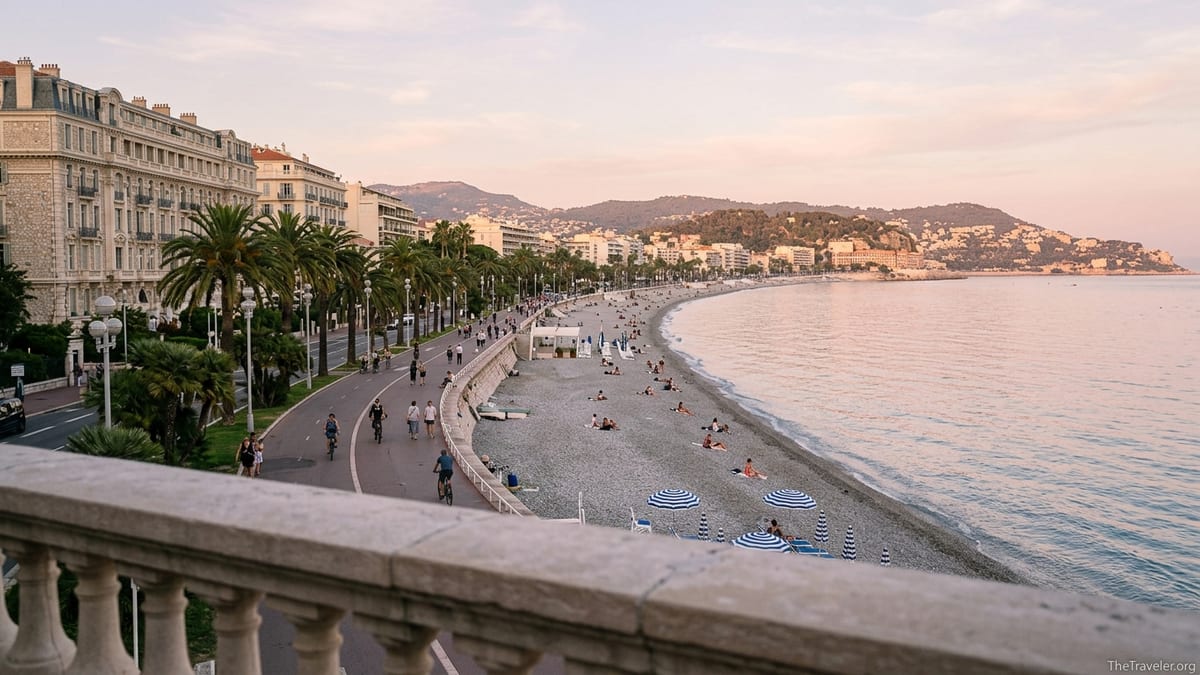
Nice works best as the all-rounder base on the French Riviera. Its Promenade des Anglais runs for around 7 kilometers along a broad curve of pebbly beach, with about twenty public stretches interspersed with private beach clubs. Families often like the central public areas such as Plage Centenaire, where ropes help with the slippery pebbles and lifeguards are typically on duty in summer. Private clubs like Beau Rivage offer padded loungers, showers and waiter service, appealing to couples who want comfort and a bar steps from the water. Nice’s old town behind the promenade is packed with small bistros, gelato shops and apartments to rent, so you can walk everywhere without needing a car.
Cannes is more compact and more overtly polished. The main draw is the Boulevard de la Croisette, with luxury hotels such as the Carlton and Martinez facing a long line of private beach clubs on soft sand. Prices reflect the setting: in high summer, front-row sunbeds at some marquee clubs can cost upward of 80 euros per day, while slightly more modest stretches on Plage du Midi to the west of the center offer lower rates and a more relaxed scene. Cannes suits travelers who enjoy dressing up for dinner, browsing designer boutiques and perhaps taking a day trip by boat to the Lérins Islands for a quieter beach and pine-fringed coves.
Saint-Tropez is less convenient and more of a lifestyle choice. The old fishing village is small and walkable, built around a harbor filled with superyachts, but the famous beach experience lies a few kilometers away on Pampelonne, a several-kilometer crescent of sand managed as a protected coastal area. Here, a mix of public stretches and beach clubs, ranging from understated wooden deck restaurants to high-energy venues with DJs, lines the dunes. Parking in high season can be expensive and traffic on the access roads slow, so many visitors stay nearby in Ramatuelle or along the Gulf of Saint-Tropez rather than commuting from far away.
For couples, Cannes and Saint-Tropez both offer a stronger sense of occasion than Nice, with more intimate boutique hotels and upscale dining, although Nice’s larger size gives more choice at varying budgets. For families, Nice usually wins because of its good-value apartments, playgrounds along the promenade and easy tram connection from the airport. Cannes works well if you can afford a hotel near the Croisette so that hauling beach toys and strollers to the sand stays manageable. Saint-Tropez is best as a two or three night splurge, or a day trip from a quieter base such as Sainte-Maxime or Fréjus, especially during school holidays when congestion peaks.
Marseille, Aix-en-Provence and the Calanques
Marseille is France’s oldest major city and a very different proposition from the manicured Riviera resorts. Centered on the Vieux-Port, it offers a working harbor feel, a large immigrant community and a food scene that leans heavily on seafood and North African influences. Visitors come for the lively markets in the Noailles district, sweeping views from the basilica of Notre-Dame de la Garde and access to the nearby Calanques, a series of limestone fjord-like inlets between Marseille and Cassis. From the Vieux-Port, several licensed companies operate boat tours that range from short 2-hour rides past a handful of calanques to half-day outings with swim stops.
For swimmers and hikers, the Calanques are a powerful card in Marseille’s favor. A typical three-hour cruise on a hybrid-powered boat, departing from the central quay, might cost roughly 35 to 45 euros per adult in peak season, with commentary about the geology and ecology of coves like Sormiou, Morgiou or En Vau. Kayak and small-boat excursions offer a more active option, though recent regulations have tightened around unlicensed rentals to protect the fragile environment, so it is important to book with authorized operators. Many summer days see trail closures when fire risk is high, so boat or kayak access can be the most practical way to experience these turquoise inlets.
Aix-en-Provence, about 30 minutes by bus or train from Marseille, feels like another world. It is a mid-sized university town with elegant 18th-century townhouses, shady plane trees and fountains at almost every intersection. Rather than beaches, the focus is on market squares such as Place Richelme, where local producers sell goat cheese, lavender honey and sun-dried tomatoes in the mornings. From Aix, organized wine tours visit nearby appellations like Coteaux d’Aix-en-Provence and the vineyards beneath Mont Sainte-Victoire that inspired the painter Cézanne. Prices for half-day small-group tastings generally start from around 80 to 100 euros per person, including transport and several cellar visits.
For couples who like culture and long lunches more than beach clubs, a split stay between Marseille and Aix works well. You might spend three nights in Marseille for the Calanques and the city’s edgy arts scene, then two or three nights in Aix to slow down among cafes, antiques shops and day trips to Luberon villages such as Lourmarin or Bonnieux. Families often prefer Aix as a base because its compact center is easy with strollers and its squares feel safer and calmer at night. With older children or teens, adding a day in Marseille for the MuCEM museum, a boat trip and perhaps a soccer match at the Stade Vélodrome can be a highlight.
Historic Provence: Avignon, Nîmes and Carcassonne
Avignon and Nîmes sit slightly inland, connected by regular regional trains, and offer dense layers of Roman and medieval history. Avignon’s walled center holds the vast Palais des Papes, once home to the papacy in the 14th century, as well as the truncated but iconic Pont d’Avignon bridge. Summer brings the famous performing arts festival, when streets fill with actors promoting fringe shows and accommodation prices spike. Outside festival weeks, you can usually find centrally located guesthouses with air conditioning for under 150 euros per night in shoulder season, making it a good-value base for couples exploring nearby vineyards in Châteauneuf-du-Pape.
Nîmes leans even more strongly into its Roman past. Its arena ranks among the best-preserved amphitheaters in the former empire and still hosts concerts and occasional reenactment events. Families with school-age children often find Nîmes particularly engaging because major sights sit within easy walking distance and the stories of gladiators, aqueducts and temples are easy to explain. From Nîmes, many visitors take a half or full-day excursion to the Pont du Gard aqueduct, where you can picnic by the river, rent kayaks in season and let kids paddle under the arches. Combining Nîmes and Avignon in a three or four night stay works well if you have a car or are comfortable with local trains.
Carcassonne, farther west, makes a strong impression with its double ring of medieval walls crowning a hill above the Aude River. The restored citadel, known as La Cité, looks almost like a movie set from a distance, complete with conical towers and arrow slits. Inside the walls, you will find hotels, restaurants and souvenir shops, but the atmosphere early or late in the day, once tour buses have left, can feel remarkably evocative. One practical way to include Carcassonne is as a one-night stopover between Provence and the Atlantic coast, arriving on an afternoon train, checking into a small inn inside the walls and then wandering the ramparts at sunset.
For couples, Avignon and Carcassonne both provide atmospheric backdrops for an inland itinerary heavy on wine, castles and rivers. For families, Nîmes often stands out as the most relaxed and “doable” city in this group, with tree-shaded public gardens and broad squares where children can run. None of these destinations is a beach spot, so if swimming is a priority, plan to pair them with a coastal segment in Marseille, Montpellier or the Atlantic. Travelers wary of very hot weather might find late April to early June or late September ideal, when historic stone sites are more comfortable to explore.
Urban by the Sea: Montpellier, Toulouse, Bordeaux and Biarritz
Montpellier is one of southern France’s fastest-growing and youngest-feeling cities, with a large student population and a tram network covered in playful artwork. Its historic center, the Écusson, is a compact tangle of medieval lanes that opens onto the broad Place de la Comédie. For beaches, you need to travel a short distance by tram and bus or seasonal shuttle to stretches such as Palavas-les-Flots or Carnon, where the sand shelves gently into the water and seaside restaurants serve grilled fish and ice cream. This makes Montpellier a good option if you want to split your days between museums and beaches without the formality or price tag of the Riviera.
Toulouse, nicknamed La Ville Rose for its pink brick facades, sits inland on the Garonne River and does not have beaches, but it works well as a city break combined with other south-western destinations. Couples interested in aerospace often visit the Airbus museum and assembly line tours, while families enjoy the Cité de l’Espace theme park on the outskirts of town. In the evenings, terraces along the riverfront fill with students and professionals drinking wine by the glass that often costs markedly less than equivalent pours on the Riviera. You can then head east by train to Carcassonne or west to Bordeaux and Biarritz.
Bordeaux has reinvented itself over the past two decades as a handsome, pedestrian-friendly city with a revitalized waterfront along the Garonne. Its classical streets are filled with wine bars offering tasting flights, cheese boards and farm charcuterie. Day trips fan out into the vineyards of the Médoc or Saint-Émilion, where many chateaux offer pre-booked tours and tastings. For beaches, locals often drive or take regional buses to the Atlantic coast at Arcachon Bay or the miles-long sands near Lacanau. Families sometimes base themselves in Bordeaux itself to enjoy parks, river cruises and tram access, then plan one or two coastal excursions instead of committing to a pure beach resort.
Biarritz, much smaller than Bordeaux, sits directly on the Bay of Biscay and revolves around its surf beaches. Grande Plage, right in front of town, often has a line of surf schools with foam boards stacked against the promenade, and group lessons in high season typically start at around 40 to 50 euros per person for a 90-minute session. The atmosphere is noticeably more laid-back than the Riviera, with a mix of families, French holidaymakers and international surfers. Couples looking for a balance of beach time and Basque culture often combine Biarritz with inland villages such as Ainhoa or Espelette, reached by car or organized excursions.
Beaches, Food and Culture: Matching Cities to Travel Styles
For dedicated beach lovers and swimmers, the choice often comes down to water type and setting. The Riviera between Nice and Saint-Tropez offers typically calmer, clear blue water with either pebbles or carefully maintained sand on urban beaches. The Atlantic around Biarritz, Arcachon and Lacanau brings bigger waves, cooler water and a stronger surf culture. Families with small children often appreciate the shallow, sheltered conditions at Mediterranean spots like Palavas-les-Flots near Montpellier or the family-oriented beach clubs in Nice, whereas teenagers may prefer surfing lessons and body-boarding on the Atlantic.
Food is strong almost everywhere, but the emphasis differs. Marseille is the destination of choice for seafood, from casual bouillabaisse-inspired fish stews at harbor-front bistros to fine-dining interpretations overlooking the sea. Nice leans toward Niçoise specialties like socca, a chickpea pancake sold at market stalls, and salad Niçoise in dozens of variations. In Aix-en-Provence and Avignon, restaurant menus and markets share a focus on olive oil, tapenade, fresh goat cheese and rosé wines. Around Toulouse, hearty southwestern dishes such as cassoulet, duck confit and regional sausages are common. Bordeaux is the center of its eponymous wine region, while Biarritz blends French and Basque influences, with pintxo-style bar snacks and local peppers appearing on many menus.
On a couples’ trip focused on long dinners, wine and architecture, a logical route might combine three nights in Nice or Cannes with four nights split between Aix and Avignon, finishing with two nights in Bordeaux. You might start with aperitifs on a rooftop terrace over the Mediterranean, move on to strolling past 18th-century facades in Aix while sampling rosés at a wine bar, then end with tastings at chateaux outside Bordeaux. For families, a different combination could work better, such as a week in Nice for safe, serviced beaches and ice cream parlors, followed by three nights near Nîmes or Montpellier for Roman sites and sandy beaches where kids can play with buckets and spades.
Cultural travelers who prioritize museums, galleries and music festivals will find dense programming in Marseille, Montpellier, Toulouse and Bordeaux, which all have large year-round populations and university communities. Smaller historic centers like Carcassonne and Nîmes offer powerful one- or two-day experiences but quieter evenings, which some visitors love and others find too subdued. In peak summer, many towns layer on open-air concerts, night markets and temporary exhibitions, so even a relaxed beach base such as Biarritz or Saint-Tropez can come with more nightlife and culture than you might expect, especially in July and August.
The Takeaway
Choosing the “best” place in Southern France depends less on a single must-see city and more on how you like to travel. If this is your first visit and you want a classic postcard mix of sea, old town lanes and easy day trips, Nice makes the most versatile base, with Cannes and Antibes within simple train range and enough infrastructure to keep both couples and families happy. Those who prefer art, food and hill villages to beach clubs might gravitate instead to Aix-en-Provence or Avignon, perhaps with a day in Marseille for the Calanques. Travelers drawn to surf, wine and a more low-key atmosphere often end up in Bordeaux and Biarritz, with a night in Carcassonne or Toulouse as part of the journey west.
Rather than trying to fit Nice, Cannes, Saint-Tropez, Marseille, Aix, Avignon, Nîmes, Montpellier, Toulouse, Carcassonne, Bordeaux and Biarritz into a single short trip, pick one coastal base and one inland or Atlantic counterpart that match your priorities. Consider travel time between them, the month you are visiting and whether you will rely on trains or a rental car. With those decisions made, the pleasure of Southern France is as much about sitting at a shaded terrace table or floating off a quiet cove as it is about ticking off names on a list.
FAQ
Q1. Is Nice or Cannes better as a base for first-time visitors to the French Riviera?
For most first-time visitors, Nice is the better base because it has more accommodation in different price ranges, a larger old town, frequent airport connections and easy train links to Antibes, Cannes and Monaco. Cannes is smaller and more upscale, with sandier central beaches and a polished promenade, but it usually works best for shorter, more expensive stays focused on beach clubs and shopping.
Q2. Where should families with young children stay: Nice, Marseille or Montpellier?
Families with young children often find Nice and Montpellier more convenient. Nice offers playgrounds along the promenade, traffic-calmed seaside paths and many apartments close to the water, although its beaches are pebbly. Montpellier combines a compact historic center with access to nearby sandy beaches by tram and shuttle, which can be easier for small children. Marseille can be rewarding with teens, especially for Calanques trips, but its size and steeper streets may be tiring with strollers.
Q3. Is Saint-Tropez worth visiting if I am on a midrange budget?
Saint-Tropez can be worth a visit on a midrange budget if you approach it as a short stop rather than a week-long base. Overnight stays near the harbor or at stylish beach clubs on Pampelonne tend to be expensive, especially in July and August. Many travelers choose to stay in more affordable nearby towns such as Sainte-Maxime or inland villages and then visit Saint-Tropez for a day by ferry or car to enjoy the port, the old town and a few hours on the beach.
Q4. Which inland Provençal town is best for food and wine: Aix-en-Provence, Avignon or Nîmes?
Aix-en-Provence and Avignon both stand out for food and wine. Aix has a particularly strong cafe and market culture, with daily stalls selling local produce and many wine bars offering flights of rosé and red from nearby vineyards. Avignon provides easy access to the Châteauneuf-du-Pape wine area, where tours and tastings are common. Nîmes has excellent restaurants and markets too, but it is often chosen more for its Roman sites than for wine-focused itineraries.
Q5. Is Biarritz a good alternative to the Riviera for beach holidays?
Biarritz is an excellent alternative if you prefer surf culture, cooler temperatures and a more relaxed feel. Its Atlantic beaches have stronger waves than most Riviera resorts, which attracts surfers and makes beginner lessons popular. The setting is scenic, with cliffs and Belle Époque architecture rather than long urban promenades. However, water temperatures are generally lower than on the Mediterranean and weather can be more changeable, so it suits travelers who value atmosphere and waves over guaranteed calm, warm seas.
Q6. Without a car, which combination of Southern France cities works best?
Without a car, a very practical route is to combine Nice with either Marseille and Aix or with Avignon and Nîmes, as these cities are all linked by frequent trains. Another good option is to travel from Toulouse to Carcassonne and then onward to Bordeaux or Biarritz using regional and intercity trains. Smaller villages and vineyards may require organized tours or occasional taxis, but the main cities themselves are walkable and have public transport.
Q7. How many days do I need in Carcassonne?
Most travelers find one or two nights in Carcassonne sufficient. Arriving by midday on the first day lets you explore the medieval citadel, walk the ramparts and have dinner inside the walls once day trippers have gone. A second day can be used for a canal walk, a short countryside excursion or simply a slower wander through the lower town. Longer stays usually make sense only if you are using Carcassonne as a base for a wider exploration of the region by car.
Q8. When is the best time to visit Southern France for fewer crowds but good weather?
Late April to early June and mid-September to early October often offer the best balance of pleasant weather and lighter crowds. During these shoulder seasons, coastal water temperatures may be cooler than in high summer but still acceptable for many swimmers, and hotel prices tend to be lower. Inland cities such as Nîmes, Avignon and Toulouse are usually more comfortable to explore in these periods than in the peak heat of July and August.
Q9. Which city is best if I want a mix of city life and day trips to vineyards?
Bordeaux is one of the strongest choices for combining city life with easy vineyard access. Within an hour or so by car or organized tour, you can reach famous wine areas such as the Médoc and Saint-Émilion, and many chateaux welcome visitors who book ahead. Avignon and Aix-en-Provence also offer good access to wine regions, but Bordeaux has a particularly dense concentration of established wine tourism services and urban wine bars.
Q10. Do I need to speak French to travel comfortably in Southern France?
You do not need to be fluent in French to travel comfortably, but learning a few basic phrases helps a great deal. In larger cities and major tourist areas like Nice, Cannes, Marseille, Bordeaux and Biarritz, many people working in hotels, restaurants and tour companies speak at least some English. In smaller inland towns and markets, English may be less common, so simple greetings, please and thank you in French, along with patience and a translation app, go a long way toward smooth interactions.