


Southern France is one of Europe’s most romantic regions, but winding village roads and tight old-town streets can make driving stressful. The good news is that you can see a great deal of Provence and the French Riviera without ever renting a car, if you choose your base carefully and lean on the region’s dense web of trains, regional buses and organized day tours.
How Car-Free Travel Works in Southern France
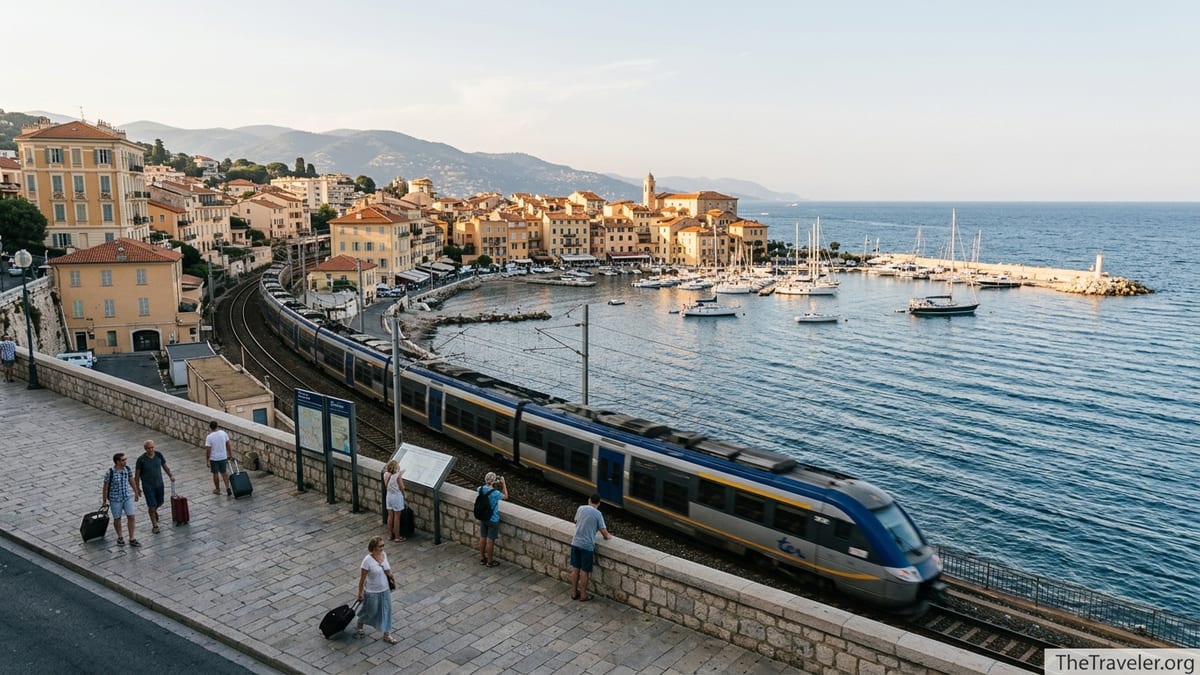
Southern France is unusually friendly to travelers without a vehicle, provided you stick to places linked by trains and regional buses. The backbone is the TER regional rail network branded as ZOU, which connects major coastal cities such as Marseille, Toulon, Cannes, Antibes, Nice and all the way to the Italian border near Ventimiglia with regular, relatively inexpensive services. On busy stretches like Cannes to Menton there are typically multiple trains each hour during the day, so you can day-trip freely without long waits between departures.
On the ground in cities, local transit networks fill the gaps. In and around Nice, the Lignes d’Azur system combines trams and buses that reach the airport, hillside neighborhoods and nearby suburbs, while the ZOU regional buses connect further along the coast and inland. Similar urban networks serve Marseille, Aix-en-Provence, Nîmes and Montpellier, with flat fares that usually sit in the 1 to 2 euro range for a single ride bought from machines or on mobile apps. For visitors, this means your “car” is effectively the local tram or regional TER train.
The limitations appear when you try to reach small perched villages, scattered vineyards or lavender fields. Places like Gordes, Roussillon or tiny hilltop towns in the Luberon have limited or highly seasonal buses and awkward timetables. In those cases, organizing a small-group tour from a city base like Avignon or Aix-en-Provence, or booking a private driver for a half day, is usually a better use of time than trying to patch together rural buses. A car-free trip works best if you focus on rail-linked towns and let tours handle the countryside.
Costs for rail and bus travel are generally modest compared with renting a vehicle. A regional TER ticket between Nice and Cannes, for example, is often in the 5 to 10 euro range each way when bought at the station, and regional buses that cover longer distances, such as between Aix-en-Provence and Marseille airport, are usually under 15 euros. You avoid motorway tolls, fuel, parking fees and city-center restrictions, and you can sip a glass of rosé at lunch without worrying about driving back to your hotel.
Best Car-Free Base: Nice and the Eastern Riviera
For most travelers who want an easy, car-free holiday by the sea, Nice is the strongest base in southern France. The city combines an international airport with direct tram access into the center, a main rail station on the coastal TER line, and the Lignes d’Azur tram and bus network for local travel. From the airport, the tram runs directly to central stops such as Jean Médecin and Garibaldi, with ticket machines at the platforms and clear English-language instructions, so you can arrive and be checked into your hotel in the Old Town or near the Promenade des Anglais within an hour.
From Nice Ville station, frequent TER trains make short hops along the coast. The ride to Antibes is roughly 20 minutes, to Cannes about 30 to 35 minutes, and to Monaco Monte Carlo around 25 minutes. Tickets can be bought from blue SNCF machines or via official mobile apps, and you simply validate your paper ticket in the small yellow or blue machines on the platform before boarding. Because trains run often, especially in summer, you can decide spontaneously in the morning whether to spend the day strolling Antibes’ old ramparts, exploring the market in Ventimiglia across the Italian border or hiking to hilltop Eze from Eze-sur-Mer station.
Local buses from Nice extend your reach further. ZOU express buses link Nice to destinations such as Grasse, Vence or the charming seaside town of Saint-Raphaël, while urban buses carry you to Villefranche-sur-Mer, Saint-Jean-Cap-Ferrat or into the hills behind the city. A visitor might, for instance, take the train to Villefranche in the morning, swim and lunch at the harbor, then return to Nice and hop on a bus to the Matisse Museum high above the city in the afternoon. This level of connectivity is difficult to match elsewhere in the region.
Numerous day tours are also based in Nice, catering specifically to travelers without a car. Common options include small-group minivan excursions that combine Eze, Monaco and Monte Carlo in one long day, wine tours into the Bellet hills above Nice, and evening trips to hill villages such as Saint-Paul-de-Vence. Prices for these tours typically start around 70 to 100 euros per person for a full day with a driver-guide, making them an efficient way to see multiple villages that would be tedious to reach on your own by bus. Booking platforms and local agencies in the center display a wide range of itineraries year-round, with especially dense offerings from late spring through early autumn.
Great Coastal Alternatives: Antibes, Cannes and Marseille
If you prefer a slightly smaller base than Nice but still want easy connections, Antibes is an excellent compromise. The town’s rail station sits only a short walk from the old town and the port, and TER trains in both directions give you quick access to Cannes, Nice and beyond. Many travelers enjoy staying in Antibes to escape some of Nice’s bustle while still being able to day-trip along the coast. You can wander its daily covered market, visit the Picasso Museum and walk the coastal path around the Cap d’Antibes, then board a 20-minute train to Cannes for an evening stroll along La Croisette without worrying about parking.
Cannes itself works well as a base for car-free travelers who prioritize beaches and nightlife. Its station is central, a brief walk from the seafront, and TER trains connect not only to Nice and Antibes but also westwards to Saint-Raphaël and Fréjus, where coastal walking trails and quieter coves await. Buses and boats from Cannes’ harbor take you to the Lérins Islands for a day of hiking and swimming. For example, a typical visitor might pay under 20 euros for a return boat ticket to Île Sainte-Marguerite, spend the day circumnavigating the island on foot, then return in time for dinner by the marina.
Farther west, Marseille is both a gateway and a rewarding base in its own right. The city’s Saint-Charles station is the main high-speed stop for TGVs from Paris and Lyon and is also a hub for TER trains to Aix-en-Provence, Arles, Avignon, Toulon, Cassis and La Ciotat. Local buses and metro lines form an urban network that lets you move between the Old Port, the Panier district and newer neighborhoods without needing a car. On sunny days, many visitors ride a bus to coastal areas like Pointe Rouge, then join boat excursions into the Calanques, rugged inlets that are difficult to access by road.
From Marseille, short regional hops open up worthwhile day trips. A typical itinerary might be a morning TER train to Cassis, followed by a boat cruise into the Calanques or a guided hike tour, then a return to the city by late afternoon. Another day could be dedicated to Arles, reached by train in just over an hour, to see Roman ruins and Van Gogh sites. Trains to Avignon or Aix-en-Provence take roughly one hour as well, so a traveler could feasibly visit both as separate day trips from a Marseille base without feeling rushed.
Classical Provence Without a Car: Avignon, Arles and Aix
When people imagine postcard Provence, they often picture hilltop villages, vineyards and lavender fields, many of which are not directly on train lines. Even so, you can still experience a large slice of Provence without renting a car if you base yourself in the right small cities. Avignon, Arles and Aix-en-Provence are the most practical, thanks to their mix of rail access, walkable centers and a good supply of organized excursions into the countryside.
Avignon is particularly convenient. Its compact walled center is walkable from the central rail station, which sits right outside the city walls. High-speed TGV trains arrive at a separate out-of-town station, but regular shuttle buses link it to the historic center in under 15 minutes. From Avignon Centre station, regional TER trains run to Arles, Nîmes, Orange and Marseille, and local buses reach smaller towns like Saint-Rémy-de-Provence. Travelers often use Avignon as a base to visit the Pont du Gard aqueduct, Roman Nîmes and Châteauneuf-du-Pape wine country on day tours, sold at tourist offices and online, that bundle transport and guiding into one price.
Arles is another appealing base if you are drawn to Roman sites and Van Gogh history. The rail station is an easy walk from the old core, so you can arrive by train, drop your bag at a hotel in minutes and then wander through the amphitheater, Forum Square and riverside promenade on foot. Regional trains put Avignon, Nîmes and Marseille within reach for day trips, while small-group tours offer excursions into the Camargue wetlands to see white horses, flamingos and traditional ranches. Because bus schedules into the Camargue vary by season, these organized tours are often the simplest way to explore without a car.
Aix-en-Provence, although not directly on a main coastal train line, is very well served by regional buses. Frequent coaches link Aix with Marseille’s Saint-Charles station and Marseille Provence Airport, and other routes connect to villages such as Lourmarin or Bonnieux. The old town is largely pedestrian and compact, anchored by the Cours Mirabeau boulevard with its fountains and plane trees. Travelers often choose Aix as a quieter base and then join dedicated tours to see the Luberon hill villages, lavender fields around Valensole in summer, or Cezanne sites in the countryside. Tour prices vary, but half-day small-group excursions often start around 60 to 80 euros per person.
Across all three cities, the pattern is similar: use trains and regional buses to move between rail-linked towns, and rely on commercial tours or occasional taxis for more remote spots. For example, a visitor might spend three nights in Avignon using trains to reach Nîmes and Arles, then move to Aix for three more nights and use minivan tours to explore the Luberon. This approach balances independent travel with guided days and keeps logistics manageable without a vehicle.
Tickets, Passes and Airport Transfers
Planning a car-free itinerary in southern France works best if you understand the basic ticketing landscape. For regional trains, most travelers buy point-to-point TER tickets at station machines shortly before departure. Machines accept major cards, and you can switch language to English. Prices vary with distance, but common routes such as Nice to Cannes or Marseille to Avignon are typically in the 5 to 20 euro range each way. While there are regional discount passes and occasional promotions, casual visitors usually find simple one-way tickets easiest, especially for a stay of a week or less.
On urban networks like Lignes d’Azur in Nice or the tram and bus system in Marseille, single-ride tickets bought from machines or on-board validators tend to cost around 1.50 to 2 euros. In some cities, 24-hour or multi-day passes provide better value if you expect to use buses and trams several times per day. For example, a visitor staying in Nice might purchase a day pass that covers unlimited tram and bus rides across the metropolitan area, then use it to connect between their hotel, the harbor, the beach and the rail station without counting each journey.
Airport transfers are straightforward in most of southern France’s main gateways. Nice airport is connected by tram to the city center, with services every few minutes from early morning until late evening. This makes arriving without a car especially simple, as you can wheel your suitcase directly from the terminal to the tram platform and be downtown in roughly half an hour. In Marseille, an airport coach links Marseille Provence Airport with Saint-Charles station in about 25 to 30 minutes, timed roughly to flight arrivals. In Montpellier, a combination of tram and shuttle bus connects the airport to the city center and main rail station.
One practical tip is to check the first and last train or bus times for any critical journey, such as a transfer to catch a flight. While daytime frequencies are usually good, late-night services drop off sharply, and early-morning options may be limited on weekends or holidays. When in doubt, aim to arrive the evening before a morning departure from a different city, or budget for a taxi from your hotel to the airport if a pre-dawn public connection would be tight or stressful.
Organized Day Tours and When to Consider a Driver
Organized day tours are what make a car-free trip in southern France feel complete rather than restrictive. From major bases like Nice, Marseille, Avignon, Arles and Aix, agencies run year-round small-group excursions that bundle transport, sightseeing stops and commentary into one product. For instance, a typical “Best of the Luberon” tour from Aix might collect eight guests in a minivan, visit three or four hill villages such as Gordes, Roussillon and Lourmarin, and return by early evening. Similarly, from Nice you can find all-day trips that combine Monaco, Eze and Menton, or wine-focused excursions into nearby appellations.
Prices depend on season, duration and inclusions, but full-day tours often fall in the 80 to 140 euro per person range. Some include entry tickets to sites or wine tastings, while others cover only transport and guiding. Many operate on fixed days of the week, especially outside peak summer, so it is worth aligning your base nights with tour availability. For example, if a lavender-field tour only runs on Tuesdays and Fridays in June and July, you may want to schedule your nights in Aix or Avignon accordingly to avoid missing it.
There are moments when hiring a private driver or taxi for a few hours makes sense, even if you are largely traveling by train and bus. This could be the case if you want to see a particular remote village that is poorly served by transit, if your group is four or more people and can share the cost, or if you are carrying heavy luggage between an out-of-town accommodation and the nearest station. Private transfers from Nice to a hillside village above the coast, for example, can cost more than a standard taxi ride but may still compare favorably to a day’s car rental once you factor in fuel and parking.
To keep costs predictable, it helps to ask for approximate prices in advance from your hotel, local tourist office or a reputable transfer company. Many will quote flat rates for common routes, such as airport to city center or city center to a popular village. For sightseeing days, clarify whether waiting time is included or billed separately, and consider combining your most remote stops into a single hired-car day rather than scattering taxis across your itinerary.
Itinerary Ideas and Matching Bases to Your Style
The right base in southern France without a car depends on what you want to experience most. If your priority is Mediterranean beaches, glamorous promenades and easy rail day trips, basing in Nice or Antibes for a full week works well. A sample plan could be three or four days using trains to reach Cannes, Monaco and Menton, plus one or two organized tours into inland villages. In this scenario, you might never leave the coastal rail line, yet still feel that you have sampled a range of towns, markets and viewpoints.
If you are more drawn to Roman ruins, medieval alleys and inland landscapes, an Avignon or Arles base is better suited. One practical pattern is to spend three nights in Avignon, visiting the Papal Palace and Pont d’Avignon, then doing day trips by train to Nîmes and Arles and joining an organized excursion to the Pont du Gard. From there, you could move to Aix-en-Provence for another three or four nights, using bus links and tours to reach Luberon villages, lavender areas in season and local vineyards. This two-base structure keeps transfer days short while giving you variety.
Travelers who want a bit of everything may combine coast and inland. A common split is three to four nights in Nice followed by three to four nights in Avignon or Aix, connected by a direct train that takes several hours but is straightforward. You would enjoy coastal walks, Riviera towns and perhaps a day trip into Monaco first, then shift to Roman arenas, walled cities and hill villages. Because all legs of this journey are covered by mainstream rail and bus routes, you avoid the need to ever drive, pay for parking or navigate unfamiliar roads.
Whichever base you choose, try to stay within walking distance of the main station or a central tram stop. Being able to stroll to your train in ten minutes, rather than needing a taxi or a long bus ride across town, makes those early departures and late returns far more pleasant. Many mid-range hotels and apartment rentals in Nice, Avignon, Arles and Aix cluster in neighborhoods that balance station access with lively streets, so you can step out for a bakery run in the morning and wander back from dinner at night without complicated transit.
The Takeaway
Southern France rewards travelers who plan around its public transport rather than fighting it. By choosing rail-connected bases such as Nice, Antibes, Cannes, Marseille, Avignon, Arles or Aix-en-Provence, you can move smoothly between cities on TER trains, rely on local buses and trams for everyday errands, and let organized tours handle hard-to-reach villages and countryside. This approach trims away the costs and stresses of car rental while still giving you access to blue bays, Roman theaters, markets and medieval lanes.
The key is to be realistic about what you can reach independently and where it is more efficient to pay for a tour or a driver. Focus self-guided days on places with frequent trains and buses, and cluster your countryside ambitions into one or two guided outings. Check first and last departure times, stay near central stations or tram lines, and leave room for slow afternoons by the sea or in a café-lined square. With that framework, a car-free journey through southern France feels less like a compromise and more like the most relaxed way to travel.
FAQ
Q1. Is it realistic to visit southern France without renting a car?
Yes, it is realistic if you focus on rail-linked cities such as Nice, Antibes, Cannes, Marseille, Avignon, Arles and Aix-en-Provence and use organized tours for rural areas.
Q2. Which single base is best if I want an easy car-free trip?
Nice is generally the best all-round base because it combines an international airport, direct tram into the center, a major rail station and many tour options.
Q3. Can I see small hilltop villages like Gordes or Roussillon without a car?
You can visit them on small-group tours from bases such as Avignon or Aix-en-Provence, but reaching them by public bus alone is time-consuming and often seasonal.
Q4. How busy are the regional trains along the Riviera in summer?
Trains between Cannes, Antibes, Nice and Monaco can be very crowded in July and August, especially late afternoon, so traveling earlier or later in the day is more comfortable.
Q5. Are airport transfers easy without a car in Nice and Marseille?
Yes, Nice airport is linked to the city by tram, and Marseille Provence Airport has a dedicated coach to Marseille Saint-Charles station, both designed for travelers without cars.
Q6. How far in advance should I book organized day tours?
In peak season it is wise to book popular tours, such as lavender or Luberon village trips, at least a few weeks in advance, while off-season you often can book closer to the date.
Q7. Is it cheaper to rely on trains and buses than to rent a car?
For many travelers it is cheaper, because you avoid fuel, tolls, parking and insurance costs, and regional train and bus fares are usually modest for typical vacation distances.
Q8. What is a good itinerary that mixes coast and inland without driving?
A balanced plan is three or four nights in Nice for the Riviera, followed by three or four nights in Avignon or Aix-en-Provence for Roman sites and Provence villages via tours.
Q9. Are there any places I should avoid without a car?
Very rural areas and scattered villages, including much of the Luberon and some parts of inland Provence, are difficult by public transport alone and are best visited on tours.
Q10. Can I rely on public transport late at night?
Services thin out late in the evening, especially regional trains and rural buses, so for late returns it is safer to plan to be back earlier or budget for a taxi within your base city.