


Southern France brings together lavender fields and Roman arenas, Riviera beaches and medieval citadels, slow canals and big-city culture. The challenge is not whether to go, but how to fit Provence, the Côte d’Azur and Occitanie into a realistic itinerary that matches your time, budget and travel style. The routes below combine well connected hubs like Avignon, Aix-en-Provence, Nice, Montpellier, Nîmes, Carcassonne and Toulouse, with optional extensions into the southwest, using current train networks and practical overnight allocations.
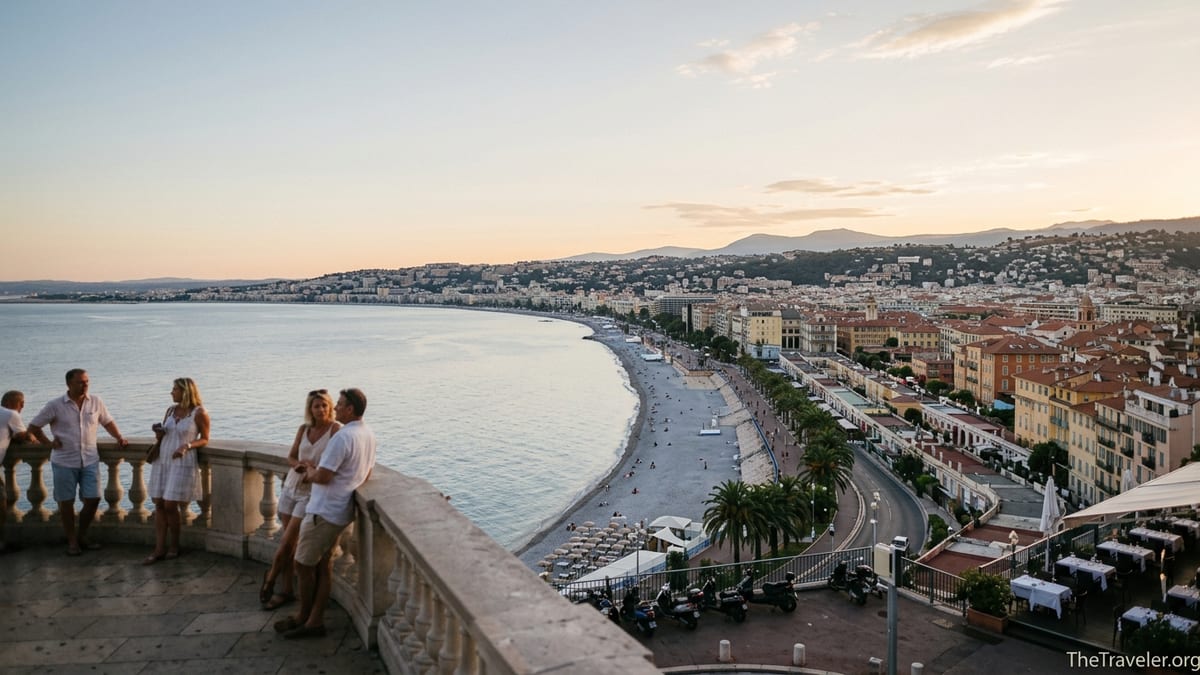
How to structure a Southern France itinerary
For most travelers, the most efficient entry points to Southern France are Paris, Marseille, Nice or Toulouse, which all have direct high-speed rail connections from Paris and international flights from North America and Europe. From Paris, TGV trains can reach Avignon or Aix-en-Provence in around 3 hours, and Nice in roughly 5.5 to 6 hours depending on the train. Once on the ground, regional TER and Intercités services link the main hubs at least a few times per day, with especially frequent trains along the Marseille to Nice coastal line and the busy Cannes to Menton section of the Côte d’Azur.
To avoid exhaustion, a rule of thumb is a minimum of two nights per base so you have at least one full day without packing and moving. In practice, that means one or two bases for a 5 day trip, two or three bases for 7 to 10 days, and up to four bases for 14 to 21 days. Popular combinations include Avignon plus Nice for a short break, or a triangle of Avignon, Nice and Montpellier for a week. Drivers gain extra flexibility, but with current regional rail coverage you can comfortably plan most of the itineraries here by train, then use local buses or taxis for villages and vineyards.
Costs vary widely by season. In July and August, mid range hotels in Avignon, Aix-en-Provence, Nice or Cannes often run from about 160 to 250 euros per night for a central double room, while shoulder season rates in May, June, September and early October can drop closer to 110 to 170 euros. In smaller Occitanie towns such as Nîmes, Montpellier or Carcassonne, you can often find comfortable, central three star hotels from roughly 90 to 140 euros in shoulder season. Budget for regional train tickets such as Avignon to Marseille or Marseille to Nice from about 20 to 45 euros per person if bought in advance, with slower regional TER tickets usually cheaper than high speed options.
These itineraries are built around realistic train and driving times, keeping individual jumps between 1 and 3 hours whenever possible. For example, current timetables typically show around 1 hour by train from Nîmes to Avignon, about 2.5 to 3 hours from Nîmes or Avignon to Nice, and roughly 2.5 hours between Nice and Marseille on direct trains, with even more frequent local services stopping at Cannes and Antibes along the way.
5 day Southern France itinerary: Provence and one Riviera base
With 5 days, it is wise to focus on two bases in the same broad area. A classic combination is Avignon, as a gateway to inland Provence, paired with Nice on the eastern Côte d’Azur. Fly or take the train into Avignon or nearby Marseille, then finish in Nice for an easy onward journey. Aim for 2 nights in Avignon and 3 nights in Nice so you have one full day in Provence and two full days on the Riviera, plus travel time.
Days 1 and 2 work well based in Avignon. Spend your arrival afternoon exploring the Palais des Papes and the famous Pont d’Avignon, then linger over dinner at a bistro on Place de l’Horloge. On your full day, take a half day mini van tour from operators in Avignon that visit nearby hilltop villages like Gordes and Roussillon in the Luberon, or rent a car for the day to loop through vineyards and lavender fields in season. Expect to pay around 80 to 120 euros per person for a small group tour, or from about 60 to 90 euros per day for a compact rental car in peak months excluding fuel and tolls.
On day 3, travel from Avignon to Nice. Direct trains via Marseille usually take about 3 to 3.5 hours; if you choose to drive, allow at least 3.5 to 4 hours without stops. Check in near Nice-Ville station or in the Old Town to be within walking distance of the Promenade des Anglais. The afternoon is ideal for a first stroll along the seafront, followed by dinner at a local restaurant in the atmospheric lanes around Cours Saleya.
Days 4 and 5 focus on the Côte d’Azur. Use one day for Nice itself, with time at the Cours Saleya market, the Colline du Château viewpoint and the pebble beach. The other day can be a train based excursion to Antibes and Cannes, or in the opposite direction to Monaco and Menton. Regional trains run very frequently along this stretch, often as often as every 15 to 30 minutes between Cannes and Menton, making day trips straightforward without a car. A Nice to Cannes regional train ticket can cost roughly 10 to 20 euros return per person if bought same day at the station.
7 day Southern France itinerary: Provence, Côte d’Azur and a taste of Occitanie
In 7 days, you can add a third region without rushing if you keep your bases to three cities. A balanced route is Avignon, Nice and Montpellier, which gives you Roman heritage, Riviera glamour and a first look at Occitanie’s Mediterranean coast. Allocate 2 nights in Avignon, 3 nights in Nice and 2 nights in Montpellier, and travel primarily by train to avoid one way rental fees on cars.
Follow the 5 day plan for your first 4 days, then on day 5 take a morning train from Nice to Montpellier via Marseille. Direct trains between Nice and Marseille can take around 2.5 hours, and Marseille to Montpellier usually adds another 1.5 to 2 hours, so with sensible connections you can expect a total journey of approximately 4.5 to 5 hours. Booking an advance TGV or Intercités ticket can reduce the fare compared with buying a last minute flexible option. Once in Montpellier, stay near Place de la Comédie or around the Ecusson historic center so you can explore almost everything on foot.
Use day 6 to wander Montpellier’s car free medieval streets, visit the Musée Fabre or enjoy café terraces on the wide Esplanade Charles de Gaulle. If the weather is warm, you can reach Mediterranean beaches such as Palavas-les-Flots or Carnon by local tram and bus from central Montpellier in under an hour. A round trip on public transport plus a simple seafood lunch by the water can be a relatively budget friendly day compared to the Côte d’Azur, where seafront restaurant prices tend to be higher.
Day 7 can be a final morning in Montpellier followed by a train back to Paris, Barcelona or your departure city, or you can squeeze in a side trip to nearby Nîmes. Trains from Montpellier to Nîmes usually take around 30 to 40 minutes, and Nîmes rewards even a short visit with its exceptionally preserved Roman arena and the Maison Carrée temple. If you only have a few hours, prioritize the arena visit, then stroll through the old town before catching an afternoon train onward.
10 day Southern France itinerary: Avignon, Aix, Nice and Carcassonne
With 10 days, you can deepen your Provence experience and add a first taste of medieval Occitanie. A popular structure is four nights in Provence split between Avignon and Aix-en-Provence, three nights on the Côte d’Azur in Nice, and three nights in or near Carcassonne. This does create four bases, but because each segment is relatively short by train, it remains manageable, especially outside the busiest summer weekends.
Begin with two nights in Avignon as before, then travel about 1 to 1.5 hours by regional train to Aix-en-Provence for nights 3 and 4. Aix offers a more polished, café lined atmosphere, with Cours Mirabeau at its heart and Cézanne’s studio as a highlight. From Aix, you can join small group excursions to the Luberon or Sainte-Victoire countryside, or spend an afternoon in nearby Marseille reached in roughly 35 to 45 minutes by train or bus. Marseille’s Vieux-Port and the striking modern Mucem museum on the waterfront make an excellent contrast to smaller Provençal towns.
On day 5, travel from Aix or Marseille to Nice. Direct trains from Marseille to Nice usually take about 2.5 to 3 hours, running several times per day. Many travelers choose seats on the sea facing side of the train for views of coves and beach towns around Saint-Raphaël, Cannes and Antibes. Once in Nice, settle in for three nights, using one full day for Nice and nearby villages such as Villefranche-sur-Mer or Èze, and another for a cross Riviera day trip to Cannes and Antibes or Monaco and Menton.
Day 8 is your transfer to Carcassonne, shifting from the Riviera coastline into Occitanie’s medieval heart. To keep travel time reasonable, take a morning train from Nice to Montpellier or Toulouse, then change to Carcassonne. Depending on the exact route and connection, total train time is typically around 6 to 7 hours, so this is your longest travel day in the 10 day plan. Consider breaking it up with a lunch stop in Montpellier’s city center, which is walking distance from the main station. Once in Carcassonne, aim to stay either inside the walled Cité or in the lower town within a 15 to 20 minute walk, to enjoy evening views of the illuminated ramparts.
Days 9 and 10 are dedicated to Carcassonne and its surroundings. One full day is needed to explore the double walled medieval fortress, the Comtal castle and the Basilica of Saint-Nazaire, and to enjoy quieter cobbled lanes once day trippers leave. A second day can be used for a Canal du Midi cruise or a wine tasting excursion in the nearby Corbières or Minervois regions, arranged through local operators or your hotel. Small group tours may cost in the range of 80 to 130 euros per person including tastings and transport, while a short canal boat ride will typically be less.
14 day Southern France itinerary: Provence, Riviera and Occitanie loop
In 14 days, you can build a satisfying loop through all three regions without feeling rushed, combining cultural hubs and quieter corners. A practical structure is to spend 4 nights in the Avignon or Luberon area, 4 nights spread between Aix-en-Provence and Marseille, 4 nights in Nice or another Côte d’Azur base, and 2 nights in Occitanie at Carcassonne or Toulouse. This plan assumes train travel between major cities and the occasional day rental car for countryside exploration.
Start with Avignon as a base for the first 4 nights, using two full days for local sights and the Luberon, and one day for a trip to the Roman marvels of Nîmes and the nearby Pont du Gard, which can be reached by a mix of regional trains and buses or by car. Tickets for the arena and the Pont du Gard visitor center together will typically run to a few dozen euros per adult, but many travelers consider it money well spent for the combination of dramatic architecture and riverside scenery.
Nights 5 to 8 can be based between Aix-en-Provence and Marseille. For example, spend two nights in Aix to enjoy its markets, fountains and art heritage, then move to Marseille for two nights to experience its multicultural port atmosphere and seafood focused dining. Regional trains connect Aix and Marseille frequently in under an hour, and Marseille’s main station places you within easy reach of the Vieux-Port and Panier district. With two full days in Marseille, you can visit Mucem, the Basilique Notre-Dame de la Garde, and take a boat trip to the Frioul Islands or the Calanques when sea conditions allow.
Nights 9 to 12 belong to the Côte d’Azur. While Nice is the most convenient rail hub, some travelers prefer to base in Antibes for a slightly smaller scale feel or in Villefranche-sur-Mer for more immediate sea views. Regardless of base, the frequently running regional trains make it simple to day trip west to Cannes and Saint-Raphaël or east to Monaco, Menton and even the Italian border at Ventimiglia. A 4 day pass on regional trains, when available in certain promotional periods, can be cost effective if you plan to hop between multiple towns each day rather than focusing on a single coastal base.
For the final 2 nights, shift into Occitanie. One option is to travel from Nice to Toulouse via Montpellier, spending your last two nights in Toulouse, which offers a blend of red brick architecture, riverfront promenades and aerospace themed attractions. Another is to return to Carcassonne for a slower paced finale. Train times from Nice to Toulouse with one change are often 7 to 8 hours, while Nice to Carcassonne is similar. This is an ideal opportunity to use a long distance Intercités or TGV service in combination with a good book and a picnic from a local bakery.
21 day Southern France itinerary with southwestern extension
With three full weeks, you can add deeper Occitanie and southwest France experiences such as Toulouse, Albi, Narbonne or even Bordeaux, while still enjoying Provence and the Côte d’Azur. A sample 21 day structure could be: 5 nights in Provence, 5 nights on the Côte d’Azur, 6 nights across Occitanie hubs like Montpellier, Carcassonne and Toulouse, and an optional 5 night extension toward the Atlantic in Bordeaux or the Basque Country, if your schedule allows and you can stretch slightly beyond three weeks.
Begin with a leisurely 5 nights between Avignon and a Luberon village or Aix-en-Provence. This allows time for multiple market days, vineyard visits and, in late June or early July, lavender fields around Sault or Valensole. Renting a car for at least 3 of these days gives you the freedom to link places like Gordes, Roussillon, Lourmarin and Sénanque Abbey at your own pace. Many travelers arrange accommodation at a countryside guesthouse with parking, then drop the car before entering city centers like Nice or Toulouse where parking is more complex and expensive.
Spend the next 5 nights based on the Côte d’Azur, potentially splitting between Nice and a quieter town such as Menton or Antibes. Use this time not only for beaches and seafront walks but also for hill villages like Saint-Paul-de-Vence, which can be reached by bus from the coastal rail line. An extra day allows for a boat trip to the Îles de Lérins off Cannes or a longer hike in the Esterel red rock coastline near Saint-Raphaël, both of which provide a contrasting, more natural side of the Riviera compared with headline resorts.
The following 6 nights can trace an Occitanie arc. For example, travel from Nice to Montpellier for 2 nights to explore its lively student city vibrancy, then move on to Carcassonne for 2 nights to dig deeper into its medieval history and nearby wine country. From Carcassonne, continue to Toulouse for the final 2 nights in the region, where you can visit the Basilica of Saint-Sernin, Place du Capitole and aerospace attractions such as the Cité de l’Espace. Organized day trips from Toulouse to Albi or to the Canal du Midi countryside can add variety without the stress of self driving.
If you want a southwestern extension toward the Atlantic and have flexibility to go beyond 21 days, consider adding a high speed train segment from Toulouse to Bordeaux, often taking about 2 to 2.5 hours, then perhaps onward to Bayonne or Biarritz on the Basque coast. This creates a grand arc from lavender fields through Riviera beaches, medieval citadels, canal side towns and finally Atlantic surf. Because such a route crosses several French regions, a national rail pass or careful advance booking of individual tickets can make a noticeable difference in cost.
Realistic travel times, booking strategies and seasonal tips
When building any of these itineraries, it helps to anchor each transition with realistic transport times, then work backward to decide on departure hours. For instance, Nice to Marseille usually takes around 2.5 to 3 hours on direct trains, while Marseille to Montpellier is about 1.5 to 2 hours. Avignon or Nîmes to Nice will often be around 2.5 to 3 hours on a through service, and Toulouse to Carcassonne can be roughly 1.5 hours by regional train. These durations assume broadly on time conditions, though in peak seasons it is wise to allow some buffer for delays.
For rail travel, many visitors use the main national booking platforms or official regional sites to buy advance tickets for longer segments such as Paris to Avignon, Marseille to Nice or Toulouse to Bordeaux, locking in lower fares. For shorter local hops like Nice to Antibes or Montpellier to Nîmes, buying flexible tickets a day or two in advance or even at the station is usually fine. Second class on modern TGV and Intercités trains in France is comfortable for most travelers, with assigned seating, luggage racks and air conditioning, while regional TER trains can be more basic but still practical.
Driving adds flexibility in rural Provence or parts of Occitanie, but you should factor in tolls on motorways, which can add a few dozen euros to a long north south run, and parking charges in cities, where garages in historic centers may cost around 20 to 30 euros per day. Many travelers adopt a hybrid strategy: rent a car for 3 or 4 days around Avignon or Aix to explore villages, then drop it before heading to dense urban areas or the Riviera trains, where public transport is more convenient. Automatic transmission rentals may cost significantly more than manual cars in France, so book early if you do not drive stick shift.
Seasonally, late spring and early autumn often hit a sweet spot for Southern France. In May, June, September and early October, daytime temperatures are usually comfortable for walking, sea temperatures are increasingly swimmable from late May onward, and accommodation prices are lower than in high summer. July and August bring festivals, long evenings and lavender in full bloom, but also higher prices, busier trains and heavier traffic, especially on weekends. In winter, some seaside towns feel quieter, and certain countryside hotels or restaurants may close, but larger hubs like Nice, Marseille and Toulouse remain lively and can be appealing for travelers seeking culture over beaches.
FAQ
Q1. Is it realistic to visit Provence, the Côte d’Azur and Occitanie in one week?
Yes, but you will need to keep moving and prioritize. A common 7 day plan is 2 nights in Avignon, 3 in Nice and 2 in Montpellier or Carcassonne, focusing on major sights and skipping smaller villages for a future trip.
Q2. Do I need a car for these Southern France itineraries?
No, all the sample routes can be done by train and local buses, especially between hubs like Avignon, Aix, Marseille, Nice, Montpellier, Carcassonne and Toulouse. A car is most useful for exploring Provençal villages or rural Occitanie at a slower pace.
Q3. How far in advance should I book trains in Southern France?
For long distance TGV and Intercités services, aim to book 2 to 3 months ahead for the best fares if your dates are fixed. Regional TER tickets usually do not offer large discounts for early purchase, so buying them closer to travel is fine.
Q4. What is a realistic daily budget for mid range travel in this region?
A rough mid range daily budget per person might be from 150 to 250 euros including a shared double room, meals in casual restaurants or brasseries, local transport and some paid sightseeing. Costs are usually higher on the Côte d’Azur and lower in smaller Occitanie towns.
Q5. Which city is best as a first base in Provence?
Avignon is often the most practical first base thanks to its TGV connections, compact center and large choice of tours into the surrounding countryside. Aix-en-Provence is another excellent option if you prefer a slightly more polished, café focused atmosphere.
Q6. How many nights should I spend on the Côte d’Azur?
If you only want a taste of the Riviera, 3 nights in Nice can work, giving you one full day in the city and one day trip along the coast. Travelers who enjoy seaside towns and hill villages often stay 4 to 5 nights and use the fast regional trains to explore.
Q7. Is Carcassonne worth including on a short itinerary?
If your schedule is tight, Carcassonne is best saved for itineraries of 10 days or more, or for travelers particularly interested in medieval history. Getting there from Nice or Provence can take most of a day, so it deserves at least 2 nights.
Q8. When is the best time to see lavender in Provence?
Lavender in areas like Valensole or the Luberon typically blooms from late June to mid July, depending on the year and altitude. By early August, many fields have been harvested, especially in lower areas.
Q9. Are there good bases in Occitanie besides Carcassonne and Toulouse?
Yes, Nîmes and Montpellier are both excellent bases, combining Roman or medieval heritage with walkable centers and good train access. They pair well with Avignon and the Provence segment of a Southern France itinerary.
Q10. Is it better to travel Southern France by train or by car?
It depends on your priorities. Trains are efficient, environmentally friendly and avoid parking hassles, making them ideal for city to city hops. A car works best for travelers who want flexibility to explore small villages, country roads and vineyards at their own pace.