


Southern France is really two trips in one. Inland, Provence drifts by in a blur of hilltop villages, vineyard lunches and lavender fields. On the coast, the French Riviera swaps stone farmhouses for Belle Epoque hotels, private beaches and late-night cocktails. Both regions sit in the same corner of France, yet they deliver very different holidays. This guide compares countryside and coast in practical detail, from villages and beaches to hotels, nightlife, food, road trips, family appeal and costs, to help you decide which side of Southern France to prioritize.
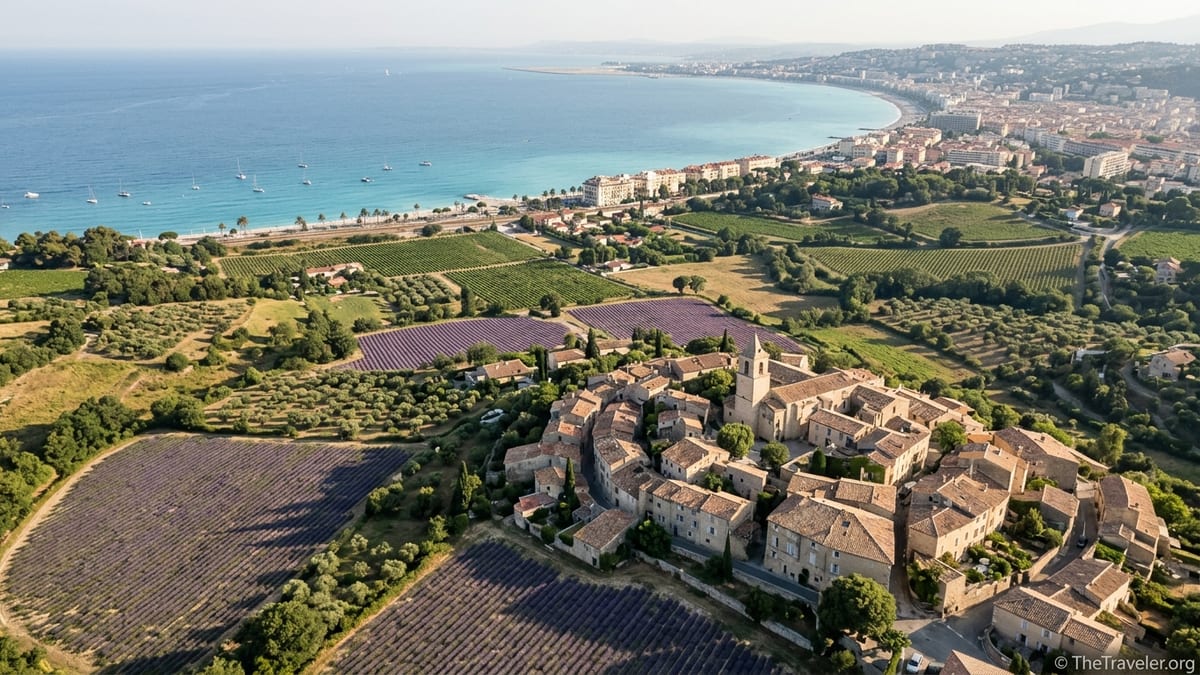
Provence vs French Riviera: How They Feel on the Ground
Although Provence and the French Riviera share the same administrative region, they feel like distinct worlds. Inland Provence is primarily a landscape of low mountains, vineyards and stone villages such as Gordes, Bonnieux and Roussillon, where daily life still revolves around the morning market and the rhythm of the fields. Travelers usually base themselves in small towns like L’Isle sur la Sorgue, Saint‑Rémy‑de‑Provence or Lourmarin and explore by car along narrow country roads lined with plane trees and stone farmhouses.
The French Riviera, or Côte d’Azur, runs along the Mediterranean from around Saint‑Tropez past Cannes and Nice toward Menton near the Italian border. Here the focus is on the sea: promenades, marinas, and long strings of beach clubs and public coves. Cities such as Nice, Cannes and Antibes offer a denser, more urban experience, with apartment blocks and grand hotels built right up against the water and frequent local trains linking one resort to the next.
In practice, Provence suits travelers who enjoy slower days, scenic drives, wine tasting and long lunches in village squares. The Riviera suits those who want to walk to the beach, rely on trains and buses instead of a car, and mix daytime swimming with evening bar‑hopping or people‑watching along famous promenades like the Promenade des Anglais in Nice.
Weather is broadly similar across the region, with hot, dry summers and mild winters. The coast, however, benefits from slightly more stable winter temperatures and a longer shoulder season for sea swimming, which means Nice and Cannes can still feel lively in October while some Provençal villages are already quietening down for winter.
Villages, Cities and Landscapes
Provence’s signature landscapes are its perched villages and agricultural valleys. Gordes, often cited among the most beautiful villages in the world, clings to a rocky outcrop above the Luberon with honey‑colored stone houses and panoramic views over orchards and vines. Nearby, Roussillon sits on ochre cliffs streaked with red and orange, with a signposted “ochre trail” that lets you walk through old quarries glowing at sunset. Around Bonnieux, roads wind past cypress trees and farm tracks leading to small wineries and guesthouses surrounded by lavender in early summer.
Urban centers in Provence, such as Avignon and Aix‑en‑Provence, feel like historic small cities rather than resorts. Avignon is anchored by its medieval papal palace and bridge, while Aix offers elegant townhouses, fountains and a strong café culture. They work well as bases if you want a blend of cultural sights and countryside excursions within an hour’s drive.
On the French Riviera, your backdrop is the sea, and settlements stretch along the coast or climb the surrounding hills. Nice is the main gateway, with a shingle beach backed by a wide waterfront promenade and a compact old town filled with restaurants and bars. Cannes has a similar coastal strip but leans more overtly into luxury with a famous film festival, designer boutiques and a line of high‑end hotels along the Croisette. Farther along, Antibes mixes an atmospheric old town and harbor with family‑friendly beaches around Juan‑les‑Pins, while Menton near the Italian border offers pastel facades, subtropical gardens and a calmer pace.
For hilltop drama on the Riviera, inland villages like Èze and Saint‑Paul‑de‑Vence offer cobbled lanes, galleries and sweeping sea views, but they are day‑trip destinations rather than places many visitors stay overnight. By contrast, in Provence it is common to sleep in the middle of the countryside in a renovated farmhouse or small hotel and drive into villages for dinner.
Beaches, Lavender Fields and Outdoor Experiences
If you want classic Mediterranean beach days, the French Riviera has the edge. Nice’s city beach is mostly smooth pebbles, with a mix of public zones and private beach clubs where a sun lounger and umbrella can cost roughly 25 to 40 euros per day in peak season depending on the club and front‑row location. In Cannes, long sandy stretches line the Croisette, again divided between public sections and clubs where two loungers and an umbrella can run 60 euros or more in July and August. Around Antibes and Juan‑les‑Pins, small sandy coves suit families with younger children who prefer easy sea access.
West toward Saint‑Tropez, beaches such as Pampelonne offer a mix of simple public access and legendary clubs charging premium prices for loungers, cocktails and meals. Budget travelers often choose smaller public coves near Nice or Villefranche‑sur‑Mer for free entry and pack their own towels and snacks, accepting that facilities will be more basic and space more limited in midsummer.
Provence’s iconic outdoor experience is not the beach but the lavender fields and vineyards. On the Valensole plateau and around Sault, long rows of purple typically bloom from late June into July, with some higher‑elevation plots holding color into early August in an average year. Many visitors stay in nearby villages such as Valensole or Sault and plan early‑morning or late‑evening drives to avoid midday crowds and harsh light, stopping at farms that sell essential oils, honey and soaps. In the Luberon, lavender is interspersed with vines and olive groves, making it easy to combine photography stops with wine tastings and village visits on the same day.
Beyond lavender, Provence is strong on hiking and cycling. Trails around Mont Ventoux, the Alpilles near Saint‑Rémy and the Gorges du Verdon offer everything from gentle walks to demanding routes. On the Riviera, coastal paths such as the Cap d’Antibes or Cap Ferrat trails provide scenic half‑day walks with sea views, but serious mountain hiking usually means heading inland toward the Mercantour National Park, several hours away by car.
Hotels, Nightlife and Food: What Evenings Look Like
Evenings in Provence tend to be relaxed and centered on food rather than late‑night entertainment. In smaller villages, you might have three or four restaurants to choose from, most serving local dishes like ratatouille, daubes, grilled lamb and seasonal tarts. A typical three‑course dinner with wine in a mid‑range bistro can cost around 35 to 50 euros per person, slightly lower than similar quality on the Riviera. After dinner, many travelers simply stroll through the village, have a final glass of rosé on a terrace, and head back to a guesthouse or farmhouse hotel.
Accommodation in Provence spans simple family‑run hotels in places like Saint‑Rémy or Uzès, farm stays in working vineyards and higher‑end country hotels with pools. In peak summer, a comfortable boutique hotel in a Luberon village may cost in the region of 220 to 350 euros per night for a double room, with character properties commanding more. Outside July and August, prices typically soften noticeably, and late spring or early autumn can offer good value while restaurants and markets remain lively.
On the French Riviera, nightlife is a much bigger part of the experience, especially in cities like Nice, Cannes and Monaco. Seafront promenades fill up around sunset, and many visitors move between aperitif bars, waterfront restaurants and late‑night venues. In Cannes and Monaco, upscale cocktail bars can easily charge 18 to 25 euros for a drink, and entry to certain clubs may come with minimum spends or high cover charges on weekends during peak season. Nice offers a broader range of price points, with neighborhood wine bars and casual beach kiosks sitting alongside luxury hotel bars.
Hotel prices along the Riviera reflect coastal demand. In high season, a four‑star hotel in central Nice or Cannes often starts near 300 euros per night, with seafront balconies and famous addresses costing significantly more. However, travelers willing to stay a few blocks back from the water or choose nearby towns such as Menton or inland villages above Nice can often find rooms in the 180 to 250 euro range in July, especially when booked well in advance or during mid‑week stays.
Road Trips, Transport and Practical Logistics
Provence rewards travelers who are comfortable driving. Many of its most atmospheric villages, from Oppède‑le‑Vieux to Saignon or Cucuron, are not on major rail lines, and buses can be infrequent, especially in the evening. Rental cars collected in Marseille, Avignon or Aix‑en‑Provence airports and stations give you the freedom to link vineyards, markets and viewpoints on your own schedule. A typical one‑week compact car rental in summer for two drivers might cost around 350 to 550 euros before fuel and tolls, depending on insurance and booking timing.
Driving itself is part of the pleasure in Provence, but it comes with practical considerations. Village centers often have narrow lanes and limited parking, so many visitors leave cars in designated lots just outside and walk in. In July and August, popular spots like Gordes and the Gorges du Verdon can see heavy daytime traffic, so early starts and late afternoon visits can reduce stress and help with parking.
On the French Riviera, public transport is genuinely practical for visitors. The coastal train line connects towns from roughly Cannes to Menton, usually with at least hourly services during the day. That means you can stay in Nice, for example, and take quick day trips to Antibes, Villefranche‑sur‑Mer, Monaco or Menton without renting a car. Local buses cover shorter hops to hilltop villages like Èze, though schedules thin out in the evening. For many travelers, especially those uncomfortable with European driving or parking, this rail‑based setup is a major argument for prioritizing the coast.
Road trips that mix both areas are common. A classic pattern is to fly into Marseille or Avignon, spend four or five nights in Provence with a rental car visiting the Luberon and nearby towns, then drive or take the train to Nice for three or four nights on the Riviera before flying out. This kind of itinerary gives a real taste of both countryside and coast in about a week and a half, but if you have fewer than seven full days on the ground, focusing on just one region usually feels more relaxing.
Couples, Families, Budgets: Who Each Region Suits Best
Couples often gravitate to Provence for romance and to the Riviera for buzz. In Provence, a typical day for a couple in June might involve coffee in a village square, a mid‑morning market, a wine tasting at a small estate, and a sunset walk among lavender or vineyards before dinner. Many boutique hotels and guesthouses cater specifically to adults with quiet pools and multi‑course dinners. It is an easy setting for honeymoons, anniversaries or any trip where the goal is to slow down and disconnect.
The French Riviera, by contrast, appeals to couples who want both daytime relaxation and a nightlife scene. A pair staying in central Nice can have breakfast at a café, spend the day at a beach club, then dress up for cocktails on a hotel rooftop followed by a late dinner in the old town or a short train ride to a different town for variety. For some, that variety and energy outweigh the charm of rural evenings, while for others it feels too busy and commercial compared with Provence.
Families face a slightly more complex choice. With young children, Provence offers space, pools and the possibility of renting a villa with a garden where kids can play while adults cook or share local cheese and wine on the terrace. Day trips might include easy walks, riverside paddling or visits to small animal farms. On the coast, families often appreciate the simplicity of being able to walk to the beach and playgrounds without worrying about car seats or parking. Towns like Antibes and Menton mix sandy beaches, aquariums or small theme attractions and family‑friendly restaurants, though in peak summer parents must factor in heat, crowd levels and higher prices for ice creams, beach equipment and snacks.
Budget is another dividing line. As a broad guideline, travelers can expect the Riviera’s major resorts to cost more per day than most inland parts of Provence, particularly for beachfront hotels and nightlife. A family of four staying in a mid‑range hotel with breakfasts and eating out for most meals along the Côte d’Azur in early summer can easily see weekly spending in the low thousands of euros once accommodation, restaurant meals, beach clubs and activities are included. In Provence, self‑catering rentals combined with market shopping and more occasional restaurant splurges can keep overall costs lower, especially outside the school holiday peak.
The Takeaway
Choosing between Provence and the French Riviera means deciding whether countryside or coast should anchor your Southern France experience. Provence delivers stone villages, lavender fields, vineyards and slow evenings, best explored with a car and an openness to meandering between markets and viewpoints. It is ideal for travelers who value quiet, scenery, food and wine, and who do not mind driving to get the most out of the region.
The French Riviera, by contrast, places you directly on the Mediterranean, with easy train links between coastal towns, a wide spectrum of beaches and a more cosmopolitan nightlife and dining scene. It suits travelers who want to swim daily, rely on public transport and enjoy people‑watching along promenades, with the option to dip into hilltop villages or even Monaco for the day.
If your trip is short and you must choose one, prioritize Provence if you are drawn to rural landscapes, historic villages and lingering meals in quiet squares. Prioritize the Riviera if warm evenings by the sea, a choice of bars and restaurants within walking distance and varied day trips by train sound more appealing. With ten days or more, consider dividing time between the two, starting in the countryside to unwind before finishing with a few nights by the coast. Either way, Southern France will feel less like a single destination and more like a pair of complementary worlds that reward repeat visits.
FAQ
Q1. Is Provence or the French Riviera better for a first trip to Southern France?
For a first trip, many visitors choose the French Riviera because it is easy to navigate by train and combines beaches with lively towns. If you prefer calmer days in villages and do not mind renting a car, Provence can be just as rewarding for a first‑time visit.
Q2. Do I need a car in Provence and on the French Riviera?
In Provence, a car is highly recommended to reach hilltop villages, vineyards and lavender fields that are poorly served by public transport. On the French Riviera, you can comfortably rely on trains and local buses if you base yourself in a coastal town like Nice or Antibes.
Q3. When is the best time to see lavender in Provence?
Lavender in Provence typically blooms from late June through much of July, with some higher fields holding color into early August in an average year. Visiting in the first half of July usually offers the best chance of seeing widespread bloom.
Q4. Are beaches in the French Riviera sandy or pebbly?
It varies by town. Nice’s central beaches are mostly pebbly, while Cannes, Juan‑les‑Pins and many coves near Antibes offer sandy stretches. Research specific towns if sand is a priority.
Q5. Which region is more expensive, Provence or the French Riviera?
Overall, the French Riviera’s main coastal resorts tend to be more expensive, particularly for beachfront hotels, beach clubs and nightlife. Provence can still be costly in peak summer, but countryside rentals and village restaurants often offer better value.
Q6. Is Southern France suitable for families with young children?
Yes. Provence works well for families who like space, pools and slower days, often in villas or countryside hotels. The Riviera suits families who want easy beach access, playgrounds and the ability to move around by train without car seats.
Q7. How many days should I spend in Provence vs the French Riviera?
If you are focused on one region, five to seven nights allows a relaxed pace. With about ten days, many travelers split time between both, for example four nights in Provence and four or five on the Riviera.
Q8. Is nightlife better in Provence or on the French Riviera?
Nightlife is more developed on the French Riviera, especially in Nice, Cannes and Monaco, where you will find bars, clubs and late‑night restaurants. Provence evenings are typically quieter and centered on dinners and relaxed drinks.
Q9. Can I visit both Provence and the French Riviera without changing hotels?
It is difficult to see both well from a single base, as distances and travel times add up. For a meaningful experience of each, plan at least two bases, one inland in Provence and one on the coast.
Q10. Which region is better outside the summer months?
Spring and autumn suit both, but the French Riviera generally stays livelier in the shoulder seasons, with more restaurants and hotels open and milder weather by the sea. Some Provence villages become very quiet in late autumn and winter.