


I arrived in Alsace on a cool September afternoon, stepping off the TGV from Paris at Strasbourg’s main station with five full days ahead. I had booked two bases instead of moving every night: three nights in Ribeauvillé to explore the wine villages, then two nights in Kaysersberg to reach deeper into the Vosges Mountains and nearby castles. I rented a compact car at the station, planning to drive between villages and trailheads rather than rely on trains and buses, which thin out quickly once you leave the main Strasbourg Colmar axis. Over those five days I walked the cobbled lanes of Strasbourg, Colmar, Ribeauvillé, Riquewihr, Hunawihr, Kaysersberg and Eguisheim, visited family wineries in Ribeauvillé and Hunawihr, and climbed into the Vosges for views from Château du Haut Koenigsbourg and the Route des Crêtes. What I discovered once I stepped beyond the postcard centers was a region that felt more rural, quieter and more complex than the glossy brochures suggest.
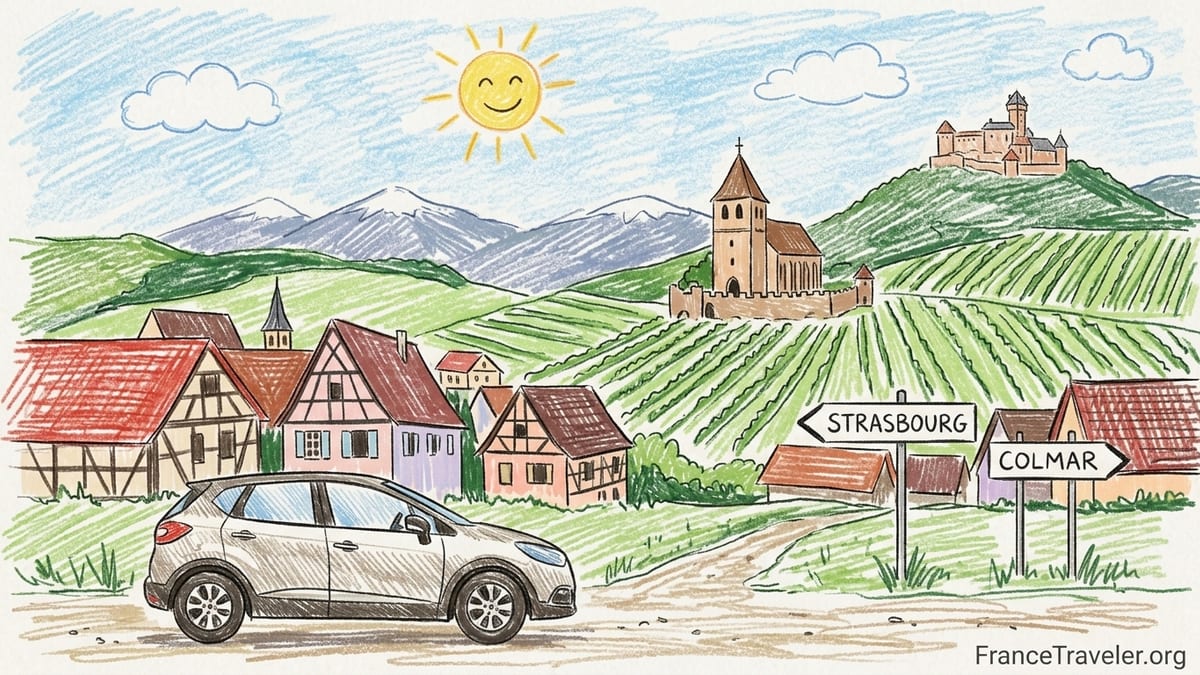
First Impressions: Strasbourg, Colmar and Choosing a Base
My trip began in Strasbourg, which immediately felt more international than I expected from a border city known in brochures for its half timbered old town. Trams glided past European institutions, students were everywhere, and I heard German, English and Spanish alongside French and Alsatian. Around the Grande Île, cafés were busy until late, and hotel prices near the cathedral in early autumn typically hovered around 130 to 180 euros per night for a midrange room if booked a few weeks ahead. Staying here would have made day trips into wine country possible by train and bus, but it would also have added up in both cost and travel time.
Colmar, about half an hour away by regional train, had the opposite surprise. I expected a pretty but relaxed small town. Instead, the historic center around Petite Venise felt noticeably more crowded in the middle of the day, especially when riverboat tours were running and several tour buses arrived at once. In September, midrange hotels near the center often run in the 110 to 160 euro range, but availability narrows on weekends because tour groups block-book rooms. After an hour of dodging phone cameras on the bridges, I understood why many visitors recommend staying in one of the smaller wine villages for a quieter experience.
With that in mind, I chose Ribeauvillé as my first base, roughly 20 minutes north of Colmar by car and about 45 minutes south of Strasbourg. It sits directly on the Alsace Wine Route and has enough services to function as a hub, including multiple bakeries, a supermarket on the edge of town, and several winstubs and casual restaurants. Guesthouses inside the medieval walls often charge about 90 to 130 euros per night for a double room in shoulder season, and some include parking either in small courtyards or in nearby public lots.
For my last two nights, I moved to Kaysersberg, a bit farther into the foothills. In hindsight, shifting bases for just two nights was one of my minor mistakes. Packing the car, checking in again and re-parking used up more time than I expected, and the driving distances in central Alsace are short enough that I could easily have kept a single base between Ribeauvillé, Kaysersberg and Eguisheim.
Driving the Vineyard Roads and Dealing With Parking
Once I left Strasbourg’s tram network behind, a rental car became the most practical option. Public transport does connect some villages, but frequencies outside rush hours are limited, and hiking or winery days often end later than the last convenient bus. I picked up a small manual hatchback at Strasbourg station, paying just under 50 euros per day including basic insurance, which is in line with typical autumn rates for compact cars booked a few weeks in advance.
The vineyard roads between Ribeauvillé, Riquewihr, Hunawihr and Kaysersberg felt shorter than they look on the map. Twenty minutes of driving here takes you much farther in experience than in distance, because villages that appear almost adjacent on a digital map still feel distinct when separated by rows of vines and low hills. That made it tempting to plan far too many stops in a single day, which I did at least once, scheduling four villages and a hike. By mid-afternoon I was tired, rushing my walks, and drove one stretch in a mild hurry, which was exactly the opposite of why I had come.
Parking turned out to be easier than the busy postcards suggested, but only if I accepted that I would often use paid municipal lots. Riquewihr and Eguisheim both have signposted parking just outside the old cores, usually charging a few euros for several hours. In Ribeauvillé, I often left the car in the larger lot near the lower town, where spaces were widely available in the evening but relatively full around midday on sunny days. On some narrow village streets, the local norm seemed to be to fold in side mirrors to help traffic pass. I learned quickly to back into any tight space so I could see better when leaving around dusk.
One important lesson was to avoid driving directly after a series of tastings. While many Alsace wineries pour modest sample sizes and often spit during professional tastings, even small pours add up. On one afternoon I visited two cellars in quick succession, felt fuzzier than I was comfortable with, and ended up leaving the car in a public lot, walking back to my guesthouse and returning for it early the next morning. It was mildly inconvenient but a useful reminder that distances may be short, but country roads can still be unforgiving.
Inside the Villages: Language, Architecture and Evening Quiet
Once I stepped beyond Strasbourg and Colmar, Alsace felt increasingly like its own small cultural world. In Ribeauvillé, Kaysersberg, Hunawihr and Eguisheim, conversation around me switched between French, the Germanic-sounding Alsatian dialect, and German, especially among older residents and visitors from across the Rhine. Restaurant menus were often in French and German, and winemakers I met usually spoke at least some English, though always appreciated when I tried to order first in French.
The architecture that draws so many visitors half timbered houses in pastel colors, steep roofs, overhanging upper floors is not confined to one or two famous streets. In Ribeauvillé, 15th and 16th century houses line the Grand Rue, and three ruined castles stand on the ridge above. Kaysersberg’s main bridge frames a cluster of oriel windows and carved beams reflected in the river. Hunawihr, smaller and quieter, feels almost like a film set when you first approach through the vineyards, but the fortified church on the hill and working farms remind you this is still a lived in place.
The biggest surprise inside the villages was how dramatically the atmosphere changed once the day trippers left. Riquewihr and Eguisheim can feel almost overwhelmed around midday with souvenir shoppers and tour groups. Yet by 8 or 9 p.m. on a September weeknight, many shops had closed, a few restaurants stayed open for lingering diners, and the streets emptied to the point where I could hear only my own footsteps and the occasional clink of glasses through half open windows. If you stay overnight, you may find yourself walking nearly alone past facades that crowded postcards never show without people.
This quiet has practical consequences. Many restaurants stop serving relatively early, often around 9 or 9:30 p.m., and village supermarkets or bakeries close well before dinner. On my second evening in Ribeauvillé I waited too long after a late tasting, assumed I would find something simple, and discovered that my preferred winstub had stopped seating. I ended up with a picnic of bread, cheese and fruit in my guesthouse room, which was pleasant enough but avoidable with a little more foresight.
Food, Portions and Winery Etiquette
Alsace is known for robust dishes and generous portions, and that reputation matched what I saw. In traditional winstubs in Ribeauvillé and Kaysersberg, plates of choucroute garnie often arrived as mounds of sauerkraut piled with several types of pork, along with potatoes. Flammekueche, the thin local flatbread topped with crème fraîche, onions and lardons, usually came on large wooden boards intended for sharing. Prices for main dishes in touristy centers like Riquewihr were commonly in the 17 to 25 euro range in 2026, with daily menus and simpler tarte flambée starting lower.
After two heavy meals in a row, I started to adjust my ordering strategy. At lunch I would share a flammekueche or order a salad and soup rather than another full plate, leaving more appetite for a glass of Riesling or Pinot Gris later. In Colmar and Strasbourg it was easier to find lighter options such as mezze-style plates, vegetarian dishes or contemporary bistros, especially in university and business districts. In smaller villages, the offer leaned more classic, so making lunch the main meal and keeping dinner simple felt more comfortable, especially if I wanted to be out walking afterward.
Visiting wineries, I learned that etiquette in Alsace balances friendliness and practicality. In Ribeauvillé, I tasted at a long-established family domain near the center that welcomed walk-ins but appreciated when visitors arrived outside peak weekend hours. Sample flights of three or four wines were often complimentary if you purchased a bottle, or charged at a modest rate around 5 to 10 euros. In Hunawihr, at a slightly larger producer on the edge of the vines, the tasting room operated with set opening hours posted at the door, and staff expected visitors to check in at the counter before seating themselves.
My key mistake was assuming that walk-ins would always be accepted. On one Saturday afternoon, I drove to a well-known estate between Riquewihr and Kaysersberg without calling ahead, only to find a private group booking occupying the space and a polite sign indicating tastings were by appointment that day. Since I had built my afternoon loosely around that visit, I ended up reshuffling my plan and cutting a hike short. On a future trip, I would email or call at least a day in advance for any estate I considered a priority, especially on Fridays and weekends during harvest season.
The Vosges Mountains and Castles Beyond the Vines
Official tourism material often frames Alsace as both a wine and mountain destination, and the Vosges begin only a short drive from the vineyards. From Ribeauvillé, I followed winding forest roads up toward the Route des Crêtes, where trailheads lead to panoramic walks along the ridgeline. The change in atmosphere was immediate. Within 30 minutes I had swapped cobbled lanes and shopfronts for spruce forests, open pastures and wooden farm inns known as ferme auberges, serving simple dishes like roestis and cured meats.
Weather in the mountains shifted faster than I expected. On one morning, Kaysersberg was sunny and already warm at 9 a.m., while a viewpoint above 1,000 meters lay under low cloud an hour later. Temperatures were several degrees cooler higher up, and a breeze made light layers essential, even in early autumn. Afternoon thunderstorms can build quickly on warm days, so I learned to start hikes earlier and to check local forecasts posted at tourist offices or shared by guesthouse hosts rather than relying only on general regional apps.
Castles provided another dimension beyond village life. Château du Haut Koenigsbourg, a major restored fortress on a rocky spur, dominates the landscape south of Sélestat. I visited in the late afternoon and found the parking area still busy, but the interior manageable. Entry tickets for adults typically cost a bit under 15 euros in 2026, with discounts for children and reduced rates available. Inside, reconstructed halls and ramparts provided sweeping views over the Rhine valley and, on clear days, toward Germany and the Black Forest. Earlier that same day, the ruined castles above Ribeauvillé had offered a contrast, with unroofed towers and partially collapsed walls reachable via a hiking path straight from the village center.
One planning error I made here was underestimating how long castle visits consume, even when distances are short. Allowing only an hour for Haut Koenigsbourg was optimistic. Between walking from the parking, buying tickets, exploring the rooms and enjoying the views, I spent closer to two hours on site. As a result, my original plan to fit in another village stop before dinner meant a rushed drive down winding forest roads. On a future itinerary, I would dedicate a half day to any major castle and treat nearby villages as optional extras rather than fixed appointments.
Beyond Postcards: How Alsace Felt Off the Main Tourist Hours
Spending nights in the villages rather than returning to Strasbourg or Colmar each evening changed how the region felt. Early mornings in Ribeauvillé brought delivery vans, locals walking dogs and bakers carrying trays of pastries from ovens to storefronts. The same streets that had been framed endlessly in photos the day before showed a practical side, with recycling trucks edging past timbered facades and shopkeepers sweeping cobbles.
In Kaysersberg, I noticed how the tempo of the day shaped interactions. Around 10 a.m. visitors from Colmar began to flow in, and tasting rooms opened their doors, laying out glasses and price lists. By lunchtime, parking areas near the center filled, and camera tripods appeared near the bridge. Yet after 6 p.m., as cars faded away and the light softened, conversations with restaurateurs and hoteliers grew longer. One guesthouse owner explained that they rely on both overnight stays and passing trade, but value the quieter shoulder seasons because they can talk to guests about hiking routes and lesser-known cellars instead of just managing turnover.
What surprised me most about Alsace beyond the postcard centers was this coexistence of intense daytime tourism and almost village-like calm at night. It felt less like a museum and more like a working landscape, especially once I noticed tractors moving through the vines at dawn and small produce stands on the edges of villages selling seasonal fruit. Even in popular places like Eguisheim, chickens scratched in side yards, and laundry fluttered from back windows that never appear in carefully framed Instagram shots.
Distances, too, felt different outside rigid day trip patterns. Because most of the classic villages lie within roughly half an hour of each other by car, it is easy to chase a checklist. On my third day I attempted Ribeauvillé, Riquewihr, Hunawihr and Eguisheim in one go. By the time I reached the last stop, I was tired of parking machines and photographs, and the charming details that had delighted me in the morning blurred into sameness. I wish I had spent a full afternoon simply wandering one village without an agenda, perhaps sitting with a single glass of wine on a terrace and watching how the light changed on the woodwork.
Mistakes I Made and How I Would Plan a Second Trip
Every trip has its missteps, and Alsace was no exception. My biggest error was trying to see too many villages in one day, which turned charming streets into a checklist and made the region feel smaller and more crowded than it actually is. Another was driving after tastings, even when I thought I had been careful. Leaving the car overnight in a public lot and walking back the next morning worked once, but it highlighted the value of planning days so that winery visits clustered near my base when possible, allowing for short walks instead of drives.
Choosing two bases for five days also proved unnecessary. While moving from Ribeauvillé to Kaysersberg let me wake up in a new setting, the practical benefits were limited because the two are only about 15 minutes apart by car. I lost almost half a day to packing, check-out, check-in and figuring out a new parking routine. With hindsight, I would pick one base in the central wine region and perhaps one night in Strasbourg at either end of the trip instead of two rural bases.
My assumptions about winery access needed adjustment too. I initially relied on walk-ins, which sometimes worked well at small family domains but failed at more prominent estates or on busy weekends. When harvest activities were underway, some wineries reduced public hours or hosted only pre-booked groups. On the next visit I would identify a handful of must-visit producers in advance, email them, and structure my days around those confirmed tastings, leaving spontaneous stops for quieter weekday afternoons.
Food planning offered another lesson. I occasionally underestimated how early kitchens closed in small villages, assuming that European dinner hours always ran late. In several places kitchens closed orders around 9 p.m., especially outside peak summer. As a result I missed out on certain recommended dishes simply because I arrived too late. On a return trip I would book dinner reservations for at least a few nights in advance, especially in well known villages and on Fridays and Saturdays, and keep one or two evenings free for casual options or simple picnics.
The Takeaway
Alsace beyond Strasbourg and Colmar is not only a string of photogenic lanes, but a compact region where rural life, wine culture and mountain landscapes intersect. Once you stay overnight in the smaller villages, you begin to see both the postcard image and the daily routines that support it, from tractor traffic in the early morning to the deep quiet that settles after the last day trippers leave. Distances are short, but the experiences are varied, shifting from cathedral squares and European institutions in Strasbourg to fortified churches in Hunawihr and wind-ruffled ridgelines in the Vosges.
What I learned most clearly is that this is a place best approached slowly. Fewer villages, more time in each. Fewer rushed tastings, more conversations with winemakers and servers. Rather than trying to pair multiple castles with several villages on the same day, I would now allow room for delays, weather changes and simple pauses. Official brochures rightly highlight wine, gastronomy, cycling and mountain experiences, but the real reward lies in how these elements overlap once you step beyond the major centers and give yourself permission to stay put for a while.
If I were to structure a second trip, I would begin with one or two nights in Strasbourg without a car, focusing on the cathedral, Petite France and riverside walks, then pick up a rental vehicle only when leaving the city. I would base myself for four or five nights in a single village such as Ribeauvillé, Kaysersberg or Eguisheim, choosing a guesthouse with parking, breakfast and easy walking access to at least one or two wineries. I would pre-book a small number of tastings spread across two or three days, dedicate at least one full day to the Vosges and a major castle, and leave entire afternoons unplanned for wandering whichever village felt most appealing at the time.
Above all, I would treat Alsace not as a quick photo stop between bigger European destinations, but as a compact region worth its own dedicated journey. Traveling a little more slowly, paying attention to language, portions, parking and the quiet moments between sightseeings, revealed a side of Alsace that felt much more lasting than any single image of half timbered houses beside a canal.
FAQ
Q1. How many days do you really need in Alsace beyond Strasbourg and Colmar?
For a first trip that includes villages, wineries and the Vosges, four to six full days is a comfortable range, allowing slower days and some flexibility for weather.
Q2. Is it necessary to rent a car to explore the smaller villages and mountains?
You can reach a few key villages by train and bus, but renting a car makes it significantly easier to visit multiple wine villages, trailheads and castles in a limited timeframe.
Q3. Which village makes the best base for exploring the central wine route?
Villages such as Ribeauvillé, Kaysersberg and Eguisheim all work well as bases because they combine characterful centers with guesthouses, restaurants and access to nearby vineyards.
Q4. Do you need winery reservations, or can you rely on walk-in tastings?
Some smaller family wineries welcome walk-ins, but popular estates and weekends often require reservations, especially during harvest, so it is safer to book key visits ahead.
Q5. What is the best time of year to visit to avoid heavy crowds?
Late spring and early autumn generally balance pleasant weather with fewer crowds than peak summer or Christmas markets, though weekends can still be busy in famous villages.
Q6. How expensive are meals in the wine villages compared to Strasbourg?
Traditional restaurants in popular villages often charge midrange prices similar to central Strasbourg, with hearty main dishes commonly in the 17 to 25 euro range in 2026.
Q7. Is parking difficult in villages like Riquewihr and Eguisheim?
Parking is usually manageable if you use municipal lots on the edges of the historic centers and are prepared to pay a modest fee and walk a few minutes into town.
Q8. How quickly can mountain weather change in the Vosges?
Conditions can shift in less than an hour, with cooler temperatures, cloud and occasional thunderstorms at higher elevations, so packing layers and checking local forecasts is important.
Q9. Are the villages very quiet at night if you stay over?
Yes, once day trippers leave, many villages become noticeably calm, with early restaurant closing times and largely empty streets, which can feel peaceful rather than lively.
Q10. How would you structure a second trip after learning from mistakes?
I would keep one city stop in Strasbourg, choose a single village base in the central wine region, book a few winery visits in advance and leave more unplanned time to wander.