


The French Atlantic coast stretches for hundreds of kilometres from the low-slung dunes of the Vendée to the steep cliffs of the Basque Country. Along the way, the character of the shoreline changes dramatically: mellow family beaches give way to world-class surf breaks, sleepy islands to high-rise resorts and wild, roadless strands. This guide compares the main areas most travellers consider for a beach holiday or surf trip: Vendée, Île de Ré, Île d’Oléron, the Arcachon area, the Landes and the Basque Coast. It focuses on how each region performs for swimming, surfing, families, wild coastline and beachfront accommodation, with concrete, real-world examples to help you choose the right base.
How the French Atlantic Coast Compares Overall
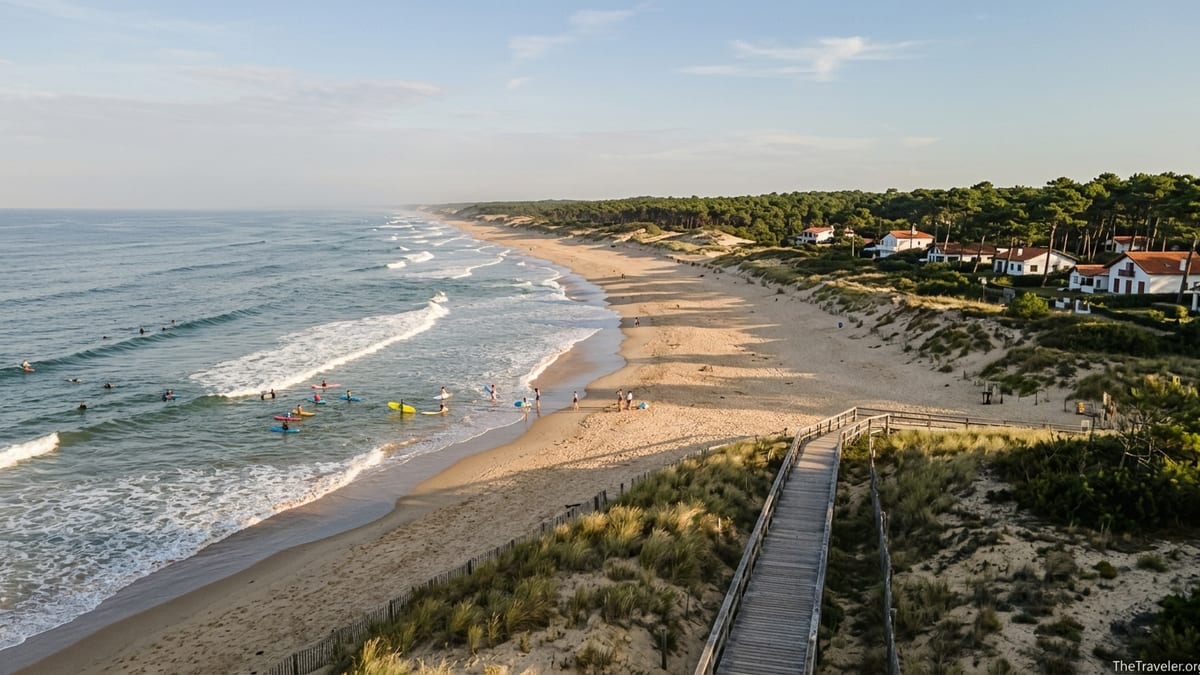
Seen on a map, the French Atlantic coast looks like a single long sweep of sand, but on the ground it feels like several distinct regions. The Vendée and the Charente islands of Ré and Oléron are relatively gentle, with broad, shelving beaches, long bike paths behind the dunes and numerous low-rise resorts and campsites. South around Arcachon the coast is punctuated by the protected waters of the bay and the Dune du Pilat, while from the Landes to the Basque Country the shoreline becomes straight, powerful and heavily surf-focused.
For pure surf quality, the stretch from the northern Landes down to the Basque Coast is the most consistent, with famous names like Hossegor, Capbreton and Biarritz drawing experienced surfers from across Europe. Families with younger children often gravitate to the Vendée, Île de Ré, Île d’Oléron and Arcachon Bay, where there are more sheltered options and extensive lifeguarded zones in summer. Travellers seeking wild coastline have good choices all along the shore, but the feeling of unbroken dunes and pine forest is particularly strong north of Arcachon and throughout the Landes.
In terms of infrastructure, you will find a spectrum that runs from traditional campsites in pine woods to high-end hotels overlooking town beaches. Island destinations like Île de Ré and Île d’Oléron lean heavily on holiday rentals and well-equipped campsites, many quite close to the sand, while larger resorts such as Les Sables d’Olonne, Lacanau-Océan, Biarritz and Saint-Jean-de-Luz offer conventional seafront hotels and apartments at a wide range of price points.
Vendée: Classic Family Resorts and Gentle Surf
The Vendée, just south of the Loire estuary, is one of France’s classic summer playgrounds and a practical choice if you want simple access, long beaches and a relaxed, family-oriented atmosphere. Resorts like Saint-Jean-de-Monts, Saint-Gilles-Croix-de-Vie, Sion-sur-l’Océan and La Tranche-sur-Mer combine wide sandy strands with promenades, casual creperies and ice cream stands. The main beaches are generally straight, with gentle to moderate waves that are popular for bodyboarding and beginner surf lessons in midsummer, when swells are smaller.
Conditions vary by spot. Around Sion-sur-l’Océan the main beach stretches for many kilometres and is backed by modest dunes and holiday housing, giving plenty of space to spread out even in August. La Tranche-sur-Mer has built a reputation as a surf-friendly family resort, with several surf schools operating group lessons that typically cost in the range of 30 to 40 euros for a two-hour beginner session. In the north of the department, closer to Saint-Jean-de-Monts, the emphasis tilts more toward safe, lifeguarded bathing zones and organized kids’ clubs on the sand.
Beachfront accommodation in the Vendée is often in the form of large campsites and holiday parks that sit just behind the dunes. Many advertise “accès direct plage,” meaning there is no road to cross between your cabin or camping pitch and the sand. Expect a wide range of budgets: a simple mobile home a short walk from the beach in high season might start around 700 to 1,000 euros per week, while more upmarket sites with extensive pool complexes and organized entertainment can cost more. For travellers prioritizing ease with children and straightforward swimming, the Vendée is hard to beat.
Île de Ré: Upscale Island Living and Sheltered Beaches
Linked to the mainland near La Rochelle by a toll bridge, Île de Ré has a more upscale, village-based feel than most of the mainland resorts. Low whitewashed houses with green shutters, tidy harbours and salt marshes frame a series of beaches that alternate between gently shelving family strands and more exposed surf spots. On the northwestern tip, near Les Portes-en-Ré, beaches like Le Lizay and Le Petit Bec are popular with surfers, particularly when Atlantic swells wrap around the island.
For families, the long south-facing beaches at Le Bois-Plage-en-Ré and La Couarde-sur-Mer are particularly attractive. Here, strips of fine sand backed by dunes offer shallow entry to the water and lifeguarded areas in peak season. Many campsites sit very close to the shore, with some sites at Bois-Plage advertising direct or very short walking access to the beach and heated pool complexes for days when Atlantic winds pick up. Between April and late September, family-focused campsites can feel like self-contained villages, with on-site bike hire, children’s clubs and evening events, which can be convenient if you prefer not to drive during your stay.
Accommodation on Île de Ré skews toward higher prices, especially in July and August. Simple cottages or apartments suitable for a family of four can easily run above 1,500 euros per week in high season in popular villages like Saint-Martin or Ars-en-Ré. Campsites, even at four and five-star level with pools and spas, often provide better value if you are willing to stay in a mobile home or cabin rather than a private villa. The island is also well set up for cycling, with flat paths linking beaches and towns, which can be a major advantage for families who prefer to leave the car parked.
Île d’Oléron: Sunny, Laid-back and Great for Mixed Groups
South of Île de Ré, Île d’Oléron has a more laid-back and less polished feel despite being one of the sunniest corners of the French Atlantic coast. Pine forests, oyster huts and simple seaside villages sit behind a generous ring of beaches. On the ocean-facing west and southwest coasts, spots such as Vert-Bois, Grand-Village and Saint-Trojan provide reliable beach breaks that appeal to intermediate surfers, while north-facing areas around Les Huttes tend to be more sheltered depending on swell direction.
For swimming and families, several beaches on the eastern and northern shores benefit from slightly calmer conditions. In the north, near La Brée-les-Bains and Saint-Denis-d’Oléron, shallow sandy beaches and modest tides make paddling and early swimming lessons feasible on calm days. Municipal and privately run campsites line this part of the shore, with many advertising direct or very short walks to the sand and simple facilities focused on outdoor living. It is common to find pitches or basic mobile homes just a few minutes from the sea, often at prices lower than equivalent island accommodation further north.
Beachfront and near-beach accommodation on Oléron includes everything from straightforward municipal campsites right behind the dunes to four-star holiday parks with heated pools and organized activities. For a couple or family visiting in shoulder season, a week in a mobile home a short stroll from the ocean can often cost significantly less than a comparable stay on Île de Ré. Travellers who want a mix of surf, quiet cycling through pine woods and the chance to sample oysters in simple cabanes by the water tend to find Oléron particularly appealing.
Arcachon Area: Protected Bay, Dune du Pilat and Easy Access
Between Bordeaux and the Landes, the Arcachon area offers a very different coastal experience. The Bassin d’Arcachon itself is a semi-enclosed bay, ringed by oyster farms, small towns and sandy spits. The sheltered waters of the bay are excellent for paddling, stand-up paddleboarding and sailing, but you will not find the same surf as on the open coast. For waves, you head out to the ocean beaches near La Teste-de-Buch and around the famous Dune du Pilat, where the full force of the Atlantic returns.
Arcachon town has a long-established resort atmosphere, with belle époque villas, tree-shaded streets and a walkable seafront. Families like the gently shelving main beach inside the bay, where the lack of large surf creates a more controlled environment for young children and nervous swimmers. Water temperatures in mid-summer are often a touch higher inside the bay than on the open ocean. Because much of the shore is developed, a variety of mid-range and upscale seafront hotels and apartments are available, particularly in the central Ville d’Été district and along the promenade.
For travellers who want both wild coastline and urban comforts, basing in or near Arcachon can work well. A typical day might involve a morning climb up the Dune du Pilat, followed by an afternoon on an ocean beach a short drive away, and dinner back in town. Accommodation options run from simple campsites in pine forests with direct beach paths to four-star hotels with views across the bay. In high season, nightly room rates at seafront hotels often start in the mid-hundreds of euros, while campsites inland from the dunes offer lower-cost stays if you bring your own tent or book a basic cabin.
Landes: Wild Dunes and World-famous Beach Breaks
South of the Arcachon area the coastline straightens into the long, dune-backed beaches of the Landes, one of Europe’s most iconic surf regions. From Mimizan and Contis down past Seignosse and Hossegor to Capbreton, a near-continuous strip of sand faces the open North Atlantic. In autumn and winter this coastline produces some of the most powerful and hollow waves on the continent, especially around Hossegor’s La Gravière, which frequently hosts top-level competitions and attracts advanced surfers.
In summer the mood is softer. Swells tend to be smaller, and many beaches have large lifeguarded areas marked out, making the region popular with confident swimming families as well as surfers. Resorts such as Biscarrosse-Plage, Mimizan-Plage and Moliets combine low-rise developments with campsites in pine forests that often sit behind the dunes, sometimes with direct sand tracks leading to the beach. Surf schools are ubiquitous, and week-long packages for beginners, including board and wetsuit hire, are widely available at prices that are often competitive with other European surf destinations.
The wild character of the Landes is part of the appeal. Away from the main resort car parks, stretches of beach can feel completely undeveloped, with only dunes and pine forest in sight. This beauty comes with real ocean power, and visitors need to be aware of hazards such as rip currents and shifting sandbars. Local authorities publish safety information, and lifeguards typically advise swimmers to stay between the flagged areas, especially when surf is up. For many surf-focused travellers, though, the Landes offers the best balance of consistent waves, uncrowded stretches of sand and relatively straightforward access from Bordeaux by road or train.
Basque Coast: Characterful Towns and Surf for All Levels
At the southern end of the French Atlantic lies the Basque Coast, a relatively short but highly varied stretch centered on Biarritz, Bayonne, Saint-Jean-de-Luz and Hendaye. Here, cliffs and headlands break up the sandy beaches, creating a mix of sheltered coves and more exposed surf spots. Biarritz is a historic surf hub, home to town beaches like Grande Plage and the long sweep of Côte des Basques, which is particularly popular with longboarders and intermediate surfers when conditions are right.
For learners and families, Hendaye near the Spanish border is often recommended thanks to its broad, gently shelving bay that can tame incoming swells. Surf schools line the promenade in high season, offering group lessons for both children and adults, often with packages spread over several days. Saint-Jean-de-Luz offers a more traditional fishing-port atmosphere, with a protected central beach that is well suited to swimming and paddling, especially when winds are blowing onshore further up the coast.
The Basque Coast also stands out for its concentration of seafront hotels and apartments directly facing the waves. In Biarritz, for example, it is possible to stay in everything from modest two-star hotels a short walk from Grande Plage to luxury properties overlooking the town’s historic casino and lighthouse. Prices in midsummer can be high, but visiting in June or early September often brings softer rates while sea temperatures remain pleasant. Away from the major towns, smaller villages like Guéthary provide more low-key stays, often in guesthouses perched above small coves with steep paths down to the water.
Choosing the Right Area for Your Trip
Selecting the best part of the French Atlantic coast depends on your priorities. If your main focus is consistent surf and you are comfortable in energetic ocean conditions, the Landes and Basque Coast offer the best variety of beach breaks and established surf culture. Intermediate and advanced surfers often divide their time between Hossegor or Seignosse and sessions further south in Biarritz or around Capbreton. Travellers combining surf with nightlife lean toward Biarritz or Hossegor, where bars, board shops and surf schools cluster within walking distance of the beach.
Families with younger children or mixed-ability groups might find the gentler shores of the Vendée, Île de Ré, Île d’Oléron or Arcachon Bay more comfortable. In these regions it is usually possible to choose between more protected beaches inside bays or on leeward shores, and slightly more exposed strands for bodyboarding and beginner surf lessons. Practical factors such as the presence of playgrounds on or near the promenade, summer kids’ clubs and restaurant options that cater to early dining can make a significant difference to daily routines.
Budget and style of accommodation also influence the decision. Island destinations and the Basque Coast generally command the highest prices, especially in peak summer, while the Vendée, parts of the Landes and some areas around Oléron and Arcachon can provide better value without sacrificing beach quality. Travellers willing to stay a short cycle or drive from the most famous beaches often find lower nightly rates, particularly in campsites set a little back from the dunes or in smaller inland villages connected to the coast by bike paths.
FAQ
Q1. Which area is best for beginner surfers on the French Atlantic coast?
For beginners, summer conditions in the Vendée, parts of Île d’Oléron and sheltered Basque spots such as Hendaye or the gentler days at Côte des Basques in Biarritz work well. These areas have established surf schools that know how to adjust lesson locations to daily conditions and provide soft boards and appropriate wetsuits.
Q2. Where should families with small children base themselves?
Families with very young children often prefer the Vendée resorts, Île de Ré’s south-facing beaches, the gentler shores of Île d’Oléron and the protected waters of Arcachon Bay. These places combine lifeguarded zones in summer with promenades, playgrounds and a wide choice of family-friendly accommodation, from holiday rentals to well-equipped campsites.
Q3. What is the best region for a wild, undeveloped coastline feel?
If you are seeking unspoiled scenery with dunes and pine forests, the Landes coastline between Mimizan and Seignosse is a strong candidate, along with some of the less built-up stretches north of Arcachon. Even in high season it is often possible to walk a short distance from main access points and find near-empty sand bordered only by dunes and forest.
Q4. Which part of the coast has the warmest and calmest water in summer?
Water temperatures rise gradually southward along the French Atlantic, but local conditions matter. In general, sheltered areas like Arcachon Bay and some eastern or northern shores of Île d’Oléron feel slightly warmer and calmer in peak summer than fully exposed ocean beaches, although exact temperatures vary with weather and tides.
Q5. Is it easy to find beachfront accommodation close to the sand?
Yes, but the style varies by region. In the Vendée, Landes and around Arcachon many large campsites and holiday parks sit just behind the dunes with direct pedestrian access to the beach. On Île de Ré and Île d’Oléron, near-beach campsites and rentals are common, while the Basque Coast and larger resorts like Les Sables d’Olonne and Biarritz offer more conventional seafront hotels and apartments.
Q6. Do I need a car to enjoy these coastal regions?
A car is helpful but not always essential. Towns like Biarritz, Arcachon, Les Sables d’Olonne and some parts of the Basque Coast are accessible by train and have local buses. Islands such as Ré and Oléron are well suited to cycling once you arrive, with extensive bike paths linking beaches and villages. However, a car gives more flexibility to explore multiple beaches and reach quieter stretches.
Q7. When is the best time of year to visit for surfing?
For consistent, powerful surf, autumn and early spring are often preferred, especially along the Landes and Basque Coast, when Atlantic swells are stronger. Summer brings smaller waves that are friendlier for beginners and families but can be less reliable for experienced shortboarders. Water temperatures are more comfortable from late June to early October.
Q8. How safe is swimming on the open Atlantic beaches?
Swimming on open Atlantic beaches can be very enjoyable but requires caution. Rip currents and shore breaks can be strong, especially on the Landes and Basque Coast. It is wise to swim only on lifeguarded beaches during patrol hours, stay between the flags, and follow local advice or warning signs. Families should pay close attention to children near the waterline.
Q9. Are there good options for travellers on a tighter budget?
Yes. Budget-conscious travellers can look to larger campsites in the Vendée and Landes, municipal sites on Île d’Oléron and inland villages a short drive or bike ride from the coast. Visiting in June or September rather than peak August usually brings lower nightly rates on both campsites and rental properties while still offering mild weather and usable sea temperatures.
Q10. Which region combines surf, culture and food in one trip?
The Basque Coast is particularly strong in this regard, with towns like Biarritz, Bayonne and Saint-Jean-de-Luz offering quality surf, lively markets, Basque cuisine and easy side trips into nearby villages. Combining a few days in the Landes for wilder beaches with time in the Basque towns makes a varied itinerary for travellers interested in both waves and local culture.