


Two names dominate many travelers’ daydreams of France’s Atlantic coast: La Rochelle and Biarritz. Both offer big skies, Atlantic swells and plates of fresh seafood, but the experience on the ground is remarkably different. One is a historic harbor town of arcaded streets and family-friendly beaches; the other a compact Basque resort where surfing and style set the tone. Choosing the right base can shape your entire trip, from how you spend your mornings to where you end up after midnight. This guide compares La Rochelle and Biarritz in detail so you can decide which coastal base fits your style, budget and plans.
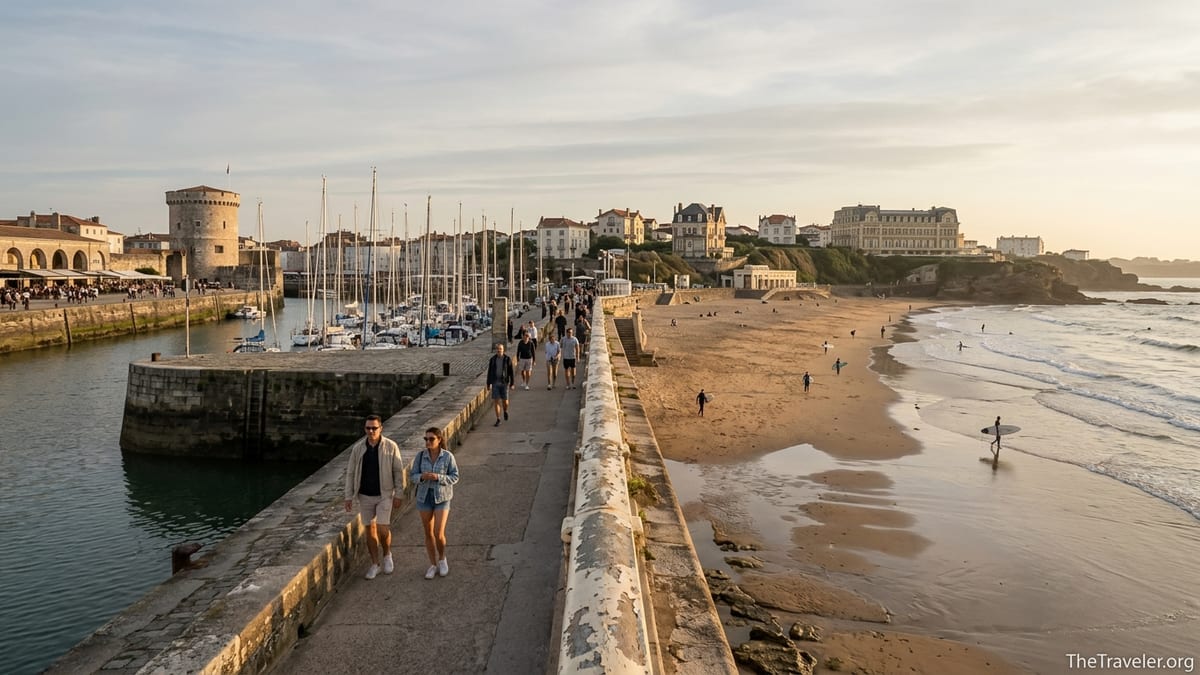
Overall Vibe: Maritime Old Port vs Basque Boutique Resort
La Rochelle feels like a working maritime city that just happens to be very beautiful. The heart of town is the Vieux Port, framed by medieval towers and lined with brasseries and café terraces. You will see yacht masts, ferries heading to nearby islands and locals commuting by bike. Even in high summer the atmosphere is more relaxed than flashy, with families pushing strollers under the old stone arcades, students filling the bars in the Saint-Nicolas quarter and a year-round population that keeps the city feeling lived-in rather than purely seasonal.
Biarritz, by contrast, is all about the resort experience. It grew up as an imperial seaside escape and later as a European surf capital, and you feel that mix of elegance and surf-town energy as soon as you step onto the seafront promenade. Grand Belle Epoque villas sit above rocky coves, chic boutiques cluster around the Grande Plage, and wetsuits hang outside apartments in backstreets a few blocks from the surf. The town is smaller and more self-contained than La Rochelle, with most visitors focused on the beach, the ocean and the evening scene.
For many travelers, the choice comes down to this: La Rochelle is a better fit if you want a larger, walkable city with history, markets and gentle coastal life. Biarritz suits those who want an intense seaside break built around surfing, scenic coves and Basque culture, even if that means slightly higher prices and heavier summer crowds.
In budget terms, La Rochelle can feel more forgiving, with a wide spread of accommodation from simple chain hotels in the Minimes district to mid-range properties in restored townhouses. Biarritz often prices more like a classic resort, especially in July and August, when seafront hotels and apartments overlooking the Grande Plage command premium rates and minimum stays.
Beaches and Swimming: Protected Urban Coves vs Surf-Facing Bays
La Rochelle’s beaches are urban, sheltered and tailored to gentle swimming rather than big surf. Within the city limits you have three main options: Plage des Minimes beside the large marina, Plage de la Concurrence a short walk from the old port, and smaller Chef de Baie to the west. These are compact strips of sand where lifeguards are typically on duty in peak season and where the water is shallow and calmer than on the open Atlantic. Families spread out on the sand, kids paddle in the shallows and you are never far from an ice cream stand or café.
For more space near La Rochelle, many visitors make the short hop to Châtelaillon-Plage, around 15 kilometers south, which offers several kilometers of sandy beach and a classic seafront promenade. It is still oriented toward safe swimming and family games rather than powerful waves. The water here usually feels warmer and more manageable for cautious swimmers, young children and anyone who wants to float or paddle in peace.
Biarritz offers a very different coastal experience. The Grande Plage is the emblematic central beach, a broad curve of sand backed by a promenade, beach clubs and the historic casino. To the south, the Côte des Basques opens toward the Atlantic and is widely regarded as the cradle of European surfing, with long rolling waves and a mix of surf schools and experienced riders sharing the break. North of the center, other beaches and neighboring Anglet offer even more sandy stretches that face directly onto the Bay of Biscay, with surf conditions that change daily.
The trade-off is that conditions in Biarritz can be rougher, particularly in autumn and winter, and even in summer there are days when red flags limit or prohibit swimming. Strong currents mean families need to stay near flagged zones and heed lifeguards. If your top priority is tranquil daily swims in relatively flat water, La Rochelle and nearby resorts are the safer bet. If you want to feel Atlantic energy, watch sunset waves explode against rocky headlands and possibly surf yourself, Biarritz clearly wins.
Surfing and Watersports: Gentle Kayaks vs Atlantic Swell
La Rochelle does not compete as a surf capital, but it does offer a full menu of softer water activities. Around the Port des Minimes you will find sailing schools, sea kayaking rentals and stand-up paddleboard sessions that explore the coastline and nearby islands in calm conditions. Families can sign kids up for week-long sailing courses, and casual visitors can join short boat trips around the bay or out toward the famous Fort Boyard. Equipment rental prices for kayaks or paddleboards are generally moderate by French coastal standards, and sessions are geared to beginners.
Biarritz is one of Europe’s most recognized surf destinations. The Côte des Basques and neighboring beaches draw a near-constant lineup of surf schools and camps offering group and private lessons for all levels. In high season you will see vans from surf schools lined up along the cliffs, with boards stacked on racks and instructors leading groups down to the sand. Beginners often start on the inside reform waves while more experienced surfers sit farther out. Typical group lessons run for a couple of hours and can be booked on individual days or as part of multi-day packages that include accommodation.
Even if you do not surf, the ocean culture shapes Biarritz. Cafés and bars near the beaches fill with surfers checking conditions, and shops sell everything from wetsuits to locally shaped boards. Evening strolls often involve detours to watch the last sets roll in below the cliffs. By contrast, in La Rochelle the connection to the sea is more about boating, ferries and maritime history than riding waves, from harbor cruise boats to the large aquarium that interprets marine life of the Atlantic and beyond.
If surfing is a decisive factor for your trip, Biarritz should be your base, with the added advantage of easy access by car or train to other wave-rich spots such as Anglet to the north and Hendaye or the Spanish Basque coast to the south. If your priority is accessible, low-stress water activities that almost anyone in the family can try, La Rochelle delivers in a calmer setting.
Atmosphere, Food and Nightlife: Harbor Terraces vs Basque Pintxos
La Rochelle’s food scene leans toward classic Atlantic French. Around the Vieux Port and in the old town you will find brasseries serving moules-frites, grilled fish and seafood platters piled with oysters, mussels and shrimp, often sourced from nearby Marennes-Oléron. The covered market is a highlight, with fishmongers, cheese stalls and bakeries packed each morning. Many visitors rent an apartment and shop here for picnic supplies before bicycling out to the seafront or nearby parks. Price-wise, you can still find fixed-price lunch menus in central La Rochelle that feel reasonable for a port city of its size.
Evenings in La Rochelle tend to start on harborside terraces, with locals and visitors lingering over glasses of white wine or Pineau des Charentes as the towers light up. The Saint-Nicolas neighborhood, just across the water from the main harbor, has a younger feel with bars tucked into former warehouses and live music in summer. Nightlife exists but is moderate; you are more likely to end the night at a lively wine bar than a late-closing club, and the atmosphere quiets noticeably outside peak season and weekends.
Biarritz’s food and drink culture has a Basque accent. The town’s markets and tapas-style bars showcase pintxos, small plates and regional specialties such as Basque charcuterie, sheep’s milk cheeses and traditional cakes. You might start an evening with a glass of local white wine or cider and a few bites at a pintxos counter near the market, then move on to a bistro for grilled fish or squid. The compact center means it is easy to drift from bar to bar on foot, especially in summer when streets stay lively late into the evening.
Nightlife in Biarritz can be more intense than in La Rochelle during peak months, with seafront bars, late-opening cocktail spots and seasonal venues near the beaches attracting a mix of surfers, weekenders and international visitors. Outside high summer it calms down, but there is still a baseline of activity tied to events, surf competitions and weekends. Travelers who prioritize long, social evenings and a dense cluster of bars in walking distance will likely feel more at home in Biarritz.
Where to Stay: Hotels, Neighborhoods and Typical Prices
La Rochelle offers a broad spread of accommodation, often at slightly lower average prices than Biarritz in high season. In the historic center you will find mid-range hotels in restored stone townhouses, small boutiques tucked behind arcades and chain properties within 10 or 15 minutes’ walk of the harbor. The Minimes district near the marina and main urban beach has several modern hotels and apartment-style residences that appeal to families, many with parking and easy access to boat trips and bike paths.
For travelers watching their budget, La Rochelle has multiple two-star and simple three-star options slightly set back from the old town where you trade immediate harbor views for lower nightly rates and quieter streets. During shoulder seasons in spring and early autumn you can often secure centrally located rooms at prices that would be hard to match on the Mediterranean, especially if you book midweek.
Biarritz has a denser concentration of classic resort hotels, including long-established properties overlooking the Grande Plage and stylish boutique addresses in streets behind the seafront. Rooms with direct ocean views, balconies and proximity to the beach carry a clear premium, particularly in July and August when European school holidays drive demand. Apartment rentals are also popular, ranging from compact studios above surf shops to multi-bedroom flats near the cliff paths.
Good-value stays in Biarritz often mean compromising slightly on view or distance. Moving even a 10 to 15 minute walk back from the water, or choosing a guesthouse in nearby villages connected by bus, can significantly soften daily costs while still keeping you close to surf and nightlife. Because the town is smaller than La Rochelle, you are rarely far from the center, but parking can be tight in peak season, something to factor in if you plan to drive.
Families vs Couples: Which Base Works Best?
For families with young children, La Rochelle is particularly appealing. The gently shelving urban beaches, frequent lifeguard presence in season and relatively calm water reduce stress for parents, and the city layers on many child-friendly attractions. The large aquarium near the harbor is a staple for rainy days or hot afternoons, while harbor boat tours, miniature train rides and playgrounds in the city’s parks break up sightseeing. Many restaurants are used to serving families and offer simple kids’ options alongside seafood and daily specials.
La Rochelle also works well logistically for multi-generational trips. Flat streets, a compact historic core and the possibility to get around by tram-style electric buses or rental bikes make it easy for grandparents and young kids alike. Day trips to nearby islands such as Île de Ré can be as simple as a short bus ride or bridge crossing, giving families variety without long travel days.
Biarritz can still be a strong choice for families, particularly those with older children or teenagers who want to try surfing. Surf schools provide structured activities, and families can balance time on the sand with short excursions to Bayonne, Saint-Jean-de-Luz or small Basque villages. However, the presence of stronger waves, steeper beach entries in some areas and periods of heavy shorebreak mean that constant supervision is essential for less confident swimmers.
For couples, the equation shifts. Biarritz’s dramatic coastline, sunset viewpoints, stylish bars and compact, walkable center make it a classic romantic weekend destination. You can step from a morning swim to a café breakfast, explore boutiques in the afternoon and watch the sun set from a cliff-top promenade before a late dinner of seafood and Basque specialties. La Rochelle is more low-key romantic: think evening walks along the harbor, oysters at the market and bike rides along the coast, with fewer late nights and more quiet corners.
Getting There, Getting Around and Day Trips
Transportation can be a deciding factor, especially for shorter trips. La Rochelle has a train station on major routes along France’s west coast, with direct high-speed connections to Paris in around three hours in many cases. The compact airport offers seasonal flights from several European cities, mainly in spring and summer. Once in town, you can comfortably explore on foot or by bicycle, with local buses connecting the center to the Minimes marina, Châtelaillon-Plage and other nearby spots.
Biarritz is also reasonably well connected but sits farther south, closer to the Spanish border. Trains link it to Bordeaux, Bayonne and other Basque towns, and there is an airport near town with flights from French and European cities, especially in summer. Local buses and regional trains connect Biarritz with Bayonne, Saint-Jean-de-Luz, Hendaye and across the border to San Sebastian, making cross-border day trips realistic even without a car if you are willing to plan connections.
La Rochelle excels as a base for exploring the Charente-Maritime coast and islands. The iconic Île de Ré sits just across a toll bridge, easily reached by bus, bike or car, with its whitewashed villages, salt marshes and long beaches. Boat services operate from the harbor to Île d’Aix and around Fort Boyard in high season. Inland, you can visit Cognac country or canals of the Marais Poitevin, known as the Green Venice, on organized excursions or self-planned drives.
Biarritz, in turn, is ideal for sampling both French and Spanish Basque cultures. Short train or bus rides take you to Bayonne’s historic center, the harbor of Saint-Jean-de-Luz or north toward long sandy beaches around Anglet and Hossegor. With a bit more planning, you can cross into Spain for a day in San Sebastian or Bilbao, combining beach time with world-class food and art. Travelers who want to pack multiple cultures and coastlines into one trip often find Biarritz a strategic base.
The Takeaway: Which Coastal Base Is Better for You?
If you picture yourself breakfasting in a historic port, wandering markets, taking gentle harbor cruises and watching the tide from café terraces, La Rochelle is likely your better match. It offers a blend of maritime heritage, walkable streets and family-friendly beaches that suits travelers seeking a relaxed atmosphere and moderate prices, with excellent day-trip options to nearby islands and coastal towns.
If your dream trip centers on surfing, dramatic Atlantic views, Basque flavors and lively evenings in a compact seaside town, then Biarritz is the stronger choice. It concentrates beaches, surf schools, bars and boutiques into a small area and adds the bonus of easy access to both French and Spanish Basque highlights. The trade-off is potentially higher accommodation costs in peak season and more variable sea conditions for casual swimmers.
For families with younger children or travelers who prioritize calmer water, gentler days and a larger urban setting, La Rochelle generally comes out ahead as a coastal base. For couples, solo travelers and groups of friends focused on surfing, gastronomy and nightlife, Biarritz is hard to beat. Either way, both towns reward slowing down, walking their seafronts and letting the rhythms of France’s Atlantic coast set the pace of your days.
FAQ
Q1. Which destination is better for a first-time visitor to the French Atlantic coast?
For a first trip, La Rochelle is often easier, with its combination of historic center, gentle beaches and straightforward rail links, while still feeling distinctly Atlantic.
Q2. Is Biarritz much more expensive than La Rochelle?
Accommodation and dining in Biarritz can be noticeably pricier in peak summer, especially for seafront rooms, but outside July and August the gap often narrows.
Q3. Which place is better if I want to surf every day?
Biarritz is the clear choice for regular surfing, thanks to beaches like Côte des Basques and easy access to other surf spots along the Basque and Landes coasts.
Q4. Are the beaches in La Rochelle suitable for small children?
Yes, the urban beaches around La Rochelle are generally sheltered and shallow, with lifeguards in season, making them well suited to young children under supervision.
Q5. Can I visit Île de Ré easily from both La Rochelle and Biarritz?
Île de Ré is directly connected to La Rochelle by a bridge and local transport, so it is a straightforward day trip from La Rochelle and not practical as a day trip from Biarritz.
Q6. Which base is better for nightlife and bar-hopping?
Biarritz offers denser clusters of late-opening bars and a more energetic summer nightlife, while La Rochelle has a sociable but generally quieter evening scene.
Q7. Do I need a car to enjoy day trips from La Rochelle?
A car gives you maximum flexibility, but many popular trips from La Rochelle, including Île de Ré and Châtelaillon-Plage, can be done by bus, bike or organized excursion.
Q8. Is it realistic to stay in Biarritz and visit Spain for the day?
Yes, with planning you can reach Spanish Basque cities such as San Sebastian by regional train or bus from Biarritz, making cross-border day trips feasible.
Q9. Which city works better in the shoulder seasons of spring and autumn?
Both can be rewarding, but La Rochelle feels more like a year-round city, while Biarritz is quieter once beach and surf crowds thin outside peak months.
Q10. If I am traveling with both surfers and non-surfers, where should we base ourselves?
Biarritz suits mixed groups who want surf access alongside shopping, dining and short coastal trips, provided non-surfers are comfortable with more energetic beaches.