


The French Atlantic coast stretches for more than 1,700 kilometres, from wild Brittany headlands to the sunny surf beaches of the Basque Country. The entire coastline shares big skies, long sandy strands and cycling paths through pine forests, but the experience changes sharply with the seasons and from north to south. Planning around weather, water temperature, surf conditions, school holidays and campsite pricing can make the difference between a packed, pricey August and a peaceful June or September escape. This guide walks month by month through what to expect, with concrete examples from real beach towns, surf spots and campsites.
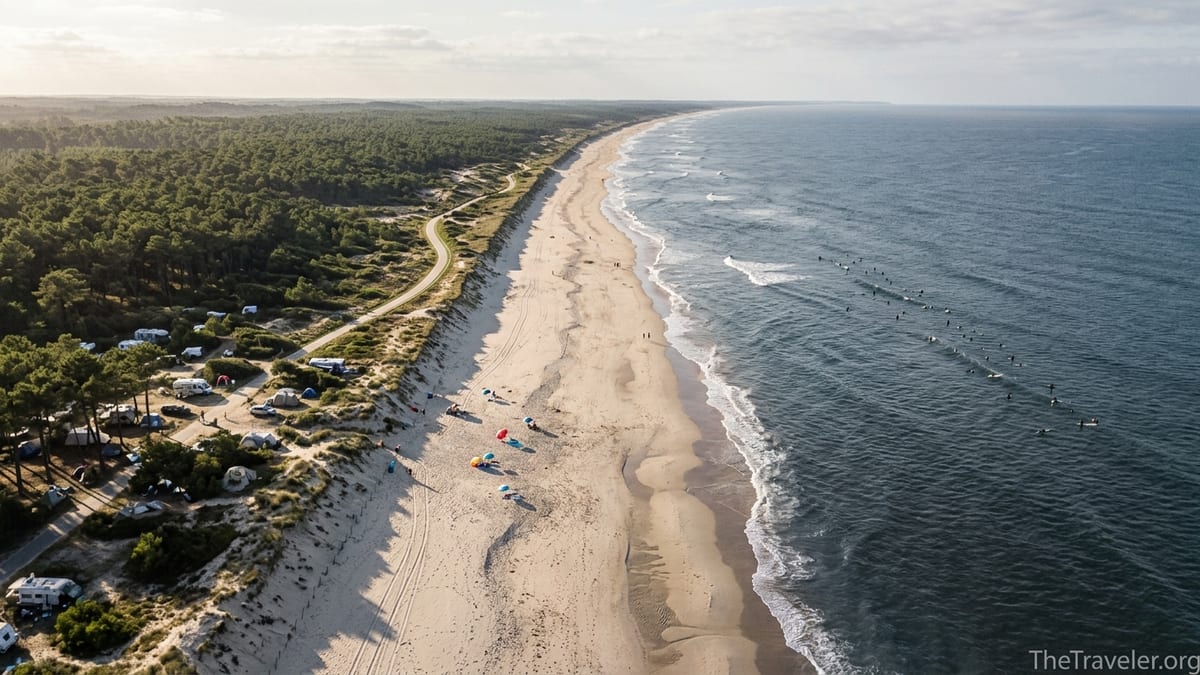
North vs South: How the Atlantic Coast Changes
The northern Atlantic coast, broadly Brittany and the Vendée, runs from ports like Roscoff and Brest down to Saint-Gilles-Croix-de-Vie and Les Sables-d’Olonne. Here the ocean is cooler year round, the weather more changeable and tides more dramatic. In July near Saint-Malo or Quiberon, typical afternoon air temperatures sit in the low 20s Celsius, and the sea is often around 17 to 19 degrees, fine for short swims but still brisk without a wetsuit.
Further south, the Charente-Maritime, Landes and Basque Country, including La Rochelle, Île de Ré, Biscarrosse and Biarritz, enjoy a slightly warmer and sunnier climate. In August at Biarritz or Hossegor, the ocean can peak around 21 to 23 degrees in good years, and daytime highs regularly reach the upper 20s. This southern section is also where France’s most famous surf breaks sit, from La Sauzaie and La Tranche-sur-Mer in the Vendée to the beach breaks of Seignosse and the reef at Guéthary near Saint-Jean-de-Luz.
Price patterns differ too. In northern regions such as southern Brittany or the Loire-Atlantique coast near La Baule, three-star seaside campsites often remain slightly cheaper in summer than equivalents near Lacanau or Hossegor, where international surf demand pushes up nightly rates in late July and August. Travelers specifically seeking lower prices and quieter beaches often find better value in the north in peak season, or in the south just outside school holidays.
For most beachgoers, the best compromise is either late June and early July before French families arrive, or the first three weeks of September once schools return. The exact feel of those shoulder periods still depends on the month you pick and whether you choose Brittany’s rugged coves or the Landes’ long surfing beaches.
Understanding School Holidays, Crowds and Prices
In France, school summer holidays generally start in the first days of July and run until the very end of August for all three academic zones. In 2026, for example, the national summer holiday period is scheduled from early July to around 30 August. That eight-week window is when beach towns such as La Baule, Royan, Mimizan and Biarritz are busiest, and when accommodation prices on the coast are at their highest.
Campsites and holiday parks publish clear seasonal price bands that illustrate this. A municipal campsite near the Atlantic in Loire-Atlantique shows low season in spring and late autumn at a modest nightly pitch fee, a standard season in May, June and September with adult prices around one euro higher per night, and high season from late June to late August with adult rates about 20 percent above standard and supplements for extra vehicles. Further south, a four-star campsite in Charente-Maritime lists typical adult camping rates rising from roughly five to six and a half euros per night between low and high season, with pitch retaining fees more than quadrupling in peak summer. Even inland riverside camps such as Auvergne’s Rives du Soleil advertise monthly pitch packages that jump from around 435 euros in spring or September to around 630 euros for July or August.
Because demand is so concentrated, booking timing matters. Beachfront three- and four-star campsites around La Tranche-sur-Mer or Cap Ferret often fill prime August weeks a year ahead, while the same sites may have wide availability for the second half of June, with special offers such as fifth night free or discounted long stays. Budget-conscious travelers can save hundreds of euros over a fortnight by avoiding the central French holiday weeks and staying slightly inland, for example in a campsite near the Gironde estuary or in a village two or three kilometres from the sand reachable by bike.
Month-by-Month: March to May
March on the Atlantic coast is primarily for walkers, cyclists and early-season surfers. In Brittany, places like Concarneau or Crozon can see cool, windy days with highs around 10 to 12 degrees. The sea is still cold, often 11 or 12 degrees, so only dedicated surfers in thick winter wetsuits are out at breaks like La Torche. Many campsites, beach bars and seasonal restaurants remain closed, although a few year-round sites on the Vendée coast and near Biarritz welcome self-contained motorhomes and caravans at sharply lower prices that can be half their summer rates.
April brings milder conditions and Easter holidays. Around La Rochelle and Île d’Oléron, daytime highs often climb into the mid-teens, and you begin to get brighter, longer days. Families from France and neighbouring countries head to the coast for long weekends, especially around Easter Monday, so places such as Pornichet or Arcachon can feel unexpectedly busy during holiday weeks. Sea temperatures still sit below 15 degrees almost everywhere, so swimming is for wetsuit wearers, but surf spots in the Landes such as Capbreton benefit from regular spring swells.
May is one of the sweetest months for price-sensitive travelers who do not need summer warmth. Across the coast, many three- and four-star campsites reopen around late March or early April, but May avoids both the Easter peak and school summer holidays. A basic tent pitch near Quiberon or Saint-Gilles-Croix-de-Vie might cost around 15 to 25 euros per night including two people and electricity, while the same spot in early August can be 30 euros or more. On sunny May days, Brittany’s south coast beaches such as Carnac and Guidel can feel almost summery, with empty sands and enough warmth for picnics and coastal cycling.
High Summer: June to August
June is the connoisseur’s month on much of the Atlantic. By mid-June, sea temperatures near La Rochelle can climb into the high teens and approach 20 degrees by the end of the month, while air temperatures commonly reach the low to mid-20s. In the south, around Biscarrosse or Vieux-Boucau, you can enjoy warm evenings, outdoor markets and nearly full seasonal services without the dense crowds of late July. Many campsites consider June still standard or mid-season, so a beach pitch that runs close to 50 euros per night in early August for two adults and a vehicle might still be around 30 to 35 euros.
July is when the coast moves into full summer mode. From Saint-Jean-de-Monts to Hossegor, lifeguard posts and beach clubs operate daily, and surf schools run back-to-back lessons for beginners. The northern coast, including the Pink Granite Coast of Brittany, still sees slightly cooler water but benefits from long daylight hours and family-friendly tidal pools. However, from around the second week of July, most French families have arrived, and travel costs reflect that. In the Landes and Basque Country, simple mobile homes inside large campsites near Seignosse or Messanges can cost well over 1,500 euros for a week in peak July, compared with under 800 euros for a similar unit in mid-June.
August is the busiest and most expensive month on the French Atlantic. Many French businesses close for several weeks, and Parisians head west to the sea. Popular resorts such as La Baule, Les Sables-d’Olonne, La Palmyre and Biarritz see crowded promenades, full restaurants and peak room rates. You will still find basic municipal campsites inland from the coast with unreserved tent pitches at modest fixed tariffs, but anything directly behind the dunes, especially with a pool complex and kids’ club, will be charging its highest nightly prices. Surf in August can be inconsistent, particularly in recent summers when stable high-pressure systems have suppressed Atlantic swells, so while beach weather is usually reliable, serious surfers may find autumn more productive.
Golden Shoulder Season: September and October
September is many locals’ favourite time on the Atlantic coast. French schools typically reopen in the first days of the month, and within a week the feel of resorts changes. On the Vendée coast, you can still expect daytime highs in the low 20s and sea temperatures around 19 to 21 degrees in early September, yet beaches that were blanket-to-blanket in mid-August suddenly feel spacious again. Campsites drop from high to standard or low season pricing, sometimes reducing nightly pitch costs by 20 to 30 percent.
For surfers, early autumn is often considered the best compromise between warm water and consistent waves. In the Landes and Basque Country, September and October bring more frequent Atlantic depressions and thus cleaner swells. Spots like Hossegor, Lacanau and Anglet come back to life, and international surf competitions are often scheduled for late September or early October to catch these conditions. Water temperatures in October can still be around 18 or 19 degrees in the south, comfortable in a three-millimetre wetsuit.
October further north can be unpredictable. In Brittany and the Loire-Atlantique, storms and rain become more common, but you also get beautiful clear days with empty beaches and low-angle autumn light. Cyclists enjoy car-free coastal roads and greenways such as the Vélodyssée, while accommodation prices on hotels and guesthouses continue to soften. Beachfront three-star hotels in Saint-Malo or La Rochelle that can charge high three-figure nightly rates in August may offer midweek October nights at half that, especially outside school half-term holidays.
Winter and Early Spring: November to February
From November to February, the French Atlantic coast is a different proposition. This is the season of Atlantic storms, short days and chilly seas, particularly in the north where sea temperatures can drop close to 10 degrees. For general beach holidays it is not an attractive period, but it does have niches. Big wave surfers travel to heavy spots near the Basque border and photogenic reefs like Belharra offshore from Saint-Jean-de-Luz, where long-period swells occasionally break dramatically. Towns such as Biarritz and Saint-Jean-de-Luz also have enough year-round residents to keep restaurants and cafés open, and prices on boutique hotels are far below their August peaks.
Campsite options shrink in winter. Many large coastal holiday parks close entirely between November and late March. A handful of year-round or long-stay friendly sites remain open, often on the outskirts of major towns like La Rochelle, Brest or Bayonne, catering mainly to motorhome owners and workers. Rates at these winter-open sites can be a fraction of summer levels, with long-stay offers for a month or more at prices similar to a week in July.
If you are mainly interested in cycling, coastal hiking or storm watching and do not mind layering up, the off-season can still be appealing. Trains from Paris to La Rochelle, Nantes and Bayonne are cheaper outside holiday periods, and you will rarely need to book restaurants in advance. Just keep in mind that many seasonal attractions, from beach clubs to ice-cream parlours, will not reopen until late March or around Easter.
Beaches, Surfing, Cycling and Where to Save
For classic beach days with warm sand and relatively comfortable water, the most reliable period along the northern Atlantic (Brittany and Vendée) is late June to early September, with mid-July to mid-August giving the highest water temperatures. On the southern coast from La Rochelle to the Spanish border, the beach season is a little longer, stretching comfortably from mid-June through late September. Family-friendly beaches like Saint-Jean-de-Monts, La Tranche-sur-Mer, Lacanau Océan and Hendaye have supervised swimming zones in July and August and often on June and September weekends.
Surfing is more nuanced. Beginners who want small, manageable waves and warm water often do best in June, early July or September. Resorts such as Biscarrosse, Mimizan and Vieux-Boucau are full of surf schools offering group lessons that include board and wetsuit rental. Intermediate and advanced surfers seeking stronger swells and offshore winds tend to aim for late September, October and November, accepting cooler water in exchange for more consistent waves at spots like Hossegor’s La Gravière or the reef and point breaks around Guéthary.
Cycling is enjoyable for far more of the year. The Atlantic coast is criss-crossed by signposted routes such as the Vélodyssée, running from Roscoff in northern Brittany to the Basque Country. April, May, June, September and early October are prime months for cycle touring, with generally mild temperatures and fewer afternoon heatwaves than in high summer. Real-world examples include multi-day loops between Rennes, Saint-Malo and the Emerald Coast, or a more southerly itinerary linking La Rochelle, Île de Ré and the Marais Poitevin wetlands, staying in simple two-star hotels or cyclist-friendly campsites along the way at off-peak rates.
To save money, two strategies stand out. First, shift your trip to the shoulders of high season: for instance, opting for the last two weeks of June in a Landes campsite rather than the first two of August may cut your accommodation cost by a third while still delivering beach-weather days. Second, trade direct beachfront locations for short bike rides. A campsite three kilometres inland from Hossegor or a chambre d’hôtes in the backstreets of Saint-Palais-sur-Mer will typically charge materially less than a seafront property on the same dates, while still keeping you within easy cycling distance of the ocean.
The Takeaway
Choosing the best time to visit the French Atlantic coast depends on your priorities. If you need reliable warmth and are travelling with school-age children, mid-July to late August offers the fullest programme of lifeguarded beaches, kids’ clubs and festivals, at the price of higher costs and busy sands. If you value lower prices, quieter campsites and still want to swim, late June and September are the sweet spots, especially on the southern Atlantic around La Rochelle, the Gironde and the Landes.
For surfers, late September and October usually deliver the most consistent waves, while beginners may prefer gentler conditions in June or early July. Cyclists and walkers can enjoy the coast from April through October, tailoring their route to the north or south depending on how much weather risk they are willing to accept. Whatever your focus, paying attention to school holiday dates, campsite tariff calendars and the north-south climate gradient will help you turn a good French seaside trip into a great one.
FAQ
Q1. When is the overall best time to visit the French Atlantic coast for most travellers?
For most visitors, the last two weeks of June and the first three weeks of September offer the best balance of pleasant beach weather, open services, manageable crowds and more moderate accommodation prices.
Q2. When is the sea warmest for swimming on the French Atlantic coast?
The Atlantic is usually warmest from late July through early September. In the south around Biarritz or Hossegor, water temperatures can reach the low 20s Celsius in good years, while Brittany typically stays a few degrees cooler.
Q3. What is the best month for surfing on the French Atlantic coast?
Advanced surfers often favour late September, October and November for more powerful, consistent swells, particularly in the Landes and Basque Country. Beginners and families usually do better in June, early July or September, when waves are smaller and water is warmer.
Q4. How do French school holidays affect prices and crowds on the Atlantic coast?
French summer school holidays generally run from early July to the end of August, creating a sharp high season. During this period, seaside campsites and hotels in popular resorts like La Baule, La Rochelle and Hossegor often charge their highest rates and book up well in advance.
Q5. Is the northern Atlantic coast much cooler than the south in summer?
Yes, but the difference is modest rather than extreme. In summer, Brittany and the Vendée typically see air temperatures a few degrees lower and sea temperatures two or three degrees cooler than the Landes and Basque Country, which feel noticeably warmer but still Atlantic rather than Mediterranean.
Q6. Are there good times for a budget camping trip to the French Atlantic coast?
For lower prices, look at May, June before the school holidays, and September. Campsites often classify these as low or standard season, with nightly pitch rates significantly below their July and August peaks, especially a little way back from the beachfront.
Q7. When is the best time for cycling along the Atlantic routes like the Vélodyssée?
April, May, June, September and early October are ideal, with generally mild temperatures and fewer crowds. July and August can be hot and busy, particularly on popular sections around La Rochelle, Arcachon and the Landes coast.
Q8. Is it worth visiting the French Atlantic coast in winter?
Winter visits suit a niche audience. While general beach holidays are not attractive due to cold water and frequent storms, cities such as Biarritz, La Rochelle or Nantes can be pleasant for cultural breaks, and experienced surfers may enjoy powerful winter swells.
Q9. How far in advance should I book accommodation for an August stay?
For popular coastal areas in August, especially the Landes and Basque resorts, it is sensible to book six to twelve months ahead for sought-after campsites or seafront rentals. Outside that core holiday month, a few months’ lead time is usually enough.
Q10. If I want quiet beaches, which months should I avoid?
If you prioritise tranquillity, avoid the French school summer holiday window from early July to late August and the Easter holiday weeks. Instead, choose late May, June, September or early October, when beaches are far less crowded but many services are still operating.