


The French Atlantic Coast stretches from the Charente-Maritime up near La Rochelle down to the Basque Country on the Spanish border, with long sandy beaches, surfing powerhouses and quietly chic islands in between. Choosing the right base is less about ticking sights off a list and more about matching your style of trip: surf before breakfast, bike to the bakery with the kids, or stroll from a boutique hotel to oyster shacks and sunset cocktails. This guide compares La Rochelle, Île de Ré, Arcachon, Cap Ferret, Hossegor, Biarritz and Saint-Jean-de-Luz so you can pick the right place to stay for your French Atlantic escape.
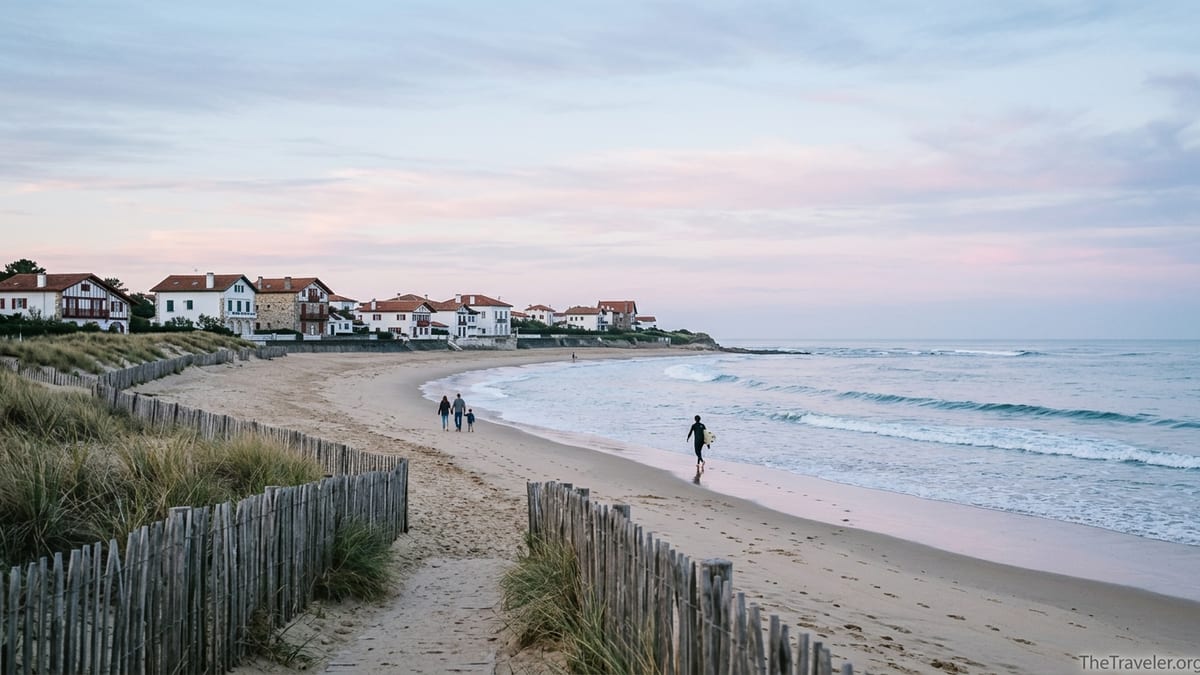
How to choose your base on the French Atlantic Coast
Before you look at maps and hotel deals, decide what kind of Atlantic holiday you want. If your priority is world-class surf and beach bars, you will have a very different experience in Hossegor than in family-focused Saint-Jean-de-Luz. Likewise, if your kids are small and you want calm, supervised beaches, the enclosed bay at Arcachon or the sheltered sands of Saint-Jean-de-Luz will feel more manageable than the powerful beach breaks north of Biarritz.
Think about logistics as well as vibe. Flying or taking a high-speed train into Bordeaux or Biarritz makes the southern coast easy, while La Rochelle is the natural gateway for Île de Ré. In high season, parking in Biarritz or Cap Ferret can be stressful and expensive, so staying somewhere with on-site parking or relying on bikes and buses can change the feel of your trip. On Île de Ré, for example, many visitors park the car and get around almost entirely by bike.
Your budget matters too. A simple but stylish double room in a three-star hotel in La Rochelle can start around 110 to 150 euros in July, while a harbourside boutique stay on Île de Ré or a sea-view suite in Biarritz can easily exceed 300 euros per night in August. Families often find better value in apartment rentals or campsites with mobile homes, especially around Arcachon, Cap Ferret and Hossegor, where four-star campsites include pools, kids clubs and direct access to the dunes.
Finally, consider whether you want one fixed base or a small road trip. It is common, for example, to spend three nights in La Rochelle and Île de Ré, then drive five hours south to Biarritz and Saint-Jean-de-Luz. Another popular loop is Bordeaux to Arcachon and Cap Ferret, then down to Hossegor and the Basque Country, using a rental car to hop between coastal resorts without having to change accommodation every night.
La Rochelle: historic harbor with easy access to Île de Ré
La Rochelle is not technically on the open ocean, but its medieval towers, yacht-filled Vieux Port and lively restaurant scene make it an excellent first stop on the Atlantic Coast. It works especially well for short breaks or for travelers who want coastal atmosphere without committing to island logistics or surf-town intensity. The compact old town is walkable, with plenty of mid-range hotels and apartment-hotels tucked behind the harbor.
For families, staying near the Vieux Port or the Aquarium area keeps things simple. Expect a mix of chain hotels and small independents, with family rooms or connecting rooms that often price between 140 and 220 euros per night in school holidays. You can spend mornings exploring the maritime museum or taking a harbor boat trip, then drive or bus across the bridge to Île de Ré for beach time in the afternoon.
Couples who like charm over sand might choose a boutique hotel in a restored townhouse in the pedestrian center. From there, it is an easy stroll to wine bars, crêperies and seafood bistros looking onto the towers of Saint-Nicolas and La Chaîne. Evening walks along the ramparts give you a sense of the Atlantic without needing to stay right on a beach.
As a practical base, La Rochelle is also one of the most convenient arrival points. High-speed trains link Paris and La Rochelle in under three hours, and the small La Rochelle–Île de Ré airport receives seasonal flights from several European cities. Travelers who arrive late at night often sleep in La Rochelle, then pick up rental bikes or a car in the morning for a week on Île de Ré.
Île de Ré: chic, bike-friendly island for families and couples
Joined to the mainland by a sweeping bridge, Île de Ré has become a summer favorite for Parisians in search of low-rise, whitewashed villages, sandy beaches and gentle cycling. The island is compact, so you can choose almost any village as a base and still reach the rest within a 20 to 30 minute bike ride. That said, different areas have distinct personalities that suit different types of trips.
Families often gravitate toward the south coast around Le Bois-Plage-en-Ré and La Couarde-sur-Mer, where long sandy beaches back onto dunes and pine forest. In season, there are supervised swimming zones, beach clubs for kids and surf schools offering group lessons for beginners and teenagers. Accommodation options run from four-star campsites with pools and waterslides to self-catering houses with small gardens where children can play while parents grill seafood.
For couples and design-conscious travelers, Saint-Martin-de-Ré is the island’s star. Inside the Vauban fortifications, cobbled lanes are lined with boutiques, wine bars and small luxury hotels in old merchant houses. A room with harbor view in a five-star property here can easily cost 350 to 600 euros per night in August, but outside peak weeks you can find doubles in stylish guesthouses from around 200 euros. It is a good base if you want restaurants, galleries and nightlife within a short stroll.
Surfers and more active travelers tend to look west and north, toward villages like Les Portes-en-Ré and Ars-en-Ré. Beaches such as Petit Bec and Trousse Chemise pick up Atlantic swells, and several surf schools operate summer camps and lessons for adults and older children. Even if you do not surf, staying at this end of the island gives you wilder dunes, salt marsh walks and quieter sunsets. Just keep in mind that amenities are more seasonal, and having either a car or good bikes makes exploring easier.
Arcachon & Cap Ferret: bay life, dunes and oysters
Southwest of Bordeaux, the Arcachon Basin is a sheltered lagoon framed by sandy peninsulas and pine forest. On the south side lies Arcachon, a Victorian-era resort town with belle époque villas, a seafront promenade and family-friendly beaches. Arcachon suits travelers who want easy swimming, boat trips and classic seaside comforts, all within walking distance from hotels and apartments.
Families usually stay in central Arcachon or the quieter Pereire district, where shallow waters and lifeguarded beaches make it easy with toddlers. Many three and four-star hotels sit within a few minutes’ walk of the sand, and it is common to find family rooms or apartments with small kitchenettes around the 180 to 280 euro per night range in July and August. From town, boats cross the bay to the Cap Ferret peninsula and to the Île aux Oiseaux, and local companies run half-day trips to the Dune du Pilat, Europe’s tallest sand dune.
Across the water, Cap Ferret offers a more low-key and dispersed experience. A narrow strip of land between the bay and the open Atlantic, it is dotted with oyster villages, small wooden cabins and surf beaches facing the ocean. Accommodation is more spread out and leans toward villas, guesthouses and a handful of high-end hotels. One of the peninsula’s fashionable beach hotels has even been highlighted internationally in recent “world’s greatest places” lists, with room rates that can exceed 500 euros per night in peak season.
Cap Ferret is ideal for couples, food lovers and relaxed surfers rather than first-time visitors without a car. You might rent a simple wooden cabin in the fishing village of L’Herbe, eating oysters at communal tables beside the water, then drive or cycle ten minutes through the pines to reach an Atlantic surf spot like Grand Crohot. In summer, traffic and parking can be challenging, so booking accommodation with bikes included or easy access to the local boat shuttles will make your stay far smoother.
Hossegor: surfing capital with a laid-back resort feel
Hossegor, in the Landes department, is widely considered the surfing capital of France. Its long beach breaks host major competitions most years, and in autumn the sandbars can produce powerful, barreling waves that attract professionals from around the world. For experienced surfers or travelers who love being around surf culture, this is one of the best bases on the Atlantic Coast.
The town itself is low-rise and surrounded by pine forest and a lagoon. Accommodation ranges from simple surf lodges and hostels from around 40 to 80 euros per night in shared rooms, up to four-star hotels and villa rentals with pools. Many visitors stay in apartments a short walk from La Gravière and La Nord beaches, so they can check the waves from the dune each morning. Surf shops, board shapers and cafes line the central streets, and it is common to rent boards and wetsuits for a week at a time rather than bringing your own.
Hossegor can work for families with older children who surf or want to learn, but it is less ideal for toddlers who need calm water. The waves here are often powerful, and although there are supervised areas in season, it is important to respect local safety flags. Some families choose to stay slightly inland, around the lake or in neighboring Capbreton, where there are calmer swimming spots, and then drive five to ten minutes to surf beaches.
Nightlife in Hossegor is lively in July and August, with beach bars and clubs staying open late. If you prefer quieter evenings, look for accommodation slightly away from the main beachfront, perhaps in residential streets behind the dunes or near the golf course. Having a car makes it easy to mix Hossegor with day trips north toward Biscarrosse or south toward Biarritz and the Basque Country.
Biarritz: elegant surf city for couples, foodies and mixed groups
Biarritz manages to be both an elegant historic resort and a buzzing surf town. With its grand seafront casino, belle époque villas and the iconic Rocher de la Vierge, it appeals to travelers who want more urban energy than a small surf village can provide. At the same time, city beaches like Grande Plage and Côte des Basques make it possible to surf before breakfast and dress up for dinner without ever getting in a car.
For couples and style-conscious travelers, staying close to Grande Plage or the central market area works well. Boutique hotels in restored townhouses, as well as five-star oceanfront properties with thalasso spas, dominate this zone. Prices in high season often start around 250 to 300 euros per night for a central double room, going much higher for sea-view suites. You are paying for location: a few minutes’ walk to cafes, tapas bars, designer shops and the main beaches.
Biarritz can also suit adventurous families, especially with older kids who can handle the occasional Atlantic swell. Some parents choose apartment rentals in residential neighborhoods like Saint-Charles or near the lighthouse, where streets are quieter and you can walk or take a bus to different beaches. In summer, surf schools set up daily lessons for all levels on Côte des Basques and nearby beaches, and there are plenty of non-surf attractions, from an aquarium to coastal walks toward Anglet.
For surf-focused road trips, Biarritz is a strategic base. Drive 30 minutes north and you hit a string of beach breaks around Anglet and Hossegor, while 30 minutes south brings you to the more sheltered Basque coves around Saint-Jean-de-Luz and, further on, the Spanish coast. Just keep in mind that parking in central Biarritz can be expensive and limited in July and August, so properties with private garages or nearby public parking are worth the extra cost.
Saint-Jean-de-Luz: sheltered bay for calmer family holidays
South of Biarritz, Saint-Jean-de-Luz wraps around a wide, sheltered bay that feels markedly calmer than the open beaches to the north. Its broad, gently sloping main beach is protected by sea walls, which takes the edge off Atlantic swells and creates some of the safest swimming conditions on this stretch of coast. For families with younger children, or for travelers nervous about big waves, this can be an ideal base.
The town itself is charming, with Basque houses, a compact old center and a working fishing harbor. Many three-star hotels and small guesthouses sit one or two streets back from the beach, offering doubles from around 150 to 220 euros per night in summer. Beachfront properties, where you can step straight onto the promenade, command higher rates but are very convenient for parents juggling nap times and beach toys.
Saint-Jean-de-Luz is also a good option for couples who want a slower pace than Biarritz but still appreciate good restaurants and an atmospheric town. Evenings tend to revolve around strolling the promenade, eating seafood or pintxos and watching the sun set behind the headlands. From here, it is easy to do day trips by train or car to Biarritz, Hendaye or Spanish Basque towns like San Sebastián while keeping a single, relaxing base.
For surfers, Saint-Jean-de-Luz itself is more of a fallback when conditions are too big elsewhere, as the bay smooths out the swell. Many surf-oriented travelers choose to stay here with non-surfing partners or kids, then drive 15 to 30 minutes to more exposed beaches when they want stronger waves. This balance of protected swimming and nearby surf makes it one of the most versatile bases on the French Basque Coast.
Which destination is best for you: quick comparisons
If you are planning a primarily family-oriented holiday with young children who are not strong swimmers, Saint-Jean-de-Luz, Arcachon and the south coast of Île de Ré are your safest bets. All offer supervised, gently shelving beaches, playgrounds, ice cream stands and easy access to accommodation with family rooms or apartments. In these areas, a typical day might involve a morning on a lifeguarded beach, an afternoon bike ride or boat trip, and dinner at a casual bistro where children are welcome.
For couples seeking romance, food and atmosphere, Île de Ré’s Saint-Martin, Biarritz’s central district and Cap Ferret’s oyster villages all deliver. Expect candlelit dinners, smart wine lists and boutique properties with spa facilities or pools. These destinations tend to be among the most expensive on the coast in high season, so traveling in June or September, or booking midweek, can make a notable difference to room rates.
If surfing is the main goal, Hossegor and Biarritz stand out, with Arcachon, Cap Ferret and certain beaches on Île de Ré as secondary options. Intermediate and advanced surfers usually time trips to Hossegor for late summer and autumn, when swells consistently light up the sandbars. Beginners might prefer summer in Biarritz or Île de Ré, when smaller waves and plentiful surf schools make learning less intimidating. In any case, staying within walking distance of the beach dramatically improves the experience, even if it costs more.
For road trippers, combining two or three of these bases can showcase very different sides of the Atlantic Coast. One popular route starts in La Rochelle and Île de Ré, continues to Arcachon and Cap Ferret, then finishes in Biarritz and Saint-Jean-de-Luz. Renting a compact car and booking two or three nights in each place lets you mix island cycling, dune climbing, oyster tastings, surfing and Basque culture without daily packing and unpacking.
FAQ
Q1. Which French Atlantic resort is best for a first-time visitor?
For a first trip, Biarritz is a strong choice because it combines beaches, surf, restaurants and a walkable town. You can easily add day trips to Saint-Jean-de-Luz or inland Basque villages without needing to move hotels.
Q2. Where should families with small children stay on the French Atlantic Coast?
Families with young kids often do best in Saint-Jean-de-Luz, Arcachon or the south coast of Île de Ré. These areas have calmer, supervised beaches, lots of ice cream stands and family-friendly accommodation close to the sand.
Q3. Which destination is best if surfing is my main priority?
Hossegor is the top choice for experienced surfers, with powerful beach breaks and a strong surf scene. Biarritz is slightly more forgiving and works well for mixed groups thanks to its city amenities and multiple surf schools.
Q4. Is Île de Ré worth the higher accommodation prices?
Île de Ré can be pricey, especially in peak summer, but many travelers feel the combination of pretty villages, bike paths and beaches justifies the cost. Booking outside August or choosing a campsite or apartment can keep budgets in check.
Q5. Do I need a car to enjoy Cap Ferret and Arcachon?
A car is helpful, especially on Cap Ferret where villages and surf beaches are spread out. In Arcachon town itself you can manage without, but having a vehicle makes it easier to reach the Dune du Pilat and quieter beaches around the bay.
Q6. When is the best time to visit for warm weather and manageable crowds?
Late June, early July and September often offer warm weather and sea temperatures that are comfortable for swimming, without the heaviest August crowds or peak prices. May and early October can also be pleasant but less predictable for beach days.
Q7. Which base works best for a long weekend without changing hotels?
For a three or four-night stay, Biarritz, La Rochelle or Arcachon all make excellent single bases. Each offers enough restaurants and activities in town, plus easy day trips, so you do not have to move around.
Q8. Are there budget-friendly options along this coast?
Yes. Outside August you can find simple hotels and apartment rentals in La Rochelle, Hossegor and smaller villages near Arcachon and Biarritz at more modest prices. Campsites with mobile homes are often the best value for families and groups.
Q9. Which area is best for couples who want quiet rather than nightlife?
Cap Ferret’s oyster villages, the western villages of Île de Ré and Saint-Jean-de-Luz outside the very center are all good for relaxed evenings. Here, nightlife is mostly about long dinners and sunset walks rather than clubs.
Q10. Can I combine several of these destinations in one trip?
Yes. A common itinerary is a week to ten days split between Île de Ré or La Rochelle, Arcachon or Cap Ferret, and Biarritz or Saint-Jean-de-Luz. Driving times between each cluster are typically three to five hours, making it easy to experience different vibes in a single holiday.