


Planning a first visit to the French Riviera is often a balancing act between what you can easily do on your own by train or bus and what is worth paying for as a guided tour. In 2026, day tours from Nice, Cannes and Antibes routinely bundle glamorous stops such as Èze, Monaco, Cannes, Antibes and Saint-Tropez, along with coastal boat trips and private full‑Riviera itineraries. This guide focuses on what those tours actually look like in the real world today and which ones genuinely add value compared with simply hopping on the train.
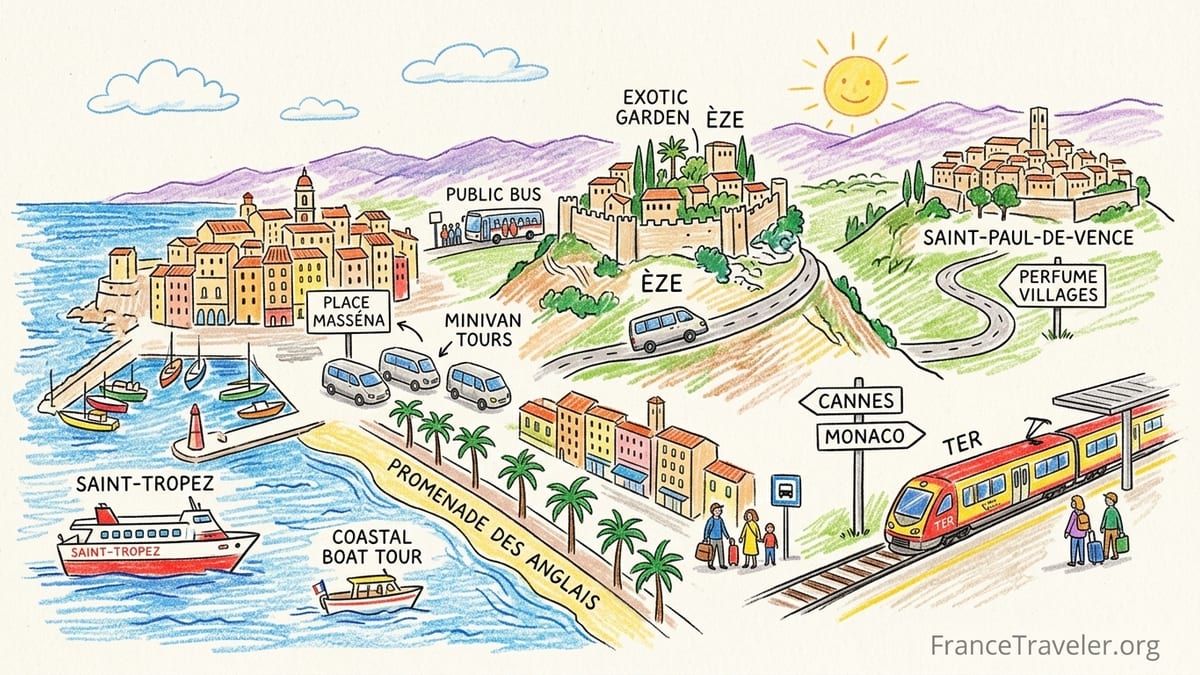
Understanding the Layout of the Riviera and Where Tours Start
Most French Riviera tours today start from Nice, Cannes or occasionally Antibes. Nice is the main hub, with a dense cluster of small‑group minivan tours departing daily from central hotels or a handful of meeting points around Place Masséna and the main train station. Operators commonly use eight‑seat minibuses, which keeps groups small and allows them to reach hill villages like Èze and Saint‑Paul‑de‑Vence that are awkward by public transport.
Cannes and Antibes see more seasonal tour traffic, often catering to cruise passengers or travelers already staying in those towns. From Cannes, late‑spring through early‑autumn schedules typically include half‑day circuits to Antibes and Saint‑Paul‑de‑Vence, as well as full‑day loops reaching Monaco or Saint‑Tropez. Antibes has a smaller but growing set of excursions, usually sharing vehicles with guests picked up in nearby resorts like Juan‑les‑Pins.
When comparing tours, pay attention to departure city and whether hotel pickup is included. Many Nice‑based minivan tours now include pickup from central hotels but may ask guests in the Old Town or along the Promenade des Anglais to meet at a designated point to avoid traffic delays. In Cannes, pickup often extends along the seafront hotels near La Croisette, while budget tours may require you to meet at the train station or port entrance.
Also consider how far you actually need a vehicle. Some destinations, such as Monaco, Cannes and Antibes, sit directly on the coastal rail line with frequent regional trains. In those cases, paying for a tour only makes sense if you want an efficient multi‑stop day with commentary rather than simple transport. Others, such as Saint‑Paul‑de‑Vence or the inland perfume villages, are far harder to reach without a car, and tours can save hours of bus changes.
Èze and Monaco Tours from Nice: When a Tour Is Worth It
In 2026, one of the most bookable products from Nice is the combined Èze and Monaco half‑day or full‑day tour. A typical small‑group option uses an eight‑seat minivan, includes central hotel pickup in Nice, and runs either morning or afternoon for about five hours, or as a full‑day that also adds stops in Monte‑Carlo or another coastal viewpoint. Prices for these shared tours routinely sit in the 70 to 100 euro range per adult, with private versions for two to four travelers starting around 350 to 500 euros depending on the season.
The main value here is not the Nice to Monaco leg itself, which is quick and cheap by local train, but the chance to combine Monaco with Èze and clifftop viewpoints on the Moyenne Corniche. Èze village clings to the hillside well above the main road, and while there is a public bus, services thin out in the evening and can be packed in July and August. A minivan drops you close to the village entrance, builds in time for the exotic garden or perfume factory visit, and then continues directly to Monaco without backtracking to bus stops.
For Monaco alone, however, a tour is often unnecessary. Regional trains run along the coast between Nice and Monaco in roughly 25 minutes, usually for under 10 euros return in 2026, and they depart throughout the day. Travelers who simply want time on the Monaco harborfront, the Oceanographic Museum or the Monte‑Carlo casino can comfortably go by train, pair it with local buses or short taxi rides within Monaco, and spend their budget on entry tickets or a harborfront lunch instead of a guided excursion.
A combined Èze and Monaco tour makes particular sense if you have limited time in Nice, are traveling with older relatives who will appreciate door‑to‑door pickup, or want structured commentary about the royal palace and Grand Prix circuit. If you enjoy independent exploring, consider taking the train to Monaco one day and then booking a separate half‑day tour just to Èze and nearby viewpoints, giving you more flexible time in each place rather than racing through both in five hours.
Nice‑based Multi‑Stop Tours: Cannes, Antibes and Saint‑Paul‑de‑Vence
Multi‑stop excursions from Nice that combine Cannes, Antibes and Saint‑Paul‑de‑Vence have become a staple in 2026. A common shared product is a five to six‑hour minivan tour that leaves Nice mid‑morning, drives along the coastal road past marinas and coves, stops first in Cannes near the Palais des Festivals, then continues to Antibes for the old town and the billionaires’ quay, and finishes with a wander through the hilltop streets of Saint‑Paul‑de‑Vence before returning to Nice late afternoon.
The key advantage with this type of tour is stitching together places that are only partially convenient by train. Cannes and Antibes sit on the main rail line and are extremely easy, cheap hops from Nice. Trains run roughly every 20 to 30 minutes in season, and many travelers happily self‑organize a Cannes and Antibes day without spending more than about 20 euros on tickets. Saint‑Paul‑de‑Vence, by contrast, sits inland, requiring a bus from Cagnes‑sur‑Mer or Vence, and the connection times can eat up a good portion of the day. The minivan tour solves that last leg and eliminates waiting around at bus stops.
In practice, if you mainly want to stroll Cannes’ Croisette and Antibes’ old harbor at your own pace, a tour may feel rushed. You might get 45 to 60 minutes in each town before moving on. On the other hand, travelers on tight schedules appreciate being able to see three Riviera classics between breakfast and dinner. Some 2026 itineraries also weave in a quick photo stop at the film festival red carpet in Cannes or a detour to the scenic Cap d’Antibes drive, which are much harder to coordinate in a single day by public transport.
For those keen to save money, a smart compromise is to visit Cannes and Antibes independently by train on one day and then book a shorter, focused excursion purely to Saint‑Paul‑de‑Vence and potentially another inland village on another day. This lets you linger in the coastal towns, grab a long lunch in Antibes’ market quarter, and still benefit from the logistical help where you need it most: the inland leg to the hill village.
Saint‑Tropez Day Trips: Coach, Boat and Private Transfers
Saint‑Tropez is the outlier in this region, both glamorous and slightly awkward to reach. There is no direct train into the town itself in 2026; the rail line stops at Saint‑Raphaël‑Valescure or Les Arcs–Draguignan, with onward travel by bus, taxi or boat. That gap is exactly why day trips from Nice, Cannes and Antibes tend to be either organized tours or a mix of train and ferry, rather than a simple DIY rail hop.
From Nice, shared full‑day tours to Saint‑Tropez and Port Grimaud typically leave around 8 am, include hotel or central pickup, drive along the autoroute or the coast depending on traffic, and aim to reach Saint‑Tropez by late morning. Many itineraries then either include a short boat cruise across the bay or up the coast, or offer it as an optional extra. Prices for these coach or minivan tours usually land between 110 and 150 euros per person in peak season, reflecting both the distance and the 10 to 11 hours you will be with the driver.
Boat‑based options take a different approach. Seasonal ferries now run from the port of Nice and other coastal towns to Saint‑Tropez, with 2026 adult return fares from Nice typically in the 80 to 90 euro range and sailing times around 2.5 to 3 hours each way. These are not guided tours but simple transport on a large excursion boat, often combined with commentary on the headlands and coves you pass. Travelers usually get about six hours ashore before the return sailing, which is enough time for a harbor stroll, a visit to the citadel or Annonciade Museum, and a café stop in the old town.
From Cannes or Saint‑Raphaël, shorter ferries across the Gulf of Saint‑Tropez reduce the travel time and are popular with visitors who want to spend more of the day in the town rather than on the boat or coach. Private transfers, including chauffeured cars or vans from Nice or Cannes, are the most flexible but also the most expensive, often 300 to 400 euros or more round‑trip for a small group. Those make sense when you are several people splitting the cost, want an early start to beat traffic, or plan to stay late for dinner and return after regular ferries or scheduled tours have finished for the day.
Coastal Boat Trips: Seeing the Riviera from the Water
Coastal boat tours have expanded quickly in recent seasons, and by 2026 you can choose from one‑hour harbor cruises, half‑day coastal trips and full‑day boat excursions from ports like Nice, Cannes and Saint‑Raphaël. In Nice, for example, short sightseeing cruises from the main port typically sail along the coastline past the Cap de Nice and into the bay of Villefranche‑sur‑Mer. Recent adult fares for a one‑hour commentary cruise have hovered around the mid‑20 euros mark, with longer coastal itineraries to Monaco or the Lérins Islands priced higher.
Unlike land‑based tours, coastal cruises are primarily about scenery rather than detailed historical commentary. You might pass below villas clinging to the cliffs, see the old quays of Villefranche from the sea and get a sense of how closely packed the Riviera resorts really are. Full‑day boat trips sometimes blend in swimming stops, snorkeling gear and simple lunches on board, functioning as both a relaxed beach day and a moving viewpoint for the coastline.
Private boat charters from Nice, Cannes or Antibes are also widely available, usually as half‑day or full‑day rentals with a skipper. Prices vary dramatically depending on the size of the boat and the month, but even modest RIBs or small motorboats with captain can run several hundred euros for a few hours in high summer. These charters make the most sense if you are traveling as a group of friends or a family, want maximum flexibility with swimming stops, and prefer to avoid crowded beaches such as Pampelonne at midday.
For travelers primarily interested in visiting towns like Monaco or Saint‑Tropez themselves, boat trips are best seen as a scenic add‑on rather than the main means of transport from every base. In practice, many visitors combine a simple train or tour into a coastal town and then buy a shorter boat cruise locally once they arrive, often on the same day, allowing them to calibrate how much time they really want on the water.
Private Full‑Riviera Excursions: When to Upgrade From a Group Tour
Private full‑Riviera excursions, usually sold as eight to ten‑hour days in a chauffeured car or minivan, target travelers who want to string together several marquee stops without the compromises of a set group itinerary. A typical private route from Nice might include Èze, Monaco, a coastal drive toward Cannes, a stroll in Antibes and a final stop in Saint‑Paul‑de‑Vence, all tailored to how quickly you like to move. In 2026, pricing for such custom days often starts around 600 to 800 euros for a vehicle and driver‑guide, not per person, making them cost‑effective for families or groups of four to six people.
The key advantage of these private days is flexibility. You can ask your driver to skip a perfume factory visit that does not interest you, stay longer in Èze if the views captivate you, or have a late dinner booking in Monaco without worrying about the group’s schedule. Many private operators include hotel pickup across a wide radius, from central Nice to select hotels in Villefranche‑sur‑Mer or Saint‑Jean‑Cap‑Ferrat, and some will also pick up from Cannes or Antibes if the vehicle is based there.
Private excursions are also where you can realistically attempt a “best of the Riviera” circuit that includes both Monaco and Saint‑Tropez over two days, or folds in less obvious stops such as inland hill villages or local wineries. A good local driver‑guide will know how to route around peak traffic near popular events and advise on realistic timings. For example, they might recommend leaving Nice very early for a Saint‑Tropez day in late July, or suggest shifting Saint‑Tropez to a weekday and visiting Cannes or Antibes on a busier weekend instead.
If your budget allows but you are unsure whether to go private, a useful rule of thumb is to choose private for the longest, most traffic‑sensitive days such as Saint‑Tropez or a full‑Riviera sampler, and stick with shared small‑group tours for compact itineraries like Èze and Monaco. This way, you spend extra where the flexibility has the biggest payoff and avoid overpaying for routes that already work well in a shared format.
When Trains and Buses Beat Tours: DIY‑Friendly Destinations
Not every Riviera outing needs a tour. The coastal rail line from Ventimiglia in Italy through Menton, Monaco, Nice, Antibes and Cannes is frequent, relatively inexpensive and scenic. In 2026, off‑peak fares between Nice and Antibes or Cannes remain modest, and journey times are usually under 30 to 40 minutes. For straightforward town visits where you simply want to wander the Old Town, visit a museum or sit on the beach, the train is often the most efficient and flexible option.
Destinations that are particularly easy by train include Monaco, Villefranche‑sur‑Mer, Antibes, Cannes and Menton. All have stations close enough to the historic centers that you can walk straight into town without needing additional transport. In these cases, the main value of a tour lies in curated commentary or in combining several towns into one tightly choreographed day, rather than in basic logistics. Independent travelers who enjoy reading a guidebook or using an audio app often prefer to visit one or two of these towns per day on their own, leaving space for unplanned café stops and swims.
Buses still matter, especially for hill villages. Saint‑Paul‑de‑Vence, Èze village and some inland perfume towns sit high above the coast, connected by regional buses that can be very good value but require careful attention to schedules. During school holidays and weekends in July and August, some of these services run less often or fill up faster, which is precisely when small‑group tours feel most attractive despite their higher price.
As you weigh up DIY against tours, consider how confident you feel with timetable apps, how comfortable you are waiting at roadside bus stops in the sun, and how much commentary you actually want. For a first‑time visitor with only three or four days on the Riviera, it often makes sense to mix one or two self‑guided train outings with one carefully chosen small‑group tour to an otherwise fiddly destination such as Èze plus a hill village, or Saint‑Tropez.
The Takeaway
In 2026, the French Riviera offers more touring options than ever, from simple coastal boat cruises to complex private itineraries that link Èze, Monaco, Cannes, Antibes, Saint‑Paul‑de‑Vence and Saint‑Tropez. The smartest strategy is not to book everything as a tour but to reserve them for the days where they genuinely save time, stress or money. That usually means inland hill villages, complex multi‑stop days, and slower destinations such as Saint‑Tropez, where there is no direct train.
For simple point‑to‑point visits along the coastline, especially between Nice, Monaco, Cannes and Antibes, the regional train network remains your best friend. Use it to reach easy towns on your own, and then invest in one or two well‑chosen tours that add commentary, hotel pickup and access to trickier locations. By consciously mixing DIY days with targeted excursions, you can see more of the Riviera without feeling rushed, and still enjoy the unstructured hours that make a Mediterranean trip memorable.
FAQ
Q1. Is it worth booking a tour from Nice to Monaco, or should I just take the train?
For Monaco alone, most travelers do well with the regional train, which is fast, frequent and inexpensive. A tour becomes worthwhile if you want to combine Monaco with Èze and panoramic viewpoints on the same day, or if you value hotel pickup and guided commentary over managing trains and local buses yourself.
Q2. Which French Riviera destinations are easy enough to visit without a tour?
Monaco, Villefranche‑sur‑Mer, Antibes, Cannes and Menton are straightforward by train from Nice or other coastal bases, with stations close to the centers. If you are comfortable reading timetables and maps, you can visit these on your own and reserve tours for less convenient places like hill villages or Saint‑Tropez.
Q3. When does paying extra for a small‑group tour from Nice make sense?
Small‑group tours pay off when they solve a specific problem: reaching hilltop villages such as Èze or Saint‑Paul‑de‑Vence without multiple bus changes, linking several distant stops in one efficient loop, or handling long days like Saint‑Tropez where parking and traffic are difficult. They are also useful if you are short on time and want curated highlights instead of planning everything from scratch.
Q4. How long do typical Èze and Monaco tours from Nice last?
Shared minivan tours that only include Èze and Monaco usually last about five hours, either morning or afternoon. Full‑day versions that add extra viewpoints, perfume factory visits or more time in Monaco often run eight to nine hours, starting around 8 or 9 am and returning late afternoon or early evening.
Q5. Are Cannes and Antibes better as part of a tour or on my own?
Cannes and Antibes are both very easy by regional train, so many travelers enjoy visiting them independently and lingering as long as they like. Tours that combine them with Saint‑Paul‑de‑Vence can be useful if you specifically want that hill village without organizing buses yourself, but for the coastal towns alone, DIY works very well.
Q6. What is the most convenient way to do a Saint‑Tropez day trip from Nice?
Most visitors choose either a full‑day guided tour by minivan or coach, which includes hotel pickup and structured stops, or a seasonal ferry from Nice that sails directly to Saint‑Tropez. Tours offer door‑to‑door convenience and commentary; ferries emphasize scenic coastal views and a relaxed arrival in the old harbor but involve longer time on the water.
Q7. Should I book a private full‑Riviera tour or join a shared group?
Private tours are ideal for families or small groups who want flexibility, have specific stops in mind or are traveling in peak months when traffic is heavy. Shared small‑group tours are more affordable and still offer hotel pickup and commentary but follow fixed schedules. If budget allows, many travelers choose private for long or complex days, and shared groups for compact itineraries.
Q8. Do most French Riviera tours include hotel pickup?
Many Nice‑based minivan tours now include pickup from central hotels and sometimes apartments, though they may exclude very narrow streets in the Old Town. In Cannes and Antibes, pickup is often offered from major seafront hotels, while budget tours may use a single meeting point near the train station or port. It is important to check the exact pickup policy before booking.
Q9. Are coastal boat trips suitable for first‑time visitors who get seasick?
Short coastal cruises of about one hour on larger boats are generally gentle and stay close to shore, which suits most people. If you are prone to seasickness, consider sitting on deck in the fresh air, avoiding very windy days, and opting for shorter cruises rather than long open‑sea crossings to distant ports.
Q10. How far in advance should I book French Riviera tours in summer?
For July and August, it is wise to book popular small‑group tours and Saint‑Tropez day trips at least a week or two in advance, especially on weekends. In May, June, September and early October, you often have more flexibility, but last‑minute availability for top‑rated small‑group tours can still be limited on days with cruise ship calls or major events.