


The French Riviera still has an aura of glamor, but for most travelers in 2026 it is also a calculation: which vacation package offers the best value, and when is it cheaper to build your own trip? Whether you are eyeing a long weekend in Nice, a Cannes beach escape or a splurge in Saint-Tropez, understanding how flight-and-hotel, hotel-and-car and complete packages actually work on today’s major booking platforms will help you stretch your budget without sacrificing the Riviera dream.
How French Riviera Vacation Packages Work in 2026
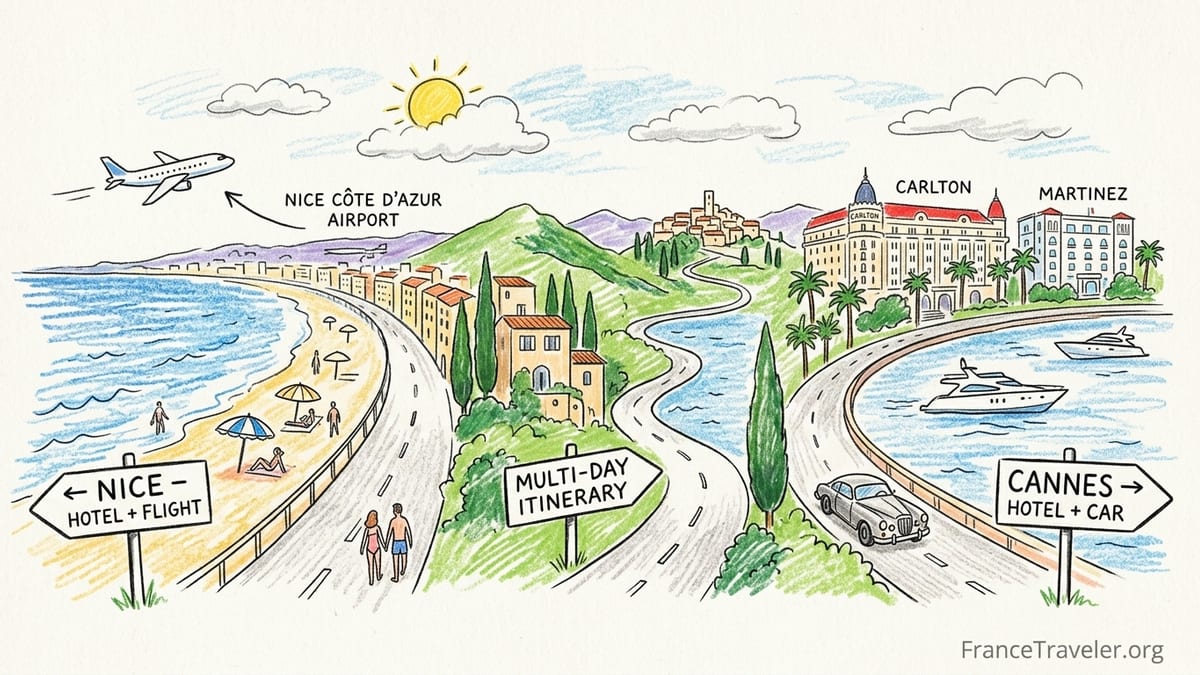
On large online travel agencies, French Riviera packages are typically marketed in three main formats: flight + hotel, hotel + car, and full “multi-day Riviera” itineraries that may add transfers and excursions. For example, a recent seven-night Nice-based package from a European gateway bundled a midrange three-star hotel near the Promenade des Anglais with non-stop flights and basic breakfast at a per-person price that was noticeably lower than booking each element separately. By contrast, many Cannes offers on package platforms focus on four and five-star hotels with breakfast included, reflecting the city’s more upscale profile.
Flight-and-hotel bundles are usually the most visible for Riviera trips. On sites similar to Expedia, you will see dynamic pricing where a three-night Cannes package in late September 2026 can start around a few hundred euros per person from Madrid for a two or three-star property with breakfast, but rise sharply into the thousands for a full week at iconic addresses such as the Carlton or Hôtel Martinez. Because these prices change constantly, the key is not the exact figure, but the pattern: the better the hotel location and the more flexible the flight times, the bigger the potential saving when you bundle compared with booking each piece in isolation.
Hotel-and-car packages tend to target travelers who plan to explore beyond Nice and Cannes. A typical example sold through European tour operators is a seven-night self-drive itinerary based in Nice that includes accommodation, airport pickup of a compact car and a suggested route to Antibes, Cannes, Saint-Paul-de-Vence and Saint-Tropez. One such program, priced at roughly 1,700 US dollars per person for a week in a three-star Nice hotel, includes private airport transfers, day tours to Antibes and Cannes, and an excursion to Saint-Tropez, but leaves the international flights separate, which gives long-haul travelers more freedom to chase flight deals.
Finally, there are complete Riviera vacations marketed as “your way” or “flexible” packages. These often start with flights into Nice, add several nights in Cannes or another resort, and include extras such as daily breakfast, a welcome dinner or a guided day trip to Monaco. Costco-style packages, for instance, have promoted Cannes stays where the price covers transatlantic flights, four or five nights in a central hotel and member-specific benefits, while leaving meals largely at your discretion. These full packages appeal to travelers who value predictability and do not want to piece the trip together line by line.
Nice-Based Packages vs Cannes, Saint-Tropez and Quieter Resorts
Nice remains the primary hub for French Riviera packages because almost all international visitors fly into Nice Côte d’Azur Airport. Many packages keep you based entirely in Nice, using the city’s reliable tram and coastal train for day trips. For example, a seven-night “Nice and the Riviera” package might place you in a three-star hotel in the Old Town or near the seafront, with daily breakfast and two or three included excursions to Monaco, Cannes and inland hill towns. From a value perspective, these packages can be strong because three-star inventory in Nice is larger and often more competitively priced than in Cannes or Saint-Tropez, especially in shoulder seasons like April, May, late September and early October.
Cannes packages usually skew more upscale. Travel platforms list numerous flight-and-hotel combinations around well-known four and five-star properties on the Boulevard de la Croisette. An example from autumn 2026 shows three nights in a basic hotel in the La Bocca district with flights from Madrid priced at under 300 euros per person including breakfast and travel insurance, while a week at a five-star beachfront property like the Martinez or Carlton, also with flights from Madrid and breakfast, climbs well above 2,500 euros per person. If your aim is a classic glamorous beach holiday, Cannes-based packages deliver it, but you should be prepared for higher absolute costs and far steeper prices during the Cannes Film Festival in May, when many hotels require long minimum stays and package rates can double.
Saint-Tropez is less package-driven because access is trickier. There is no train station in Saint-Tropez itself, and most visitors arrive by car or seasonal ferry. You are more likely to encounter Saint-Tropez as a day trip built into a Nice or Cannes stay, or as part of a self-drive itinerary that combines a few nights in Saint-Tropez with stops in other Riviera towns. These programs often include car rental, making them closer to hotel-and-car bundles even if marketed as a full package. For instance, a six-day private itinerary marketed to English-speaking travelers includes five nights along the Riviera, private airport transfers in Nice and day excursions to Cannes and Saint-Tropez, but leaves airfare to France on the traveler.
Quieter Riviera resorts such as Antibes, Juan-les-Pins, Villefranche-sur-Mer and Menton appear less frequently as headline package destinations, but they still feature as hotel options within broader “Côte d’Azur” searches. A search on package platforms for September 2026, for example, returns flight-and-hotel deals that place travelers in Antibes or Juan-les-Pins at prices often slightly lower than Cannes equivalents. These towns can offer better value for families and couples who prioritize calmer beaches and less nightlife, while remaining a short train ride away from Nice and Cannes for sightseeing.
Flight + Hotel vs Hotel + Car vs Full Riviera Itineraries
Choosing between flight-and-hotel, hotel-and-car and full itineraries depends largely on how you plan to move around. Flight-and-hotel packages work best if you intend to stay mainly in one base, such as Nice or Cannes, and use public transport. From Nice, frequent coastal trains run to Antibes, Cannes, Menton and Monaco, and buses or organized tours handle side trips like Eze or the inland gorges. A traveler flying from New York, for instance, might book a standalone transatlantic round-trip for around 600 to 800 US dollars in shoulder season, then bundle a Nice hotel with a short Paris–Nice hop through a package for extra savings on the internal flight and accommodation.
Hotel-and-car bundles are attractive if you want to explore the hinterland or smaller coves where trains do not go. A typical package might include seven nights in a Nice or Antibes hotel with breakfast and a compact rental car collected at Nice Airport. This allows you to drive to places like the hilltop villages of Saint-Paul-de-Vence or the Verdon Gorge on your own schedule. You should, however, factor in parking fees in cities such as Nice and Cannes, plus higher fuel and toll costs than in many parts of North America. Some recent traveller reports suggest that many Dutch and German visitors still prefer to drive down in their own cars and stay at campsites, which can be cheaper than renting a vehicle locally if you already live in Europe.
Full Riviera itineraries marketed by tour operators usually combine elements of both. One eight-day “Stunning Riviera” package, for example, keeps you based in a midrange Nice hotel and includes airport transfers, breakfast, and guided days in Antibes, Cannes, Saint-Tropez and Monaco. The price is quoted around 1,750 US dollars per person, excluding international airfare, and includes private transfers rather than car rental. This sort of program is best for travelers who do not want to drive in France and like having a set schedule of excursions built in.
When you compare, look not only at headline price but also at how much independence you want. Flight-and-hotel bundles give you the most freedom to improvise with day trips using public transport. Hotel-and-car and full itineraries structure more of your time but can unlock corners of the Riviera that trains and bus routes do not reach. For many first-time visitors, a hybrid approach works well: a flight-and-hotel package centered in Nice plus a three-day car rental booked separately mid-stay for inland explorations.
Beach Holidays vs Sightseeing-Focused Trips
The French Riviera can be either a pure beach holiday or a cultural and scenic itinerary, and the best package for you depends on which side you lean toward. Beach-focused travelers tend to gravitate to Cannes, Juan-les-Pins and the private beach clubs in Nice. Packages oriented toward this market highlight room categories with balconies or sea views, and they often feature hotels with their own beach concessions or easy access to the Croisette. For example, a seven-night September package in a four-star Cannes hotel with breakfast and direct flights from a European capital may list “private beach access” as a selling point, and that amenity can justify a higher per-night cost compared with equally rated inland hotels.
Sightseeing-centered trips are usually based in Nice, Menton or Villefranche-sur-Mer, where you can reach multiple attractions without changing hotels. Nice-based packages often pitch a “hub and spoke” model: sleep in Nice, then spend your days on trains and buses to Monaco, Eze, Antibes and inland villages. In these cases, the package value comes less from luxury amenities and more from convenient flight times, manageable airport transfers and hotels close to transit lines. Travelers who choose this structure often report they spend only part of their time on the beach, devoting many days to walking old towns, visiting museums and sampling local markets.
In practice, most Riviera vacations mix the two. A couple might book a flight-and-hotel week in Nice, use the first three days for museums and day trips, then reserve beach loungers at a Nice or Antibes beach club later in the week. When evaluating packages, read the hotel descriptions to see whether there is an on-site pool, how far the property sits from the waterfront, and whether beach access is included or sold separately. A “beachfront” label in Cannes might still mean you pay extra daily fees for sunbeds and umbrellas at a partner club, which can significantly increase the real cost of a supposedly all-in package.
Season also matters. In high summer, July and August, hotel prices across the Riviera are high, beaches are crowded and families dominate many resorts. In shoulder months like May, June, September and early October, you can still swim, but package rates are often lower and sightseeing is more pleasant in cooler temperatures. Some travelers even prefer early spring or late autumn Nice packages that emphasize museums and food, accepting that beach time may be limited in exchange for softer prices and fewer crowds.
Airport Transfers, Breakfast and Other Inclusions That Change the Math
Airport transfers can be an overlooked part of Riviera packages, yet they have a real impact on value and convenience. Nice Côte d’Azur Airport sits only a short distance west of the city, and a modern tram line connects the terminals to central Nice. In 2026, the tram ride between the airport and the nearby Grand Arénas stop is free, and from there you can buy regular urban tickets at standard prices. Some visitors report that tickets bought at airport machines can cost more than those purchased in town, so a package that explicitly includes private transfers from the airport to your hotel may be worth paying for if it saves confusion, especially after a long-haul flight with luggage.
Private or shared transfers bundled into packages from North American tour operators can also be reassuring for travelers not comfortable navigating French signage on arrival. For instance, several multi-day Nice and Cannes programs include round-trip private car transfers from Nice Airport to the hotel, which if purchased separately might cost roughly the equivalent of two or three tram or bus fares per person each way. On the other hand, if you are confident using public transport and traveling light, you may prefer a cheaper package that omits transfers and rely on the tram or a local taxi at the fixed airport-to-city rates published by the tourist office.
Breakfast is another important variable. Many European Riviera packages include “bed and breakfast” as standard, particularly in midrange and upscale hotels. Some dynamic flight-and-hotel bundles show a lower headline rate for “room only,” and then a modest increase for the breakfast-inclusive option. On a seven-night stay, paying a little extra per night for breakfast can be good value if local café prices for a simple breakfast run to several euros per person each day. However, in cities like Nice with abundant bakeries, some travelers deliberately choose room-only deals to enjoy different cafés each morning and keep flexibility.
Other inclusions that can tilt the balance include resort fees, city tourist taxes, parking charges for hotel-and-car packages, and cancellation terms. In Cannes and Nice, daily city tax is usually charged per person per night and may not be included in the package price. Parking in central areas can add a noticeable daily fee. Before you commit to a package that appears cheaper than independent booking, check whether these mandatory extras are wrapped into the package total or will be payable on arrival, as this can erase much of the apparent saving.
Cancellation Terms and When Bundling Really Saves Money
Cancellation rules for Riviera packages vary widely and are a crucial part of the value equation. Some online agencies now offer “free cancellation” flight-and-hotel packages where the hotel can be canceled or changed up to a few days before arrival, while the flight portions follow the airline’s own fare rules. Others advertise discounted “non-refundable” bundles that lock you into specific flights and hotel dates in exchange for a lower total. On traditional tour-operator packages, changes and cancellations often follow a sliding scale, with increasing penalties as you approach departure, especially for high-season dates.
Bundling tends to offer genuine financial benefits in a few clear scenarios. One is when flying from long-haul markets like North America during shoulder seasons. For example, if a round-trip economy flight from New York to Nice in late September costs about 700 US dollars on its own and a midrange Nice hotel would run another 1,200 dollars for the week, a combined package at or slightly below 1,700 to 1,800 dollars per person with better flight times can be a meaningful saving. Another is when booking four or five-star hotels in Cannes or Monaco, where rack rates are high and package-only discounts negotiated by partners can be significant compared with public rates on the hotel’s own site.
Where bundling may not save much is on very simple, off-season trips where standalone airfares and hotel rates are already low. A January three-night stay in Nice, for instance, might be just as cheap to assemble yourself, especially if you are flexible on flight times and happy to book a small independent hotel that is not part of big-agency inventory. Similarly, if you are redeeming airline miles or loyalty points for flights, building the land portion independently often makes more sense because many package systems cannot integrate award tickets.
To test whether a bundle is genuinely better value, it can be worth recreating the package manually: price out flights and the exact same hotel for the same dates, add estimated transfers, breakfast, resort fees and taxes, and compare that total with the package price. In many real-world Riviera examples, you will find small to moderate savings from bundling, along with the convenience of one booking and sometimes more lenient payment schedules. Just remember that non-refundable discount packages expose you to higher risk if your plans change, so consider travel insurance or more flexible options if your dates are not absolutely fixed.
The Takeaway
French Riviera vacation packages in 2026 are diverse enough to fit almost any style of trip, from a budget-friendly Nice city break to a high-end Cannes beach holiday or a self-drive circuit that dips into Saint-Tropez and the inland villages. Flight-and-hotel deals work well when you want a single base and efficient airport logistics, hotel-and-car packages help you unlock quieter corners beyond the train line, and full itineraries suit travelers who prefer having a pre-arranged schedule of excursions and transfers.
To get the best value, start by deciding whether your trip is primarily about beaches, sightseeing or a mix of both, then pick the right base: Nice for flexibility and transport, Cannes for glamor and beachfront convenience, quieter resorts like Antibes or Menton for a more relaxed atmosphere. Pay close attention to whether airport transfers, breakfast, parking and local taxes are included, and study cancellation terms just as carefully as headline prices. Finally, always compare a package against a do-it-yourself breakdown for the same dates and properties. When the numbers line up and the inclusions match your travel style, a French Riviera package can turn a complex Mediterranean planning puzzle into a simple, good-value booking.
FAQ
Q1. Is it cheaper to book a French Riviera package or arrange everything independently?
In many cases packages offer a modest saving, especially for four and five-star hotels or long-haul flights, but sometimes the difference is small. Always price the same flights and hotel separately, add realistic costs for transfers, breakfast and local taxes, then compare with the package total before deciding.
Q2. Which base is better for first-time visitors, Nice or Cannes?
Nice is usually better for first-timers because it has the main airport, extensive public transport and a wide range of hotel categories and prices. Cannes is ideal if you want a beach-focused, more upscale stay and are willing to pay more for seafront hotels and private beach access.
Q3. When do French Riviera packages offer the best value during the year?
Shoulder seasons like May, June, late September and early October often provide the best balance of price, weather and crowds. High summer and major events such as the Cannes Film Festival bring sharp price increases, so packages during those periods are rarely true bargains.
Q4. Do I need a rental car if I book a package in Nice?
No, many visitors base in Nice without a car and rely on trams, buses and the coastal train to reach Cannes, Antibes, Menton and Monaco. A car is helpful only if you plan to explore inland villages or more remote beaches that are poorly served by public transport.
Q5. What should I look for in the cancellation terms of a Riviera package?
Check whether the hotel portion is refundable, how airline change fees are handled, and what penalties apply as you get closer to departure. Flexible or semi-flexible packages usually cost more but can be worth it if your dates are not completely fixed.
Q6. Are breakfast-inclusive packages worth the extra cost?
Often they are, particularly in midrange and upscale hotels where buffet breakfasts can be expensive when bought separately. However, if you prefer trying local bakeries and cafés each morning, a cheaper room-only rate may suit you better.
Q7. How are airport transfers typically handled in Riviera packages?
Some packages include private or shared transfers from Nice Airport to your hotel, while others expect you to use the tram, bus or taxi at your own expense. If your arrival is late at night or you have a lot of luggage, transfers included in the package can add real convenience.
Q8. Can I customize a Riviera package to include multiple bases, such as Nice and Saint-Tropez?
Many tour operators and larger online agencies now allow multi-city or multi-hotel packages. You might, for example, spend four nights in Nice and three in Cannes or Saint-Tropez, with transfers or car rental linking the two, all under one booking.
Q9. How far in advance should I book a French Riviera package?
For peak periods like July, August and the Cannes Film Festival, booking several months in advance is wise to secure preferred hotels and flight times. For shoulder seasons, you can sometimes wait longer, but booking at least two to three months ahead still improves choice and pricing.
Q10. Are Riviera packages suitable for families with children?
Yes, especially if you choose family-friendly hotels with pools and easy beach access in places like Juan-les-Pins, Antibes or parts of Nice. Look for packages that clearly specify room types, occupancy limits, breakfast policies for children and whether nearby beaches are shallow and calm enough for younger swimmers.