


Planning a Provençal escape in 2026 means facing an embarrassment of riches: vineyard estates wrapped in cypress and vines, historic bastides turned into design-forward retreats, and small village hotels with shaded pools and easy parking for road trips. This guide focuses on the strongest real-world options around Aix-en-Provence, Avignon, Saint-Rémy and the Alpilles, Gordes and the Luberon, plus a few standout countryside bases, with a practical look at what actually matters when you arrive: pools, restaurants, views, parking, walkability, family rooms and how well each property works if you are exploring by car.
How to Choose the Right Base in Provence
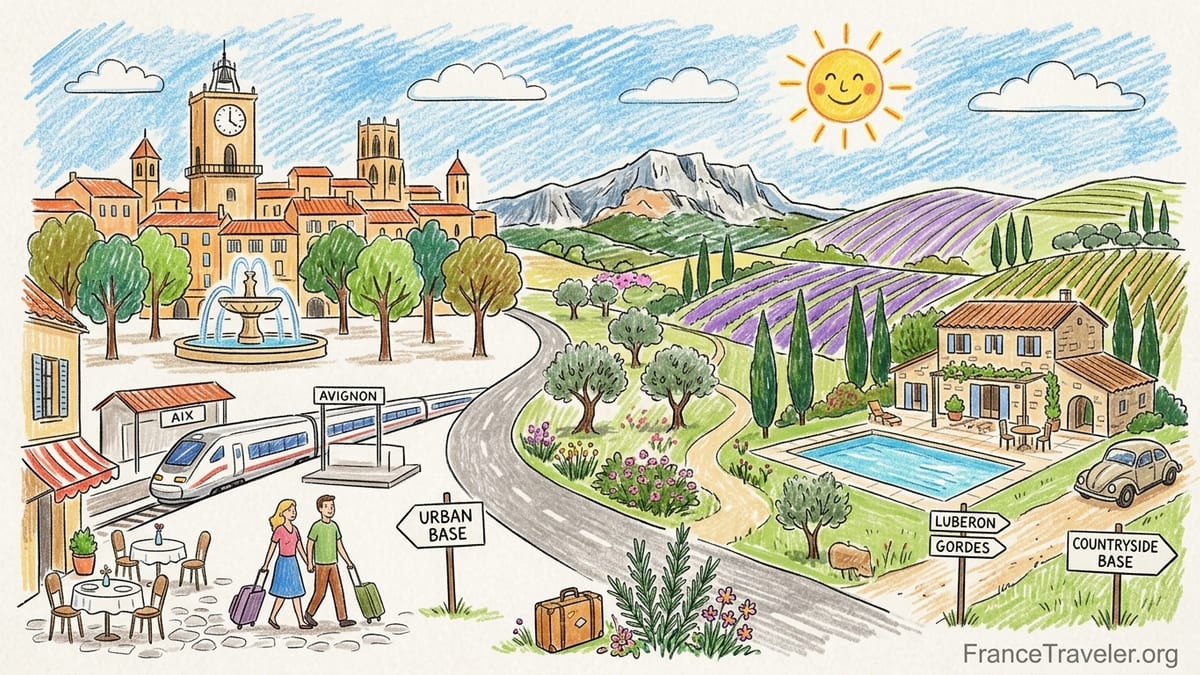
Before you fall in love with a single swimming pool photo, think first about your base. Aix-en-Provence and Avignon work well if you want urban energy, walkable restaurants and rail connections, while Saint-Rémy, the Alpilles villages and the Luberon around Gordes offer a more quintessential countryside feel with olive groves, vineyard views and easier parking. Many travelers now split a week between an elegant hotel on the edge of Aix or Avignon and a bastide-style hideaway in the hills.
For first-time visitors renting a car, smaller towns such as Saint-Rémy-de-Provence, Gordes or Lourmarin often feel less stressful. Hotels like Le Vallon de Valrugues & Spa near Saint-Rémy and Les Bories & Spa above Gordes sit just outside village centers, so you can park on-site and still be a short stroll or shuttle ride from cafes and markets. Several vineyard estates, including Villa La Coste near Aix and Domaine de Fontenille in the Luberon, are fully rural and best suited to guests content to drive out for each excursion or dinner.
Budget and travel style also play a role. Provence’s five-star estates commonly start around the high hundreds of euros per night in shoulder season and rise well into four figures in peak summer. In contrast, characterful three and four-star properties inside towns, such as Le Chalet Fleuri or L’Amandière in Saint-Rémy, often offer rooms in the low hundreds of euros outside July and August, still with pools and gardens. Deciding how many nights you truly plan to linger by the pool versus being out on the road can help you allocate spend between luxury nights and simpler bases.
Finally, consider the season. Pools at countryside hotels are usually unheated and really come into their own from late May through September. If you are visiting in early spring or late autumn, spa hotels with heated indoor pools such as Les Lodges Sainte-Victoire near Aix or Le Vallon de Valrugues & Spa by Saint-Rémy can make a big difference, especially on cooler days or for shoulder-season family trips.
Aix-en-Provence and Countryside Estates
Aix-en-Provence remains one of the most popular entry points to the region, with the TGV station and Marseille Provence Airport within easy reach. For travelers who want the charm of the countryside plus quick city access, the ring of estates just outside town is particularly appealing. Villa La Coste, set in the biodynamic vineyard of Château La Coste between Aix and the Luberon, delivers serious contemporary luxury: large suites, expansive terraces, a serene pool area and an on-site art and architecture park. It suits design-minded couples or honeymooners planning to spend long days on property with short drives into Aix’s old town for markets on the Cours Mirabeau.
Another strong option a short drive from the center is Les Lodges Sainte-Victoire. Located in a 19th-century manor in a park facing the Sainte-Victoire mountain, it combines an outdoor pool with a full spa that includes a heated indoor pool, sauna and hammam. Guests often use it as a calm base after days exploring the Luberon villages or the Calanques near Marseille. Parking is on-site, and while you will likely drive into Aix for dinner, the property’s restaurant offers refined Provençal cuisine for nights when you prefer to stay put.
Travelers who prioritize being able to walk out the door into the city may gravitate toward in-town boutique hotels, where rooms are smaller but you step straight into restaurant-lined streets. Historic properties close to the Cours Mirabeau typically offer valet or nearby garage parking at a daily fee rather than sprawling car parks. This set-up is ideal if you plan to park the car for a couple of days and explore Aix on foot, then use the vehicle only for longer day trips to lavender fields or the southern Luberon.
Families and road-trippers should weigh the trade-off between staying right in the center and choosing a hotel on the outskirts with easier access to ring roads and highways. Estates just outside Aix, such as Villa La Coste and Les Lodges Sainte-Victoire, allow you to drive out toward Gordes, Avignon or Cassis without threading the medieval streets each time, and they tend to offer larger suites and interconnecting rooms that work well for parents traveling with older children.
Avignon and the Rhône Valley
Avignon offers a very different experience, with its papal history, festivals and the convenience of the high-speed train station. Within the walled center, boutique hotels are typically housed in townhouses and small mansions with atmospheric courtyards rather than vast grounds. Pools, if present, are often intimate plunge or lap pools rather than resort-style complexes. These properties suit couples or solo travelers who want to explore the Palais des Papes on foot, enjoy evenings in wine bars and occasionally head out by car or organized wine tour into Châteauneuf-du-Pape and the Rhône vineyards.
Parking in Avignon’s center can be tight, so hotels with on-site or partner garages are well worth booking in advance if you are arriving by car. Some visitors sidestep this entirely by basing themselves across the river in Villeneuve-lès-Avignon or in nearby countryside bastides within a 15 to 20 minute drive. In these locations, you find more space for gardens and pools, easier free parking and quieter nights, while still being close to Avignon for a day of sightseeing or a theatre performance during the summer festival.
Pricewise, Avignon sits slightly below the top-tier resort estates of the Alpilles and Luberon. Comfortable four-star hotels with air conditioning, breakfast rooms and in some cases small pools often price in the mid range except for peak festival weeks when rates spike. Family rooms do exist but are fewer than in countryside resorts, so families with older children may prefer to book two connecting rooms or consider a rural property where suites are larger.
Avignon works especially well for travelers relying more heavily on trains and organized tours than on a rental car. If you plan to move around each day under your own steam, consider whether battling city traffic and parking after a day in the vineyards is worth the trade-off, or whether a village base closer to the wine country such as Saint-Rémy or the Luberon might feel more relaxing.
Saint-Rémy-de-Provence and the Alpilles
Saint-Rémy-de-Provence, in the foothills of the Alpilles, balances village charm with easy driving access better than almost anywhere in the region. On the luxury end, Le Vallon de Valrugues & Spa sits about 800 meters from the village center, beside the Alpilles Regional Nature Park. The hotel combines an outdoor pool and large terrace with a substantial spa area that includes a heated indoor pool, jacuzzi, sauna, steam room and treatment rooms, making it a strong option outside high summer as well as in July and August. Many guests walk into town in about 10 to 15 minutes or use the hotel’s shuttle service, while parking at the property is straightforward.
Another high-end address in Saint-Rémy is Le Saint-Rémy, a five-star hotel and spa in the heart of the village. Here the appeal is being steps from galleries, boutiques and the weekly market, with a design-forward interior and resort-style pool courtyard. Because it is set in the historic center, on-site parking is more constrained and often offered as valet or reserved spaces, suited to travelers who want to park the car on arrival and then mostly explore locally on foot or by short drives into the Alpilles hills.
For mid-range budgets, properties like L’Amandière and Le Chalet Fleuri offer particularly good value. Both sit a short walk from the historic center, usually around a five to ten minute stroll, and combine green gardens with outdoor pools and relaxed, residential atmospheres. They typically provide free or modestly priced on-site parking, making them highly convenient for guests planning day trips to Les Baux-de-Provence, Arles, the Camargue or the Luberon. Rooms tend to be simpler than at five-star resorts but often include family configurations or triples that work for parents with a child.
Elsewhere in the Alpilles, small luxury properties carved into old stone farmhouses and perched near Les Baux-de-Provence offer dramatic views and tranquil pools. These secluded mas-style hotels suit couples or small groups who are comfortable relying on a car for every outing and who prioritize atmosphere, sunset terraces and starry-night dinners over being able to walk into town. Road access in the Alpilles is generally good, but lanes can be narrow, so confident drivers will feel most at ease.
Gordes, the Luberon and Hilltop Villages
For many, the mental picture of Provence is the Luberon: stone villages clinging to hilltops, lavender fields, vineyards and ochre cliffs. The village of Gordes has become one of the region’s star destinations, and its hotels reflect that status. At the top end, Airelles Gordes, La Bastide sits in a 16th-century bastide on the village ramparts, recently restored with lavish attention to historic detail. Terraces and pools overlook the Luberon valley, and a high-end spa and multiple dining venues create a self-contained resort atmosphere within walking distance of Gordes’ lanes and restaurants. This is classic, full-service luxury with strong appeal for special occasions and travelers for whom budget is not the primary constraint.
Nearby, Les Bories & Spa occupies an 8-hectare park above Gordes, delivering a slightly more resort-like layout with low stone buildings, lawns and olive groves. The large outdoor pool, spa facilities and open views across the hills make it a favorite with couples and older families who want a quiet environment while still being a short drive or even a longer walk from the village. Parking is straightforward, and the hotel’s position above the road network makes it convenient for Luberon drives to Roussillon, Bonnieux and Ménerbes.
The wider Luberon also hides smaller-scale vineyard properties. Domaine de Fontenille, near Lauris, is a good example: a Relais & Châteaux address on a wine estate roughly 45 minutes from Aix-en-Provence, with a natural stone pool, permaculture gardens and a relaxed sense of luxury. It appeals to travelers interested in wine, food and slow travel, who may spend afternoons by the pool followed by wine tastings and dinners on-site. Because it sits firmly in the countryside, a car is essential; parking is easy and free, but you will drive to reach villages and additional restaurants.
Hilltop locations do affect practicality. Views from properties around Gordes and the Luberon ridges can be extraordinary, but walking back uphill from village dinners may not suit all guests, especially in the summer heat. Many visitors opt to drive into village centers for dinner, park in public car parks and then return to their hotel after dark. If that sounds stressful, consider slightly lower-lying villages such as Lourmarin or Goult, which still offer characterful boutique hotels and guesthouses, often with small pools and courtyards, and a flatter walk from hotel to restaurant.
Vineyard Hotels and Rural Bastides
Beyond the flagship resort names, Provence is dotted with vineyard hotels and reimagined bastides that provide a more intimate, countryside-driven experience. Properties like Villa La Coste near Aix and Château Bellini in the Var countryside between Aix and the Côte d’Azur blend design, art and wine within working estates. At these addresses, the vineyard is not just a backdrop but part of the guest experience, with cellar tours, tastings and seasonal harvest activities available on-site or nearby.
Rural bastides often trade immediate walkability for space and privacy. Expect generous gardens, shaded terraces for breakfast, and pools framed by cypress and lavender instead of walls and neighboring roofs. Parking is typically ample and included, making them well suited to road trips where you are arriving and leaving with luggage multiple times. However, you will rely on your car for dinners out unless the property has a sufficiently good restaurant to keep you on-site a few nights each week.
Family travelers frequently find vineyard and bastide hotels appealing because room categories often include suites with sofa beds, duplex layouts or interconnecting spaces. Children can swim, explore grounds and nap while adults enjoy a glass of local rosé on the terrace. That said, some of the more design-led estates position themselves firmly toward couples and may have policies limiting children in certain areas, so checking child-friendliness and age policies directly with the hotel before booking is important.
In terms of pricing, vineyard hotels and rural bastides run the gamut from simpler, effectively three-star family-run houses to full-on five-star estates with spas and Michelin-level restaurants. Shoulder season, particularly late April, May, late September and October, can offer more accessible rates while still delivering warm days for vineyard walks and, in early autumn, usable pools.
Practical Comparisons: Pools, Parking, Walkability and Families
When comparing Provence hotels, certain practical points consistently make or break a stay. Pools are high on most wish lists. In-town boutique hotels in Aix, Avignon and village centers often have smaller pools or none at all, while countryside estates such as Les Lodges Sainte-Victoire, Le Vallon de Valrugues, Les Bories or Domaine de Fontenille feature resort-style or natural stone pools set in gardens. If swimming is central to your holiday, prioritize properties with generous outdoor pools and, outside high summer, consider hotels that also offer heated indoor pools or spa facilities.
Parking is another critical factor, especially if you are not used to driving in historic towns. Rural hotels almost always include on-site surface parking, frequently gated but informal. Village-edge properties like L’Amandière and Le Chalet Fleuri in Saint-Rémy, or Les Bories above Gordes, combine this ease with walkability into town. Premium properties in tight historic centers, such as Le Saint-Rémy, tend to rely on valet parking or reserved spaces in nearby garages with nightly fees. That trade-off buys doorstep access to shops and cafés, but you will want to pack light and be comfortable with a few minutes’ walk or a bellhop transfer.
Walkability and restaurants go hand in hand. If you imagine wandering out every evening to choose a different bistro, check how long the walk from your hotel to the village core actually is and whether there is a safe sidewalk or footpath. Saint-Rémy is one of the easiest places to combine pool hotels with easy dining access, while more dramatic hill villages like Gordes can involve steeper walks that some guests might prefer to drive. In rural vineyard estates such as Villa La Coste or Domaine de Fontenille, excellent on-site restaurants typically fill the gap, but options beyond the estate will require a drive.
For families, room layout and relaxed common areas matter as much as formal facilities. Flexible suites and adjoining rooms are common at many five-star resorts, but they can be limited in number and book up early in summer. Mid-range hotels with family rooms or triples around the Alpilles and Luberon often provide a good balance of price and practicality. If you are traveling with very young children, check the availability of cots, highchairs and child-safe pool areas, as many Provence pools are unfenced and rely on supervision rather than barriers.
The Takeaway
Choosing the best hotel in Provence is less about finding a single “perfect” property and more about matching your base to how you plan to travel. Urban or near-urban options around Aix-en-Provence and Avignon suit visitors who value culture, rail access and evening strolls through restaurant-lined streets, while Saint-Rémy, the Alpilles and the Luberon deliver the countryside postcard of stone villages, olive trees and vineyard views with easier parking and driving.
Luxury travelers are spoiled for choice among estates like Villa La Coste, Les Lodges Sainte-Victoire, Airelles Gordes, Les Bories and Le Vallon de Valrugues, which combine strong pools, spas and on-site dining. Those seeking character on a more moderate budget can look to village-edge properties such as L’Amandière or Le Chalet Fleuri and similar three and four-star hotels across the Luberon and Alpilles, many of which include gardens and pools alongside practical amenities like secure parking and family rooms.
Above all, be honest about how much time you will spend on property versus exploring. If the hotel is a destination in itself, a vineyard estate or grand bastide might justify a bigger slice of the budget. If you will be on the road each day, a simpler but well-located base with a good bed, pool and parking could prove the most satisfying choice. In Provence, the real luxury often comes down to unhurried evenings on a terrace, cicadas in the background and knowing that the next day’s market, village or wine road is an easy drive away.
FAQ
Q1. Is it better to stay in a town like Aix or in the Provençal countryside?
For first-time visitors who want restaurants and shops on the doorstep, a town such as Aix-en-Provence or Saint-Rémy works well, especially without a car. If you are driving and prefer space, pools and vineyard or hill views, a countryside bastide or estate around the Alpilles or Luberon may be more rewarding.
Q2. Do I need a car to enjoy Provence’s luxury hotels?
You can reach Aix, Avignon and some villages by train or bus, but a car makes it much easier to explore hilltop villages, vineyards and markets on your own schedule. Most rural luxury hotels, including vineyard estates and remote bastides, really assume guests will arrive with a car.
Q3. When is pool season in Provence?
Most outdoor pools are unheated and feel comfortable from roughly late May through September, depending on the year. Spa hotels with heated indoor pools extend the realistic swimming season into spring and autumn, which can be helpful for trips in April, early May or October.
Q4. Are Provence’s top hotels suitable for families with children?
Many five-star estates and vineyard hotels welcome children and offer suites or interconnecting rooms, though the ambience often remains oriented toward couples. If you are traveling with younger children, check for family rooms, cots and any age-related pool rules in advance, and consider mid-range village hotels that cater more explicitly to families.
Q5. How expensive are luxury hotels in Provence compared with town boutiques?
High-end estates around the Alpilles and Luberon often start in the high hundreds of euros per night in shoulder season and can rise significantly in July and August. In contrast, well-located three and four-star town hotels with pools and parking can be found in the low to mid hundreds of euros outside peak dates.
Q6. Is parking difficult at hotels in historic centers like Avignon and Gordes?
Inside walled centers and hilltop villages, parking space is limited, so hotels typically offer valet service, small garages or reserved spaces for a nightly fee. If you prefer easy, self-park arrangements, look at village-edge or countryside hotels where parking is usually free and straightforward.
Q7. Which area is best for vineyard hotel stays?
Vineyard hotels cluster around Aix-en-Provence, the Luberon and parts of the Var and Rhône Valley. Estates near Aix and in the southern Luberon are particularly convenient, combining wine experiences with relatively short drives to villages, markets and the coast.
Q8. How far in advance should I book for summer in Provence?
For July and August, it is sensible to book sought-after hotels three to six months in advance, especially if you require specific room types such as family suites or adjoining rooms. More modest town hotels can sometimes be found closer to the date, but availability becomes tight around major festivals and holidays.
Q9. Are boutique hotels in Provence air conditioned?
Most modernized boutique and luxury hotels in Provence offer air conditioning, but it is not universal in older buildings or very small guesthouses. If you are traveling in high summer and are sensitive to heat, confirm this detail before finalizing a reservation.
Q10. Can I rely on hotel restaurants, or should I plan to dine out every night?
Larger estates and many vineyard hotels have strong on-site restaurants that guests happily use several times during a stay. In villages and towns, you will usually find a range of independent restaurants within walking or short driving distance. A balanced approach, mixing on-site dinners for relaxed evenings with outings to local bistros, works well for most travelers.