


The French Pyrenees are more low-key than the Alps, but that is exactly their charm. Resorts here mix old spa towns, family ski areas and wild national-park scenery, and the right hotel can make the difference between a decent trip and a truly memorable mountain escape. This guide focuses on practical details that matter in real life, from parking and ski storage to pool hours and family rooms, with concrete examples in Cauterets, Saint-Lary, Luchon, Font-Romeu, Ax-les-Thermes, Luz-Saint-Sauveur and key national-park gateways.
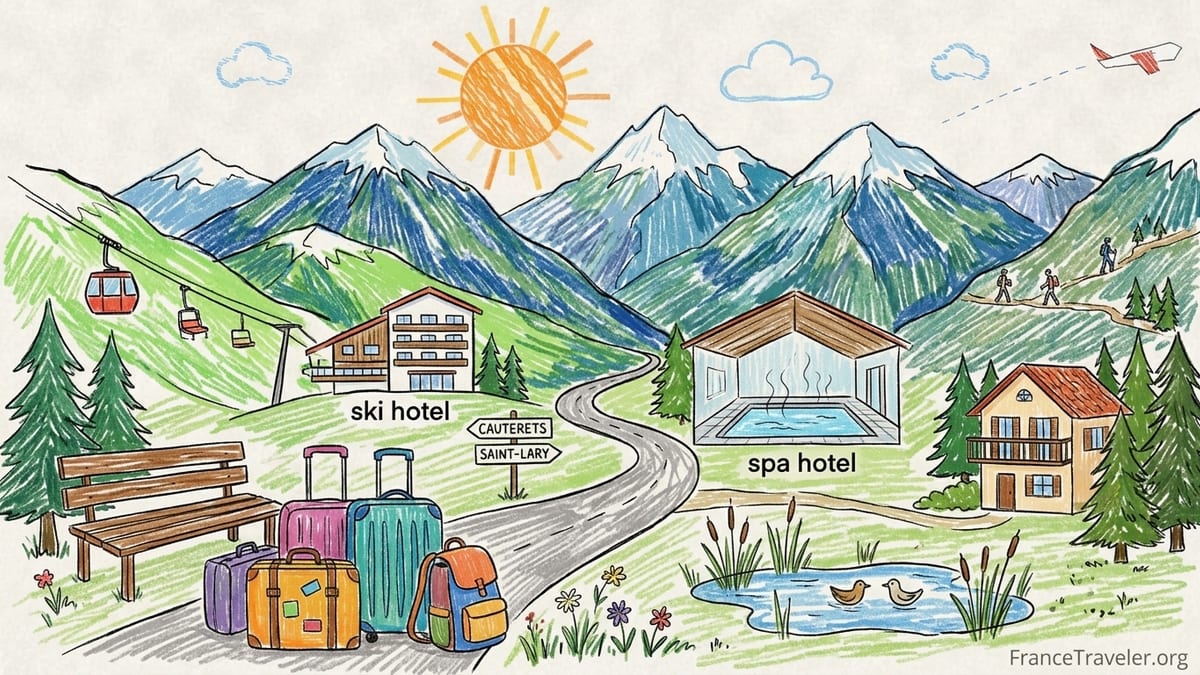
How to Choose a Hotel in the French Pyrenees
Picking a base in the French Pyrenees is less about star ratings and more about matching your priorities to the geography. Distances between valleys can be long and winding, so you want a hotel that lines up with your main goal, whether that is ski-in convenience, thermal spas, summer hiking or a romantic hideaway. In winter, being close to a lift or ski shuttle can save you 30 minutes every morning. In summer and autumn, being near a trailhead into a national park such as the Parc National des Pyrénées is more important than being right in the middle of a resort village.
Most mid-range mountain hotels here include breakfast, but dinner can be a set menu, a simple half-board option or not offered at all. If you plan to ski hard all day, a half-board hotel in a village like Saint-Lary or Cauterets can make evenings easier. If you prefer to sample local bistros, choose a central address with plenty of restaurants within a five-minute walk. Many properties close between late March or early April and mid May, and again for part of autumn, so always check seasonal opening dates before locking in flights or trains.
Parking and access are practical issues that are easy to overlook. In old spa towns such as Luchon and Cauterets, some characterful hotels do not have large private car parks, instead relying on nearby municipal parking. In more purpose-built resorts such as Font-Romeu or Ax-les-Thermes, you are more likely to find on-site parking and private garages. For families, look carefully at room descriptions: a “family room” can mean anything from a small double with a sofa-bed to a pair of interconnecting rooms, which affects comfort on a week-long stay.
Finally, if you are coming primarily for wellness, focus on the on-site spa rather than the resort’s public baths. Town thermal complexes in Cauterets, Ax-les-Thermes and Saint-Lary are excellent, but they can be crowded at peak times and often require advance booking. A hotel with its own pool, hot tub or small spa can be a real plus for an unhurried evening soak, especially if you are visiting during school holidays.
Cauterets: Spa Town Charm and Easy Access to High Mountains
Cauterets is one of the most atmospheric bases in the Hautes-Pyrénées, combining Belle Époque spa architecture with a compact ski area and direct access to the Parc National des Pyrénées. The village itself sits in a narrow valley, with the main gondola rising from the edge of the centre up to the Cirque du Lys ski area. Many hotels are within walking distance of both the gondola and the town’s thermal baths, which makes it easy to switch from ski boots to hot pools in a matter of minutes.
For travellers who value peace and wellness over glamour, small hotels just outside the busiest streets work well. A typical three-star address a few hundred metres from the centre will often provide simple but comfortable rooms, a sauna or small wellness corner, and easy access to a large public car park within about 100 metres. After a day on the slopes or hiking to Pont d’Espagne, you can expect to walk five to ten minutes back from the gondola, drop skis in a basic storage room and be in the sauna shortly after. Such properties tend to run from roughly December to late March for the ski season, then reopen from around June through early autumn for hikers.
If you are travelling with children, consider staying close to the main street so that walks to the lift, bakery and supermarkets are short. Many family-friendly hotels in Cauterets offer quad or family rooms with bunk beds, breakfast buffets with plenty of kid-friendly options and the option to rent ski lockers near the lift station to avoid carrying equipment. In summer, these same hotels sit close to shuttle departures for Pont d’Espagne, one of the most spectacular gateways to high-level hiking and family-friendly lakeside walks.
Parking in Cauterets can feel tight on winter weekends and during August. Hotels that advertise private parking may still have limited spaces, so it is worth confirming in advance, especially if you are arriving late in the day. Otherwise you will likely use municipal parking, which is generally within a short walk from most central hotels. For couples seeking a romantic break, look for smaller hotels or guesthouses with balconies facing up-valley; waking up to views of snowy peaks or an autumn forested valley is one of Cauterets’ real pleasures.
Saint-Lary-Soulan: All-Rounder for Ski, Spa and Families
Saint-Lary-Soulan, in the Aure valley, is one of the most versatile resorts in the French Pyrenees. The village has a lively centre, an extensive ski area connected by gondola and cable car, and a strong spa tradition. This combination makes it popular with families, mixed-ability groups and travellers who like to split their time between skiing, spa sessions and easy walks along the valley floor.
On the higher end of the scale, four-star properties near the lift base stand out for their wellness facilities. A typical example is a modern hotel with an indoor heated pool, hammam, sauna and partnered spa brand for treatments, attached to a large thermal complex. These hotels usually have on-site or underground parking, ski storage rooms and direct access or a very short walk to the gondola that rises to the Pla d’Adet sector. They are ideal for travellers who want to ski in the morning, then retreat to a controlled, quieter spa environment in the late afternoon, rather than rely solely on the public baths.
Mid-range and family hotels in Saint-Lary often sit slightly back from the busiest streets while remaining within a ten-minute walk of the lifts. You can expect functional family rooms, buffet breakfasts, small play corners for children and sometimes outdoor pools that come into their own in summer. During July and August the village transforms into a base for hiking and cycling, with chairlifts opening for walkers and mountain bikers, so hotels that felt ski-focused in winter become practical hubs for summer adventures. Ask about secure bike storage in addition to ski lockers if you are travelling with your own gear.
For couples on a romantic trip, Saint-Lary’s older stone houses and smaller boutique-style hotels on the village outskirts offer a calmer atmosphere. You may trade immediate lift access for more character, gardens and mountain views, but shuttle services and a reasonably flat main street make it feasible to reach the lifts on foot. Parking is generally easier on the outskirts, another factor to weigh if you are driving a hire car or camper-style vehicle and prefer not to wrestle with tight underground garages.
Luchon and Superbagnères: Historic Spa Meets High Plateau Skiing
Bagnères-de-Luchon, often shortened to Luchon, is a classic Pyrenean spa town at the foot of the Superbagnères ski area. The town itself has leafy avenues, 19th-century buildings and a traditional thermal complex, while the skiing sits on a high plateau reached by road or gondola. This split between town and slopes shapes the hotel scene: most accommodation is in Luchon proper, rather than right on the pistes.
Modern four-star hotels in Luchon typically emphasise wellness and all-weather comfort. Expect underground or private parking, an indoor pool, small spa area with sauna and hammam, treatment rooms and a proper ski storage room. One flagship property near the departure station for the gondola has a private terrace, secure parking and an indoor pool, and sits only a few minutes’ walk from the lift, which means you can leave the car parked for your entire stay. As of the current season, this type of hotel generally closes for a shoulder period in spring, for example from around the end of March to mid May, before reopening for the summer hiking season.
Smaller hotels, B&Bs and apartment-residences provide an alternative for families and budget-conscious travellers. Many have on-site parking or reserved spaces in nearby lots, and some are extremely well set up for cyclists and skiers, with large storage rooms, workshops and laundry facilities. For a family of four, booking a two-bedroom apartment within walking distance of the main street can be better value than two hotel rooms, especially if you plan to self-cater part of the time. Note that while Luchon has lift connections to Superbagnères in winter, in early or late season the lift operating dates may not align perfectly with every hotel’s opening calendar.
In summer, Luchon becomes a hub for hiking, paragliding and road cycling, so even hotels that feel oriented toward winter sports work well as bases for non-ski trips. Check whether your chosen property offers packed lunches or early breakfasts, which can be helpful if you are catching an early shuttle to a trailhead. Couples can look for historic hotels or renovated townhouses with balconies overlooking the park, which combine easy strolls to restaurants with views of the surrounding peaks.
Font-Romeu: Sunshine, Family Skiing and Modern Spa Hotels
Font-Romeu, in the eastern Pyrenees, is known for its high sunshine hours and its combined Font-Romeu Pyrénées 2000 ski area. The resort sits on a balcony-like position above the Cerdagne valley, with views across to Spanish peaks. It is particularly popular with families and those who prefer a balanced, mid-altitude ski holiday rather than extreme terrain.
The hotel mix here ranges from traditional chalet-style properties on the edge of town to more contemporary spa hotels near the centre. A good example of the latter is a four-star hotel with a rooftop or upper-level wellness area, small indoor pool, hot tub and panoramic terrace, often with billiards lounge and fireplace. These hotels usually have covered or outdoor private parking and are within a short walk of resort shuttle stops that run to the main lift station. They suit couples and small groups who want a simple, car-free routine: breakfast, shuttle to the slopes, afternoon spa and dinner either on site or in nearby restaurants.
On the more rustic side, chalet hotels set a few kilometres outside the centre offer a quieter mountain feel. One such property south-facing in open countryside provides a heated outdoor pool or spa-style pool, large free car park and a winter shuttle to the resort, striking a balance between immersion in nature and access to ski lifts. These are good choices for guests who value silence, starry skies and easy on-site parking over nightlife.
Font-Romeu also has an increasing number of apart-hotels and residences with spa facilities. A recently renovated residence on the edge of town, for example, combines self-catering apartments with a dedicated spa area that includes a small pool and massage rooms, plus numbered parking spaces for each unit. For families or mixed-age groups, this format offers more space and flexibility at a similar price to two classic hotel rooms, with the bonus of being able to cook simple meals on non-restaurant nights.
Ax-les-Thermes: Thermal Waters and Convenient Ski Links
Ax-les-Thermes, in the Ariège Pyrenees, is another resort where thermal baths and skiing go hand in hand. The town sits at the confluence of valleys, with sulphur-rich hot springs feeding public pools and fountains, while a gondola rises from near the centre to the Ax 3 Domaines ski area. For many travellers, the appeal lies in stepping straight from the gondola into the village, then soaking feet in a public hot spring before wandering back to the hotel.
Hotel options in Ax-les-Thermes lean towards small and mid-range properties, some of them family-run. A typical three-star hotel in the centre will have compact but practical rooms, breakfast service, and sometimes a small wellness corner with hot tub or sauna. Parking can be more challenging here than in purpose-built resorts, especially on market days and winter weekends. Hotels with private garages or reserved spots nearby are worth seeking out if you are driving; otherwise plan for a few minutes’ walk from public car parks to your accommodation.
For families, apartment-style hotels with kitchenettes and access to a shared spa or pool area can work very well. They allow you to eat in on some nights and manage picky eaters without the pressure of restaurant schedules. Proximity to both the gondola and the town’s main thermal centre is a major plus. In winter you might ski until lifts close, then book an evening slot at the thermal baths followed by a simple dinner at home or in a nearby pizzeria.
Couples looking for a romantic break can focus on smaller, quieter addresses on the riverbanks or up the side streets, where traffic noise is lower. Many such properties do not have large spa areas but make up for it with balconies, good soundproofing and more intimate dining rooms. In summer and autumn, Ax-les-Thermes is an excellent base for hikes into the Orlu valley and nearby nature reserves, so check whether your hotel can provide early breakfasts or packed lunches if you are planning long days out.
Luz-Saint-Sauveur and National-Park Gateways
Luz-Saint-Sauveur is a strategic base between the ski slopes of Luz Ardiden, Barèges and Cauterets, and the high glacial cirques that form the heart of the Parc National des Pyrénées. The village itself has a small historic centre and a modest thermal complex, and it lies on the road toward both the Cirque de Gavarnie and the Col du Tourmalet. This makes it particularly attractive for travellers who plan to mix skiing or cycling with day trips into some of the most dramatic scenery in the range.
Hotels in Luz-Saint-Sauveur are typically small-scale, many of them family-run, with simple but warm rooms and breakfast included. Parking is often on-site or immediately adjacent, which is convenient if you are using the village as a base camp to drive to different trailheads or ski areas. Some hotels provide basic wellness facilities such as a hot tub or sauna, but the main relaxation draw is usually the public thermal baths and the village’s peaceful atmosphere after dark.
For more immersive national-park access, travellers often look at accommodation around Gavarnie or the small hamlets near Pont d’Espagne above Cauterets. Here you will find small inns, gîtes and mountain hotels that might close entirely from late autumn until the snowpack stabilises, then again in spring. These properties rarely offer large spas but sometimes have outdoor hot tubs, terraces with direct mountain views and immediate access to hiking trails. Ski storage can be as simple as a locked shed or boot room, so if you have high-end equipment or bikes, ask specifically about secure storage before you book.
Another useful gateway is the Vallée d’Ossau further west, with villages such as Laruns and Eaux-Bonnes providing access to the Gourette ski area and summer hikes. Hotels here tend to be traditional and straightforward, catering to French families and hikers. If you are planning a road trip along the length of the French Pyrenees, including one or two nights in these lesser-known valleys can give you a broader sense of the region’s character than staying only in headline resorts.
Matching Hotels to Ski, Spa, Family and Romantic Needs
When weighing options across the French Pyrenees, it helps to define your trip type first. For a ski-focused holiday with minimal fuss, prioritise hotels close to lifts in Saint-Lary, Cauterets, Font-Romeu or Ax-les-Thermes, ideally with on-site ski storage and breakfast included. A central Font-Romeu spa hotel with private parking and a short walk to shuttles, or a Saint-Lary four-star property linked to the thermal complex and gondola, are good examples of this straightforward setup. In both cases you can leave the car parked and rely on lifts and shuttles day to day.
If spa time is central to your trip, target towns with strong thermal traditions and hotels that complement the public baths. Luchon stands out here, with modern hotels that pair indoor pools and saunas with easy access to the historic thermal complex. Cauterets and Saint-Lary offer similar combinations. When comparing properties, look beyond the presence of a pool to details like adult-only spa hours, reservation systems for treatments and whether access is included or charged separately, as these can affect both cost and atmosphere.
Families benefit from space, predictable routines and easy logistics. Apart-hotels in Font-Romeu and Ax-les-Thermes, family rooms in Saint-Lary, and small central hotels in Cauterets all work well for parents who want to avoid long walks in ski boots and complicated transfers. Check that your chosen hotel has cots if needed, high chairs at breakfast and, in winter, somewhere warm to dry gloves and boots overnight. In summer, safe outdoor spaces such as gardens or nearby playgrounds are particularly valuable for younger children.
For romantic stays, focus on character and quiet rather than sheer ski convenience. A chalet hotel outside Font-Romeu, a historic townhouse in Luchon with park views, or a small inn near Luz-Saint-Sauveur with a few well-appointed rooms and mountain-facing balconies can be far more atmospheric than a large complex. Easy access to sunset viewpoints, gentle evening walks and intimate dining rooms often matters more to couples than having the fastest route to the first chairlift.
The Takeaway
The French Pyrenees reward travellers who match their base to their priorities. Instead of chasing the most luxurious property, focus on how a hotel will work with your daily rhythm. For winter ski trips, that might mean secure parking, ski storage next to the lift and hearty breakfasts; for spa breaks, it could be adult-only wellness hours and quiet relaxation rooms; for families, interconnecting rooms and simple access to lifts and shops.
Cauterets, Saint-Lary, Luchon, Font-Romeu, Ax-les-Thermes and Luz-Saint-Sauveur each bring a slightly different mix of skiing, spa culture and national-park access, and within each resort you will find hotels that lean toward either practical comfort or romantic charm. With a little research into parking arrangements, lift proximity, room layouts and seasonal opening dates, you can choose a base that fits the way you really travel, and let the peaks, forests and hot springs of the Pyrenees do the rest.
FAQ
Q1. When is the best time to visit the French Pyrenees for skiing?
For most resorts such as Cauterets, Saint-Lary, Font-Romeu and Ax-les-Thermes, the main ski season usually runs from mid December to late March, with the most reliable combination of snow coverage and lift openings from early January to early March. Exact dates vary each year depending on snowfall and resort decisions, so check current season calendars before you book.
Q2. Do most Pyrenean hotels include parking in the room rate?
In village resorts like Font-Romeu and Saint-Lary, many hotels include free outdoor parking or have small private car parks, while some four-star properties offer paid underground garages. In older spa towns such as Cauterets, Luchon and Ax-les-Thermes, you may rely more on nearby municipal lots, which are often free or modestly priced. Always confirm whether parking is on site, reserved or first-come, first-served.
Q3. How important is ski storage when choosing a hotel?
Dedicated ski storage makes a real difference, especially for families and longer stays. A good ski room lets you leave equipment to dry overnight, reduces clutter in your room and often sits close to the exit you use to walk to lifts or shuttles. If a hotel does not have its own ski room, ask whether there are lockers for rent at the lift station, which is common in resorts such as Cauterets and Saint-Lary.
Q4. Are hotel pools and spas in the Pyrenees usually open year-round?
Not always. Many hotels in the French Pyrenees close completely in shoulder seasons such as late spring and parts of autumn, and their spa and pool facilities close with them. Even when hotels remain open, some outdoor pools operate only in summer. Before booking primarily for wellness facilities, check seasonal opening dates and whether any scheduled maintenance might affect your stay.
Q5. Which resorts are best for families with young children?
Font-Romeu, Saint-Lary and Cauterets are particularly family-friendly, with gentle beginner areas, ski schools and compact village centres. Many hotels in these resorts offer family rooms, kids’ corners and easy access to lifts or shuttles. Apartment-style accommodation with kitchenettes can also work very well for managing meal times and early bedtimes.
Q6. Can I stay in one hotel and explore several different valleys?
It is possible, but road distances and winter driving conditions can make day trips slower than they look on a map. Bases like Luz-Saint-Sauveur and Saint-Lary give access to multiple valleys and ski areas within an hour’s drive, but if you want to visit both the central and eastern Pyrenees, it is usually more comfortable to plan two or more bases rather than commuting long distances from a single hotel.
Q7. Are breakfasts in Pyrenean hotels substantial enough for a ski day?
Most mid-range and higher-end hotels offer buffet breakfasts with bread, pastries, cereal, yoghurt and some hot items such as eggs or bacon. While they may not match the largest Alpine buffets, they are generally sufficient to fuel a morning on the slopes. If you need something more substantial, choose hotels that advertise hot options or consider bringing extra snacks for the first lift.
Q8. Do hotels near national-park gateways stay open in winter?
Some do, particularly in villages like Cauterets and Luz-Saint-Sauveur, which combine ski access with proximity to national-park areas. Smaller inns and mountain hotels closer to high passes or remote trailheads may close once heavy snow arrives and reopen in late spring or early summer. If winter hiking or snowshoeing is part of your plan, pick a base in a village that maintains year-round road access and confirm opening dates directly with the hotel.
Q9. How far in advance should I book for school holidays?
For French school holidays in February and early March, and for the peak summer weeks of late July and August, it is wise to book three to six months ahead, especially in popular resorts such as Saint-Lary, Cauterets and Font-Romeu. Family rooms and apartments in central locations tend to sell out first. Outside these periods, you can often find good last-minute availability, particularly for midweek stays.
Q10. Are romantic, quiet hotels available even in busy resorts?
Yes. Even in lively resorts you can find small chalet hotels, guesthouses or boutique properties on quieter streets or just outside the centre. These often have fewer rooms, more personalised service and better soundproofing than large complexes. When researching, look for mentions of gardens, terraces, mountain views and adult-oriented spa areas, all of which can contribute to a more romantic and tranquil stay.