


I have lost count of how many glossy Loire Valley spreads I have flipped through over the years, each promising fairy‑tale turrets, mirror‑still moats and gardens straight from a costume drama. What those brochures rarely admit is that some châteaux start to blur together once you have seen a few. After multiple trips, I have walked the stone staircases and gravel paths of Chambord, Chenonceau, Amboise, Blois, Villandry and Azay‑le‑Rideau, sometimes on hurried day trips from Paris, sometimes on longer stays based in Tours. This ranking is unapologetically first‑person and limited to those six estates I have genuinely visited, with all the practicalities that matter in real life: interiors, gardens, crowds, parking, photography, walking time, visit length and whether the admission price felt worth it at the gate.
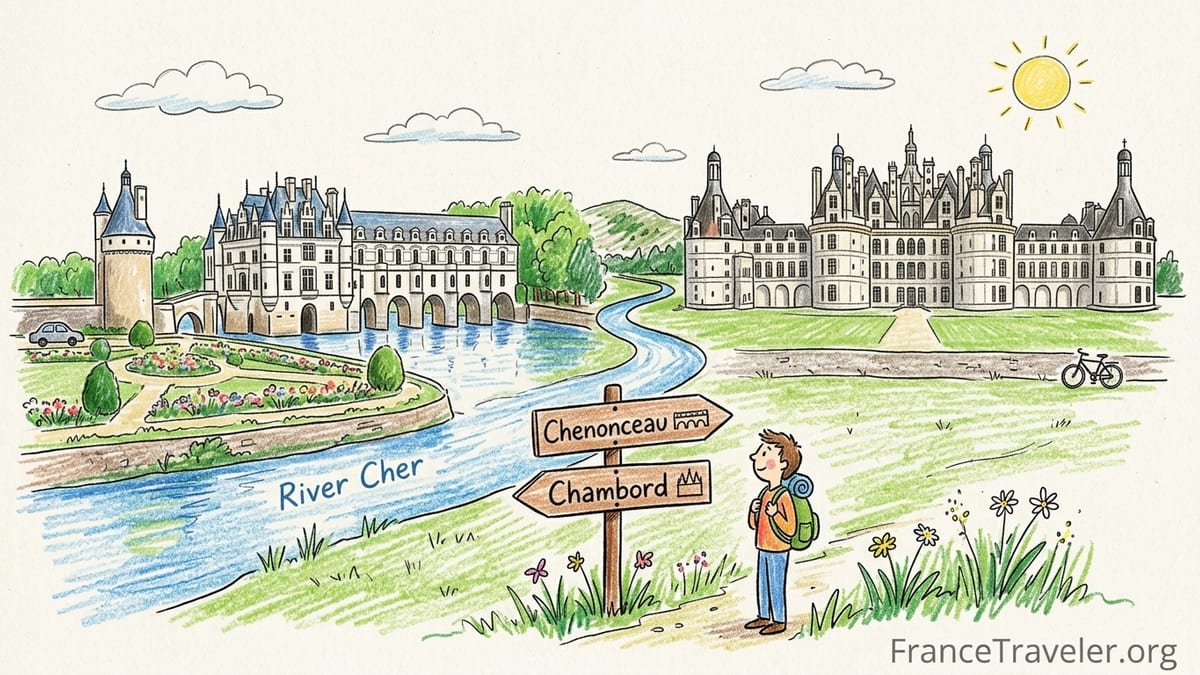
How I Chose and What Visiting Really Feels Like
France’s official château guide highlights Chambord, Chenonceau and Blois among the giant names of the Loire, while the Touraine region adds Amboise, Villandry, Azay‑le‑Rideau, Chinon and Loches as essential stops. That is an intimidating list for a short trip. I deliberately narrowed my comparison to the six I have actually walked through myself: Chambord, Chenonceau, Amboise, Blois, Villandry and Azay‑le‑Rideau. You will not find Chinon or Loches ranked here, because at the time of writing I have only researched them. My aim is to describe what it is like when you are the one buying the ticket, trying to park, and working out whether your feet and your budget can handle one more set of spiral staircases.
Across these visits, ticket prices for adults usually sat somewhere around the mid‑teens to low twenties in euros for full access, depending on the estate and whether gardens are included. For example, Chambord’s published full price for château and formal gardens in recent seasons has been in the mid‑teens per adult, while Blois has combined tickets for the château and its nightly sound‑and‑light show that climb into the low twenties. Specific rates change almost yearly, so I always check each château’s official site in the week before a trip. More important than the exact figure, though, is the feeling at the end of the visit: did what I saw feel like good value for what I paid, once I factored in crowds, atmosphere and how long I actually stayed.
On a typical Loire day, I would comfortably spend two to three hours at a major château that has both significant interiors and gardens, plus extra time for lunch or a café stop. That means that even an ambitious traveler can realistically do only two serious visits in a single day without turning the experience into a blur. I learned this the hard way on an early trip when I tried to squeeze Blois in the morning, Chambord at midday and Cheverny in the late afternoon. By the time I reached the third estate I barely registered the details of the rooms. The six châteaux in this article are the ones that stuck in my memory long after I handed back the audio guides.
Château de Chenonceau: The One I Keep Replaying
If I had to send a first‑timer to only one Loire château, I would still choose Chenonceau. The setting is immediately cinematic: the white stone arches of the gallery stretch across the River Cher, and as you walk up the tree‑lined approach it feels like the château is floating. On my last visit I paid for a full ticket that included both the historic interiors and the gardens. The price was comparable to other headline sites in the valley, but the way the visit unfolds makes it feel generous. You move through furnished rooms that still feel domestic rather than museum‑stuffy, with fresh flower arrangements and explanations about the women who shaped Chenonceau, from Diane de Poitiers to Catherine de Médicis.
From a purely interior perspective, Chenonceau is the most consistently engaging of the six. The long gallery over the river might be one of the most photographed rooms in France, but early in the morning or later in the afternoon it can still feel surprisingly intimate. In high season I have found the main staircase and several key rooms crowded, with small bottlenecks around popular viewpoints; this is one château where I try hard to arrive just after opening or a couple of hours before closing. The visit route is clear, and the amount of walking indoors is manageable for most visitors, although there are still a fair number of stairs if you want to see everything.
The gardens and outdoor experience at Chenonceau are an essential part of why I would visit again. The formal gardens on either side of the château, the riverside paths and the small labyrinth give you space to breathe after the more confined interior. On a sunny day, I easily spend another hour outside, taking photos of the arches reflected in the river and the flower borders framing the façade. Parking at Chenonceau is straightforward, with a large, well‑signed car park set just back from the entrance road, which has made day trips from Tours or even Paris by rental car relatively painless. For me, the combination of distinctive architecture, livable interiors and satisfying gardens means that even with the crowds, the ticket still feels well worth the cost.
Château de Chambord: Spectacular Shell, Demanding Visit
Chambord is the château that dominates every Loire brochure for good reason. Approaching the vast silhouette after parking on the edge of the estate is breathtaking. The roofline bristles with turrets, chimneys and the famous double‑helix staircase often linked with Leonardo da Vinci. The sheer scale of the outer façade is unlike anything else in the valley, and from a photography point of view it is unmatched. I have spent long stretches on the lawn or the canal bank just trying to capture the sense of size with a standard phone camera and a compact mirrorless camera.
Inside, though, Chambord can feel more austere than Chenonceau. Many rooms are partially or sparsely furnished, and the narrative is about architecture and royal ambition rather than everyday court life. The double‑helix staircase is as impressive as its reputation suggests, especially when you realize that you can climb up and down simultaneously on separate spirals without crossing paths with others. The rooftop terraces are a major highlight. Walking among the chimneys and lanterns with views over the surrounding forest is something I still talk about with friends. That said, the amount of walking involved in a full visit is substantial. On one spring day I easily logged several kilometers just circling the main building and exploring different wings.
Practicalities at Chambord are a mixed bag. General admission pricing for the château and French formal gardens has recently been around the mid‑teens in euros for adults, with an evolving tariff structure announced for 2026 that may introduce more seasonal or dynamic pricing. Parking in the main car park close to the château is paid by the day, with published information in recent seasons indicating a flat car fee for full‑day parking. There are also signs that groups who purchase multiple tickets may get discounted or free parking if they present proof of visitation at the pay station. In my experience, the parking lots are large but can fill up close to the entrance midday in peak months, which sometimes means a longer walk. For me, Chambord is the château I most wanted to see once, and I would return mainly to photograph the exterior and rooftop again rather than to repeat the full indoor visit.
Blois and Amboise: Urban Châteaux with Character
Blois and Amboise offer a different feel from Chambord and Chenonceau because both sit directly in lively town centers. At Blois, the château overlooks a square lined with cafés, and on my last visit I parked in a public lot within a short uphill walk to the entrance. The climb is noticeable but not punishing if you are reasonably mobile. Inside, Blois unfolds as an architectural lesson in French royal history, with four wings reflecting different periods around a central courtyard. The interiors are richer and denser with decoration than Chambord. The François I wing, with its famous external staircase, and the elaborate painted ceilings in several rooms were standouts for me.
Blois also wins points for atmosphere. The château has embraced multimedia, and when I visited, the signage and optional audio guide did a good job of connecting rooms to dramatic historical events such as the assassination of the Duke of Guise. In the evening, the sound‑and‑light show projected onto the inside of the courtyard walls was a memorable extra. It required a supplemental ticket on top of daytime admission, pushing the total cost for a full day and evening experience into the low twenties in euros per adult. For travelers who enjoy urban evenings, being able to leave the show and immediately find dinner in town felt like a luxury.
Amboise, by contrast, feels more intimate but no less strategic. The château occupies a rocky spur above the Loire, and from many points on the ramparts and gardens you get broad views over the river and the tiled roofs of the town below. Access and parking are embedded in the fabric of the small city. I have found paid parking spaces along the riverbank and side streets, then walked up through the town to reach the entrance. Once inside, the visit is a mix of restored royal apartments, thick stone walls and terraces. The Chapel of Saint‑Hubert, with the tomb associated with Leonardo da Vinci, is one of the most visited spots and can draw small queues.
What makes Amboise stand out in my memory is the combination of history and views rather than the interiors alone. The walk along the ramparts and the lawns high above the Loire is where I spent most of my time, taking photographs in the late afternoon when the light softened over the town. Admission pricing in recent seasons has aligned with other major Loire sites, sitting somewhere in the mid‑teens for adults, with separate family formulas and options that sometimes combine with another nearby site. For me, both Blois and Amboise are châteaux I would gladly revisit, particularly because their town settings mean that even a shorter visit feels like part of a larger day of wandering, shopping and riverside strolling.
Villandry and Azay‑le‑Rideau: Gardens and Grace on a Human Scale
Villandry is, quite simply, the garden château. If you love formal plantings, vegetable beds laid out as geometric patterns and long terraces with layered views, this is essential. The interiors of Villandry are pleasant and liveable, and seeing them once gave me useful context for the family that restored the site in the early twentieth century, but on repeat visits I have spent most of my time outside. The ticket structure usually allows you to choose between gardens only and combined château plus gardens. Pay close attention when you are buying your ticket if you plan a return later in the day, because the price difference between gardens only and full access can feel significant if you know you are unlikely to tour the rooms again.
On my last visit, I chose the full ticket specifically because I wanted to show a first‑time companion both aspects, and I felt the combined price gave good value for a half‑day stay. We arrived by car and parked in the signed areas near the entrance. The walk from parking to ticket office was short and flat, aided by clear signage in several languages. Once inside, the amount of walking is flexible. You can spend as long as you like on the upper terraces and then loop through the ornamental kitchen garden, the water garden and the boxwood parterres. It is entirely possible to log several kilometers without realizing it, but you can also sit on benches and simply watch the changing light. For photography, late afternoon or an overcast day is ideal, when the contrasts between deep greens and gravel paths are easier for a phone camera to handle without blown‑out highlights.
Azay‑le‑Rideau is almost the opposite of Chambord in scale. The château rises from a mirror‑like moat, compact and harmonious, and the walk from the entrance gate through the landscaped park to the water’s edge is only a few minutes. On my most recent visit, I bought a ticket at the on‑site office for the standard château visit, and spent about two hours inside and out. The interiors feel carefully curated, with period rooms that are neither overwhelming nor empty. The staircase with its carved stonework and the views from the upper windows back over the water are especially memorable. The site managers have invested in improvements in recent seasons, from refined visitor flow to climate adaptation measures during summer heat, which has occasionally meant earlier morning openings or shaded rest areas in the park when temperatures climbed.
From a practical point of view, Azay‑le‑Rideau is user‑friendly. The town offers several car parks within walking distance, including a designated château parking area operated by a private company with some spaces set aside for disabled visitors and options such as electric vehicle charging nearby. I have always appreciated how little time it takes to get from the parking space into the heart of the visit. Compared with the vast domains of Chambord or the intense footwork of Blois, Azay feels gentle. It is a château I would happily revisit on a future trip, especially in shoulder seasons like late spring or early autumn, when the park’s trees reflect on the water and the tourist numbers dip just enough to allow quieter photographs.
What Becomes Repetitive and What Stays Distinctive
After several days of château‑hopping, certain themes blur. Grand staircases, tapestries, royal portraits and reconstructed bedrooms begin to feel interchangeable, especially if you are relying solely on the standard room labels without context from a guide or audio commentary. For me, the interiors at Chambord were the quickest to fade into that blur on later trips, because so much of the story there is architectural and symbolic rather than lived‑in. Once I had admired the famous staircase and rooftop, I found subsequent rooms less distinctive. Blois, with its denser decoration and narrative focus on dramatic court events, held my attention better, but even there, a third or fourth royal bedroom did not add much beyond the first.
Where the châteaux stay unique is in their strongest combinations of setting and story. Chenonceau’s arches over the Cher, Villandry’s terraced gardens and Azay‑le‑Rideau’s compact island setting resist repetition. I could easily imagine returning to each of these just to walk the grounds at different times of year or day, camera in hand. Amboise occupies a middle ground. The town views and the connection to Leonardo da Vinci give it a story hook that feels quite different from the other estates, while some of the interior rooms, though attractive, feel more generic once you have seen a few Loire palaces.
On the more practical side, certain experiences also became repetitive in a way that influenced how I planned later days. Parking logistics, for instance, can feel like a recurring chore. Paying a flat fee in a dedicated château car park at Chambord or at a signposted lot in Villandry is straightforward, but circling riverside streets in Amboise on a busy weekend or negotiating narrow lanes near Chenonceau can eat into your energy. Likewise, navigating gift shops and café areas that are broadly similar in their offer of guidebooks, regional wine and cookies can give you déjà vu by the third or fourth site. Recognizing that repetition early helped me consciously seek out what each château did best, rather than trying to “collect” them all in one trip.
Value for Money, Crowds and Timing Strategies
Looking back, the estates where the admission price felt most justified were those where I spent the longest time and where the experience felt coherent from parking to final photograph. Chenonceau stands out in that sense: between interiors, gardens, riverside paths and a stop at the café, I never left in under three hours, which made the ticket feel well used. Villandry, especially on a full‑gardens day, offered similar value. Blois and Amboise both benefited from their urban settings. Even when I spent slightly less time inside the walls, the ability to flow directly into a town stroll or a meal extended the perceived value of the stop.
Chambord is the one château where the calculation is different. The exterior and park are so impressive that you might be tempted to visit only the grounds, especially if you are traveling with people who tire easily indoors. Depending on current policies, there may be some areas you can access or at least view without a full ticket, but if you want the rooftop terraces and the full double‑helix experience, you will need to pay for château admission. On my visits, I came away satisfied, but I could imagine some travelers feeling that an intensive two‑ to three‑hour indoor circuit was more “work” for the same cost than a gentle garden visit at Villandry or Azay. It comes down to your interest in architectural history and your stamina for large stone spaces.
Crowds can significantly change how each château feels. Chenonceau and Chambord attract heavy international traffic, especially from April through October and on French public holidays. I have had very different experiences at Chenonceau on a late winter weekday versus a sunny Sunday in August. On the quiet day, I could pause on the gallery and hear the river; on the busy day, I shuffled in a packed line. Blois, Amboise, Villandry and Azay‑le‑Rideau still receive plenty of visitors, but I have found more opportunities in those places to step aside from the main flow, whether on a terrace in Villandry or under a tree in Azay’s park. Whenever possible, I aim for early morning entry at the headline sites, and save smaller or more garden‑focused châteaux for the afternoon when heat and fatigue set in.
My Personal Ranking and How I Would Plan a Short Trip
Based purely on my own visits, weighing interiors, gardens, crowds, photography potential, walking effort and that hard‑to‑define feeling of wanting to return, my ranking looks like this. At the top sit Chenonceau and Villandry, in that order. Chenonceau offers the strongest all‑around experience, an iconic silhouette over water, engaging interiors and a river setting that never feels generic. Villandry follows closely because its gardens are unique in the valley. Even if you have seen formal gardens elsewhere in Europe, the combination of vegetable beds, ornamental designs and elevated viewpoints here is distinctive.
In the next tier I would place Azay‑le‑Rideau and Amboise. Azay wins for charm and manageability, a place where both the château and the visit logistics feel human in scale. It is ideal for travelers who might be intimidated by the size and bus crowds at Chambord and Chenonceau. Amboise adds a welcome historical and scenic counterpoint, especially if you are interested in Leonardo da Vinci or enjoy town views. I would happily include both on a three‑ or four‑day Loire base, perhaps pairing Azay with Villandry on one day and Amboise with Chenonceau on another.
Chambord and Blois complete the list not because they are weak but because their strengths are more specific. Chambord is the monument to monarchy and architecture, essential if you want to feel the grand scale of French royal ambition. I am glad I visited, and I would return for photographs and the rooftop. Blois offers the clearest narrative of royal intrigue, and its urban perch makes it a rewarding half‑day or evening destination. For travelers with limited time, I would suggest choosing one of these two for your “royal history” fix, then balancing it with at least one water château and one garden‑heavy estate.
The Takeaway
After multiple circuits through the Loire, what I remember most are not the lists of kings and queens but the specific moments: the reflection of Chenonceau’s arches in the Cher just after opening time, the geometric patchwork of Villandry seen from the upper terrace at golden hour, the sudden wind on Chambord’s roof, the rooftops of Amboise glowing at dusk, the calm water around Azay‑le‑Rideau. Those were the times when the cost of entry, the drive, the search for parking and the lines at the ticket window all felt worth it.
If you are planning your own trip, resist the urge to tick off as many châteaux as possible. Choose two per day at most, mix different types of experience and give yourself permission to linger where you connect most strongly. For me, that still means I would go out of my way to repeat Chenonceau for its balanced beauty, Villandry for its gardens and Azay‑le‑Rideau for its quiet elegance. Chambord, Blois and Amboise sit ready for when I crave drama, rooftops and town views. The Loire Valley has more castles than any single itinerary can hold. Focusing on how each one actually feels under your feet and through your camera lens is the surest way to build a trip you will want to repeat.
FAQ
Q1. If I only have one day in the Loire, which château should I prioritize?
For a single day, I would focus on Chenonceau in the morning for its all‑round mix of interiors and river setting, then choose either Villandry for gardens or Amboise for town views in the afternoon, depending on whether you prefer plants or panoramas.
Q2. How much time should I allow for a visit to one of these châteaux?
For the six châteaux discussed here, I usually allow at least two hours on site, and often three at places like Chenonceau or Villandry where gardens extend the visit. That gives time for photos, a short café break and a less rushed walk through the main rooms.
Q3. Are tickets better bought in advance or on the day?
For peak season dates, buying tickets in advance through the official websites can save you from queuing at the ticket office, especially at Chenonceau and Chambord. Outside school holidays and summer weekends, I have often been able to buy tickets on arrival without long waits, particularly at Azay‑le‑Rideau and Villandry.
Q4. Which château is best for travelers who struggle with lots of walking or stairs?
Azay‑le‑Rideau and Villandry are the gentlest in terms of distances from parking to entrance and the overall scale of the visit. There are still stairs if you want to see all the interiors, but you can enjoy much of what makes these places special from ground‑level rooms, park paths and terraces.
Q5. Is parking easy at the major Loire châteaux?
Each of the six châteaux has some form of nearby parking, but experiences differ. Chambord and Chenonceau have large, organized car parks, often with a daily fee, while Villandry and Azay‑le‑Rideau use smaller lots close to the entrance. At Blois and Amboise, you typically park in town lots or along the river and walk uphill to the château.
Q6. How can I avoid the worst crowds?
Arriving at opening time or in the last two hours before closing makes a noticeable difference at headline sites like Chenonceau and Chambord. Visiting outside peak school holiday periods, choosing weekdays over weekends and saving smaller sites such as Azay‑le‑Rideau or Villandry for mid‑afternoon can also help.
Q7. Are the admission prices worth it if I am not a history expert?
In my experience, yes, provided you choose châteaux that match your interests. If you enjoy gardens and photography more than royal politics, lean toward Villandry, Chenonceau and Azay‑le‑Rideau. If you like architecture and big stories, Chambord, Blois and Amboise offer richer historical context through displays and audio guides.
Q8. Can I visit more than two châteaux in a single day?
It is possible to rush three in one day, but I found that doing so made the interiors blend together and left me exhausted. Planning for two substantial visits per day, or one major château plus a shorter garden stop, generally leads to a more enjoyable and memorable trip.
Q9. Which château offers the best photography opportunities?
For classic postcard shots, Chenonceau over the River Cher and Chambord’s dramatic façade and rooftop terraces are unbeatable. For more contemplative, detail‑rich images, the patterned gardens of Villandry and the reflective moat of Azay‑le‑Rideau are especially rewarding.
Q10. How should I base myself to visit these six châteaux efficiently?
Staying in or near Tours has worked well for me, as it sits roughly central to Chambord, Chenonceau, Amboise, Blois, Villandry and Azay‑le‑Rideau. From there, you can plan day trips by car, mixing one or two châteaux with a leisurely lunch in a nearby town or village.