


I thought I knew Loire wines before I actually stood in a damp Vouvray cave, a glass of Chenin in my hand, with tuffeau chalk dust on my shoes. It took one long day moving from those pale, humming cellars near Vouvray to the Cabernet Franc stronghold of Chinon to understand how different these appellations really feel in the glass and on the ground. This is exactly what that day was like, and what I wish I had known before booking.
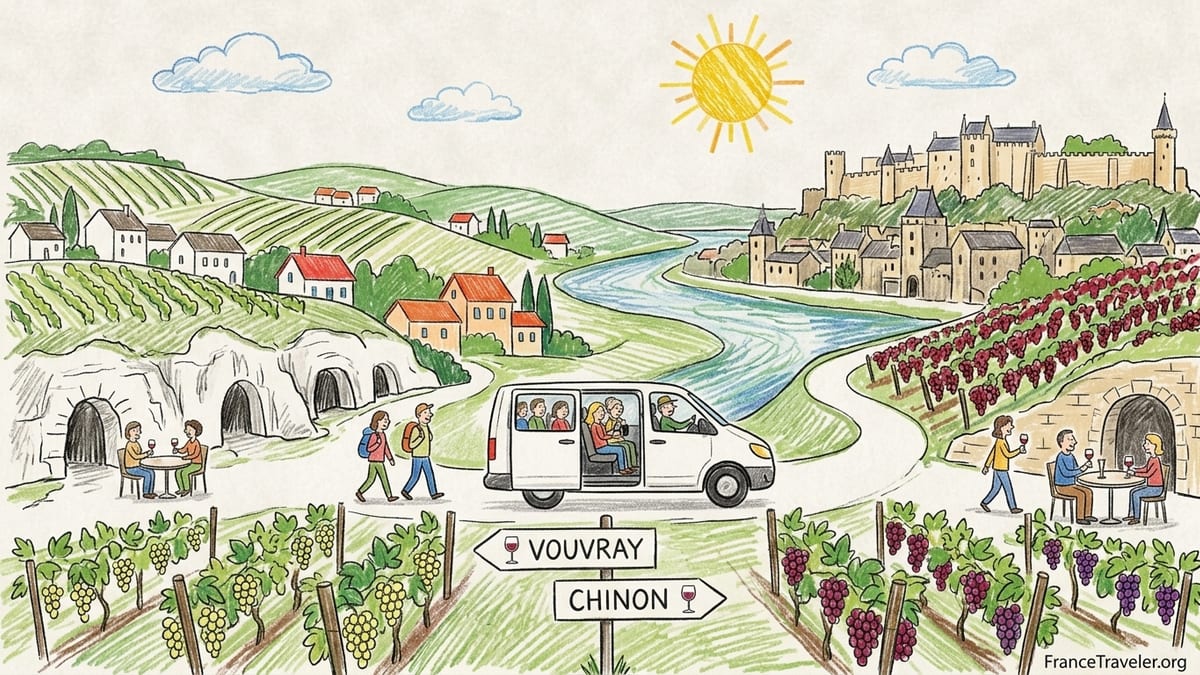
Why I Chose a Small-Group Vouvray & Chinon Tour
I based myself in Tours and booked a full-day small-group tour that combined Vouvray in the morning with Chinon in the afternoon. The operator ran an eight-seat minivan with an English-speaking driver-guide, departing from central Tours around 9 a.m. and returning close to 6:30 p.m. The price at the time of my visit was a little under 200 euros per person, including tastings at three estates and a simple sit-down lunch with wine. Compared with renting a car, paying for fuel and dealing with zero-tolerance drink-driving enforcement in France, that premium felt like a reasonable trade for not counting my pours.
The tour’s structure shaped my entire experience. We visited one sparkling-focused Chenin producer in Vouvray, then a still-wine specialist also in the Vouvray appellation, followed by an afternoon in Chinon at an estate with both vineyard and cellar visits. Group size was the key selling point. With just six of us plus the guide, there was enough time at each stop to ask real questions, taste calmly and step away for photos without feeling rushed around a coach-tour circuit.
I had considered hiring a private driver for the day. In late 2026, quotes from Tours-based driver-guides for a custom Loire wine itinerary that included both Vouvray and Chinon typically ran between about 350 and 500 euros for the vehicle, not counting tasting fees and lunch. Split between two people, that can work out well for those with specific producers in mind. As a first-timer, however, I was more comfortable letting someone else decide the route and handle all the appointments, and the group tour did exactly that.
The Loire is sometimes dismissed as a “minor” region by travelers who focus on Bordeaux or Burgundy, but local and national tourism offices emphasize how extensive it really is, with tens of thousands of hectares under vine and hundreds of kilometers of signposted wine routes weaving past chateaux, villages and troglodyte caves. You feel that scale even on a single day out from Tours. The driving between Vouvray and Chinon alone takes close to an hour, and the landscapes you cross explain a lot about what ends up in the glass.
Arriving in Vouvray: Caves Carved into Chalk and First Tastes of Chenin
We drove northeast from Tours into the Vouvray appellation, a patchwork of vineyards and villages strung along and above the Loire. The white stone houses and cellar doors cut into the hillsides are your first reminder that this is Chenin Blanc country. Many wineries here work out of long galleries dug into tuffeau, the pale, porous limestone that keeps wines cool and humid through warm summers and increasingly erratic autumns.
Our first stop was a family-run Vouvray estate that focuses on sparkling wines made by the traditional method. The tasting room was a simple space carved straight into the rock, lit by a line of overhead bulbs and the occasional shaft of daylight from a doorway. We walked perhaps 50 meters into the gallery, past aging bottles lying horizontally in riddling racks, their labels chalk-marked with codes. The air was cool enough that some in our group pulled on sweaters even though it was a sunny early autumn day outside.
The winemaker poured small but proper tasting samples, roughly 4 to 5 centiliters each, into tulip-shaped glasses. Over about 45 minutes we worked through four wines: a brut nature sparkling Vouvray, a slightly softer brut, a demi-sec sparkling cuvée with more residual sugar and a still Vouvray labeled sec. The brut nature felt almost saline, with high acidity, green apple and a chalky edge that matched the rock around us. The demi-sec cuvée, on the other hand, showed clear notes of ripe pear and honey, with a softer texture that clung to the sides of the glass.
One of the most useful parts of this first visit was hearing the explanation of local sweetness terms while holding the wines. Labels in Vouvray can read sec, tendre, demi-sec, moelleux or even doux. Producers and regional bodies broadly agree that sec indicates the driest style, demi-sec a medium-sweet profile, and moelleux or doux significantly sweeter styles influenced by late harvest or noble rot, but there is overlap in sugar levels and producers also use the word tendre for wines that sit in a gentle middle ground. Having the winemaker point to the same grape harvested at different times, and then demonstrate the effect on the palate, was more instructive than any textbook description.
Still Vouvray and Local Lunch: How Chenin Meets the Table
Our second Vouvray stop remained within a few kilometers of the first but felt distinct. Here the focus was on still wines, including a bone-drier sec, a richer demi-sec and, from a recent vintage, a moelleux made from late-harvest grapes. The cellar again was hewn into the chalk, but with more obvious modern fittings: stainless-steel tanks at the entrance, older oak barrels deeper inside and a simple tasting counter only a few steps from the stacked cases of bottled wine.
The sec Chenin, poured first, showed citrus peel, white flowers and a laser line of acidity. Even people in the group who said they usually preferred “fuller” whites commented that the wine felt more textured than they expected for such a dry style, something the winemaker attributed to the combination of low yields on older vines and time on fine lees. The demi-sec that followed felt like a natural extension rather than a completely different wine. There was a little sweetness, enough to round the edges and carry flavors of quince and baked apple, but the finish still snapped back with freshness.
We tasted slightly larger pours at this second estate, perhaps closer to 6 or 7 centiliters per wine, and the atmosphere was relaxed enough that it would have been easy to drink more than intended. Here the advantage of arriving with a driver-guide became obvious. Our guide quietly coordinated bottle purchases and tax refund paperwork for those interested, then nudged us back toward the van in time for lunch reservations in a nearby village.
Lunch was included in the tour price and took place at a modest bistro set on a side street rather than a postcard-perfect riverside terrace. There were no elaborate tasting-menu pairings, just honest local cooking: a choice of goat cheese salad or rillettes to start, chicken in a light cream sauce or a vegetarian tart for the main, and a simple dessert like apple tart or ice cream. The house white and red were both from nearby appellations in Touraine and poured by the glass. What mattered most was seeing how the same Chenin style we had just tasted in the cellar worked with typical Loire Valley dishes. A dry to off-dry Vouvray makes particular sense with local goat cheeses and white meats in sauce, and the lunch setting made that clear.
On the Road to Chinon: Changing Landscapes, Changing Grapes
After lunch we turned southwest, crossing the Loire and later following the Vienne toward Chinon. The drive took close to an hour including a short photo stop near a hillside viewpoint. As soon as we left the immediate Vouvray area, the pattern of vineyards began to shift. White grapes gave way to red, and the flat terraces near the river rose into gentle slopes and plateaus.
Our guide used the drive to sketch out the basics. In and around Chinon, Cabernet Franc dominates, with small amounts of Cabernet Sauvignon and, to a much lesser extent, Chenin Blanc planted for white Chinon. The appellation stretches across river terraces with gravelly soils and up onto limestone and clay-limestone slopes. Winegrower and tourism materials describe how the lighter, gravelly sites near the river tend to produce fruitier, early-drinking reds, while the limestone hillsides can give firmer, more structured wines designed to age. These broad patterns are not absolute, but they became helpful reference points later in the cellars.
This was the part of the day when I felt most grateful not to be thinking about driving. The combination of a full lunch, generous Vouvray tastings and the languid river scenery would have made self-policing intake difficult. Road regulations in France treat drink-driving seriously, and the line between a day of pleasant tasting and a serious problem can be easy to cross when moving between multiple wineries scattered across rural roads.
Coming into Chinon itself, you see the medieval fortress perched above the Vienne and the old town stretching along the river. Along the base of the hill, tunnel entrances and arched doors mark further tuffeau caves repurposed as wine cellars. The atmosphere feels different from Vouvray before you even taste anything. In Vouvray, white wines and sparkling bottles dominate the eye. In Chinon, you sense red wine country as soon as you walk past chalkboards listing Cabernet Franc by the glass in café windows.
Inside a Chinon Cellar: Cabernet Franc in the Cool Dark
Our afternoon visit in Chinon combined a short vineyard walk with a longer tour of the cellars and tasting. The estate sat slightly above the town on a slope, with rows of vines running up toward a line of trees. The Cabernet Franc leaves were just beginning to show autumn color, and bunches from the most recent harvest had already disappeared into the winery buildings behind us. From there, a door led straight into a horizontal tunnel cut into the hillside, where barrels and tanks lined the walls in a corridor of cool, damp air.
The cellar felt less polished than the Vouvray sparkling gallery that started our day. The floor was rougher, the lighting more discreet, and the smell of fermenting wine still lingered in one alcove where tanks bubbled quietly. Our host explained that some of the galleries dated back many centuries, originally dug for stone used in local construction. Today they serve as near-perfect aging cellars thanks to steady temperatures and natural humidity, not unlike the conditions under the Vouvray plateau but in service of very different wines.
The tasting took place at a wooden table set among barrels, with simple stemware and a spittoon in easy reach. We began with the estate’s rare white Chinon, made from Chenin Blanc, as a bridge from the morning. It was drier and more linear than the softer Vouvray demi-sec we had enjoyed at lunch, with bright citrus and a slightly herbal note. Then we moved through three red Cabernet Francs: a young, tank-raised cuvée from gravelly soils, a mid-range wine with some time in large older barrels and a more structured bottling from limestone slopes designed for aging.
Here the explanation of terroir from the drive came sharply into focus. The first red tasted like fresh raspberries and redcurrants, light in body with soft tannins and a gentle leafy, peppery lift. It was the kind of wine you could imagine chilling slightly and pouring alongside charcuterie. The second wine, with partial barrel aging, felt deeper and more savory, the fruit shading toward black cherry with firmer structure. The final cuvée from the hillsides showed graphite and spice along with darker fruit, and it gripped the palate in a way none of the day’s whites had. The pours remained in the 4 to 5 centiliter range, enough to understand the progression without overwhelming the senses.
Vouvray vs Chinon: What Surprised Me in the Glass
Before this trip, I thought of Vouvray primarily as pleasantly sweet Chenin and Chinon simply as “Loire Cabernet Franc.” Tasting both regions in one day revealed contrasts I had not anticipated. The first surprise was just how dry many Vouvray wines are today. At both estates we visited in the morning, the majority of the still wines poured were labeled sec or just slightly tendre, with sweetness present more as texture than overt sugar. The demi-sec and moelleux styles were treated as special cuvées rather than defaults, often produced only in certain vintages when autumn weather allowed later harvesting or noble rot.
Another revelation was the role of acidity. Vouvray’s Chenin carries a strong, almost architectural line of acidity from start to finish, even in sweeter styles. This structure allows demi-sec and moelleux wines to feel balanced rather than cloying, especially when matched with food. In Chinon, Cabernet Franc’s acidity also keeps wines fresh, but here it works in tandem with tannins and savory notes. The result is a family of reds that can sit comfortably at the table without the weight or alcohol you might find in warmer-climate Cabernet.
What surprised me most in Chinon was the sheer range of expression within a relatively compact appellation. The fresh, fruit-driven red from river terraces bore little resemblance to the structured hillside wine poured last, yet both came from Cabernet Franc harvested not far apart on the calendar. Tourism information and local guides often describe Chinon as a benchmark for Loire Cabernet Franc, and tasting these wines side by side made that claim feel justified. The wines showed a clear thread of identity, yet the nuances of soil and aging choices created distinct personalities.
Tasting Vouvray and Chinon together also gave me a new appreciation of how the Loire’s reputation for versatility is grounded in specific places. On paper, it might sound like simple diversity: whites, reds, rosés and sparkling wines scattered along a long river. In practice, you feel the continuity in the shared use of tuffeau caves, the consistent search for freshness and drinkability, and the way both regions lean into food-friendly styles rather than blockbuster bottles.
Was the Guided Tour Worth the Cost and Loss of Freedom?
Looking back on the day, the decision to join a guided small-group tour instead of driving myself shaped not only the logistics but also the pace and depth of the experience. The van’s schedule created a natural rhythm: roughly an hour at each Vouvray estate, a 90-minute lunch, then two to two and a half hours at the Chinon property including the vineyard walk. That may sound tight on paper, but on the ground it felt balanced. There was enough time at each stop to engage without lingering so long that fatigue or palate fatigue set in.
The main trade-off was spontaneity. Traveling independently with a car, you could divert to a roadside cellar you spot on the way or linger longer at a producer whose wines really speak to you. On a group tour, once everyone is back in the van, you move on. You also share your tastings and questions with strangers whose wine knowledge and interests may differ. In my case, the group mix worked in my favor. Some participants were new to Loire wines, others had studied them more deeply, and the guide adjusted explanations accordingly, turning the van into a rolling classroom between stops.
From a cost perspective, the tour became easier to justify as the day went on. Tasting fees at individual Loire estates can range widely. Some producers still pour several wines for a modest flat fee, while others charge per flight or per person, especially for more structured visits that include vineyard walks or cellar tours. Our package wrapped all of that into a single upfront price, alongside lunch and transport. When I added what equivalent tastings, lunch, fuel, and a rental car would likely have cost over the same number of hours, the difference narrowed considerably, especially once I factored in the intangible value of being able to taste without counting units.
The only moment when I missed having my own car was at the end of the Chinon visit. Standing in the late-afternoon light above the vineyards, it was tempting to stay longer, find a terrace in town and order a glass of something we had not yet tried. Instead, we climbed back into the van and watched the fortress recede in the mirrors. For many travelers, that compromise between freedom and structure will be the central question when planning a Loire wine day. In my case, for a first combined visit to Vouvray and Chinon, the guided option felt like the right choice.
Practical Tips for Planning Your Own Vouvray and Chinon Day
Spending a day between Vouvray and Chinon requires a bit of planning, whether you join a group or go independently. The two areas sit far enough apart that you need to think about driving times, meal breaks and how many tastings you can realistically enjoy before your palate and attention start to fade. On our tour, three estate visits and one sit-down lunch filled roughly nine to ten hours door to door. Trying to add a fourth full tasting with visits to both cellar and vineyard would likely have pushed us into exhaustion.
If you prefer to drive yourself, basing in Tours or Amboise works well for Vouvray, with Chinon reachable in roughly an hour to an hour and a quarter by car depending on traffic and exact route. Local train connections can take you as far as Chinon town, where several producers maintain cellars within walking distance, but reaching vineyards and broader appellation sites still generally requires either a bicycle, taxi or organized tour. In all cases, it is essential to consider your alcohol intake alongside road safety and legal limits.
Booking ahead has become more important, especially for structured visits that include guided cellar tours, food pairings or tastings of older vintages. Some estates in both appellations still allow drop-in tastings at their shops or public cellars, but many request or require reservations, particularly in harvest season and during busy holiday periods. A reliable approach is to contact one or two estates in each region you are keen to visit, confirm availability and then build your day around those anchor appointments rather than trying to improvise everything on arrival.
Finally, think about what styles of wine you most want to explore. If you are drawn to sparkling wines and the interplay of sweetness and acidity in Chenin, allocate more time to Vouvray and perhaps add a second day that includes neighboring Montlouis-sur-Loire. If you love medium-bodied reds with herbal, peppery notes and moderate alcohol, you might instead let Chinon be the center of your plans, with a side trip to neighboring red-wine appellations. Even in one combined day, though, tasting both Vouvray and Chinon offers a concentrated lesson in how the Loire Valley’s diversity emerges from real landscapes, real cellars and the choices of the people who work them.
The Takeaway
My day tasting Vouvray and Chinon shifted the Loire Valley from an abstract idea into a tangible place. Beginning in pale, echoing Vouvray caves with sparkling Chenin, moving through still whites over lunch and ending the afternoon amid barrels of Cabernet Franc in Chinon created a clear narrative of how soil, grape variety and human decisions converge into very different wines. Along the way, the structure of a small-group tour resolved practical questions about transport, pacing and appointments that might otherwise have consumed much of my planning energy.
If you travel primarily for wine, you could easily spend several days in each appellation, drilling deeper into individual producers and vintages. If, like many travelers, you have only one or two days to spare between chateaux and riverside walks, a combined Vouvray and Chinon day offers a compelling snapshot. You taste sparkling and still wines, whites and reds, dry and sweet expressions, all while tracing a route that follows the Loire and Vienne rivers through some of central France’s most characteristic landscapes.
Most of all, the experience underlines that the Loire is anything but minor. The scale of its vineyards, the breadth of its styles and the quiet confidence of the winemakers you meet in caves and tasting rooms make that clear. Whether you arrive by minivan tour, rental car or train and taxi, a day that takes you from Chenin in Vouvray to Cabernet Franc in Chinon is likely to stay with you long after the last bottle from the trip has been opened at home.
FAQ
Q1. Can I realistically visit both Vouvray and Chinon in one day? Yes, it is possible to visit both in one full day if you start early, limit yourself to about three estate visits and plan your transport carefully between Tours, Vouvray and Chinon.
Q2. Is it better to drive myself or join a guided wine tour? Driving gives more flexibility to choose producers and timing, but a guided tour removes concerns about drink-driving, handles reservations and often provides useful background during the day.
Q3. How many tastings are comfortable in a single day? For most people, three structured tastings plus a proper lunch is enough. Beyond that, palate fatigue and simple tiredness tend to reduce enjoyment and attention.
Q4. Do I need to book winery visits in advance? For cellar tours and guided tastings, advance reservations are strongly recommended, especially in harvest season or on weekends, even though some estates still allow casual drop-in tastings.
Q5. What should I expect to pay for a full-day small-group tour? Prices can change, but at the time of my visit a combined Vouvray and Chinon small-group tour from Tours with three tastings and lunch cost just under 200 euros per person.
Q6. How big are the tasting pours at Loire wineries? Pours on guided visits are usually small but sufficient, often around 4 to 7 centiliters per wine, which allows you to compare several bottles without overconsumption.
Q7. What is the main difference between Vouvray and Chinon wines? Vouvray focuses on Chenin Blanc in dry, off-dry, sweet and sparkling styles, while Chinon is centered on red Cabernet Franc, with fresh, medium-bodied reds and a small amount of rosé and white.
Q8. Are Loire wine cellars cold inside? Yes, underground tuffeau cellars in both Vouvray and Chinon stay cool throughout the year, so bringing a light layer or jacket is sensible even in warm weather.
Q9. Can I buy bottles and bring them home from winery visits? Most estates sell directly from the cellar door, and you can usually buy single bottles or cases, but you should check your airline and customs rules before planning larger purchases.
Q10. Is tipping expected on Loire Valley wine tours? Tipping is not obligatory, but if you feel your guide or driver added real value to the day, a modest cash tip offered discreetly at the end is appreciated.