


Central France is where storybook chateaux, vineyard-covered hills and dormant volcanoes sit within a day’s train ride of Paris. For couples choosing between the Loire Valley, Burgundy and Auvergne, the challenge is not finding somewhere magical, but deciding which flavor of France fits your trip. This guide compares the key bases in central France for castles, wine, countryside, history, hiking and atmosphere, with practical, on-the-ground details to help you make a confident choice.
How to Choose Your Base in Central France
Think of central France as three overlapping experiences. The Loire Valley excels at Renaissance castles, riverside cycling and relaxed white and sparkling wines. Burgundy, focused around Dijon and Beaune, is the serious wine destination, with food culture and historic streets as rich as its Pinot Noir. Auvergne, centered on Clermont-Ferrand and the surrounding volcanoes, offers wild landscapes, big-sky hikes and small stone villages, with fewer crowds and generally lower prices.
For a short romantic break of three to five nights, most couples do best by picking one core base and adding one or two easy day trips. That might mean staying in Tours with day trips to Amboise and Blois, setting up in Beaune and exploring the Route des Grands Crus, or booking a cozy guesthouse near Clermont-Ferrand and driving into the Auvergne Volcanoes Regional Natural Park. Trying to “do it all” in one visit usually means too much time on trains and not enough time over long lunches and sunset walks.
Budget is another deciding factor. In 2026 a charming midrange hotel for two in Tours or Amboise often runs around 110 to 170 euros per night outside peak August, while similar character properties in Beaune’s medieval center commonly start higher, reflecting Burgundy’s global wine prestige. In Auvergne, small family hotels and mountain inns can still be found from roughly 80 to 120 euros per night, especially in villages beyond Clermont-Ferrand, which can make a week of hiking and road-tripping surprisingly affordable.
Season also matters. Loire chateaux and Burgundy vineyards are at their greenest from late April to June and again in September and early October, when harvest energy is in the air. Auvergne’s volcano hikes are most reliable for weather from June to September, with wildflowers in early summer and crisp, clear days in early autumn. In winter, some castle interiors remain open on reduced schedules, while the Sancy mountains near Clermont-Ferrand switch to skiing and snowshoeing, creating an entirely different kind of couples break.
Loire Valley Overview: Castles, Riverlight and Easy Romance
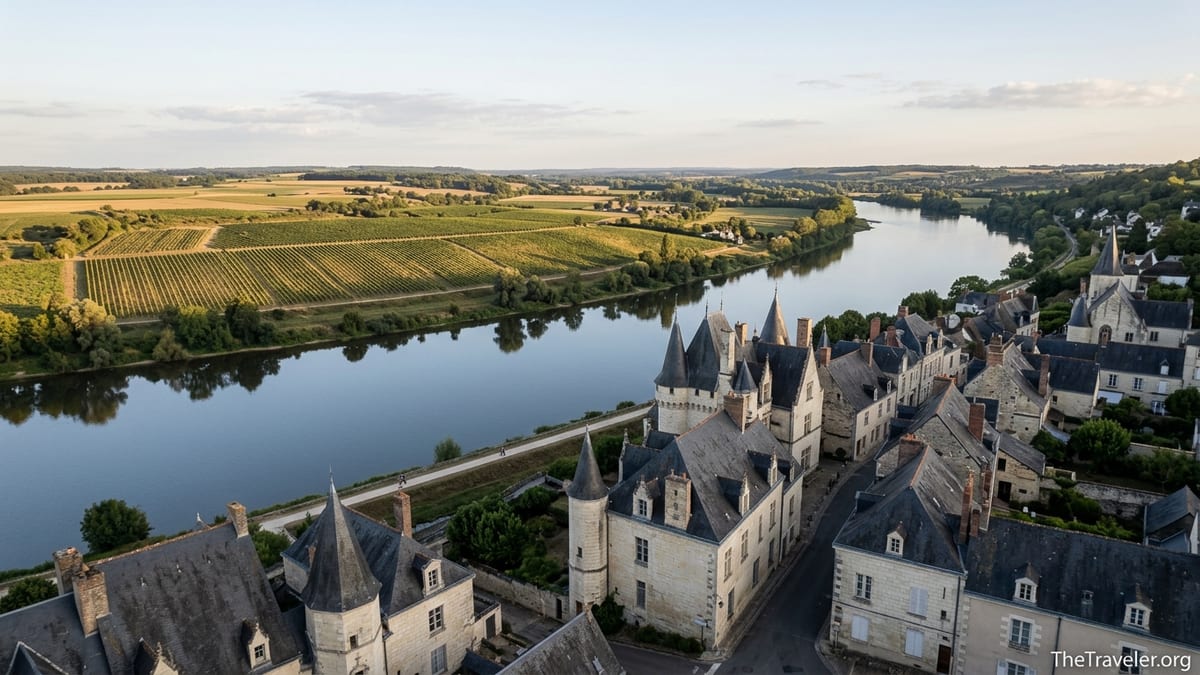
The Loire Valley’s central stretch around Tours, Amboise and Blois concentrates many of France’s most famous chateaux within an hour’s drive or train ride. Regional tourism offices still promote classic itineraries in 2025 and 2026 that link Chambord, Chenonceau, Amboise and Blois over three to six days, often coupled with vineyard visits and gentle cycling along the Loire à Vélo route, which follows the river at mostly flat gradients. This combination makes the valley ideal if your image of France involves castle silhouettes at sunset and picnics by the water with a chilled bottle of local Sauvignon Blanc or Crémant de Loire.
Castles here are not abstract museum pieces. At Chaumont-sur-Loire, for example, the annual garden festival turns the grounds into an open-air art exhibition, while Amboise mixes royal history with contemporary cultural events. Many couples time their day so that they stroll the ramparts of the Royal Château of Amboise in late afternoon, watch the light warm across the tiles of the town below, then descend for drinks on a terrace overlooking the river. Regional guides still feature these views on their 2025–2026 brochures because they remain some of the most emblematic in central France.
Wine is never far away. The Touraine AOC, which includes vineyards around Tours and Amboise, is known for approachable whites from Chenin Blanc and Sauvignon Blanc and light to medium-bodied reds from Cabernet Franc and Gamay. Regional tourism bodies actively encourage visits to small producers rather than only the biggest names, and many cellars around Amboise, Vouvray and Montlouis offer tastings where you can sample three or four wines for around 8 to 15 euros per person. Often these take place in old stone caves cut into limestone cliffs, adding a sense of discovery to the tasting experience.
Because public transport lines follow the river, you can feasibly base yourself in a single town and rely on regional trains, supplemented by occasional taxis or day tours. This is especially helpful if you prefer not to drive after tastings. Local operators still run full-day small-group excursions from bases like Tours and Amboise that combine two or three chateaux with a vineyard visit, typically in groups of eight or fewer, which keeps the experience more personal for couples.
Tours, Amboise and Blois: Which Loire Town Is Right for You
Tours functions as the Loire Valley’s practical hub. It has the largest train station in the area, with frequent direct connections from Paris taking around one to one and a half hours, and regular services onward to Amboise, Blois and smaller Loire towns. The historic old town, with its half-timbered houses around Place Plumereau, has a lively restaurant and bar scene that stays open later than in many smaller Loire communities, which can matter if you enjoy lingering over dinner. For couples wanting a balanced mix of castle day trips and urban comforts on a four or five night stay, Tours is often the most convenient base.
Amboise is more intimate, with the Royal Château of Amboise dominating a bend in the Loire and narrow streets fanning out below. It appeals strongly to couples who want a romantic small-town feel while still having enough cafes and wine bars to fill a long weekend. Tourist office programs for 2025 include guided evening walks in the historic center and themed tours that combine heritage and food, such as strolls through the market followed by tastings of Touraine wines and regional goat cheeses. Accommodation here spreads from small hotels in restored townhouses to boutique guesthouses with a handful of rooms, many within walking distance of both the château and the riverbank.
Blois sits a little further downstream and feels slightly quieter in the evenings than Tours, while still offering a genuine small-city atmosphere. Its royal château, with distinct wings from different periods, makes it a good choice if you enjoy digging into architectural history. The town’s hillside layout and steep streets give it viewpoints over the Loire and make casual walks feel pleasantly varied. For some travelers, Blois is a strategic base because it sits near major estates like Chambord and Cheverny, and yet remains less dominated by tourism than some smaller castle villages.
When comparing these three for a couples stay, think about your priorities at night. If you want a wide choice of wine bars, bistros and perhaps a late-night cocktail or two, Tours provides the most options and easiest late trains from Paris. If you imagine walking everywhere hand in hand and ending the day with a glass of Vouvray on a riverside terrace, Amboise might feel closer to that dream. If you like the idea of a historical town that feels more lived-in than curated, with easy access to major chateaux by car or tour, Blois can be an appealing middle ground.
Beyond the Loire: Bourges for Gothic Drama and Quiet Streets
East of the main Loire corridor, Bourges offers a different kind of historic atmosphere. Here the star is not a castle but a cathedral. Bourges Cathedral, classified as a UNESCO World Heritage site, rises above a compact medieval center of narrow lanes and timber-framed houses. Visitor information for 2026 still highlights visits to the cathedral’s crypt and tower, which reward those willing to climb with views over the roofs of the old town. Compared with the Loire’s headline castles, Bourges tends to see fewer international tour groups, which translates into a quieter, more contemplative feel, especially in the evenings.
For couples interested in architecture and history more than ticking off famous names, Bourges is rewarding for a two-night stay. You might spend one morning on a guided tour of the cathedral and surrounding quarter, another afternoon exploring the marsh gardens that stretch out just beyond the center, where small plots crisscrossed by canals are still cultivated. A typical dinner here might involve duck or beef from nearby regions, paired with a local Pinot Noir or Sauvignon from lesser-known appellations like Quincy or Reuilly, which are often more affordable than Loire bottles from more famous names.
Accommodation in Bourges tends to be modestly priced compared with Burgundy or the central Loire. Simple but comfortable three-star hotels and character guesthouses in historic buildings can often be found under 120 euros per night outside peak summer weekends. This makes Bourges a good value stop for couples driving between the Loire Valley and Burgundy or Auvergne who want to slow down for a day or two of cathedral visits, quiet walks and long dinners without the pressure of a packed sightseeing checklist.
Logistically, Bourges works best for travelers with a car or those comfortable with longer rail journeys. There are direct train connections from Paris that take around two hours on regional services, and onward rail to Clermont-Ferrand or Nevers, but frequencies and connections are more limited than to major Loire bases. As a result, the town feels more like a destination in its own right than a jumping-off point for numerous day trips, which can be exactly what some couples are seeking.
Dijon and Beaune: Burgundy’s Twin Hearts for Wine and History
If world-class wine is your top priority, Burgundy’s axis of Dijon and Beaune is hard to beat. Dijon, the historic capital of the Dukes of Burgundy, combines a beautifully preserved center of mansions, churches and narrow streets with a distinctly urban cultural life. Its historic core is recognized by UNESCO as part of the “Climats” of Burgundy, the mosaic of vineyard plots that underpin the region’s wine culture. The local tourism office continues to promote guided walking tours that introduce visitors to the city’s history, from the ducal palace to hidden courtyards, often combining architecture with tastings of regional specialties such as mustard, gingerbread and regional wines.
Beaune, about 20 to 25 minutes south of Dijon by regional train, feels smaller and more overtly wine focused. It is encircled by remnants of medieval walls and sits at the heart of the Route des Grands Crus, the roughly 60 kilometer road that threads through prestigious vineyard villages between Dijon and Santenay. Many visitors base themselves in Beaune specifically to spend their days cycling or driving through names that appear on some of the world’s most sought-after labels. Wine shops and small tasting rooms in town can arrange introductions to local producers, with tasting fees that might start around 15 to 25 euros per person for a handful of wines, climbing higher for premier and grand crus.
In 2025 and 2026 wine writers and tourism bodies alike note that Burgundy remains less “packaged” than some other famous wine regions. Some estates only receive visitors by prior arrangement, and English-language group tours can book out well in advance during harvest season in September and early October. For couples, this can be part of the appeal: tasting at a small, family-run domaine followed by dinner in a bistro recommended by the winegrower feels closer to everyday local life than to a choreographed tourist circuit. Appointment-only visits do mean that planning ahead is wise, especially if you have specific appellations or producers on your wish list.
Choosing between Dijon and Beaune as a base comes down to atmosphere. Dijon suits couples who want a larger city with significant museums, markets and a wide choice of restaurants. You could spend a morning at the covered market, browsing cheese, charcuterie and seasonal produce, then take a short tram ride to a contemporary art space or the international gastronomy and wine center. Beaune fits those who want to step out of their hotel and almost immediately be on medieval streets wrapped by vineyards. Evenings here often revolve around strolling the ring road just outside the old walls at sunset, then settling into a restaurant where the wine list reads like a miniature tour of the Côte de Beaune.
Auvergne and Clermont-Ferrand: Volcanoes, Villages and Big-Sky Hikes
Where the Loire and Burgundy offer gentle landscapes, Auvergne introduces drama. The region’s dormant volcanoes, including the Chaîne des Puys and peaks like Puy de Dôme and Puy de Sancy, have been recognized in recent years for their geological and natural importance, drawing a growing number of hikers and nature lovers. Puy de Dôme itself, visible from Clermont-Ferrand about 10 kilometers away, is now a well-established attraction with a panoramic train to the summit, walking trails, and visitor facilities including a small museum and cafes. On clear days, the views across the line of volcanic domes and down to Clermont-Ferrand’s dark stone cathedral are among the most striking in central France.
Clermont-Ferrand functions as both a university city and the practical gateway to this landscape. Its compact historic center, built largely from black volcanic stone, gives it a distinctive look compared with Loire or Burgundy towns. The local tourism office promotes hiking, cycling and lake activities across the Clermont Auvergne Volcans area, highlighting that there are hundreds of kilometers of marked trails, from simple loops suitable for a half-day outing to demanding routes over mountain passes. For couples, a typical three or four night stay might combine one or two full-day hikes with easier excursions to crater lakes or spa towns and evenings spent sampling hearty regional dishes in town.
Beyond Clermont-Ferrand, smaller villages and resort towns such as Le Mont-Dore, Super-Besse or Orcival offer a quieter base in the heart of the mountains. In summer these places pivot from winter sports to hiking, mountain biking and lake swimming. Prices for simple chalet-style accommodation or small inns here are often lower than for equivalent mountain scenery in the Alps, and restaurant menus tend to focus on comforting dishes like truffade, a skillet of potatoes and melted local cheese, or lentils from nearby Le Puy, paired with rustic regional wines or beer from small Auvergne breweries.
Auvergne is particularly well suited to couples who enjoy active holidays and do not mind renting a car. While there are buses and some seasonal shuttles, many of the most scenic trailheads, viewpoints and small Romanesque churches lie away from main rail lines. Driving times between highlights are relatively short compared with some mountain regions, with many key sites within an hour of Clermont-Ferrand. For those willing to trade the iconic imagery of Loire castles and Burgundy vineyards for a sense of remoteness and big horizons, Auvergne often becomes the unexpected favorite of their trip.
Smaller Towns and Hidden Corners for Couples
Once you have chosen your main region, it is worth considering one or two smaller towns that can add a different mood to your trip. In the Loire, villages along the Cher and Indre rivers such as Chenonceaux or Azay-le-Rideau cluster around individual chateaux and offer evenings that are notably quieter than Tours or Amboise. A typical pattern for couples is to spend two or three nights in a lively hub like Tours, then move for a night or two near a single château, booking a guesthouse within walking or cycling distance so that you can explore early in the morning or near closing time, when tour groups are absent.
In Burgundy, towns like Nuits-Saint-Georges or smaller village centers between Beaune and Santenay appeal to couples who want to wake up surrounded by vines. Here, you might stay in a converted stone farmhouse that now offers a handful of rooms, with breakfast served on a terrace overlooking rows of Pinot Noir. Days can be as simple as walking or cycling between nearby villages, stopping for tastings by appointment and lunch in a small restaurant where the menu changes with the market. Prices in these villages can range widely depending on proximity to the most prestigious appellations, so it pays to compare a few options and read recent traveler reviews for a sense of value.
Auvergne’s smaller corners are more about landscape and local life than specific sights. Villages around the Sancy range or near lakes like Aydat offer direct access to trails and often a surprising amount of cultural life in summer, with small music festivals, open-air markets and village fêtes. Because international tourism is still relatively light, interactions with locals tend to feel spontaneous rather than service driven. Couples frequently recall small moments as highlights: a café owner drawing a route on a paper map, or a cheese vendor at a morning market insisting they taste two different versions of Saint-Nectaire before choosing.
Whichever region you choose, building in at least one slower day in a smaller town or village helps balance more structured sightseeing. Instead of rushing from castle to castle or cellar to cellar, you might spend the morning wandering streets without a map, stop for a long terrace lunch, then take a late afternoon walk among vineyards or along a river path. For many couples, these unplanned hours are what they remember most vividly when they think back to central France.
The Takeaway
Choosing the best place to visit in central France starts with being honest about what matters most to you as a couple. If you want the classic blend of castles, easy cycling and accessible wine tastings, the central Loire Valley around Tours, Amboise and Blois remains the strongest all-rounder, with simple logistics and an abundance of romantic river views. If your focus is on wine that you may already recognize from labels at home, combined with serious food and historic streets, then Dijon or Beaune in Burgundy will likely feel like the right choice, especially for a shorter, more intensive stay.
If you are drawn to mountains, wide open spaces and quieter villages, Auvergne and Clermont-Ferrand provide a compelling alternative that is less polished but more raw and elemental in its appeal. Bourges, meanwhile, offers a satisfying detour for cathedral lovers and those who want a medium-sized town that sees fewer tour buses than the Loire’s headline sites. Layering one or two of these centers into a week or ten days in central France can yield a trip that moves from royal courts to vineyards to volcanic ridgelines without ever feeling rushed.
In practical terms, the best approach is often to choose one primary base that matches your top priority, then add a contrasting secondary stop. A four night stay in Amboise followed by two nights in Bourges gives a different rhythm from three nights in Beaune and three in a village above Clermont-Ferrand, even though both combinations fit within the same broad region. With thoughtful planning, central France can deliver exactly the kind of shared memories you are hoping for, whether that is toasting with a glass of Vouvray under castle walls or catching your breath on a volcanic summit as the evening light slides across the landscape.
FAQ
Q1. Is the Loire Valley or Burgundy better for a first trip focused on wine and castles?
The Loire Valley is usually better for a first trip that combines wine and castles, because famous chateaux and accessible vineyards are tightly clustered and easy to reach by train or short drives.
Q2. Which Loire town makes the best base for couples without a car?
Tours is the most practical base without a car thanks to frequent trains and a busy restaurant scene, while Amboise offers a more intimate riverside feel with enough services for a three or four night stay.
Q3. How many days should we plan in Dijon or Beaune if we are serious wine enthusiasts?
Wine-focused travelers typically spend at least three full days in Dijon or Beaune so they can fit in two or three structured tastings, market visits and time to explore nearby vineyard villages without rushing.
Q4. Is Auvergne suitable for a romantic trip if we are not experienced hikers?
Yes, Auvergne works well even for casual walkers, as popular sites like Puy de Dôme offer short, well-marked trails and a summit train, and many lakeside or village walks are gentle rather than technical.
Q5. Can we visit both Loire castles and Burgundy vineyards on a one week trip?
It is possible, but you will need to keep bases to two locations and accept some travel time. A common pattern is three or four nights in the Loire for castles, then three nights in Beaune or Dijon for wine.
Q6. Is renting a car necessary in central France?
A car is optional in the central Loire and around Dijon and Beaune, where trains and tours cover main highlights, but it becomes very helpful for exploring smaller villages, vineyards off main lines and Auvergne’s volcano areas.
Q7. When is the best season for couples to visit these regions?
Late April to June and September to early October offer pleasant temperatures, green landscapes and fewer crowds, while July and August are busier and hotter, especially around major castles and cities.
Q8. Are these regions expensive compared with Paris?
Accommodation and dining are generally more affordable than central Paris, though Burgundy’s most prestigious wine villages can approach big-city prices, while Auvergne is often the best value for longer, nature-focused stays.
Q9. Which area offers the best hiking combined with charming towns?
Auvergne around Clermont-Ferrand stands out for hiking, with marked trails over volcanoes and around lakes, while still offering atmospheric towns and villages for evenings and rest days.
Q10. Is it realistic to rely on English in smaller towns and villages?
In major tourist centers like Tours, Amboise, Dijon, Beaune and Clermont-Ferrand, you will usually find some English spoken, but in smaller villages it helps to know basic French phrases and to be patient and friendly.