


With high-speed trains, dense rail lines and a mature tour industry, Paris is an easy launch pad for exploring central France. The Loire Valley and Burgundy sit within practical reach for both ambitious day trippers and travelers who want to slow down for a few nights among vineyards and Renaissance chateaux. This guide compares the main ways to get there, what is realistic in a day, and when it makes sense to turn a side trip into a short escape.
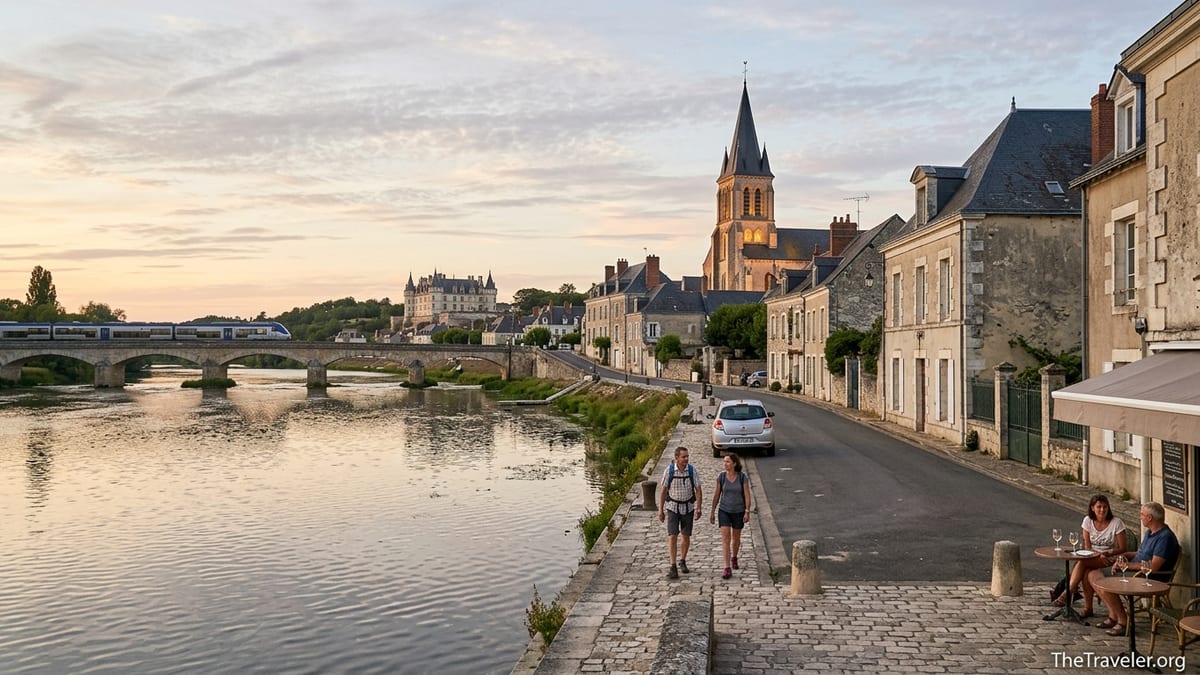
Central France From Paris: What Is Realistic In A Day
Central France covers a large swath of the country, but two regions dominate most itineraries from Paris: the Loire Valley, often focused around Tours, Amboise and Blois, and Burgundy, usually anchored around Dijon or Beaune. By high-speed TGV train from Paris to Dijon, travel time can be as short as about 1 hour 30 minutes on direct services, with roughly a dozen or more trains a day depending on the season. That makes Burgundy one of the most straightforward long day trips from the capital.
The Loire Valley is slightly more dispersed. Paris to Tours or Saint-Pierre-des-Corps by high-speed train typically takes around 1 hour 10 to 1 hour 30 minutes, after which travelers connect by regional trains, buses or car to major chateaux such as Chambord, Chenonceau and Amboise. With transfers and sightseeing, a full Loire day from Paris usually runs 11 to 13 hours door to door, which many travelers find long but manageable once in a trip.
Other central destinations, such as Chartres for its cathedral or the royal town of Fontainebleau, sit closer to Paris and are more comfortable half-day or simple day trips by direct regional train in around an hour. When planning, a rough rule is that anything accessible in under 1 hour 45 by direct train from central Paris works as a single-day excursion. Longer or more complex connections tend to be more rewarding as one or two-night stays, especially when wine tasting or countryside cycling are on the agenda.
Because French rail fares change dynamically, it is wise to check schedules and prices on official booking platforms several weeks in advance. On many routes, booking early can mean finding midweek advance fares for under 40 to 50 euros per person in second class, while buying at the last minute around holidays or summer weekends can raise prices significantly.
Getting There: Trains, Rental Cars, Private Drivers And Tours
For independent travelers, trains are usually the most efficient way to reach a base town such as Tours, Blois, Dijon or Beaune from Paris. Seats on high-speed services can be reserved in advance, and second-class comfort is adequate for most, with assigned seating, luggage racks and air conditioning. A couple traveling off-peak from Paris Montparnasse to Tours might pay in the range of 70 to 120 euros total return when booked early, while direct TGV services between Paris Gare de Lyon and Dijon on randomly chosen dates often fall somewhere between about 30 and 80 euros each way per person depending on timing and demand.
Rental cars become attractive once you are in-region rather than for the Paris segment itself. Many visitors pick up a compact car in Tours, St-Pierre-des-Corps or Dijon and then use it to explore nearby castles, wine villages and countryside lanes at their own pace. Daily rates for a small manual car from major agencies often begin around 45 to 70 euros per day outside of peak summer, plus fuel and tolls. Automatic cars are more expensive and can be limited in supply, so advance booking is essential if you are not comfortable driving stick.
Private transfers and chauffeur-driven day trips from Paris remain a premium but time-efficient option. Published rate sheets from Paris-based chauffeur companies in 2025 and 2026 show full-day Loire Valley tours with driver-guides starting around 1100 to 1300 euros for a sedan or small van, covering 10 to 12 hours on the road, with admissions and lunch extra. One operator, for example, lists a 12-hour Loire Valley tour from Paris with a driver-guide visiting Amboise, Chenonceau and Chambord from about 1150 euros for up to two passengers, and higher rates for roomier vehicles that can seat up to seven travelers. Similar full-day Burgundy itineraries with a private driver can run from roughly 1350 to 1500 euros for a long day of vineyard and village stops.
Small-group bus or minivan tours bridge the gap between cost and convenience. Loire Valley day trips marketed in English for 2026 frequently advertise prices around 200 to 300 euros per person, including coach transport from central Paris, guided visits to two or three chateaux and some wine tasting. Burgundy wine tours from Paris are often slightly higher because of the longer driving distance and the boutique nature of tastings, with per-person rates commonly in the 250 to 350 euro range for long day excursions.
Loire Valley: Day Trip Or Overnight Escape
The Loire Valley’s UNESCO-listed landscapes stretch over 200 kilometers along the river, which is why the question of a day trip versus a multi-night stay matters. A typical organized day trip from Paris might depart around 7:00 or 7:30 in the morning, arrive near Chambord by mid-morning, continue to Chenonceau over the Cher River for a midday visit and lunch stop, and end with a shorter late-afternoon tour of Amboise before returning to Paris around 8:00 or 9:00 in the evening. Travelers often report this pace as enjoyable if a bit rushed, suitable for those with only one free day in their schedule.
Opting for at least one or two nights in the Loire allows a different style of travel. For example, you might take a late-morning TGV from Paris Montparnasse to Saint-Pierre-des-Corps, pick up a rental car, and check into a small hotel or guesthouse in Amboise or Blois in time for a relaxed afternoon stroll along the river. The next day, you could reserve timed tickets at Château de Chambord, stop for a picnic in the surrounding forest, then continue to smaller, less crowded estates such as Cheverny or the gardens at Chaumont-sur-Loire, returning at your own pace in the evening.
Staying overnight also opens up early-morning balloon flights, slow cycling along the Loire à Vélo paths and unhurried dinners in wine towns such as Montlouis or Vouvray. Many regional cycling tour operators publish 2026 itineraries that combine four to eight days of hotel-based rides between chateaux, with luggage transfers included, underscoring how well the region rewards time. Even if you do not commit to a full cycling holiday, renting bikes for a half-day along riverside paths is far more feasible when you are not racing back to catch an evening train to Paris.
Accommodation ranges from simple countryside chambres d’hôtes to historic chateaux-turned-hotels. In shoulder seasons outside August, it is often possible to find double rooms in central Amboise or Blois from around 90 to 140 euros per night, with character properties and small luxury hotels costing more. Because major global events and French school holidays can push prices higher, checking the French vacation calendar and booking ahead is prudent.
Burgundy From Paris: Wine, Towns And Transport Choices
Burgundy’s north-south axis is anchored by Dijon and Beaune, both accessible in around 1 hour 30 to 2 hours by high-speed or fast regional trains from Paris. Schedules change by season, but recent timetables show around 18 trains per day on the Paris to Dijon route, with the earliest departures before 7:00 in the morning and the latest in early evening. That frequency makes it realistic to travel out in the morning, enjoy a full day of walking the historic centers, tasting wine in nearby villages and dining, and still return to Paris at night.
Many visitors, however, prefer at least one night in Dijon or Beaune to avoid watching the clock. A two-night Burgundy stay might look like this: morning TGV from Paris to Dijon, afternoon walking tour of the medieval center and the Palace of the Dukes, dinner under the timbered houses around Place de la Libération, then the next day a wine-focused excursion along the Route des Grands Crus. Local companies based in Beaune and Dijon run small-group minivan tours that stop at estates in villages such as Gevrey-Chambertin, Vosne-Romanée or Puligny-Montrachet, combining a handful of tastings with vineyard walks and cellar visits.
Wine touring in Burgundy is one of the strongest arguments for having either a driver or an organized tour. Public transport between small wine villages is limited, and driving after tastings is neither safe nor relaxing. Full-day small-group tours typically fall in the range of 150 to 250 euros per person from a Burgundy base, whereas private car-and-driver arrangements from Paris can exceed 1400 euros for a very long day on the road. A common strategy is therefore to use the train from Paris to Dijon or Beaune, then rely on local tours or taxis once in the region.
For those not primarily interested in wine, Burgundy still offers canal paths, Romanesque churches, and markets such as Dijon’s covered Les Halles. These experiences are easy to access without a car, which makes a two to three-night stay in a single town with rail access a low-stress extension to a Paris-focused itinerary. If you prefer smaller places to cities, Beaune, about 20 minutes by regional train from Dijon, is an atmospheric base with cobbled streets, the famous Hospices de Beaune and a tight cluster of tasting rooms.
Comparing Costs: Trains vs Car vs Private Transfers vs Tours
When comparing transport options from Paris into central France, the most cost-effective choice depends strongly on how many people are traveling together. For a solo traveler or couple, advance-purchase train tickets combined with local buses or an occasional taxi generally keep total daily transport under control. As a rough example, two people doing a DIY day trip by TGV from Paris to Tours and then using a local shuttle or taxi to reach a chateau might spend in the range of 150 to 250 euros in total on rail and local transport, not counting admissions or meals.
For a family or group of four, renting a car in-region often becomes competitive. A compact rental car at 60 euros per day, plus perhaps 25 to 40 euros in fuel and tolls for a day of exploring, can bring total daily transport for four people to near or below 100 euros, albeit at the cost of one person driving and navigating. Parking near major sites like Chambord or Chenonceau is typically well organized, and posted daily parking fees are usually modest compared with urban centers, though they can add up over several days.
Private transfers and chauffeur-driven tours look expensive at first glance but can make sense for multi-generational groups or those with mobility considerations. A published 2024 price list from one Paris chauffeur company, still referenced for 2025–2026 planning, shows a Loire Valley day tour at about 1180 euros for up to three or four passengers in a minivan, which equates to roughly 300 euros per person for four travelers. Expanding to a small minibus for up to eight or more passengers raises the base price but lowers the per-person share, sometimes to under 200 euros each before admissions, for those ready to split costs.
Guided small-group bus tours sold through international operators generally sit in the middle of the budget spectrum. A Loire Valley castles day tour from Paris marketed in English for 2026 might cost, as of recent listings, approximately 220 to 280 euros per person including transport and a few entry tickets. Similar structured Burgundy excursions from Paris can run higher because vineyard tastings and longer driving distances are built into the price. When evaluating these tours, it is worth checking what is truly included: some list only one or two chateau entries, while others bundle lunch and multiple tastings, changing the overall value proposition.
When A Multi-Night Extension Makes Sense
From a planning standpoint, a common approach is to treat central France as either one ambitious day trip plus one overnight excursion, or as a three to five-night add-on that balances two regions. For example, on a 10-night stay centered on Paris, a traveler might schedule a single long day to the Loire or Burgundy as a taste, then later move their luggage for a two or three-night stay in the region that resonated most. This avoids stacking multiple high-effort day trips back to back.
Multi-night extensions also make sense when aligning with other parts of a France itinerary. The Loire Valley sits naturally on a route toward Bordeaux and the Atlantic coast, while Burgundy aligns with onward travel to Lyon, Provence or the Alps. Tour brochures for 2025 and 2026 frequently stitch together Paris, the Loire and Bordeaux over a week to 10 days, reflecting the practicality of hopping between these regions by train while minimizing backtracking.
Seasonality is another factor. Summer weekends and French public holidays can crowd iconic chateaux and tasting rooms, raising prices and lengthening queues. In shoulder seasons such as May, June (outside of major events), September and early October, staying in-region allows more flexibility to adjust your sightseeing days around rainy weather or strikes that might affect rail services. If a train disruption forces schedule changes, it is usually easier to adjust a regional hotel booking than to salvage a complicated same-day round-trip from Paris.
Finally, if food and wine are central to your plans, nights on the ground matter. Loire and Burgundy restaurants often shine at dinner, when tasting menus and longer wine pairings are more common. Being able to stroll back to a hotel in Amboise, Tours, Dijon or Beaune after a long meal instead of catching a late train back to Paris can significantly improve the overall experience.
Practical Booking Tips And On-The-Ground Examples
In practice, building these side trips into your Paris stay begins with anchoring the non-flexible pieces: rail tickets, a rental car if needed, and any must-do tours. For instance, if your priority is to see Château de Chenonceau and Château de Chambord without driving, you might first secure a small-group Loire Valley coach tour for a specific date, then plan your Paris museum reservations around that day. On the other hand, if you are confident driving and want flexibility, it may be better to lock in train tickets to Tours and a two-day rental car, leaving the choice of chateaux until closer to arrival.
Travelers planning June to September trips should monitor availability three or more months ahead, particularly for popular Friday and Saturday departures from Paris and charming small hotels in wine towns that can fill with domestic visitors. For example, mid-size hotels in Beaune with on-site parking and air conditioning can be heavily booked on harvest-season weekends, while some Loire Valley ballooning companies open only early-morning slots in summer to avoid mid-day heat, meaning limited daily capacity.
Real-world accounts from recent visitors often highlight the cumulative fatigue of stacking long days. Someone who spends a full 12-hour day touring three Loire chateaux, followed by an early-morning start two days later for a Champagne or Normandy excursion, may arrive at the end of their Paris trip feeling more tired than inspired. Building at least one rest or low-key neighborhood day between big excursions, and avoiding the temptation to see every region in a single week, generally leads to better memories.
Lastly, consider how central France side trips fit your arrival and departure logistics. Some travelers choose to travel directly from central France to Charles de Gaulle Airport by train on departure day, but it is usually safer to return to Paris the night before a long-haul flight. Rail strikes, signal issues or simple delays can happen, and padding your schedule reduces the risk that a hiccup in the Loire or Burgundy disrupts your journey home.
FAQ
Q1. Is the Loire Valley really doable as a day trip from Paris?
Yes, but it is a long day. Organized tours and private drivers typically run 11 to 13 hours round trip, often visiting two or three major chateaux with limited free time in each.
Q2. Which is easier as a day trip, the Loire Valley or Burgundy?
Burgundy is usually easier, because Dijon and Beaune are on direct high-speed train lines about 1 hour 30 to 2 hours from Paris, while the Loire’s key sights are more spread out.
Q3. How far in advance should I book trains from Paris to Dijon or Tours?
Booking one to three months ahead is usually enough for most travelers, though buying earlier can help secure lower fares and preferred departure times, especially in summer and on weekends.
Q4. Do I need a car in the Loire Valley?
A car is not strictly necessary, but it makes visiting multiple chateaux in one or two days much easier. Without a car, you will rely on tours, local buses, taxis or bikes, which work best if you stay overnight.
Q5. Is it safe to drive in central France for foreign visitors?
Yes, roads are generally well maintained and clearly signed. The main adjustments are driving on the right, understanding French road rules and navigating roundabouts and toll roads.
Q6. Are private drivers from Paris worth the cost?
They can be, especially for families, groups of friends or travelers with mobility issues. Splitting a full-day car and driver among four to six people can bring per-person costs closer to those of guided coach tours.
Q7. Can I visit both the Loire Valley and Burgundy on a one-week Paris trip?
It is possible but ambitious. Many travelers choose one region for a full day or overnight, rather than trying to fit both, to avoid spending too much time in transit.
Q8. What is the best season for these trips from Paris?
Late spring and early autumn are often ideal, with longer days, generally pleasant temperatures and fewer peak-season crowds than in late July or August.
Q9. Are there good options for non-drinkers in wine regions like Burgundy?
Yes. Historic towns, markets, canal walks and architectural sites such as churches and hospices make Burgundy and the Loire enjoyable even without wine tasting.
Q10. How should I plan around possible train strikes?
Build flexibility into your schedule, avoid relying on long same-day round trips right before flights, and monitor French news and rail announcements in the weeks before you travel.