

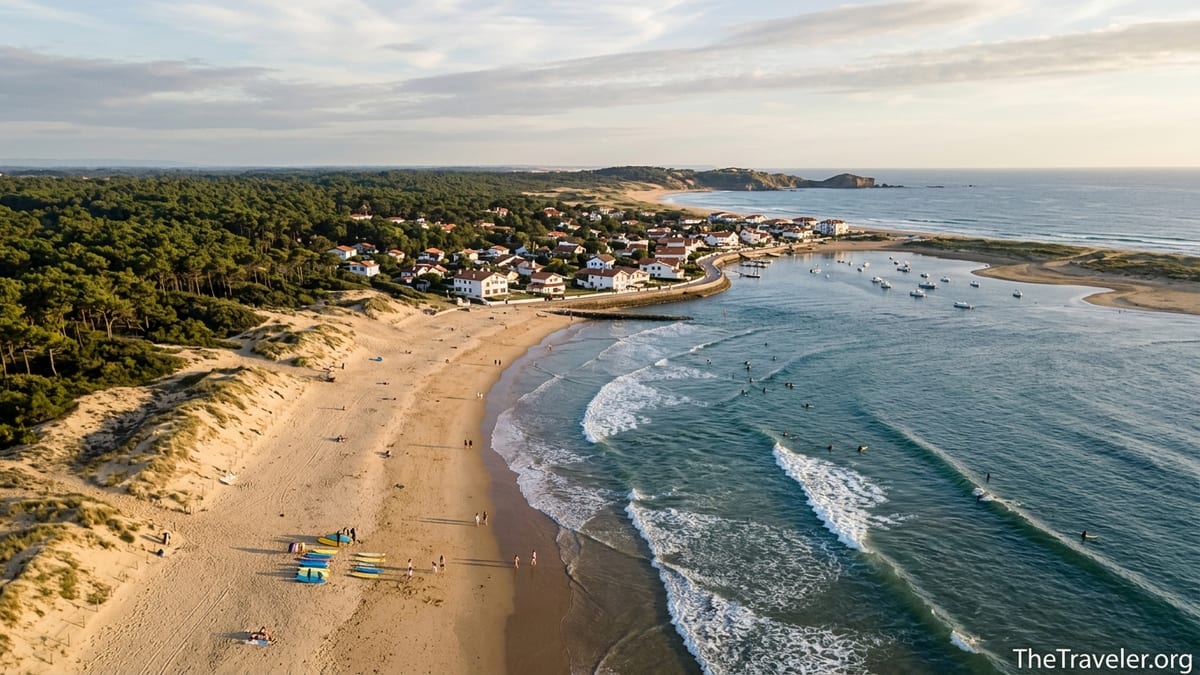
The French Atlantic coast stretches from the white limestone quays of La Rochelle to the Basque headlands at Saint-Jean-de-Luz, taking in mellow islands, pine-fringed surf beaches and lively resort towns along the way. For travelers choosing between La Rochelle, Île de Ré, Île d’Oléron, Les Sables-d’Olonne, Arcachon, Cap Ferret, Hossegor, Biarritz and Saint-Jean-de-Luz, each stop offers a distinct blend of beaches, bike paths, surf breaks and evening ambiance. This guide compares them in practical terms so you can match the right destination to your style of trip, whether you are chasing Atlantic waves, planning a relaxed family holiday or looking for a quieter coastal escape.
How the French Atlantic Coast Fits Together
Seen on a map, this section of the French Atlantic coast forms a loose arc: La Rochelle and its two islands in Charente-Maritime to the north, the Vendée coast around Les Sables-d’Olonne, then south through the sheltered Bassin d’Arcachon and Cap Ferret to the long, wild beaches of the Landes and the Basque Country around Biarritz and Saint-Jean-de-Luz. Distances are manageable by car or train. For example, La Rochelle to Arcachon by car takes around three hours in light traffic, while Biarritz to Saint-Jean-de-Luz is less than half an hour by road or regional train.
Climate and sea conditions change gradually as you move south. Around La Rochelle, Île de Ré and Île d’Oléron, tides are strong and beaches are often gently shelving, with vast sand flats at low tide that are ideal for children to play and for traditional shellfish gathering. Farther south, the Vendée and Landes coasts are more exposed to Atlantic swell, making Les Sables-d’Olonne and especially Hossegor magnets for surfers. By the time you reach Biarritz and Saint-Jean-de-Luz, headlands and rocky points carve the coast into coves, offering a mix of surf spots and more sheltered swimming bays.
Price levels are broadly similar, though some resorts command a clear premium. In high summer, a midrange hotel room in La Rochelle or Biarritz often runs from the equivalent of a few hundred US dollars per night, with prices easing by at least a third in May, June or September. More family-oriented destinations like Île d’Oléron and Les Sables-d’Olonne usually offer better value, with simple holiday apartments in summer frequently starting noticeably lower than the biggest-name resorts.
Transport also shapes the experience. La Rochelle and Biarritz both have airports with seasonal international routes and are linked by high-speed or fast regional trains to Paris, which makes them practical entry points. From these hubs you can reach the islands, Arcachon or Saint-Jean-de-Luz by regional train or bus, but Cap Ferret and Hossegor still feel like more intentional side trips, often involving a car or at least a combination of train plus local shuttle.
La Rochelle, Île de Ré and Île d’Oléron: Gentle Charente-Maritime
La Rochelle works well as a cultural and urban base on the Atlantic. Its compact old town and Old Port are framed by medieval towers and arcaded streets filled with independent boutiques and seafood restaurants. Families appreciate the large aquarium near the harbor and the safe town beaches at Les Minimes and Plage de la Concurrence, which give children easy sea access without leaving the city. Many visitors use La Rochelle as a springboard, spending two or three nights in town and then heading to Île de Ré or Île d’Oléron for a slower-paced stay.
Linked to the mainland by a toll bridge, Île de Ré has become shorthand in France for chic Atlantic holidays. The island’s draw is less about dramatic scenery and more about atmosphere: whitewashed houses with green shutters, hollyhocks in summer, morning markets in villages like Saint-Martin-de-Ré and Ars-en-Ré, and long sandy beaches such as Plage de la Conche or those near Le Bois-Plage-en-Ré. Cycling is the default mode. A web of well-maintained bike paths lets you ride from village to village along salt marshes and pine forest. Typical daily bike rental from local shops runs at a modest rate, and many families simply park their car on arrival and use bikes, trailers and child seats all week.
Île d’Oléron, farther south and a little less polished, is often chosen by families seeking more space and slightly lower prices. Its Atlantic side has big beaches like Plage de Vert Bois and Plage de la Rémigeasse, backed by dunes and forests, while the eastern shore looks onto oyster beds and calmer waters. Caravan parks, simple campsites and functional holiday villages are common, and beach clubs for children in July and August create a friendly, low-key atmosphere. For example, a week in a two-bedroom mobile home on Oléron in peak season is often noticeably cheaper than an equivalent rental on Île de Ré, especially if you book early or look just outside the most famous villages.
These three destinations skew toward couples and families who value easy beach days, markets and short excursions over nightlife. Surfing exists here, especially on the more exposed beaches of Île d’Oléron and certain spots on Île de Ré, but conditions are softer and less reliable than in the Landes or Basque Country. For beginner surf lessons, small local schools offer group sessions in summer, but serious surfers usually head farther south.
Les Sables-d’Olonne and the Vendée: Classic Seaside for Families
Les Sables-d’Olonne, in the Vendée, is a classic French seaside resort centered on a long urban beach sheltered by a natural bay. A substantial promenade lines the main Grande Plage, with apartments, hotels, creperies and ice cream stands almost touching the sand. Even on summer days when the town feels busy, the broad beach usually allows room for families to spread out their towels and for children to play in the shore break under the eye of lifeguards.
For families, Les Sables-d’Olonne has an appealing mix of simple pleasures and recognizable amenities. You can rent pedal boats in the harbor, take a small tourist train along the seafront or visit modest attractions such as the local zoo on cloudy days. Many holiday apartments sit just behind the seafront. In July and August, a modest two-bedroom place a few streets back from the promenade can often be found at a daily rate that undercuts the more fashionable islands or Basque resorts, particularly if you book outside school holiday peaks.
Surfers sometimes overlook the Vendée, but the area around Les Sables-d’Olonne does catch Atlantic swell. Nearby spots in the direction of Brétignolles-sur-Mer can offer fun beach breaks when conditions line up, though waves are generally less powerful than further south. Several surf schools along the coast cater to absolute beginners with introductory sessions that include board and wetsuit hire. For families where one parent wants to try surfing while the rest of the group prefers beach games or café terraces, this balance can work well.
In terms of vibe, Les Sables-d’Olonne feels more straightforward than La Rochelle or the Basque towns. It is a place for sandcastles, early evening strolls on the seafront and no-fuss seafood dinners rather than design hotels or fine dining tasting menus. That makes it an excellent choice if your priorities are a wide, lifeguarded beach, predictable facilities and relatively good value in high season.
Arcachon and Cap Ferret: Sheltered Lagoon vs Ocean Wilds
South of Bordeaux, the Bassin d’Arcachon forms a vast tidal lagoon that meets the ocean through a narrow inlet. On the southern shore sits Arcachon, a town of belle époque villas and apartment blocks facing a long curve of sheltered beach. Families appreciate the calm, relatively shallow water here. Even at low tide, there is usually space for children to paddle, and many stretches are monitored by lifeguards in summer. The town itself offers a classic resort mix of ice cream parlors, casual seafood restaurants and a compact shopping district backing the promenade.
Just outside Arcachon rises the Dune du Pilat, billed as Europe’s tallest sand dune. Climbing the dune in late afternoon and watching the sun sink over the ocean is one of the region’s signature experiences. Access is usually via a large paid car park, and in peak season you can expect queues on fine days, so many visitors aim for early morning or weekday evenings. On the ocean side of the dune, long beaches face open swell and can provide decent surf, though currents are strong and conditions are more suitable for experienced surfers.
Across the water, the Cap Ferret peninsula feels more secluded and informal. Its eastern side looks back over oyster farms and calm lagoon waters, with small wooden harbors such as L’Herbe and Le Canon where you can sit on simple terraces and sample local oysters paired with white wine. The western side opens onto the Atlantic, with broad beaches reached via paths through pine forest. Here, small surf schools offer seasonal lessons, and some villages provide basic beach facilities like summer lifeguard posts and a seasonal café behind the dunes.
Choosing between Arcachon and Cap Ferret depends largely on whether you want convenience or character. Arcachon offers train access from Bordeaux, plenty of hotels and easy, lagoon-style beaches. Cap Ferret suits travelers seeking a quieter, more low-rise ambiance, often staying in holiday houses or small guesthouses and relying on bikes to reach the beach or local oyster huts. Prices in high summer on Cap Ferret can rival those of Île de Ré, particularly for stylish villas close to the lagoon, while Arcachon retains a wider spread of budget options if you book early or look a little inland from the seafront.
Hossegor: Surf Capital and Energetic Beach Town
Farther south in the Landes, Hossegor has built its identity around powerful Atlantic waves. Along a three-kilometer stretch of sand, several named surf zones range from more accessible areas for improving surfers to heavy beach breaks that attract professionals. The town promotes itself as a European surfing capital, and in autumn, when swell is strongest and water temperatures remain relatively mild, visiting surfers fill local campgrounds, apartments and surf lodges. Many rental houses are simple, surf-focused places with board racks, outdoor showers and garden hoses for rinsing wetsuits.
In summer, Hossegor softens into a lively resort that still revolves around the beach. Families base themselves near the central stretch of sand, where lifeguard posts operate in high season and beach clubs run games and introductions to surf and bodyboarding for children. Local surf schools line the promenade, offering group lessons that include all equipment. A typical beginner class lasts around ninety minutes in the water, with prices comparable to other Atlantic surf hubs, and many operators suggest taking a series of three to five sessions for solid progress.
The town center and nearby marine lake add variety. Around the lake, calm waters make stand-up paddleboarding and swimming suitable for less confident bathers, while cycle paths weave through the pine forest linking Hossegor with neighboring Seignosse and Capbreton. In the evenings, bars and casual restaurants around the central square and lakefront stay busy, especially in July and August. Expect a party atmosphere at weekends, with live music events and surf-themed gatherings among both locals and visitors.
Hossegor is an excellent choice if surfing or an active beach lifestyle is at the heart of your trip. For beginners, it is worth remembering that outside mid-summer conditions can be challenging, with strong rips and powerful shore breaks. Families with young children may prefer to combine Hossegor with calmer days at the lake or consider gentler stretches of coast if they want toddlers playing at the water’s edge all day. Couple travelers who enjoy bars, surf culture and long walks through pine forest to the beach often find Hossegor a rewarding base, particularly in June or September when crowds thin but the ocean still has energy.
Biarritz and Saint-Jean-de-Luz: Basque Style and Coastal Variety
Biarritz is the symbolic capital of the French Basque coast, a town where 19th-century palaces and casino buildings overlook surf beaches. Several distinct bays sit within walking distance. The central Grande Plage offers urban beach life at its most classic, while Côte des Basques, held between cliffs, is famous for its mellow longboard-friendly waves at mid to high tide. The town has a strong dining scene, from traditional Basque restaurants serving grilled fish and pintxos-style bar snacks to contemporary bistros. Prices reflect its popularity: centrally located hotels and apartments in August are often among the highest on this stretch of coast, although out-of-season stays or places in residential neighborhoods slightly back from the seafront can be more accessible.
For surfers, Biarritz is one of the few places in Europe where you can wake up in a city, stroll down from your apartment with a board under your arm and find rideable waves on most days in season. Several surf schools operate directly on the sand, particularly at Côte des Basques, offering lessons for beginners and intermediates. It is also a good compromise destination if not everyone in your group surfs: non-surfers have museums, shopping streets and spa facilities, while surfers can fit sessions around a more general city-break rhythm.
About 20 kilometers to the south, Saint-Jean-de-Luz presents a different face of the Basque Coast. Its main town beach sits on a deep bay sheltered by breakwaters and headlands, resulting in gentler waves and calmer swimming conditions than Biarritz or Hossegor. Families with small children value being able to let them paddle in shallower water with less of a shore break, while older children can try stand-up paddleboarding on calmer days. The old town behind the beach is intimate and walkable, with narrow streets, traditional Basque houses and confectioners selling regional specialties such as macarons and gâteau basque.
Surfing is still possible around Saint-Jean-de-Luz, but the best-known breaks lie slightly outside the main bay, on more exposed beaches in neighboring Ciboure or along the road south toward Hendaye. These spots tend to have more manageable waves than the heavier beach breaks of the Landes, so they can be appealing for progressing surfers who want to avoid the most crowded line-ups. In terms of atmosphere, Saint-Jean-de-Luz is quieter and more family-oriented than Biarritz, with evenings focused on waterfront strolls and terrace dinners rather than late-night bars.
Which Destination Is Best for You
For couples seeking a romantic but relaxed break, Île de Ré, Cap Ferret, Biarritz and Saint-Jean-de-Luz stand out. Île de Ré and Cap Ferret offer atmospheric villages, golden-hour bike rides and sunset drinks in oyster huts or harbor-front cafés. Biarritz layers surf culture on top of belle époque grandeur, ideal if you want to combine beach time with restaurants and boutique shopping. Saint-Jean-de-Luz is smaller and calmer but particularly charming for long weekend stays outside the peak school holiday period, when you can still swim in relatively warm water yet find space on the main town beach.
Families with young children often do best in the calmer parts of the coast. Saint-Jean-de-Luz’s sheltered bay, Arcachon’s lagoon beaches and La Rochelle’s town beaches offer easier swimming than the more exposed surf towns, with lifeguarded areas and amenities like playgrounds and shallow paddling zones. Île de Ré and Île d’Oléron add the appeal of car-free cycling, with flat bike paths allowing even fairly young riders to travel between village markets and beaches. On these islands, it is common to see families with a mix of children’s bikes, trailers and cargo bikes, using them for grocery shopping and evening ice-cream runs as well as day trips.
For older children and teenagers, destinations that mix surf schools with some independence work well. Hossegor, Biarritz and the more exposed beaches near Les Sables-d’Olonne all have multiple surf schools offering packages from a single taster lesson to week-long camps. In Hossegor, for instance, teenagers can often join small-group lessons scheduled for late morning or afternoon, leaving parents free to relax at a beach café or explore the town. In Biarritz, teens can switch between surfing and exploring the city, with the reassurance of being able to walk back to centrally located accommodation without needing a car.
If your priority is surfing, Hossegor sits at the top of the list for experienced riders, with Biarritz, Cap Ferret and some of the Vendée and Charente-Maritime beaches offering more forgiving alternatives. Improvers and beginners might prefer slightly mellower waves around Biarritz, Cap Ferret or the islands, especially in summer, before testing themselves in Hossegor during smaller swells. For travelers whose main aim is a quieter holiday, Île d’Oléron, parts of Île de Ré away from the main ports, Cap Ferret outside August and some of the lesser-known villages near Les Sables-d’Olonne provide respite from the hardest-partying resorts.
The Takeaway
From north to south, the French Atlantic coast offers a continuous chain of beaches, islands and surf towns, yet each stretch feels distinct in practice. La Rochelle, Île de Ré and Île d’Oléron give you a gentle introduction with historic ports, peaceful cycling and family-friendly sands. Les Sables-d’Olonne brings classic seafront holidays at relatively accessible prices. Around Arcachon and Cap Ferret, you can slip between sheltered lagoon beaches and wild ocean shores within a short drive or ferry ride. Farther south, Hossegor, Biarritz and Saint-Jean-de-Luz showcase surf culture and Basque character, from heavy beach breaks to sheltered bays.
When choosing where to go, focus first on the sea conditions and atmosphere you want. If you picture children paddling in calm water and parents cycling to the market, lean toward Arcachon, the islands or Saint-Jean-de-Luz. If your dream involves dawn surf sessions and lively beach bars, consider Hossegor or Biarritz. For quieter escapes, look at Île d’Oléron or Cap Ferret outside the absolute peak of August. With realistic expectations and a little planning around tides, transport and season, you can match one of these Atlantic destinations to your ideal mix of beach time, surfing, food and relaxation.
FAQ
Q1. Which French Atlantic destination is best for beginner surfers
Arcachon, Cap Ferret and Biarritz’s Côte des Basques are good starting points, as local surf schools focus on softer waves and cater heavily to first-time surfers in summer.
Q2. Where should families with small children stay for calm swimming conditions
Saint-Jean-de-Luz, Arcachon and La Rochelle’s town beaches have sheltered waters and lifeguarded areas in high season, making them comfortable choices for young children learning to swim.
Q3. Is Île de Ré or Île d’Oléron better for a budget-conscious holiday
Île d’Oléron typically offers slightly lower accommodation prices and more campsites and holiday villages, while Île de Ré tends to be more upmarket, especially in its best-known villages.
Q4. Do I need a car to enjoy these destinations
You can reach La Rochelle, Arcachon, Biarritz and Saint-Jean-de-Luz by train and get around on foot or by bike, but a car makes it easier to explore Cap Ferret, Hossegor and the islands in depth.
Q5. When is the best time to surf in Hossegor
Autumn is often considered the prime surf season in Hossegor, with stronger, more consistent swell and still-manageable water temperatures, though summer can be better for beginners.
Q6. Which places are quietest in peak summer
Even in July and August, parts of Île d’Oléron, less central villages on Île de Ré and residential corners of Cap Ferret can feel calmer than the main resort centers further south.
Q7. How do prices compare between Biarritz and Saint-Jean-de-Luz
Biarritz is generally more expensive for central accommodation and dining, while Saint-Jean-de-Luz often offers slightly lower prices and a more family-focused, low-key atmosphere.
Q8. Is it realistic to combine several of these destinations in one trip
Yes, many travelers pair La Rochelle with Île de Ré, or Biarritz with Saint-Jean-de-Luz and Hossegor, using regional trains or short drives to move between them over one to two weeks.
Q9. Are there good options for cycling holidays along this coast
Yes, Île de Ré, Île d’Oléron and the Cap Ferret peninsula all have extensive bike paths, and long-distance routes such as the Atlantic cycling route link many coastal towns.
Q10. Which destination offers the best mix of nightlife and beach
Biarritz and Hossegor stand out for bars and late-opening venues within walking distance of surf beaches, appealing to travelers who want both ocean time and energetic evenings.