


Hot mineral water steaming in the cool mountain air, stone villages backed by sharp peaks, and the gentle rhythm of spa days broken up by ski runs or valley hikes. The French Pyrenees have quietly become one of Europe’s most rewarding regions for thermal spa travel, with a cluster of small towns that combine historic bath culture with serious mountain scenery. If you are choosing between Cauterets, Bagnères de Luchon, Bagnères de Bigorre, Barèges, Luz Saint Sauveur, Argelès Gazost and Ax les Thermes, the differences matter. Each town mixes thermal cures, modern wellness, hotels and outdoor activities in its own way, and some are far better suited than others for a short, romantic spa break or an overnight stay focused on well-being.
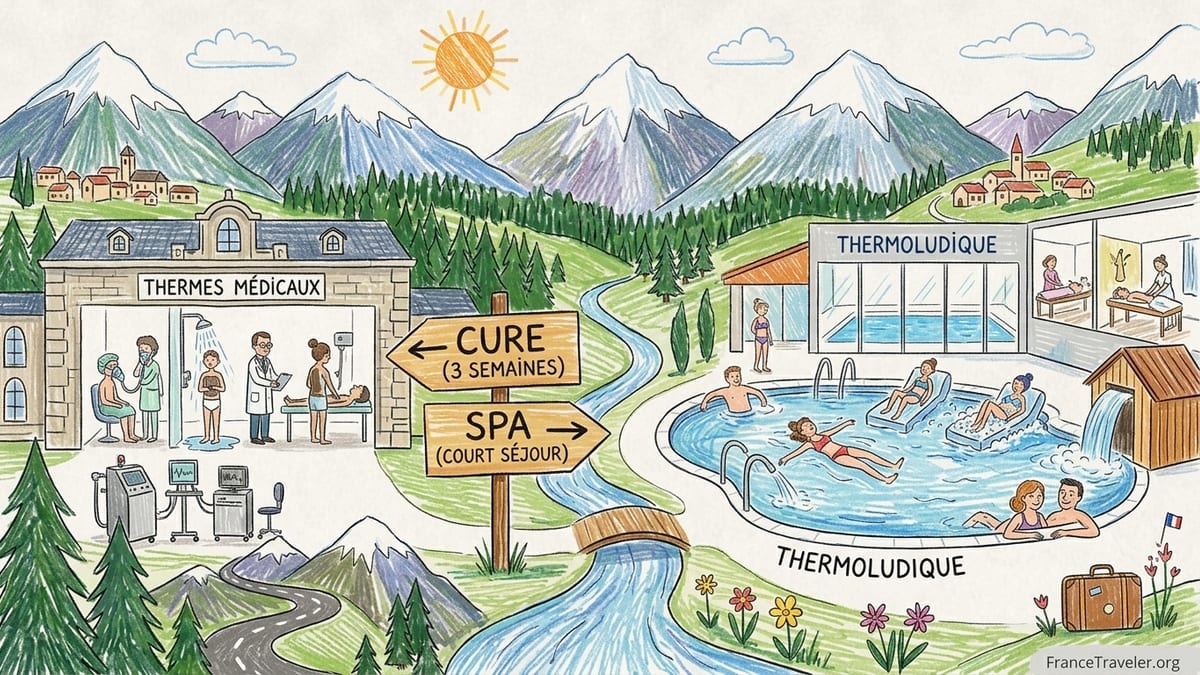
Thermal Cures vs Short Spa Breaks: How Pyrenean Baths Really Work
Before you choose a town, it helps to understand the two very different ways the French use their thermal resorts. Traditional thermal cures are medical stays, usually prescribed by a doctor and reimbursed in part by French social security. In Cauterets, for example, the Thermes de César and Thermes des Griffons focus on respiratory and rheumatology treatments that run for about three weeks, with patients following a strict daily schedule of inhalations, jet showers and mud packs in the treatment buildings rather than lounging in a leisure spa pool. These are serious health stays, not casual wellness weekends.
Short recreational spa visits, on the other hand, are built around thermoludic facilities that are open to everyone, with no prescription. Instead of an early morning medical appointment, you might buy a two or three hour session at a spa such as Les Bains du Rocher in Cauterets, or Les Bains du Couloubret in Ax les Thermes. You drift between indoor and outdoor pools at around 33 to 38 degrees, bubble beds, waterfalls and saunas, and perhaps add a 50 minute massage or facial. Many travelers will never see the medical side of thermalisme at all, but will remember the open air basins and mountain views.
For international visitors planning a holiday, this distinction is crucial. If you are coming for just two or three nights, you will almost certainly want a town with a modern, visitor friendly spa complex rather than one where the thermal offering is almost entirely medical. The good news is that several Pyrenean towns, especially Cauterets, Ax les Thermes and Luchon, now market “mini cures” and wellness breaks explicitly designed for shorter stays, combining a handful of therapeutic treatments with access to their leisure spa areas and hotel packages.
Cauterets: Steam, Belle Époque Charm and Gateway to the Gavarnie Valleys
Cauterets is arguably the most complete choice if you want to combine a real mountain atmosphere, a high quality thermal spa and easy access to headline hiking. The town grew up around a cluster of hot springs and still has two medical thermal establishments, including the Thermes des Griffons in a quiet natural setting and the Thermes de César in the center, which use highly mineralized water noted for respiratory and rheumatology benefits. Alongside these, Les Bains du Rocher is a separate, modern spa complex with indoor and outdoor lagoons, bubble beds and steam rooms where you can drop in for a two hour session without any medical paperwork.
For a concrete idea of cost, a typical two hour entry to a thermoludic spa in the Pyrenees is often in the range of 20 to 30 euros per adult, with discounts for late evening slots and multi visit passes. In Cauterets, you can expect similar pricing for access to the lagoon style pools, with massages and body treatments adding roughly 60 to 100 euros depending on duration and products. That makes it easy to build a long weekend where you ski at the Cauterets Cirque du Lys area in winter or hike to Lac de Gaube and the Pont d’Espagne waterfalls in summer, then soak in sulphurous water in the evening before walking back to a Belle Époque hotel on the main avenue.
Accommodation in Cauterets leans towards small hotels, apartment style residences and family run guesthouses rather than large resorts. Many couples choose central addresses within a five minute walk of the spa and restaurants, allowing them to park the car on arrival and then forget about it. Cauterets also forms part of the Gavarnie Valleys tourism area, so using it as a base puts you within driving distance of famous sites such as the Cirque de Gavarnie and the road to Col du Tourmalet. For travelers who want a proper mountain village that still feels lively outside spa hours, Cauterets is hard to beat.
Bagnères de Luchon: Grandeur, Vaporarium and Superbagnères Skiing
Bagnères de Luchon, usually shortened to Luchon, is one of the grand old thermal towns of the Pyrenees. The spa complex here is known for its historic bath buildings and a natural vaporarium, a network of underground galleries where hot sulphurous steam fills the rock corridors. This feature, unique on such a scale in the Pyrenees, gives Luchon a slightly different wellness offer to the pool based spas elsewhere. The main thermal establishment focuses strongly on respiratory and rheumatology cures, but it also hosts a modern spa area with beauty treatments and massages, which is usually open daily in the afternoons for non cure visitors who book in advance.
The town sits in a broad valley with big mountain views and has more of a small city feel than Cauterets or Barèges. The Allées d’Étigny, lined with cafés and hotels, lead towards the Parc des Thermes and its leafy lawns. Accommodation ranges from traditional spa hotels facing the park to self catering apartments in former grand residences. For couples, it is easy to put together a package of two nights in a mid range hotel, two afternoon spa sessions and a dinner at a local bistro serving hearty Pyrenean dishes like garbure soup and confit duck.
One major advantage of Luchon is the direct link to the Superbagnères ski area, perched above the town at over 1,800 meters. In winter, you can ride up to the slopes during the day and soak in the vaporarium or spa pools in the early evening. In summer, the same lift system gives access to hiking routes and panoramic viewpoints, and road cyclists can tackle nearby passes often used by the Tour de France. If you want a spa town that stays active year round and mixes historic atmosphere with a wide range of mountain activities, Luchon is a strong candidate for an overnight stay.
Bagnères de Bigorre and Argelès Gazost: Softer Thermal Towns Close to Nature
Bagnères de Bigorre lies a little lower in the foothills, with a more gentle mountain setting. The town’s thermal complex focuses on medical cures but also offers leisure spa facilities with pools and relaxation areas that attract weekend visitors from nearby cities. The vibe here is slightly quieter and more local than in the headline resorts, and prices for accommodation and restaurants tend to be moderate. This can be attractive if you are driving through the Pyrenees and want one or two restorative nights without the bustle of a major ski station.
The nearby Pic du Midi de Bigorre cable car and the La Mongie ski area are within an easy drive, so you can still mix bathing with high mountain excursions. Compared with Cauterets or Luchon, Bagnères de Bigorre is better for those who like market halls, thermal gardens and low key walks rather than very dramatic peaks right outside the window. For wellness focused couples who prefer a slower pace and do not need a huge spa complex, it can be a rewarding base.
Argelès Gazost, in the Gavarnie Valleys, has its own thermal establishment that concentrates heavily on vascular and lymphatic treatments in the classic French cure model. While there is a wellness element, the town’s main appeal for many travelers is its strategic location between Lourdes and the high valleys leading to Cauterets, Luz Saint Sauveur and Gavarnie proper. You will find pleasant hotels, leafy parks and easy access to cycling routes and short hikes. For a pure spa weekend, other towns on this list have more extensive leisure facilities, but Argelès Gazost works well as a central base if you plan to drive out each day to different valleys and combine a few spa sessions with sightseeing.
Barèges and Luz Saint Sauveur: High Valleys, Ski Links and Intimate Spas
Barèges and Luz Saint Sauveur sit in neighboring valleys on the road to the Col du Tourmalet and the Cirque de Gavarnie, and both are strongly oriented towards mountain sports. Barèges is one of the highest thermal villages in the French Pyrenees, with a small, intimate spa complex that uses sulphurous water recognized historically for rheumatology treatments. Today, many skiers and hikers drop in for post effort recovery sessions, using hydrojets and warm pools as a natural follow up to a day on the slopes or trails. The village itself is compact, with a handful of hotels, apartments and restaurants clustered around the main street.
Just downstream, Luz Saint Sauveur feels a little larger and livelier, with a dramatic gorge setting and views up towards Luz Ardiden and the road to Gavarnie. The local spa facility, set slightly above the town, mixes medical cure treatments with a leisure area that features pools, jets and relaxation spaces. Many cyclists based in Luz use the spa in the evenings after riding classic climbs such as Luz Ardiden or the Tourmalet. For couples, a common pattern is to book a small hotel or chalet apartment in Luz, spend the day driving to Gavarnie or hiking to the Cirque, and then book a two hour spa session on the way back down the valley.
Both Barèges and Luz are ideal if your priority is to be as close as possible to the big Pyrenean passes and hiking circuits while still enjoying genuine thermal water at the end of the day. Compared with Cauterets and Ax les Thermes, their spas are more modest and focused, but the trade off is immediate access to some of the most famous mountain scenery in France. They make excellent overnight stops on a self drive itinerary that links several valleys and spa towns.
Ax les Thermes: Roman Style Baths and Eastern Pyrenean Adventures
On the eastern side of the French Pyrenees, in Ariège, Ax les Thermes offers a very different feel. The town is smaller and slightly more rustic, with steaming fountains on the main squares that remind you just how hot the natural springs are. Historically, Ax developed around medical thermal establishments such as the Teich and the Modèle, which still welcome patients for doctor supervised cures focused on rheumatology and respiratory issues. In recent years, the opening of large thermoludic facilities has transformed its appeal for short stay visitors.
The flagship leisure complex is Les Bains du Couloubret, installed in a former thermal building in the town center. Here, around 3,000 square meters of space are devoted to pools, Roman inspired baths and wellness areas fed by water at roughly 33 to 38 degrees depending on each basin. You can move between indoor pools with massage jets, outdoor basins with mountain views, steam rooms and themed saunas. Typical pricing is similar to other major Pyrenean spas, with a few hours of access costing in the region of 20 to 30 euros, and optional treatments such as body scrubs or massages booked separately.
Ax also has a modern spa and cure complex run by a specialist operator, focusing on more traditional treatments for longer stays. For travelers, the combination of these baths with the Ax 3 Domaines ski area above town makes it easy to build a ski and spa weekend, especially if you are driving from Toulouse or even across from Barcelona. In summer, road and mountain biking, canyoning and hiking in Haute Ariège fill the days, while evenings are spent strolling between restaurants and the steamy public foot baths dotted around the old streets. Couples who like a touch of slightly old fashioned French spa ambiance combined with a very practical thermoludic center often find Ax les Thermes an excellent base.
How to Choose the Right Pyrenean Spa Town for Your Trip
With so many options, start by deciding whether your priority is the spa itself, the surrounding mountains, or a balance of both. If the spa experience is central, towns with large modern thermoludic complexes have a clear advantage. Cauterets, with Les Bains du Rocher, and Ax les Thermes, with Les Bains du Couloubret, are the strongest choices for travelers who want big, well equipped, visitor friendly spas that operate on simple time slot tickets. Luchon sits close behind thanks to its vaporarium and spa area, even though its focus remains strongly medical during cure seasons.
If your dream is waking up in a village ringed by peaks and stepping almost directly on to classic hiking or cycling routes, Barèges, Luz Saint Sauveur and Cauterets all excel. In these towns you can realistically hike to high altitude lakes such as Lac de Gaube, or drive 30 to 45 minutes to trailheads in the Gavarnie valleys, then soak in thermal water the same evening. For road cyclists chasing Tour de France climbs, basing in Luz for the Tourmalet and Luz Ardiden, or in Argelès Gazost for access to several valleys, can be especially rewarding.
Couples planning a romantic weekend often prioritize atmosphere and dining as much as the baths themselves. Cauterets and Luchon offer the most “town life,” with café lined avenues, Belle Époque architecture and a choice of restaurants within walking distance. Ax les Thermes feels a little more low key but compensates with its characterful public fountains and easy access from Toulouse. Bagnères de Bigorre and Argelès Gazost are quieter, ideal if you prefer early nights and long breakfasts in small hotels rather than nightlife.
Practical considerations also matter. Some spa complexes require advance booking, especially on weekends and during school holidays, and many have family friendly schedules with quieter adult only evening sessions that are perfect for couples. Accommodation prices fluctuate strongly between peak ski weeks, summer hiking season and the quieter shoulder months of May, June, September and October, when you may find good value midweek deals that include spa entry. It is worth checking whether your chosen town is running any special “mini cure” packages that combine three to five days of light treatments and access to leisure pools, as these can be excellent value for visitors staying a little longer.
The Takeaway
The Pyrenean thermal towns make it unusually easy to blend wellness and wild landscapes in a single trip. Cauterets, Luchon, Ax les Thermes, Barèges, Luz Saint Sauveur, Argelès Gazost and Bagnères de Bigorre each sit on natural hot springs, but what you will experience as a short stay traveler varies from town to town. Some, like Cauterets and Ax, are built around large, modern spas geared to leisure visitors. Others, such as Argelès Gazost, are still primarily focused on traditional three week cures and offer a quieter, more medical atmosphere.
For a first visit, many international travelers gravitate towards Cauterets or Ax les Thermes, where you can clearly see the difference between the cure establishments and the thermoludic spas, and where short stays are actively promoted. From there, you can easily add on a night in Luz Saint Sauveur or Barèges to get closer to the high passes, or detour through Bagnères de Bigorre for a softer foothill experience. Whatever combination you choose, remember that the real luxury here is the rhythm of the day itself: a hike or ski in clean mountain air, followed by the simple pleasure of lowering yourself into naturally hot, mineral rich water as the evening cool drifts down the valley.
FAQ
Q1. What is the main difference between a thermal cure and a simple spa visit in the Pyrenees?
Thermal cures are medical stays, often prescribed by a doctor and lasting around three weeks, with daily therapeutic treatments in dedicated buildings. Simple spa visits are short leisure sessions, usually two to three hours, in thermoludic pools and wellness areas that anyone can book without a prescription.
Q2. Which Pyrenean spa town is best for a romantic weekend break?
For couples, Cauterets and Bagnères de Luchon are particularly appealing thanks to their Belle Époque architecture, walkable centers and good choice of restaurants, combined with quality spas like Les Bains du Rocher in Cauterets or the vaporarium and spa in Luchon.
Q3. Where can I combine skiing and thermal baths most easily?
Cauterets, Bagnères de Luchon and Ax les Thermes are your strongest options for ski and soak trips. Each has a nearby ski area and a modern spa or bath complex so you can spend the day on the slopes and relax in hot mineral water in the evening.
Q4. Are the Pyrenean thermal spas suitable for children and families?
Many thermoludic spas welcome families and offer children’s entry at set times, especially in the afternoons. However, some areas such as saunas or quiet relaxation rooms are reserved for adults, and loud play is usually discouraged, so it is wise to check age rules and family hours before visiting.
Q5. How expensive is a typical visit to a thermal spa in the French Pyrenees?
Prices vary slightly by town, but a two to three hour adult session in a thermoludic spa is often in the range of 20 to 30 euros. Massages, facials and body treatments are usually extra and can add 60 to 100 euros or more depending on length and products.
Q6. Do I need to book spa sessions in advance?
Advance booking is highly recommended during weekends, school holidays and peak ski or hiking seasons, especially in popular complexes like Les Bains du Rocher in Cauterets or Les Bains du Couloubret in Ax les Thermes. In quieter periods, same day bookings are often possible but not guaranteed.
Q7. Which town is best if I am more interested in hiking than in big spa complexes?
If hiking is your priority, Barèges, Luz Saint Sauveur and Cauterets all give quick access to classic trails, including routes towards Gavarnie and high lakes. Their spas are smaller than those in Ax or Cauterets, but they are perfect for post hike recovery sessions.
Q8. Can non French speakers easily use the thermal facilities?
Yes, non French speakers are welcome and can usually manage with basic English, signage and pictograms. Staff in the main thermoludic spas are used to international visitors, though in the medical cure establishments the atmosphere is more local and French is more common.
Q9. Are there seasonal differences in how lively the spa towns feel?
Absolutely. Winter ski season and summer hiking season are the busiest times, with lively resort atmospheres in towns such as Cauterets, Luchon and Ax les Thermes. Spring and autumn are quieter, with good value on accommodations but a more tranquil, sometimes almost sleepy, feel in smaller villages.
Q10. How should I choose between staying in one base or moving between several spa towns?
If you have only a long weekend, it often makes sense to choose one well placed base such as Cauterets or Ax les Thermes and explore nearby valleys on day trips. With a week or more, you can create a mini road trip linking towns like Luchon, Cauterets and Luz Saint Sauveur, sampling different spas and landscapes along the way.