


Brittany’s official tourism board likes to point out that the region has more than 2,800 kilometres of coastline, and that its identity is built on sea air, islands, and old stone. That is all true, but when you actually go, some classic “must do” stops feel rushed or fogged in, while a simple coastal path or a plate of oysters on a harbour wall can quietly become the highlight of the trip. This article is organised by experience type rather than town, and it focuses on specific outings that are genuinely worth building a Brittany itinerary around, alongside a few that did not quite live up to the brochure.
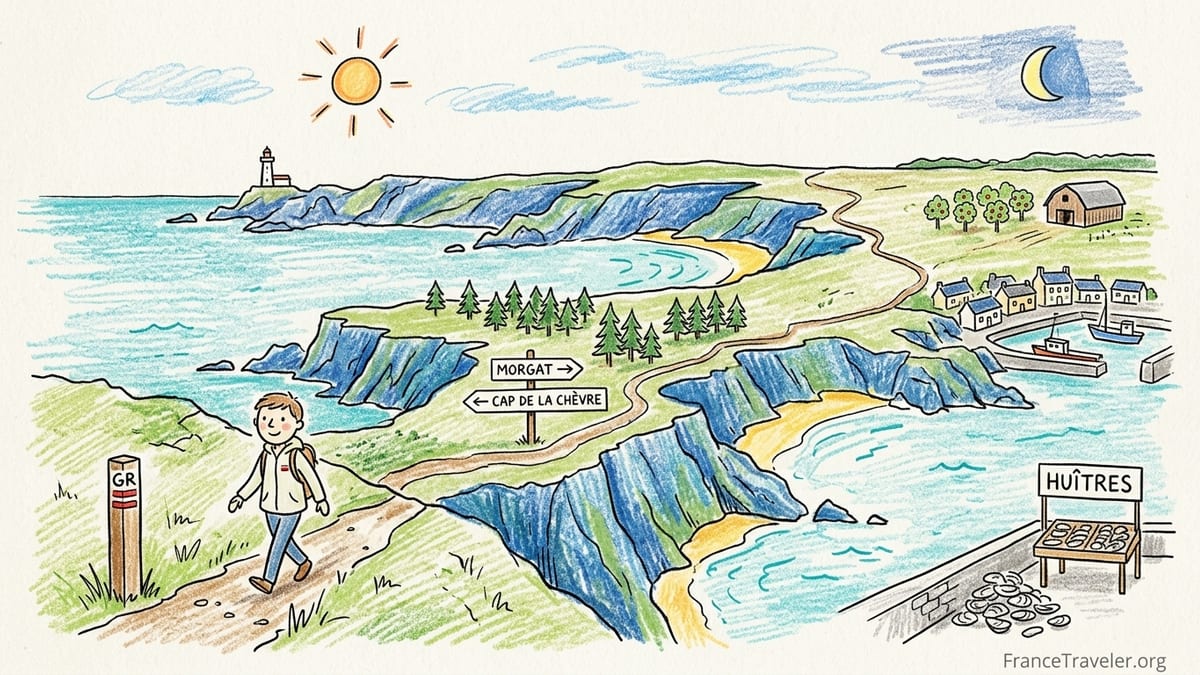
Walking the GR34: The One Experience I Would Plan a Trip Around
If there is one experience I would cross France again for, it is a day on the GR34 coastal path. The most memorable section I walked was on the Crozon peninsula, between Morgat and the Cap de la Chèvre headland in Finistère. I started from Morgat harbour, followed the red and white GR markings south through pine forest and along exposed cliffs, and turned around just past the Cap de la Chèvre viewpoint. According to local tourism information, this stretch is around 10 to 11 kilometres one way, so I effectively did a 20 to 22 kilometre out and back, which took me about seven hours including photo stops and a long picnic.
Costs were modest. I paid roughly 6 euros for a packed baguette and cheese from a Morgat bakery and another 3 euros for fruit and water. There is no fee for using the GR34 itself. I went in early June, after checking the route and tide advice on the local tourist office website, and did not need to reserve anything. The path was busy but not crowded near Morgat, then became quiet and almost empty closer to Cap de la Chèvre. Weather was classic Breton: bright sun in the morning around 17 degrees, then increasing wind in the afternoon with clouds and a short, sharp shower. The wind on the exposed cliffs was strong enough that I was glad of a light jacket and to keep well back from the edge.
Physically, this day required a moderate to strong effort. The path constantly rolled up and down in small climbs, and the coastal roots and rock demanded attention, especially when they were wet. I wore trail shoes and was happy not to be in sandals. The payoff, and the reason I would do it again, was the combination of cliff views, turquoise inlets and the feeling of being on a fringe of land between countryside and Atlantic. Unlike some “viewpoints” that deliver one panorama and are done, this felt like hours of continuous, changing scenery and small surprises. If you only have time for one proper walk in Brittany, I would choose a Crozon GR34 stage over more famous but busier stretches.
Not every GR34 outing was perfect. On another trip I tried to walk from Pointe du Grouin towards Cancale on the Emerald Coast. I had planned a relaxed 12 kilometre day, but set off mid-afternoon in August after a long lunch. The combination of heat, holiday crowds and several detours away from the sea where the path crossed minor roads made it feel less wild and more like a suburban march. I cut it short after about 8 kilometres and took a local bus back. The lesson, and my verdict, is that the GR34 is worth building a trip around, but it pays to select a section known for scenery, start early in the day and accept that some access stretches feel ordinary compared with the headlands.
Island Boat Trips: Beautiful, But Choose Slowly and Watch the Clock
Many visitors to Brittany are tempted by island cruises, and with good reason. The trip that stays with me most vividly is a day out to Île de Bréhat in the Côtes-d’Armor. I drove to the Pointe de l’Arcouest pier and bought a same-day return ticket on the shuttle boat for roughly 12 euros per adult. Crossing time was about ten minutes each way. I went in mid-September under broken cloud with sunny spells, around 18 degrees and light wind. Even at that time of year the first morning departures were busy, but once on the island the crowds spread out quickly across the paths and gardens.
I spent about six hours on Bréhat, walking from the landing quay up to the northern lighthouse, stopping for an outdoor crêpe and cider lunch that came to about 15 euros. There is no entry fee for the island itself, but I did pay for a short optional boat circuit between skerries that cost around 15 euros and lasted one hour. Physically, the island is easy walking, mostly on lanes and wide paths with gentle slopes. I would absolutely do this trip again, and next time I would probably overnight in a guesthouse to enjoy the evening when the last day-trippers have gone.
My more mixed experience was with an excursion to the Glénan archipelago off the south coast, near Bénodet. Tempted by the turquoise water photos, I booked a day cruise from Bénodet at roughly 45 euros per adult. Crossing time was about an hour each way. I reserved online two weeks ahead for a July departure. On paper, we had four hours on the main island. In practice, by the time the group had disembarked, listened to safety briefings and queued for the few services, I felt hurried. The main beach was beautiful, but heavily crowded, and the paths quickly became congested.
The weather that day was technically fine, about 22 degrees with high hazy cloud, but there was a noticeable swell. Several passengers felt seasick on the crossing, and because the schedule was fixed, there was no flexibility to linger in quieter corners or adjust the plan. Physically it was easy, but the crowds and rush stole some magic. My verdict is that while the scenery of Glénan is striking, I would only repeat the trip outside peak season, on a calm day, and ideally with a smaller operator that allows more unstructured time. Compared with a flexible GR34 walk, a timed island cruise felt constrained, so I would not build an entire Brittany itinerary around these boat trips alone.
Oyster Tasting and Coastal Food Moments: Small Costs, Big Rewards
Some of the best experiences I had in Brittany cost less than a cup of coffee in a tourist café. Oyster tasting at Cancale, on the north coast near the border with Normandy, is the obvious example. At the harbour-side Marché aux Huîtres, producers were selling freshly opened oysters by the dozen. In summer 2026, the going rate for a dozen standard oysters was roughly 6 to 10 euros depending on size and variety, and you could also buy half-dozens. I chose a dozen medium oysters for 8 euros, plus a lemon. There was no cover charge and no obligation to buy drinks.
I visited in late May on a bright but cool morning with a fresh onshore breeze. Crowd levels were moderate: several families, a few tour groups taking photos, but still plenty of space along the sea wall. The ritual is basic: carry your plate to the low wall facing the bay, eat standing up, then drop the empty shells onto the beach below where they join years of previous tastings. The whole stop took perhaps forty five minutes, including a short stroll along the harbour. Physically, this was about as easy as experiences come. I would repeat it in a heartbeat and would particularly recommend it as a break after a coastal walk, for example if you have just followed the GR34 from Pointe du Grouin into Cancale.
What did not impress me as much were some sit-down seafood platters along the same coast. In Saint-Malo, I tried a plateau de fruits de mer for two that came in just under 80 euros including a carafe of white wine. The shellfish was fresh, but the restaurant sat on an inland square away from the sea, and the atmosphere felt generic. We were in and out within ninety minutes, surrounded by a constant turnover of tables. Compared with the simple harbour-wall experience in Cancale, this felt rote and expensive. My verdict is that in Brittany, I would prioritise low-key, direct-from-producer tastings and markets over complex restaurant platters, unless you specifically want a long, formal meal.
The same logic applied to crêperies. Some of the best galettes I ate were in small, family-run places just inland from the coast. One standout was a crêperie in Crozon where a complete buckwheat galette with egg, ham and cheese, followed by a simple sugar and butter crêpe, plus a bowl of local cider, came to about 18 euros. I walked in without a reservation at 7 pm on a weekday in June and easily found a table. The dining room filled with local families rather than only tourists. I would happily design an evening around this kind of meal again. In contrast, a heavily Instagrammed crêperie inside Saint-Malo’s ramparts required queuing for over thirty minutes and delivered a similar plate at a higher price with rushed service. It made good photos, but as an experience, it is not one I feel the need to repeat.
Cider Farms and Countryside Tasting: Calm Between Coastal Days
Between long days on the coast, visiting a cider farm inland gave me a quieter, more grounded sense of Brittany. One visit I particularly valued was to a small cider producer in the countryside near Quimper. I phoned ahead the day before using the number listed on the regional cider route leaflet, and arranged to drop in at 4 pm. There was no formal tour fee; instead, the tasting was free and I paid for what I bought. I sampled three varieties of cider and one apple juice, then purchased two bottles of cider at around 6 to 7 euros each and a bottle of juice for about 4 euros.
Crowd levels were almost nonexistent: just my travelling companion and one other couple who arrived halfway through. Weather was overcast with intermittent drizzle, which made the low stone buildings and orchard rows feel especially atmospheric. The entire visit lasted a little over an hour. Physically, the effort was very low; we walked slowly around the orchard for fifteen minutes with the owner, then stood in the barn discussing production. This is an experience I would absolutely repeat, particularly because it connects you to the region’s agricultural reality in a way restaurant drinking does not.
I also tried to drop in spontaneously to a larger, more commercial cider estate closer to the main Morlaix road without calling ahead. On arrival in mid-August I found a very full car park, a shop with a coach group tasting en masse, and a structured tour that had just departed. The next tour slot was an hour later, and staff were too busy to offer informal samples in the meantime. Prices in the shop were slightly higher, around 8 to 9 euros per bottle. In the end I bought only one bottle and left after twenty minutes. The product was fine, but the conveyor-belt feel did not match the picture I had in mind.
My conclusion is that cider farms are well worth weaving into a Brittany itinerary, but I would build plans around smaller producers that expect visitors by appointment, ideally on a cloudy or rainy afternoon when coastal walking is less appealing. These gentle, low-cost hours can balance physically demanding or crowded days. What I would not do again is show up at a major estate in peak summer and hope for an intimate experience.
Swimming, Kayaking and Lighthouse Viewpoints: Weather Makes or Breaks Them
On paper, Brittany’s beaches and bays look ideal for swimming and paddling, but my experiences were highly dependent on weather and timing. One of the best swims I had was at Morgat beach after that long GR34 day on Crozon. It was early evening in June, around 19 degrees in the air and noticeably cooler in the water, but the bay was sheltered from the wind. There was no fee to access the beach, and I spent about forty minutes in and out of the water. Crowd levels were low, mostly a few families and paddleboarders. Physically it was refreshing rather than strenuous. I would absolutely repeat this as a way to transition from hiking to dinner.
Kayaking near the same bay was a more structured outing. I rented a single sea kayak from a small operator on Morgat beachfront for roughly 18 euros for two hours, including a short briefing and buoyancy aid. I booked the afternoon slot the day before by walking to the hut and leaving my name. The route suggested was to paddle along the cliffs to some small caves and back. Conditions at launch were calm, with light winds and a gentle swell. After about an hour, the wind picked up and small whitecaps formed. Paddling back into the bay required more effort than expected and left my shoulders tired.
The whole experience lasted around two and a half hours including preparation, and I would do it again, but only with close attention to the forecast and an honest assessment of my strength. Had the wind shifted earlier, the return could have felt stressful rather than fun. Compared to walking, kayaking amplified weather risk. For travellers who are not confident on water, I would not build a trip around paddling alone, but I would still recommend a short, well-briefed session as an add-on if conditions are settled.
By contrast, one of my biggest disappointments in Brittany was a famous lighthouse viewpoint in poor weather. I visited Cap Fréhel on an October afternoon, having paid a parking fee of around 3 euros at the main car park. Cloud base was low and a dense fog rolled in from the sea. The walk from the car park to the headland and lighthouse took about fifteen minutes on an easy, flat path. Physically it was effortless. Visually it was almost nothing: the cliffs, reputed to be among the most dramatic in the region, were completely hidden. Dozens of other visitors milled around, clearly experiencing the same letdown.
I stayed for about forty minutes in the hope the fog might lift, but it never did. While I am glad I saw the site for context, I would not repeat this trip in similar conditions. A coastal viewpoint is one experience where I would actively cancel or delay in the face of low clouds, even if that means scrambling the day’s plan. Lighthouses and capes are fundamental to Brittany’s charm, but they are also unforgiving when the weather closes in.
Medieval Town Walks and Forest Legends: Beyond the Coastline
Brittany’s historic towns and inland forests can provide a valuable counterweight to the coast, especially on rainy or very windy days. One medieval experience that I would happily repeat is a simple late afternoon circuit of Dinan’s old town. I parked outside the walls, walked up to the main gate and then spent about three hours meandering through the half-timbered streets, down to the river Rance and back up. Apart from parking fees of a few euros and the cost of an ice cream and later a drink on a small square, there was no charge.
I visited Dinan in early October under high, thin cloud and about 16 degrees. Crowd levels were moderate: enough people to give the streets energy, but not so many that you needed to dodge tour groups. The physical effort was mild to moderate because of the steep descent and climb between the town and the river, but there were plenty of places to rest. What elevated the experience was the ability to drift without a fixed route, then suddenly round a corner and find a view over the valley or a quiet churchyard. I would not travel to Brittany solely for its medieval towns, but I would certainly insert Dinan or a similar place as a full half-day chapter in any coastal itinerary.
In contrast, my attempt to layer in a forest and legend experience did not fully work. I went to the Huelgoat Forest, often associated with Arthurian stories and giant boulders, on a grey, damp day. The signed loop I followed around the chaos of rocks and along the stream took about two hours at a gentle pace. Parking near the entrance was free at the time of my visit. Crowd levels were low, mostly a few local walkers. Physically the paths were uneven and occasionally slippery, but the gradients were modest.
The disappointment was not the forest itself, which was quietly beautiful, but my overinflated expectations of drama and storytelling. Aside from a few interpretive panels, there was little on-site explanation of the legends in English, and the atmosphere was more contemplative than mystical. I left feeling I had enjoyed a decent walk but not the narrative-rich experience I had imagined. I would return, but next time I would download more background reading or seek out a guided walk to bring the stories to life. On its own, without that layer, it is not a core reason to choose Brittany over other wooded regions of France.
These inland experiences taught me that while Brittany is rightly marketed for its coast, its towns and forests deepen a trip when chosen deliberately. A well-timed medieval town walk in mild weather is worth planning around. A legend forest is better treated as an optional extra, best enjoyed with some preparation rather than as a spontaneous main event.
The Takeaway
Looking back across several trips to Brittany, the pattern is clear. Experiences I would actively plan a future itinerary around share a few traits. They allow flexibility in pace, like walking a scenic section of the GR34 or wandering a medieval town. They connect directly with local production, like tasting oysters on a harbour wall or talking with a cider maker among the trees. They are weather aware without being weather slaves, so that a cloudier day might shift you from cliffs to cobbles rather than ruin your plans entirely.
In concrete terms, if I were advising a first-time visitor with a week to spend, I would suggest building the skeleton of the trip around two or three full days of coastal walking on the GR34, anchored in areas like Crozon or the Pink Granite Coast; one flexible day for an island outing such as Île de Bréhat, chosen outside peak hours or season; and several half-days reserved for experiences like harbour-side oyster tastings, low-key crêperies, a small cider farm visit and an afternoon medieval town walk. Lighthouse viewpoints, busy island cruises and forest legends can sit in the “nice if conditions line up” category, ready to be swapped in or out.
Brittany’s 2,000-plus kilometres of coast, islands and inlets create almost endless options. The challenge is not finding things to do, but deciding which ones are worth the travel time and which are better kept as photos in a brochure. Based on the outings described here, I would return above all for the long, windy hours on the GR34 and the quiet moments with shellfish and cider beside the water. If your own trip keeps those experiences at its core, with the rest arranged as supporting acts, there is a good chance you will leave planning your return.
FAQ
Q1. Is walking the GR34 in Brittany suitable for beginners?
For a first experience, choose short, well-marked sections near towns such as Morgat or around the Pink Granite Coast, and aim for 10 to 15 kilometres in a day with good shoes.
Q2. How much should I budget per day for food-focused experiences like oysters and crêperies?
If you prioritise markets and simple crêperies, around 30 to 40 euros per person per day is often enough for oysters, two crêpes or galettes and drinks.
Q3. Do I need to book island boats in Brittany in advance?
For popular routes such as Bénodet to the Glénan islands in high season, advance booking is strongly advised, while short shuttles like the Île de Bréhat crossing can often be bought on the day outside peak weekends.
Q4. What is the best time of year to visit Brittany for coastal walking?
Late May to early July and September provide long daylight, mild temperatures and fewer crowds, though you should still expect changeable weather and pack waterproof layers.
Q5. Can I swim comfortably in the sea in Brittany?
Sea temperatures are cool, but many people swim from late June to early September; sheltered bays like Morgat or parts of the Gulf of Morbihan feel more comfortable than exposed Atlantic beaches.
Q6. Are cider farm visits family friendly?
Yes, most cider farms welcome families, often offer apple juice tastings and short orchard walks, and keep the focus on production rather than heavy drinking.
Q7. How do crowds in places like Saint-Malo and Cancale compare to smaller coastal towns?
Major stops such as Saint-Malo and Cancale attract dense summer crowds, especially on weekends, while smaller bases like Morgat or parts of Crozon feel calmer and more local.
Q8. Is renting a kayak in Brittany safe for inexperienced paddlers?
Short, guided or close-to-shore rentals in sheltered bays are suitable if you listen closely to briefings and respect weather advice, but open coast or long routes require experience.
Q9. Are medieval towns and forests in Brittany worth visiting if I focus mainly on the coast?
A half-day in a town like Dinan or a couple of hours in a forest such as Huelgoat adds welcome variety and weather backup, even if your main goal is coastal scenery.
Q10. Should I rent a car to reach the best experiences in Brittany?
A car gives far more flexibility for GR34 trailheads, cider farms and smaller beaches, while relying only on public transport generally limits you to larger towns and the busiest viewpoints.