


Choosing the best time to visit Burgundy is not a one-size-fits-all decision. The region feels very different if you are here to taste wine in quiet cellars, cycle past stone villages on long sunny evenings, cruise a canal, hike in the Morvan hills, book a car-free weekend in Dijon or Beaune, or simply eat and wander through medieval streets. This guide walks through Burgundy’s seasons in practical terms so you can pick the moment that best fits your own priorities.
How Burgundy Changes Through the Year
Burgundy’s vineyard belt stretches roughly from Dijon through Beaune and the Côte de Nuits and Côte de Beaune, down to the Côte Chalonnaise and Mâconnais. The climate is broadly continental, with cold winters, warm to hot summers and increasingly unpredictable shoulder seasons. Official climate data for the Côte d’Or show average January temperatures close to freezing and July averages in the low 20s Celsius, but with regular summer heat spikes well above 30 degrees. Recent vintages have underlined that patterns are still shifting.
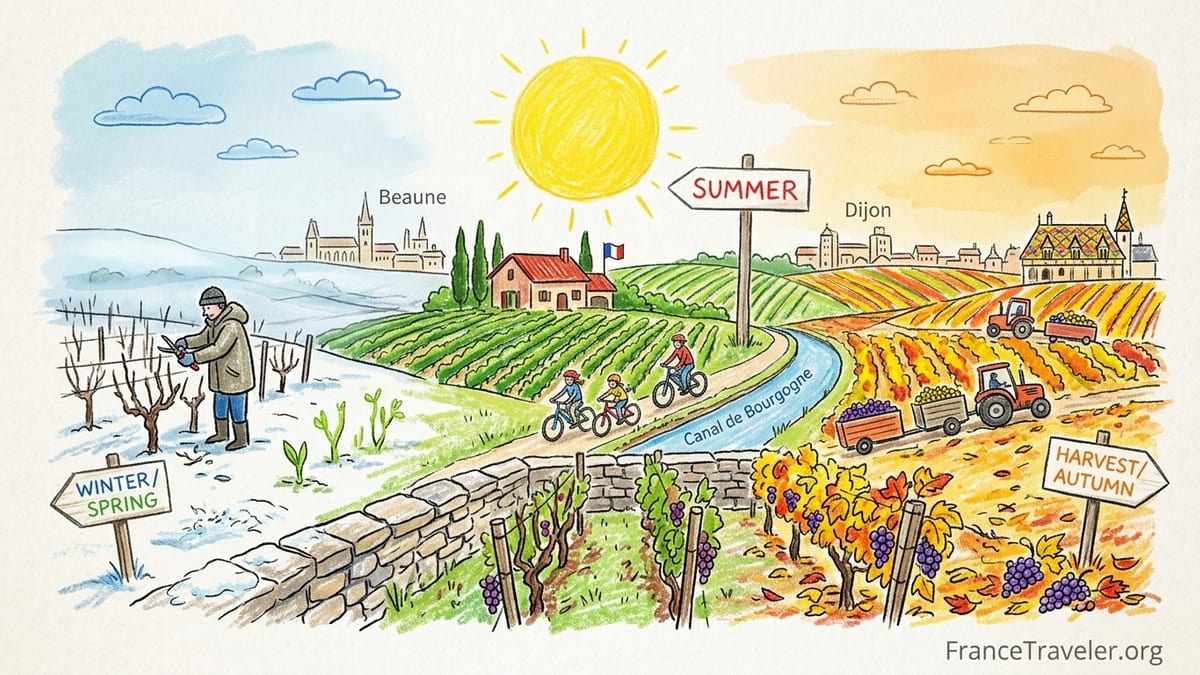
The vines themselves are part of the attraction. In winter, the rows are bare and neatly pruned, with low light picking out stone walls and limestone soils. By April and May, fresh green shoots and tiny leaves appear, especially around classic villages such as Gevrey-Chambertin and Meursault. Through June and July, the vineyards are fully green, with canopy growth at its peak, making walks along paths above Beaune or Santenay particularly scenic. By late September and October, grapes have been picked, leaves turn golden and rust-colored, and some parcels look almost like patchwork quilts on the hillsides.
Harvest timing is one of the biggest seasonal drivers. Historical data for the Beaune area show that the average harvest date has moved earlier over recent decades, with many estates now beginning picking around mid September in recent years and often finishing by late September when conditions allow. In cooler or more complicated years, some domaines still harvest into early October. This means that a visit even in early September can coincide with peak vendange activity, especially in the Côte d’Or.
Alongside the vineyard calendar you need to consider festivals and events. July brings baroque opera performances during the Festival de Beaune, hosted in the Hospices de Beaune and the Basilica of Notre-Dame. In November, Beaune’s famous wine auction weekend fills the town with professionals and enthusiasts, while other wine fairs in Beaune’s conference center offer paid tastings of dozens of appellations. These moments can add energy and access to rare wines, but they also push prices and occupancy up and make last-minute planning difficult.
Winter in Burgundy: Quiet Cellars and Local Life (December to February)
Winter in Burgundy is cold, often damp and frequently underappreciated by visitors. Average daytime highs around Dijon and Beaune usually sit between 4 and 7 degrees Celsius in January, with nights dipping below freezing. Snow is possible but not guaranteed; more often you will encounter frosty mornings, mist in the valleys and low, pale light over the vines. The vineyards themselves are stripped back, with carefully pruned vines, exposed stone and little visible activity beyond workers burning pruned canes or repairing walls.
The big advantage for travelers is calm. Aside from Christmas and New Year, this is when hotel and guesthouse prices around Beaune, Nuits-Saint-Georges and smaller wine villages tend to be at their lowest. You can often find comfortable mid-range hotels or chambres d’hôtes within walking distance of Beaune’s old town at noticeably lower rates than in summer or during harvest weekends. Many cellar doors keep their tasting rooms open year-round, especially larger houses in Beaune and Nuits-Saint-Georges, and appointments are usually easier to secure on just a week or two’s notice.
There are some downsides. Smaller rural restaurants may close for a few weeks in January, and some village-based tasting rooms limit hours or shut on weekdays. If your dream Burgundy trip centers on cycling, boating on the Canal de Bourgogne or outdoor picnics in vineyards, winter is the least convenient time. Daylight is short, with sunset before 5 pm around the solstice, and fog occasionally limits views from hilltop viewpoints above places such as Pernand-Vergelesses or Santenay.
For certain types of trip, however, winter is ideal. A car-free weekend in Dijon or Beaune works well at this time: you can walk between covered markets, mustard shops, bistros and museums, diving into wine bars in the evening without worrying about heat or crowds. It also suits travelers whose focus is tasting and learning rather than wandering through green landscapes. If you come prepared for cold weather and build your days around long lunches and cellar visits, winter can deliver a very local, unhurried version of Burgundy.
Spring: Fresh Vines, Unsettled Weather (March to May)
Spring in Burgundy is a season of transition. March can still feel wintry, with bare vines and chilly winds, but by April buds swell and early leaves emerge across the Côte de Nuits and Côte de Beaune. By May, vineyards around Puligny-Montrachet, Volnay or Marsannay typically show fresh green rows, though their appearance varies depending on how early the season is running. This makes spring particularly appealing to visitors who want to see the landscape waking up without summer heat.
The main caveat is weather volatility. Regional tourism authorities and recent climate commentary note that spring storms and late frosts remain a risk for growers. From a traveler’s perspective, that means packing layers and expecting a mix of sun, showers and cool evenings. Temperatures can reach the high teens or low twenties Celsius on sunny May afternoons, perfect for strolling through Beaune’s old town or walking short stretches of the vineyard trails, but skies can change quickly.
On the crowd front, Easter and early May public holidays bring short spikes in occupancy, especially in Dijon, Beaune and along major motorway routes, but overall spring is still calmer than summer. Many wine estates have more time than during harvest, making April and May good months to request tastings, especially if you email smaller family domaines several weeks in advance. Trains from Paris to Dijon and Beaune typically run on their usual schedules, and rental car availability is better than in August.
Spring suits visitors prioritizing quieter sightseeing and early-season vineyard scenery. It is a pleasant time for a short car-free break in Dijon, where you can combine the Fine Arts Museum, covered food market and nearby tram network with a day trip by TER train to Beaune. It also works for early hiking in lower parts of the Morvan Regional Natural Park, though higher forest trails can remain muddy into April. Families looking for lake swimming or boat rentals, however, will need to wait until later in the year when water warms and operators reopen for the main season.
Early Summer: Long Days and Green Vineyards (June to early July)
Early summer in Burgundy, from June into the first half of July, offers long daylight, fully green vineyards and generally stable weather without the peak-season crunch. Vines across the Côte d’Or are in full leaf, and flowering usually occurs around this period in average years. Sunny days with temperatures around the mid 20s Celsius are common, although hotter spells are increasingly frequent. Evenings stay light until after 9.30 pm around the solstice, which is ideal for outdoor dinners and evening walks through villages such as Pommard or Chassagne-Montrachet.
This is one of the best windows for active trips centered on cycling and canal travel. Towpaths along the Canal de Bourgogne and the Canal du Nivernais are open, river-cruise boats operate regular itineraries and bike rental shops in Beaune, Dijon and smaller hubs are in full swing. Booking a self-guided cycling day from Beaune into the vineyards, with a picnic stop among the green rows near Volnay or Aloxe-Corton, is particularly appealing at this time because temperatures are warm but usually not oppressive.
Crowds increase in June compared with April, especially on weekends and in well-known wine villages, but the atmosphere is still relatively relaxed. Hotels and guesthouses start approaching mid-season pricing. Securing cellar appointments is still realistic, though some domaines begin to limit Saturday visits as wedding season and local events pick up. Larger négociant houses and tasting rooms in Beaune remain accessible, often offering set-price flights of regional, village and premier cru wines.
Early summer is a strong choice for multi-interest trips that mix wine, culture and outdoor time. You might spend two nights in Dijon exploring museums and food markets, then drive or take the train down to Beaune for cycling, vineyard visits and a half-day on the Canal de Bourgogne. Families benefit from playgrounds and outdoor pools opening, and the first festivals and open-air concerts start appearing in town programs. If you want warmth and greenery without harvest or August crowds, targeting mid June to early July is a smart strategy.
Peak Summer: Heat, Festivals and Busy Villages (mid July to August)
From mid July through August, Burgundy feels distinctly summery. Temperatures commonly climb into the late 20s or low 30s Celsius, and in recent years heatwaves have occasionally driven highs even further. Vineyards are lush, with bunches of grapes forming, and the hills above villages like Vosne-Romanée or Santenay are at their greenest. Long evenings encourage outdoor dining in Beaune’s cobbled squares and terrace seating in Dijon’s cafés.
This is prime time for cycling, canal cruising and family trips, provided you are prepared for heat and busier sights. Canal boats on the Canal de Bourgogne and Canal du Nivernais are in full operation, lakes in and around the Morvan such as Settons and Pannecière welcome swimmers, and campsites and holiday parks see their peak season. Families often pair days at the lake or pool with short drives to visit one or two wine villages, keeping cellar time manageable with children.
Crowds are the trade-off. July’s Festival de Beaune brings visitors for baroque opera performances held in the Hospices de Beaune and the Basilica, filling hotels and restaurants over several weekends. August is also the main vacation month for French families, which means heavy demand for accommodation in Beaune, along the vineyard road and around lakes in the Morvan. Nightly rates in popular areas tend to be higher than in spring or late autumn, and last-minute availability can be limited.
For wine-focused visitors, peak summer has pros and cons. The vineyards look beautiful and cellar temperatures are comfortable, but many winemakers are in the middle of vineyard work and holiday schedules. Some smaller estates close for a week or two in August, and others reduce tasting availability. Larger producers and regional tasting spaces stay open, but getting into tiny, highly sought-after domaines may be more difficult. If your primary aim is to see vines and landscapes, cycle or enjoy water activities, peak summer is excellent. If your priority is intensive, appointment-based tasting, other periods are more practical.
Harvest Period: Intense, Beautiful and Logistically Tricky (early September to early October)
The vendange, or grape harvest, is the most romanticized period in Burgundy and for good reason. By early September in recent years, many domaines in the Côte d’Or begin picking. Reports on recent vintages indicate that, for example, in 2024 many estates started around 12 September and finished within roughly two weeks, with most grapes in by around the 24th when conditions allowed. In 2023, some growers were already more than a week into picking by mid September. While exact timing varies by vineyard and year, the core harvest window now tends to run from early to late September, with some stragglers into early October.
Visually, this is a wonderful moment. Vines remain green, grape bunches hang on parcels that are not yet picked, and teams of harvesters move through the rows. Tractors tow trailers of fruit into village wineries, and you may smell fermentations in the air as vats start bubbling. Roadside views above villages such as Pernand-Vergelesses, Nuits-Saint-Georges or Mercurey can be spectacular, with patchworks of parcels at slightly different stages of harvest.
The same factors that make harvest so atmospheric also create challenges. Many small and medium-sized producers focus entirely on bringing in and fermenting grapes. As a result, they may suspend tastings or visits, or only receive long-standing importers and journalists. Even larger wineries that maintain dedicated visitor staff can be more limited in what they can show you among active fermentations and busy cellars. Some visitors report this period as the hardest time of the year for securing tasting appointments on short notice, especially with sought-after domaines in the Côte de Nuits.
Practical issues extend beyond tastings. Agricultural traffic increases on vineyard lanes, with tractors and picking vans moving between parcels. This can slow cycling and driving on small roads and makes it especially important to watch for slow vehicles and workers on the route des grands crus. Accommodation in and around Beaune and famous villages sees strong demand from harvest workers, wine professionals and curious visitors. Prices can rise, and last-minute bookings for mid September weekends can be difficult. If you are determined to experience harvest, plan well ahead and be flexible: combine a few fixed tastings at larger houses with walks through the vineyards to absorb the atmosphere rather than trying to pack in a heavy appointment schedule.
Late Autumn: Golden Vines and Wine Events (mid October to November)
After most grapes are in, Burgundy shifts into a quieter but visually striking late autumn season. Through October, vines gradually change color, turning yellow, orange and red before leaves fall. Parcels on the Corton hill, slopes above Meursault and the Côte de Nuits often display particularly vivid color contrasts on sunny days. Temperatures cool to the low to mid teens Celsius during the day, with crisper mornings and earlier sunsets, but walking and light hiking in the vineyards remain comfortable with a jacket.
This is an excellent moment for road trips and sightseeing-first visits. Traffic on small vineyard roads eases once harvest machinery disappears, and popular car routes that link villages such as Gevrey-Chambertin, Vosne-Romanée, Beaune and Santenay feel calmer. Tasting appointments become easier again because winemakers move from picking and fermenting into the slower rhythm of monitoring wines and managing cellars. Larger négociants and cellars in Beaune offer tastings of both recent and older vintages, and restaurants pivot back toward hearty autumn cooking built around mushrooms, game and slow-cooked beef.
November brings one of Burgundy’s headline events: the Hospices de Beaune wine auction weekend, held each year in mid to late November. Over several days, Beaune fills with buyers, journalists and enthusiasts for the charity barrel auction and related tastings, dinners and wine fairs held at the local exhibition center. One recurring event marketed as a festival of great Burgundian wines offers a chance, typically over two days, to taste dozens of appellations in one place. During this weekend, hotels in Beaune often sell out far in advance and prices are at their annual peak.
Outside the auction weekend, late autumn is a strong all-round choice for visitors who want both wine and culture without crowds. A car-free weekend based in Beaune or Dijon works well, with cool but manageable temperatures for exploring historic architecture. For wine-focused travelers, mid October to early November combines attractive vineyard colors, good tasting access and more moderate accommodation prices than the harvest peak or auction days.
The Morvan: A Different Seasonal Rhythm
The Morvan Regional Natural Park sits to the west of the main Burgundy wine belt and has a distinct character. Instead of vineyard slopes, the park is dominated by wooded hills, lakes and traditional farmland across several departments of Bourgogne-Franche-Comté. Elevation is higher than in the Côte d’Or, and the climate is cooler and wetter, with more snow potential in winter and fresher nights even in summer.
In winter, small villages and gîtes in the Morvan are very quiet, and many outdoor-oriented businesses such as kayak rentals and lakeside cafés close. The forest, however, can be atmospheric for those who enjoy solitary hiking, provided they come equipped for mud, rain and short days. Spring brings wildflowers and budding trees, but trails can remain soft and some lake facilities stay shut until late May or June.
Summer is the main season for the Morvan. Lakes such as Settons, Pannecière and Saint-Agnan support swimming, paddle boarding and boat rentals, generally concentrated between late June and late August. Campsites and holiday villages by the shore attract French families, and weekends can feel lively. Daytime temperatures are pleasantly warm rather than oppressive, which makes the Morvan attractive for travelers who find the vineyard belt too hot in August. Hiking loops through the forest and ridgelines are popular, and cooler evenings around lakeside terraces are a bonus.
Autumn in the Morvan is defined by foliage. Forests shift through shades of yellow, orange and red from late September into October, often lagging slightly behind the vines in the Côte d’Or. This window is particularly appealing for hikers and photographers who want quiet trails and colorful landscapes. Because the Morvan sits a drive away from Beaune and Dijon, it works well to combine two or three days there with time in the vineyard belt. For instance, a family might spend an August week with three nights by Lac des Settons for swimming and canoeing, then three nights near Beaune for market visits and one or two relaxed tastings.
Matching Seasons to Your Style of Trip
If your trip is wine-first, focused on visiting domaines and tasting in depth, the best windows are generally early summer (June to early July) and late autumn (mid October to early November, avoiding auction weekend if you want calm). In these periods, growers are less pressured by harvest or frost risk, and many feel more able to host visitors. Spring also works well, particularly May, but weather can be more unsettled. During the harvest window from early to late September, assume that smaller domaines may say no or offer only limited slots, and structure your plans around larger houses with permanent visitor teams.
For road trips by car, shoulder seasons shine. April to early July and late September to late October balance passable weather, attractive vineyards and manageable traffic. You can drive the route des grands crus between Dijon and Santenay at your own pace, stopping in villages and viewpoints without the congestion of August or the short days of winter. Harvest weeks can still work for road trips focused on scenery, but expect tractors and picking crews on narrow roads and be patient.
Travelers planning car-free weekends in Dijon or Beaune have more flexibility. Winter, early spring and late autumn all work, as both towns retain year-round train connections, restaurants and museums. Winter offers lower prices and a more local feel, while late autumn overlays wine-themed events and colorful vineyards reachable by short taxi or bike rides. Peak summer lets you add cycling and outdoor seating but brings more visitors and higher accommodation costs right in Beaune’s center.
Cyclists will find the best balance of temperature, scenery and crowds in late spring and early summer, from late May through early July. Vineyards are green, and canal towpaths are open, but daytime heat is usually moderate. Peak summer extends cycling possibilities but may require early starts or shaded routes to avoid afternoon heat. Harvest weeks are mixed for cyclists: vineyard views and atmosphere are outstanding, but agricultural traffic and occasional temporary closures in parcels can complicate route planning.
Families often do best in peak summer or early autumn. July and August offer swimming in Morvan lakes, canal boating and open ice cream stands, paired with short, child-friendly visits to one or two wineries that welcome families. Early autumn, from early to mid September, can work for families with school flexibility, combining warmer lake or pool water with thinner crowds and the visual spectacle of harvest, though it demands more advance planning for accommodation and activities.
For hiking, the Morvan is the clear focus. Late spring through October is the core season, with June and September particularly good for longer routes without heat extremes. In the vineyard belt, shorter signposted walks above Santenay, Pernand-Vergelesses or Fixin work well from April through October, with autumn offering the most colorful views. Winter hikes are possible for well-equipped walkers but require caution due to mud, ice and early sunset.
The Takeaway
There is no single best time to visit Burgundy. Instead, the region offers a series of distinct seasonal experiences shaped by the vineyard cycle, festivals, weather and visitor flows. Winter favors slow food and cellar visits in Dijon and Beaune. Spring brings fresh growth and quieter roads but unsettled skies. Early summer excels for cycling, canals and mixed-interest trips with long days and green hills. Peak summer is ideal for families, lake time in the Morvan and festival energy, at the cost of higher prices and busier villages.
The harvest window delivers the most intense wine atmosphere, with vivid scenes in the vines and fermenting cellars, but also the tightest appointments, highest demand for accommodation and the most agricultural traffic. Late autumn offers golden vineyards, cooler but comfortable temperatures and improved access to winemakers, punctuated by the high-energy Hospices de Beaune auction weekend in November.
To choose your own best time, start with your main goal. If you want to drink and learn about Burgundy’s wines in depth, target early summer or late autumn. If cycling, hiking and lakes are non-negotiable, lean toward June, July, August or September, adjusting for your heat tolerance. Travelers who prioritize quiet medieval streets, museums and hearty winter cooking might instead aim for January or February with a warm coat and flexible plans.
The following simple decision table summarizes how Burgundy’s main seasons line up with common trip types, so you can match your dates to what matters most.
Winter (Dec to Feb): Best for car-free Dijon or Beaune weekends, quiet cellar visits, low prices. Not ideal for cycling, canals or lake activities.
Spring (Mar to May): Good for early vineyard greenery, fewer crowds, flexible wine trips and short hikes. Weather is changeable and lakes are still cool.
Early Summer (Jun to early Jul): Strong all-round choice for cycling, canal travel, mixed wine-and-culture itineraries and family trips before the August rush.
Peak Summer (mid Jul to Aug): Best for Morvan lakes, camping, school-holiday families and festivals. Wine villages are busier, some small domaines are on holiday, and heat can be intense.
Harvest Period (early Sep to early Oct): Visually spectacular and atmospheric for vineyard walks and photography. Trickier for small-estate tastings and accommodations, with more agricultural traffic.
Late Autumn (mid Oct to Nov): Excellent for quieter road trips, golden vineyards, accessible tastings and hearty food, with the caveat of very busy Hospices de Beaune auction days in Beaune itself.
FAQ
Q1. When is the best time to visit Burgundy if wine tasting is my top priority?
Late spring, early summer and late autumn generally work best. From May to early July and again from mid October to early November, many domaines are more available than during harvest or August holidays, cellars are comfortable and vineyard views are attractive.
Q2. Can I visit wineries during the grape harvest?
Yes, but options are more limited. Smaller family estates often pause visits to focus on picking and fermenting. Larger houses with dedicated hospitality teams are more likely to receive visitors, but you should arrange appointments well in advance and be flexible about timing and access during busy days.
Q3. Is August a good month for a Burgundy cycling trip?
August can work if you are prepared for heat and crowds. Vineyards are lush and canal paths are open, but midday temperatures can be high and famous villages and bike-rental hubs are busier. Early starts, shaded routes and advance bookings for bikes and accommodation are advisable.
Q4. How far in advance should I book accommodation for Beaune during major wine events?
For the Hospices de Beaune auction weekend in November or for key Festival de Beaune dates in July, it is sensible to book many months ahead. Central hotels and popular guesthouses often fill early and rates rise significantly compared with quieter weeks either side of these events.
Q5. Is winter too quiet in Burgundy for a weekend trip?
Not if you focus on towns rather than small villages. Dijon and Beaune remain lively in winter, with markets, restaurants, wine bars and museums open. You will encounter fewer tourists, some rural businesses may close, and vineyard scenery is more austere, but cellar visits and long lunches work well in this season.
Q6. What is the best season for a family holiday that mixes wine and outdoor activities?
July, August and early September are most convenient for families. Lakes and pools are open, canal boats and outdoor attractions operate, and the weather is warm enough for swimming and picnics. You can add short, child-friendly winery visits to one or two estates that welcome families while spending most of the day outside.
Q7. When should I visit the Morvan if I want to hike and enjoy the lakes?
Late June through September is ideal for combining hiking and lake activities in the Morvan. Trails are generally dry, water is warm enough for swimming, and lakeside cafés and rental operations are open. Earlier in spring or later in autumn, hiking is still attractive but water-based services may be limited.
Q8. Are Dijon and Beaune good bases for car-free travel?
Yes. Both towns are on regional rail lines and have compact historic centers that are easy to explore on foot. Dijon offers a broader urban experience with trams and museums, while Beaune gives quicker access by taxi or bike to nearby vineyards. Car-free stays work particularly well in winter, spring and late autumn.
Q9. Will I see colorful vineyards if I visit in October?
In most years, yes. Through much of October, vines in the Côte d’Or and surrounding areas shift from green to yellow, orange and red before leaves fall. The exact timing and intensity of color vary with weather and vintage, but mid October often provides some of the most photogenic vineyard landscapes.
Q10. If I can only choose one month for a first Burgundy trip, which should it be?
It depends on your priorities. For a balanced first visit that mixes wine, scenery and manageable crowds, many travelers gravitate toward June or October. June offers long, warm days and green vineyards without peak-summer pressure, while October combines golden vines, cooler walking weather and easier tasting access than during harvest, so consider which atmosphere better matches your plans.