


I have visited the Loire Valley in early April, late May, high summer in July and the soft light of late September, always chasing the same trio of pleasures: quiet château visits, lush gardens and long days on a bike. Each season reshaped my itinerary in very practical ways, from how early I set an alarm for Chenonceau to whether I could still find dinner in a village after 9 p.m. This guide combines those first-hand trips with clearly labelled researched notes to help you decide when to go and how to plan around the Loire’s changing weather, crowds and opening hours.
Loire Valley Weather in Real Life, Not Just on Paper
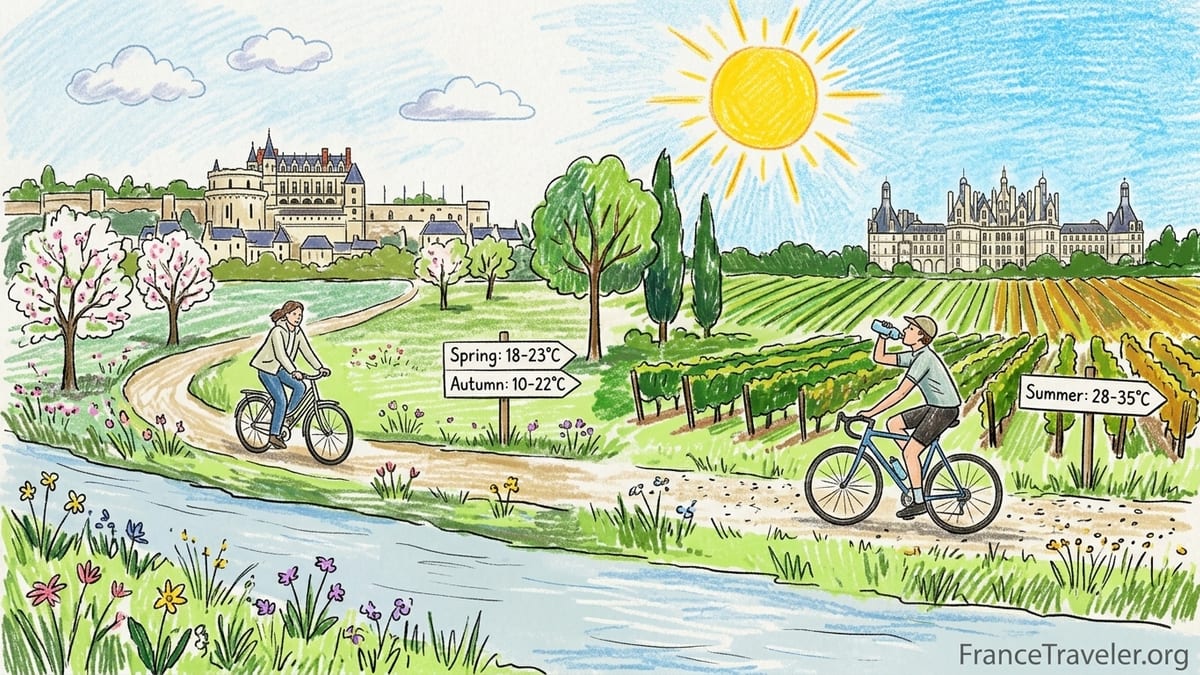
Across several trips I have used Tours and Blois as bases, which sit close to the Loire’s climatic sweet spot. In late May, daytime highs hovered around 20 to 23 degrees Celsius (high 60s to low 70s Fahrenheit). I wore a light sweater at breakfast on a terrace in Amboise, but was in short sleeves by the time I locked my bike outside Château d’Amboise at 10 a.m. Climate normals for the region show average highs around 19 degrees in May and 23 in June in the Tours area, with lows generally in the high single to low double digits, which matched what I actually experienced on the ground.
April felt noticeably cooler. During an early April cycling day between Tours and Villandry, the morning started at roughly 7 to 8 degrees Celsius. I needed gloves and a windproof layer for the first hour along the river, especially when riding into the breeze on the exposed levee sections. By mid-afternoon the temperature had climbed toward the mid teens and I was comfortable sitting outside at a café in Villandry’s village with the sun on the stone walls. Official climate data for Indre-et-Loire indicates that April average highs sit in the mid teens, with a realistic chance of showers but not the constant rain some people fear.
In July the contrast was stark. On a week-long trip that included the stretch from Blois past Chaumont-sur-Loire and on to Amboise, my phone repeatedly showed afternoon temperatures between 28 and 32 degrees Celsius, with one hot day reaching about 35. Riding on the Loire à Vélo paths in full sun, that heat felt more intense, especially on gravel sections that reflected light upwards. The evenings, however, stayed beautifully warm, and it was still pleasant to eat outside at 9:30 p.m. as the sky slowly darkened. Late September, by comparison, gave me mild highs around 22 degrees and crisp, cool mornings that called for a light jacket.
Rain patterns influence planning as much as temperature. Over all my trips, I have rarely lost a whole day to heavy rain, but spring and autumn both brought short showers. In late May, a forecast that showed “40 percent chance of rain” translated to a 20 minute downpour while I was conveniently inside the Château de Blois, with the cobblestones steaming afterwards. Research based on long term records for Angers and Tours shows that monthly rainfall is fairly evenly spread through the year, with slightly drier conditions from late spring into high summer and more frequent wet days in late autumn. That matches my experience of needing a good waterproof in April and October, but often managing with just a compact shell in my pannier in May, June and September.
Spring: Blossoms, Moody Skies and Manageable Crowds
My first real encounter with the Loire in spring was a late May trip focused on gardens and châteaux between Chenonceau and Villandry. Temperatures during this visit sat around 18 to 23 degrees Celsius most afternoons. I could comfortably cycle in a short sleeve jersey and light trousers. Mornings were cool enough that I sometimes started with a thin fleece, especially when riding along the exposed riverbank near Langeais, but I was rarely cold once the sun climbed above the poplar trees.
Garden-wise, late May was close to ideal. At Château de Villandry the ornamental kitchen garden was already densely planted, with young lettuces, cabbages and herbs creating a quilt of greens and reds. The rose garden was just getting into its stride, not yet at full high summer exuberance but full enough that every corner offered a photograph. At Chenonceau, the Diane de Poitiers and Catherine de Medici gardens were fresh and intensely green, with early summer flowers starting to fill the beds. On an early April trip in a different year, Villandry felt more like a promise than a spectacle: tulips and flowering trees provided colour, but many beds were still in their geometric, freshly planted phase.
Crowds in late May were noticeable but not overwhelming. At Chenonceau I arrived around 9:30 a.m. on a weekday and walked straight to the ticket counter with only a handful of people in front of me. By 11 a.m., the gallery over the river was busy enough that I sometimes had to wait a minute for a clear photo of the arches, but I never felt crushed. I could easily step aside and let small tour groups pass. The car park still had empty spaces at midday. At Chambord, arriving at 10 a.m. meant a five to ten minute ticket queue at most, with large school groups appearing more after lunch.
Rain and light shaped my days more than the crowds did. In late May the sun was rising before 6:00 a.m. and setting close to 9:30 p.m., which gave me generous flexibility. On one day, I rode from Tours to Azay-le-Rideau under a grey morning sky, toured the château slowly while a shower passed, then enjoyed full sunshine for the riverside ride back along quieter minor roads. Short showers and fast moving clouds are common in spring, which gave me lovely soft light for photography but meant packing a waterproof layer in my pannier every day. Paths along the Loire à Vélo were mostly dry, but the occasional puddles on shaded sections reminded me that heavier rain had fallen earlier in the week.
Summer: Long Days, Late Hours and Heat Management
High summer brought a different rhythm entirely. During a July trip focused heavily on cycling, I built my days around early morning riding, long midday château visits and late evening dinners. The reason was simple: by midday, both temperatures and visitor numbers peaked. Afternoon highs routinely reached the high 20s or low 30s Celsius, and on the wide, open levee paths west of Blois the sun could feel relentless. I learned quickly to start pedalling by 7:30 or 8 a.m., reaching my main sight like Chambord or Chaumont-sur-Loire by late morning.
Château opening hours in summer made this strategy possible. Chambord currently operates roughly 9:00 to 18:00 through most of the high season, while Chenonceau extends its opening to as late as 19:00 during part of July and August. On my July trip, I arrived at Chambord a little after 9:15 a.m., locked my bike under the trees and climbed the double helix staircase before most tour coaches had arrived. By the time I left around 12:30 p.m., the central courtyard and rooftop terraces were busy, but not impassable. The extended afternoon hours meant I could then cycle in the shade of the forest for a while, take a rest during the fiercest sun and still have daylight left if I wanted to stop at a small wine producer near Cheverny.
Queues in high summer were most noticeable at Chenonceau. Arriving at 11:00 a.m. on a Saturday in July, I stood in line for around 25 minutes to buy a ticket, with the queue looping back under the trees along the driveway. Inside the château, the famous gallery over the river moved at a slow shuffle between midday and 2 p.m., and it took patience to find a quiet corner to appreciate the flower arrangements in the rooms. By contrast, a weekday morning arrival at 9:00 during the same trip meant only a short wait at the entrance and a reasonably calm experience inside, even in the height of the season.
Cycling comfort required a few adjustments. I fitted larger water bottles to my bike and took advantage of every village fountain and bar along the Loire à Vélo. Official tourism information highlights that this route is well served by the “Accueil Vélo” network of cyclist friendly businesses, and that matched my experience: a bakery in Candé-sur-Beuvron refilled my bottles without fuss, and a small café in Chaumont-sur-Loire let me park the bike where I could keep an eye on it from the terrace. Afternoon headwinds occasionally took the edge off the heat, but riding in direct sun on the exposed levee near Amboise without a cap proved uncomfortable. Sunscreen, light long sleeves and an early start made the difference between a blissful day and a draining slog.
Autumn: Soft Light, Harvest Vibes and Shorter Days
Late September offered what felt like the best overall balance for my style of travel. On a trip focused mainly on the stretch between Saumur and Tours, I enjoyed daytime highs around 20 to 22 degrees Celsius and cool mornings near 10 to 12 degrees. I often started out in a light jacket and removed it by late morning. The air felt crisp and dry, and I encountered fewer of the sudden showers that can pepper an April ride. Vineyards rolling down to the river near Montsoreau were turning gold and rust, and roadside farm stalls sold the tail end of summer’s tomatoes alongside fresh apples and pears.
Château gardens in late September had a different beauty compared with the bright energy of May. At Villandry, the kitchen garden still looked immaculately maintained, but colours had deepened to darker greens and burgundies, with pumpkins and squashes adding splashes of orange. Some flower borders were past their peak, but that was offset by the quality of the light. The lower autumn sun cast long shadows over the clipped hedges around 5 p.m., creating strong contrasts that were a pleasure to photograph. Chenonceau’s riverside setting felt particularly atmospheric on a quiet weekday afternoon, with mist beginning to rise from the Cher river around closing time.
Crowds were noticeably lighter than in July. At Chambord, I walked directly to the ticket desk at 10:30 a.m. on a Tuesday. Coaches were present, but tour groups thinned quickly after 3 p.m. In Amboise, the streets below the château remained lively, but restaurant terraces had spare tables even at popular times. I could usually walk into a brasserie or small bistro without a reservation, something that had been much harder in high summer. Cycling along the Loire à Vélo, I sometimes went ten or fifteen minutes without seeing another rider, which was rare in July.
The main constraint in autumn was daylight. By late September, sunset was approaching 7:30 p.m. and closing times at major châteaux like Chambord had already shifted back closer to 17:00 or 18:00 depending on the exact date and year. That meant I had to be more deliberate when chaining together multiple sights. A day that might have included both Azay-le-Rideau and Ussé in summer needed to be trimmed to one major château and perhaps a village stop in autumn. I found that planning my longest cycling stretch for the morning, followed by an afternoon visit to a single château and a relaxed early dinner, made for satisfying yet realistic days.
Winter and Early Spring: Researched Advice for Riders and Garden Lovers
I have not personally cycled the Loire à Vélo in winter or visited the major châteaux in January or February, so the following observations are based on current schedules and regional climate data, and I consider them researched guidance rather than first hand experience. Official figures for the Tours area show January average highs in the mid single digits Celsius and lows close to freezing, with shortened daylight and a higher chance of rain or grey skies. Local tourism boards often describe the river at this time as wilder, with higher flows and occasional flooding of low-lying paths, which can temporarily reroute cyclists.
Château opening hours in the low season reflect this quieter period. Chambord typically operates on reduced hours around 9:00 to 17:00 for much of the winter, while still opening daily, and Chenonceau also shortens its days outside of peak periods even though it remains open year round. This is perfectly adequate for a short, focused visit by car or train, but it makes ambitious multi château itineraries by bike more complicated. With darkness falling before 6 p.m. for much of winter, cyclists would need to keep daily distances modest and factor in time for detours where riverside paths might be temporarily closed.
From a garden perspective, winter is naturally the least rewarding time if your main goal is colour and planting schemes. Villandry’s ornamental beds remain beautifully structured, but much of the spectacle lies in the geometry rather than flowers or foliage. The situation begins to change in late March and early April, when tulips, narcissus and early flowering shrubs bring patches of brightness. Regional climate data indicates that average highs in March rise toward the low teens Celsius, which is cool but adequate for cycling with appropriate layers. Many Loire à Vélo resources suggest that April is a shoulder month when services begin to expand, but some seasonal campsites, ice cream kiosks along the river and smaller café terraces may still be closed or operating reduced hours.
Train support for cyclists also varies by season. Regional operators promote dedicated Loire à Vélo trains with expanded bike capacity primarily from late spring into early autumn rather than in midwinter. Recent information for services between cities such as Orléans, Tours, Angers and Nantes indicates that enhanced bike carriage and increased frequencies concentrate roughly between May and late September, with fewer dedicated options in the colder months. This does not make winter cycling impossible, but it does reduce the flexibility that I enjoyed when hopping on and off trains with my bike in other seasons.
How Opening Hours Shape Real Itineraries
Across my trips, the biggest practical difference between seasons has been how long the main sights stay open and how that interacts with cycling distances. In high summer, with Chambord open roughly 9:00 to 18:00 and Chenonceau stretching as late as 19:00 during portions of July and August, I could reasonably combine thirty to forty kilometres of cycling with one major château and a long lunch. One day in July, for example, I left Blois around 8:00 a.m., followed quiet roads and marked cycle paths through the forest to Chambord, arrived shortly after opening, spent almost three hours exploring the château and rooftop terraces, picnicked in the park, then rode on to a guesthouse near Cheverny, arriving before 18:00.
In spring and autumn, the same distance would have been tighter. On a late May day when Chambord was closing nearer 17:30, I reversed the order of my visits, riding first to Cheverny for an early château tour and lunch in the village, then heading to Chambord for a shorter, more focused late afternoon visit. The slightly shorter window meant choosing my priorities: I spent more time in the furnished apartments and on the rooftops, and less in the hunting exhibition in the wings. In late September, with daylight fading earlier and closing times pulled back toward 17:00 or 18:00, I chose to stay overnight in Chambord’s nearby village so I could stroll the grounds in the soft evening light after the interior had closed.
Chenonceau in summer offered similar flexibility. With closing times stretching to the early evening on certain July and August days, I felt comfortable arriving mid-afternoon after a leisurely ride along the Cher river from Bléré. I spent over two hours inside the château and gardens, then still had enough light to pedal back along local lanes to my accommodation. In spring, conscious of potentially shorter hours and an earlier dusk, I aimed to reach Chenonceau before 10:00 a.m., toured the interior thoroughly, then rode on to Montrichard in the warmest part of the day, leaving a buffer in case of a headwind or mechanical issue.
Restaurant and shop hours added another subtle layer. In July and August, tourist towns like Amboise, Saumur and Blois buzzed well into the evening, with many restaurants offering two dinner seatings and ice cream counters staying open late. I could comfortably plan a full day of cycling and sightseeing, knowing I would still find an open terrace at 9:30 p.m. in Amboise. In April and late September, I was more careful to book dinner in smaller towns and villages like Montsoreau or Bréhémont, where kitchens sometimes closed by 8:30 or 9:00 p.m. and some riverfront bars opened only on weekends or peak days.
Balancing Spring Freshness Against Autumn Calm
Looking back across my trips, the choice between spring and autumn comes down to what you value most. Late May gave me the Loire in full blossom, with roses beginning to flower at Villandry, bright new leaves in the vineyards around Vouvray and long days that stretched almost to 10 p.m. This made it easy to linger over a second coffee in a village square, knowing I still had hours of light to reach the next town. The trade off was a slightly higher chance of showers and the occasional cool snap that required an extra layer on the bike in the morning.
Late September, by contrast, surrounded me with a feeling of completion. Harvest activity in the vineyards around Saumur added a quiet buzz, with small tractors edging between rows and roadside signs advertising tastings. The light had a golden quality that made even simple scenes, like a line of plane trees along a towpath, feel painterly. Crowds were lighter, which particularly improved my experience at Chambord and Chenonceau, where I could step into rooms and sometimes find them almost empty for a few minutes at a time. The compromise was shorter days and slightly reduced château opening hours, which required a more disciplined approach to daily planning.
For a traveller focused on gardens and who prefers mild temperatures, I would personally lean toward late May or very early June based on my visits. At that time, Chenonceau’s riverside setting and formal beds feel especially lush, and Villandry offers both structure and colour at once. For someone more interested in cycling comfort, photography and vineyard atmosphere, late September provided what felt like the perfect mix: gentle temperatures, stable weather on my trip, and excellent light. In both seasons, I avoided the worst of the high summer heat and the longest ticket queues while still enjoying most of the region’s seasonal services.
What I would avoid, based on both experience and research, is trying to do an extremely château heavy, long distance cycling itinerary in the depths of winter. Cooler temperatures, shorter days, a greater chance of path closures along the river and shorter opening hours at key sites all stack difficulty onto what should be a relaxed style of travel. A focused winter weekend by car, staying in one of the atmospheric small hotels in Amboise or Blois and visiting one or two nearby châteaux, could certainly work, but it is a different type of trip from the garden and cycling centred journeys described here.
The Takeaway
Seasonal shifts in the Loire Valley are not just a matter of temperature charts. On my trips they changed how early I woke up, which way I rode along the river, how often I stopped for coffee and whether I found myself in a hushed gallery at Chenonceau or queueing behind coach loads of day trippers. Late May brought blossoming gardens and long days, July delivered maximal opening hours and busy riverside towns at the price of heat and queues, and late September wrapped everything in gentle light and calmer crowds, while shortening the window for ambitious daily plans.
If your dream is to wander through exuberant château gardens and sit on sunny terraces without worrying constantly about overheating, late spring is a particularly satisfying time that I can recommend from experience. If you value warm evenings, the buzz of high season and the convenience of late closing hours at major sites, a carefully planned July or early August trip can still work well, especially if you start your days early and book key restaurants in advance. For quieter lanes, harvest colours and more spontaneous dining, my late September journey remains the one I think about most often when the Loire comes to mind.
Whatever season you choose, checking current opening hours for Chambord, Chenonceau and other headline châteaux, as well as the latest information on Loire à Vélo services and any riverside path closures, will help you translate these seasonal impressions into a smooth itinerary. Pack a light waterproof, plan around the sun rather than the clock and leave space in your schedule to follow a side road to a village café. The Loire rewards travellers who match their expectations to the season and allow its slow, riverbound rhythm to set the pace.
FAQ
Q1. What is the single best month to visit the Loire Valley for first timers?
For a first visit that balances pleasant temperatures, long days and active gardens with manageable crowds, my own trips suggest late May or very early June works especially well.
Q2. Is July too hot for cycling the Loire à Vélo?
Based on my July rides, afternoons often reached the high 20s or low 30s Celsius, which can feel intense on exposed levees, but early starts, shaded breaks and extended château hours made it workable.
Q3. Are major châteaux like Chambord and Chenonceau open year round?
Yes, both remain open throughout the year, but they substantially change daily opening hours between high and low season, so checking current schedules is essential for planning.
Q4. When are château gardens at their best?
From my visits, late May into June showed the most balanced display, with Villandry’s kitchen garden full yet fresh and Chenonceau’s formal beds lush but not yet tired from high summer heat.
Q5. Is autumn a good time for a Loire Valley cycling trip?
My late September trip was excellent for cycling, with mild temperatures, softer light and lighter crowds, though shorter days required tighter daily itineraries.
Q6. Will I need to reserve train spaces for my bike?
Recent information indicates that enhanced Loire à Vélo train services with dedicated bike spaces run mainly from late spring to early autumn, often with mandatory reservations on certain routes.
Q7. Do restaurants and shops close for a midday break?
Yes, especially in smaller towns and villages, some shops and restaurants close for a long lunch break or operate reduced hours outside high summer, so it pays to plan meals a little in advance.
Q8. Can I rely on riverside paths being open in winter and early spring?
Not entirely. Research and local reports show that higher river levels and occasional flooding in colder months can temporarily close low-lying sections of the Loire à Vélo, requiring detours.
Q9. Do I need to book château tickets in advance in summer?
For peak dates in July and August, prebooking tickets for major sites like Chenonceau and Chambord can help avoid the longest queues, especially if your time window is tight.
Q10. Is it worth visiting in winter if I am not cycling?
If you are happy with quieter towns, cooler weather and shorter opening hours, a winter weekend by car focused on one or two key châteaux can still be rewarding, especially with cosy hotel bases in towns like Amboise or Blois.