


Brittany rewards families who slow down, pick one or two coastal bases and match each day to their children’s energy levels. Atlantic beaches, medieval ports, islands a short ferry ride offshore and prehistoric sites are all close together, yet the region’s big tides, cool water and driving distances can catch visitors out. This guide pulls current, real-world details together so you can build an age-appropriate, low-stress trip that feels like a holiday for adults as well as children.
How Brittany Thinks About Families
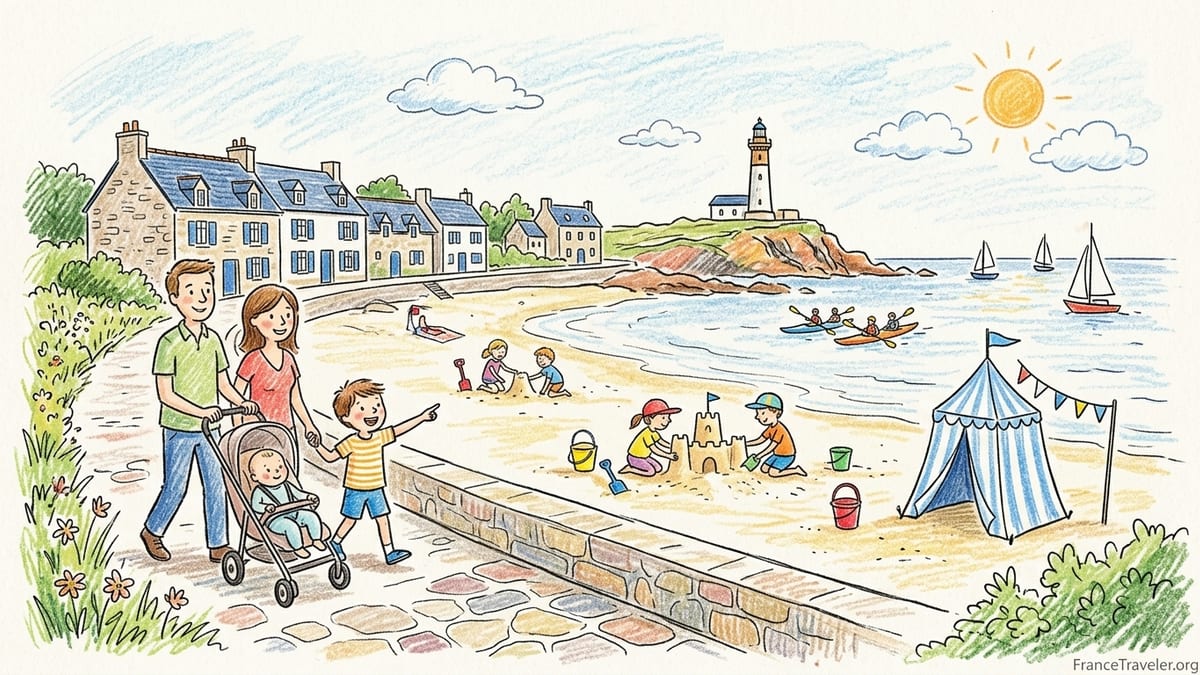
Brittany’s official tourism body runs a dedicated family programme that labels around 20 seaside resorts as particularly suitable for children, with activities, amenities and events aimed at different age groups. These include well-known names such as Dinard, Perros-Guirec, Carnac and La Baule’s Breton neighbours, as well as smaller places like Carantec, Saint-Cast-le-Guildo and Pénestin. In these resorts, you find lifeguarded beaches in summer, kids’ clubs, playgrounds close to the sand and practical touches such as pushchair-friendly promenades and baby-changing facilities in public toilets.
Family branding in Brittany is not marketing alone. Municipalities that sign up commit to running a seasonal programme of children’s activities and providing information in several languages through tourist offices. In a town like Perros-Guirec, for example, the Pink Granite Coast tourist office publishes family walking suggestions and tide tables, while beach clubs on Trestraou beach offer supervised trampolines, small pools and sailing taster sessions. Towns on the south coast near the Gulf of Morbihan and Quiberon similarly programme storytellers on the quays, open-air cinema evenings and introductory sea-kayak sessions aimed at older children.
For visiting families, this means you do not have to invent every activity from scratch. Booking a week in a labelled family resort usually gives you an immediate shortlist of beach clubs, sailing schools and rainy-day options such as aquariums and small museums within a 30 to 45 minute radius. It also increases the chances of meeting other families at a similar stage, particularly in July and early August. The trade-off is that these towns are liveliest and busiest in the French school holidays, so if you are travelling with toddlers outside peak season, look for places where playgrounds, cafes and supermarkets are open year-round.
When choosing between Brittany’s coasts, think first about your arrival point, then about your children’s ages. Families driving off ferries in Saint-Malo or Roscoff often underestimate how tiring a further three-hour drive to the far south can feel after a night crossing. With younger children, stopping on the Emerald Coast near Saint-Malo or along the north Finistère shoreline around Roscoff can be more realistic than pushing on to Morbihan on day one.
Best Coastal Bases by Age Group
For babies and toddlers, calm water, short transfers and simple routines matter more than iconic landmarks. The south coast between Vannes, Carnac and the Quiberon peninsula tends to be warmer and more sheltered in summer than the north, with family-friendly beaches such as Carnac Plage and Saint-Pierre-Quiberon offering shallow gradients and soft sand. Here you can walk from an apartment or campsite to the beach with a pushchair, find playgrounds right on the seafront and retreat quickly if the wind picks up or nap time arrives. Similar conditions exist inside the Gulf of Morbihan, where small beaches near towns like Arradon sit in a protected inland sea rather than on the open Atlantic.
With primary-age children, many families enjoy the drama of the north and west coasts as long as there are sheltered coves nearby. Perros-Guirec on the Pink Granite Coast gives easy access to rock pools and the famous coast path at Ploumanac’h, yet still has sandy Trestraou beach with lifeguards in high season and a promenade with creperies and ice-cream stands. Around Roscoff and Carantec, wide tidal ranges create sandbanks and shallow lagoons at low tide that are ideal for shrimping with nets and buckets, while small islets such as Île Callot become temporary adventures when the causeway emerges.
Teenagers often appreciate a base that combines independence with outdoor challenge. Crozon peninsula and western Finistère are strong choices for families with older children who like surfing, hiking and sea kayaking. From bases like Morgat or Camaret-sur-Mer you can rent sit-on-top kayaks, join guided coasteering or explore cliff paths such as the Route des Caps. Further south, around La Torche and the Bay of Audierne, surf schools offer beginner and improver lessons on long, sandy beaches. On the north coast, Saint-Malo’s ramparts, tidal pools and nearby sailing schools or the bay of Saint-Brieuc for kitesurfing can also keep active teens busy.
Regardless of age, try to choose no more than two bases for a one or two week holiday. Moving every night turns even short distances into a road trip, and long days in the car are rarely fun with children. A common pattern for families arriving in Saint-Malo is to spend four or five days somewhere between the Emerald Coast and the Pink Granite Coast, then the remaining days further south around Carnac or Vannes, breaking the drive with a stop at a château or prehistoric site.
Trip Styles: Beach-First, History-Led and Outdoor Families
Some families want a classic seaside holiday with the odd excursion, while others build everything around castles and standing stones or outdoor sports. Brittany can handle each style, but the best bases differ. If your children are happiest on the sand, look at long, gently shelving beaches with amenities directly behind them. Carnac Plage, for instance, offers several kilometres of sand with areas supervised in high season, ice-cream stands, mini-golf and pedalos, plus easy access to the famous Carnac alignments a short drive inland. In the north, Saint-Cast-le-Guildo and Val-André provide a similar mix on the Channel coast, with shallow tidal pools at low water and carousels on the promenade.
History-led families may prefer to anchor themselves near a fortified town, prehistoric complex or working fishing harbour. Staying within a short drive of the Carnac stones gives you multiple days of manageable, low-key visits, combining the alignments with nearby megalithic sites and the prehistory museum rather than rushing through in one morning. Elsewhere, the medieval cores of Vannes, Dinan or Quimper offer timber-framed streets and ramparts, with easy half-day trips to coastal fortifications such as Fort La Latte or Vauban-era citadels. Many castles and walled towns run summer storytelling evenings or children’s treasure hunts, which can turn history into a game.
Outdoor-oriented families, particularly with older children, might shape their holiday around the GR34 coastal path, cycling routes and water sports. The Pink Granite Coast, Crozon peninsula and the Gulf of Morbihan each offer varied walking in stages of two to four hours that fit around naps or teenagers’ lie-ins. On the south coast, signed cycle routes link Vannes with beaches and villages around the gulf, often using former railway lines for flatter riding. Around Quiberon and on islands such as Île de Bréhat, cycle hire is widespread and roads are either traffic-calmed or car-free, giving children a taste of independence.
In practice, most trips blend these styles. A week in Carnac might be beach-heavy with one day on the Quiberon peninsula for coastal walking and another in Vannes for medieval streets. A base on the Pink Granite Coast could combine sandcastles in Trégastel, a half-day island boat trip and an easy segment of the GR34. The key is to acknowledge your family’s default mode and make sure each base satisfies it without constant driving.
Practicalities: Tides, Cold Water and Wind
Brittany’s tides shape every beach day and many boat trips. On the north coast around Saint-Malo and Saint-Brieuc, tidal ranges can reach up to 12 or 13 metres, among the highest in Europe. That means the sea can be hundreds of metres from the high-water line at low tide, revealing vast sand flats, rock pools and channels that fill quickly when the tide turns. Tourist offices, supermarkets and many seafronts display daily tide tables; get in the habit of checking them each morning and explaining to children why channels that seemed shallow are no longer safe to cross as the water rises.
Sea temperatures are another adjustment for families used to the Mediterranean. In high summer, average surface temperatures off the Breton coast tend to sit around 17 to 20 degrees Celsius on the south coast and slightly cooler on the north, compared with mid-twenties in southern France. Many French children swim happily without wetsuits on warm days, but for long stays in the water, shorty wetsuits or thermal rash vests make a noticeable difference, particularly for younger children. Surf schools and some beach shops rent or sell children’s wetsuits, and tidal seawater pools in towns like Saint-Malo can feel marginally warmer than the open sea on breezy days.
Wind is part of Brittany’s appeal for sailors and surfers, yet it can catch families with babies and toddlers by surprise. Even in July, a 22-degree day with a strong onshore breeze can feel cool once you and your children are damp. Windbreaks are common on Breton beaches, and investing in a sturdy, low-profile model plus a simple pop-up shelter for naps can extend your time outside. On windier days, look for sheltered coves, estuaries or inner-gulf beaches rather than wide Atlantic strands, and carry one extra warm layer per person more than you expect.
High tidal ranges also affect lifeguard coverage. Many larger beaches employ seasonal lifeguards and mark supervised zones with flags during July and August, but their hours reflect the tides and daylight rather than fixed times. Information boards at the back of the beach usually indicate the day’s timetable and safety advice. If you are visiting outside peak season, do not assume any lifeguard presence, and brief older children clearly about staying within agreed landmarks on the shore.
Castles, Island Days and Age-Appropriate Adventures
Brittany’s castles and forts are excellent for mixed-age groups because they combine history with towers to climb, walls to walk and views to enjoy. Families often pair walled towns such as Dinan or Vannes with nearby coastal defenses such as Fort La Latte or the Vauban citadel at Port-Louis. Many sites offer simple children’s guides in French and sometimes English, colouring sheets or treasure hunts. Sturdy baby carriers are more practical than pushchairs in these settings, because spiral staircases, cobbles and narrow battlements do not lend themselves to wheels.
Island days are often the highlight of a family trip, but they need realistic timing. Short crossings such as the ten-minute ferry to Île de Bréhat from Pointe de l’Arcouest or the quarter-hour shuttle to Île de Batz from Roscoff work well for younger children, especially when departures run at least hourly in high season. On Bréhat, visitors walk or cycle on largely car-free lanes, renting bicycles or trailers near the landing stage. On Batz, families can climb the lighthouse, explore the botanical garden or simply play on small beaches close to the harbour. Because crossings are short, seasickness is rarely an issue, but it is still worth packing light snacks and an extra layer for breezy decks.
Longer island trips demand more planning. Day boats to the Glénan archipelago south of Concarneau or to Belle-Île from Quiberon involve sailings timed around tides and sea conditions, sometimes with a single outbound departure in the morning and a narrow window for return. For families, the magic of clear, turquoise shallows and car-free paths can quickly turn stressful if you are racing the clock to return hire bikes, find the right quay and keep tired children moving. When travelling with younger kids, choose islands with flexible return times or commit to an overnight stay so that a missed afternoon sailing does not upend the next day’s plans.
For older children and teenagers, kayaking, stand-up paddleboarding and easy coastal walks often sit alongside island trips. Many family-oriented resorts host sailing schools that offer one or two-hour kayak rentals in sheltered bays, sometimes with transparent-bottom boats that make rock pools and seaweed gardens visible without snorkelling. Kayaking along quiet stretches of the Gulf of Morbihan or around the coves of Crozon can feel adventurous yet remain close to shore. As always, ask about minimum ages, buoyancy aids and whether guides accompany novice paddlers before you book.
Getting Around: Pushchairs, Bikes, Ferries and Toilets
Medieval towns and walled ports are atmospheric but can be hard work with wheels. Intra-muros quarters such as old Vannes or the centre of Dinan feature cobbled streets, steps and narrow pavements, which can make lightweight pushchairs bump and snag. Consider a compact travel buggy with good suspension or a baby carrier for the steepest areas. On the seafront, many promenades are smoother, meaning you can walk long stretches with a stroller between playgrounds, ice-cream stands and beach access ramps. When booking accommodation, look for properties that either sit at seafront level or have lift access if they are in rampart-top locations.
Bicycle use varies across Brittany. On the south coast, dedicated greenways and cycle paths lead out of towns like Vannes into the surrounding countryside, and many campsites and holiday villages rent family bikes, child seats and trailers by the day or week. Islands such as Île de Bréhat and Île aux Moines in the Gulf of Morbihan are mostly car-free, making them ideal for children to cycle with fewer traffic worries. In more rugged areas such as Crozon or the Pink Granite Coast, cycling is possible but hillier, and hiring bikes with wider tyres and good brakes is worth the extra cost if you plan to ride as a family.
Ferries and small boats feel like adventures to children, but parents need to think about safety and logistics. Harbour authorities and private operators publish current timetables each season, often adjusting for tides. On short crossings to Bréhat or Batz, families usually remain on open decks for the view, so holding younger children close to railings and avoiding running becomes part of the routine. Many companies accept folded pushchairs on board but ask that they be stowed away from exits; baby carriers free your hands and keep queues easier. For longer sailings to Belle-Île or the Glénan, cabin seating, snacks and simple card games can transform the mood.
Public toilets are plentiful in better-known resorts and along some promenades, but less so on remote headlands and small islands. Factor this into route planning with younger children. Towns like Carnac, Perros-Guirec and Vannes signpost facilities near central car parks and beaches, and shopping-centre toilets can be useful backup in wet weather. Carrying a small pack of tissues and hand gel is still practical, as not every facility provides paper or soap consistently, especially in peak season when usage is high.
Managing Weather Swings and Wet-Weather Plans
Even in July and August, Brittany alternates bright, clear days with showers and grey spells. Rather than viewing this as bad luck, treat varied weather as a cue to change gears. Aquariums, small museums and indoor pools make reliable fallbacks. Families often praise Océanopolis in Brest for its large marine exhibits, penguin enclosure and hands-on displays, though it sits a drive from many coastal bases. On the north coast, Saint-Malo’s Great Aquarium presents sharks, touch pools and a submarine-style viewing tunnel, while smaller aquariums and maritime museums dot ports across the region.
On showery days with breaks in the rain, woodland adventure parks, covered markets and short castle visits work well. Many family-labelled resorts run children’s craft workshops or storytelling hours in local libraries and media centres, especially in July and August. Packing a compact set of board games, colouring materials and a football or frisbee gives you instant options when beaches feel too windy but children still need to run.
Long road-trip days are where weather, distances and children’s patience collide. Driving from the Pink Granite Coast down to the Gulf of Morbihan can take three hours or more with traffic, and detours for services, snacks and toilets stretch that further. Breaking such transfers with a planned stop at a château, playground or supermarket with a cafe changes the rhythm from endurance to a series of manageable stages. In Brittany, many dual carriageways have large service areas with petrol, toilets and picnic spots, but once you leave main routes for scenic roads, facilities thin out.
Accommodation choices also influence how gracefully you ride out wet spells. Apartments and gites with a separate living area let children play while adults cook or read. Coastal campsites and holiday parks sometimes feature indoor pools, games rooms and covered play barns. When comparing prices, factor in how much on-site entertainment you gain; a slightly higher nightly cost can pay off on the third consecutive rainy afternoon.
Sleeping Arrangements: Family Rooms, Apartments and Campsites
Brittany offers almost every accommodation type, from classic seaside hotels to farm stays and large holiday villages. For families, the most practical options tend to be self-catering apartments or gites with kitchens and washing machines, or family rooms in mid-range hotels with adjoining sleeping areas. In busy resorts, expect minimum stays of one week in high summer for many apartments, especially Saturday to Saturday, while hotels remain more flexible for short breaks or one-night stopovers en route to or from the ferry.
Family rooms sometimes mean one large room with additional beds, and sometimes two connecting rooms behind a shared door. If your children are young, check bed types and whether cots are available when you book. In popular seaside resorts and on islands, rooms with sea views and balconies often sell out first, so booking early for school-holiday dates is wise. Families with teenagers may prefer two smaller rooms to avoid late-night noise battles, particularly in compact town-centre hotels.
Campsites are a major part of Brittany’s family landscape. Many coastal sites offer mobile homes with two or three bedrooms, kitchenettes and decks, alongside tent and campervan pitches. Facilities often include playgrounds, water slides, kids’ clubs and evening entertainment in July and August. Prices vary widely, but a week in a mid-range mobile home in high summer can cost notably less than two hotel rooms, especially for larger families. When choosing, examine how close the site sits to the sea, whether a road intervenes and if you can safely walk or cycle to the nearest beach or town without always driving.
Booking platforms and local tourist-office sites list many smaller rentals and chambres d’hôtes. In rural inland areas, these can be excellent value, but you may find longer drives to the coast. As a rule, if your trip is mainly about seaside time with children, prioritise being within a 15 to 20 minute walk or a short cycle of at least one family-appropriate beach over having the largest garden or the most remote setting.
Family Trip Models: Beach-Heavy, History-Heavy and Outdoor-Oriented
For a beach-heavy week with younger children, one effective model is to base entirely in a southern resort such as Carnac or within the Gulf of Morbihan. Spend most days within walking distance of the same few beaches, rotating between morning sandcastle sessions, shallow paddling and rock pooling at low tide. Build in one short boat trip inside the gulf, a half-day at the Carnac stones or another nearby historic site, and one market visit for local produce. The emphasis is on routine, naps and easy evenings, with the car used sparingly.
A history-heavy family holiday can pair a walled town with key prehistoric or maritime sites. For example, you might spend four nights in or near a medieval centre like Vannes or Dinan, exploring ramparts, cathedrals and local museums in short bursts, then drive out to a prehistoric complex such as Carnac or to a fortified harbour. Children see repeated themes in architecture, legends and sea defences without sitting through long lectures. Add one island day with strong historical flavour, such as visiting the lighthouse and chapel remains on Île de Batz, to keep variety high.
An outdoor-oriented model, suitable for older children and teens, might split time between the Pink Granite Coast and Crozon peninsula. In the north, you walk segments of the coast path between Ploumanac’h and Trégastel, book a sea-kayak or small boat trip around offshore rock formations and spend a day on a nearby island. After a transfer day broken with a castle or town visit, you pivot to Crozon for cliff walks, surf lessons and more demanding bike rides. Rest days still exist, but the framework of the trip is moving through landscapes rather than ticking off specific sights.
Whatever model you choose, guard against over-programming. In Brittany, everyday pleasures such as fishing for crabs from harbour walls, browsing morning markets for strawberries and crepes, or watching the tide advance towards your sandcastle line can be as memorable as headline attractions. Leaving open space in the schedule lets you follow children’s curiosity and adapt when the weather or energy changes.
The Takeaway
Brittany works for families because it offers concentrated pockets of beaches, castles, islands and walking routes within manageable distances, provided you resist the urge to cover the entire region in one go. The official family seaside resorts signal where you will find lifeguards, organised activities and practical amenities, while quieter stretches of coast and inland villages offer breathing space. Matching your bases and daily plans to your children’s ages and your preferred trip style makes the difference between a chain of rushed excursions and a holiday that feels restorative.
Think in terms of one or two well-chosen hubs, realistic driving days and a mix of activities that alternate high excitement with simple downtime. Keep an eye on tides and weather, equip children for cooler water and breeze than they may expect, and treat island days and boat trips as highlights that deserve unhurried margins of time. With that preparation, Brittany can deliver the kind of family memories that span ages: toddlers chasing waves in sheltered coves, school-age children crossing to islands at low tide, teenagers catching their first Atlantic wave or reaching their first lighthouse summit.
FAQ
Q1. Is Brittany a good choice for a first overseas beach holiday with toddlers?
Brittany suits first-time family trips because crossings from the UK are straightforward, driving distances can be short if you choose a nearby coastal base, and many resorts provide lifeguarded beaches, playgrounds and family-oriented facilities. The cooler water and changeable weather compared with southern Europe are the main adjustments, but sheltered south-coast beaches and the Gulf of Morbihan make conditions gentler for young children.
Q2. How many bases should we plan for a 10 to 14 day family holiday in Brittany?
For most families, two bases work best for a 10 to 14 day trip. For example, you might spend a week on the north coast between Saint-Malo and the Pink Granite Coast, then move to the south around Carnac or Vannes. This keeps drive times between activities manageable and avoids the packing and unpacking that comes with changing accommodation every night.
Q3. Do we need a car to enjoy Brittany with children?
A car gives families much more flexibility, especially for reaching beaches, castles and prehistoric sites that are not directly on main rail lines. It is possible to combine trains and local buses between larger towns, but many family-friendly beaches and coastal paths sit a few kilometres from stations. If you prefer not to drive, choose a rail-served town with beaches in walking distance and plan to rely on organised excursions and ferries.
Q4. How cold is the sea in Brittany in summer and will my children swim?
In July and August, sea temperatures off Brittany’s coasts usually range between the high teens and around 20 degrees Celsius, cooler than the Mediterranean but warm enough for paddling and short swims. Many children enjoy the water in swimsuits on hot days, but bringing or hiring shorty wetsuits or thermal tops helps them stay in longer, especially on windier days or on the north and west coasts.
Q5. Are Brittany’s big tides dangerous for families?
Large tidal ranges mean families need to pay attention, but with basic precautions they become a fascinating part of the trip. Always check tide tables, avoid walking out between sandbanks without knowing how fast the tide returns, and explain agreed boundaries to older children. Choosing beaches with lifeguard presence in season and staying aware of changing waterlines helps keep days safe.
Q6. What is the best time of year to visit Brittany with kids?
Late June to early September offers the warmest weather, the broadest choice of family activities and the highest chance of lifeguarded beaches, though July and August are busiest and most expensive. May and late September can be rewarding with school-age children if you value quieter towns and are prepared for cooler water and fewer organised events. Outside these months, focus more on walks, castles and markets than on long beach days.
Q7. How practical are Brittany’s medieval towns with a pushchair?
Medieval quarters such as Dinan or Vannes have cobbles, steps and narrow pavements that can be awkward with a pushchair, so a lightweight buggy with good wheels or a baby carrier is useful. Seafront promenades are usually smoother and more accessible, with ramps down to many main beaches. When booking accommodation, look for properties at seafront level or with lift access rather than steep staircases if you expect to use a stroller daily.
Q8. Are there plenty of family rooms and self-catering options?
Yes, Brittany has many hotels with family rooms or connecting rooms, along with a wide choice of apartments, gites and mobile homes on campsites. In coastal resorts, apartments and gites often book Saturday to Saturday in peak season, so reserving several months ahead is sensible. Campsites with mobile homes can be good value for larger families, especially when you factor in on-site pools, playgrounds and kids’ clubs.
Q9. How should we plan an island day so it stays enjoyable rather than stressful?
Start by choosing an island with a short, frequent ferry if you are travelling with younger children, such as Île de Bréhat or Île de Batz. Check the latest sailing times before you book bikes or plan long walks, arrive early at the departure harbour and allow generous margins before your planned return boat. Pack simple food, extra layers and a small game so that waiting for ferries or dealing with queues does not become a flashpoint.
Q10. What wet-weather activities does Brittany offer for families?
On rainy or cool days, aquariums, maritime museums, indoor pools, covered markets and small local museums are reliable options. Larger attractions such as Océanopolis in Brest or the Great Aquarium near Saint-Malo appeal to a wide age range, while many towns organise children’s workshops, cinema showings or library activities in school-holiday periods. Having a few of these ideas noted before you travel makes it easier to adjust plans when showers appear.