


Central France rewards travelers who slow down. Between the châteaux of the Loire, the vineyards of Burgundy and the volcanic plateaus of Auvergne, distances look short on the map but feel long if you keep packing and unpacking. This guide lays out realistic 5, 7, 10 and 14 day itineraries from Paris that cluster sights around smart overnight bases, with typical driving times and options for shortening or extending each route.
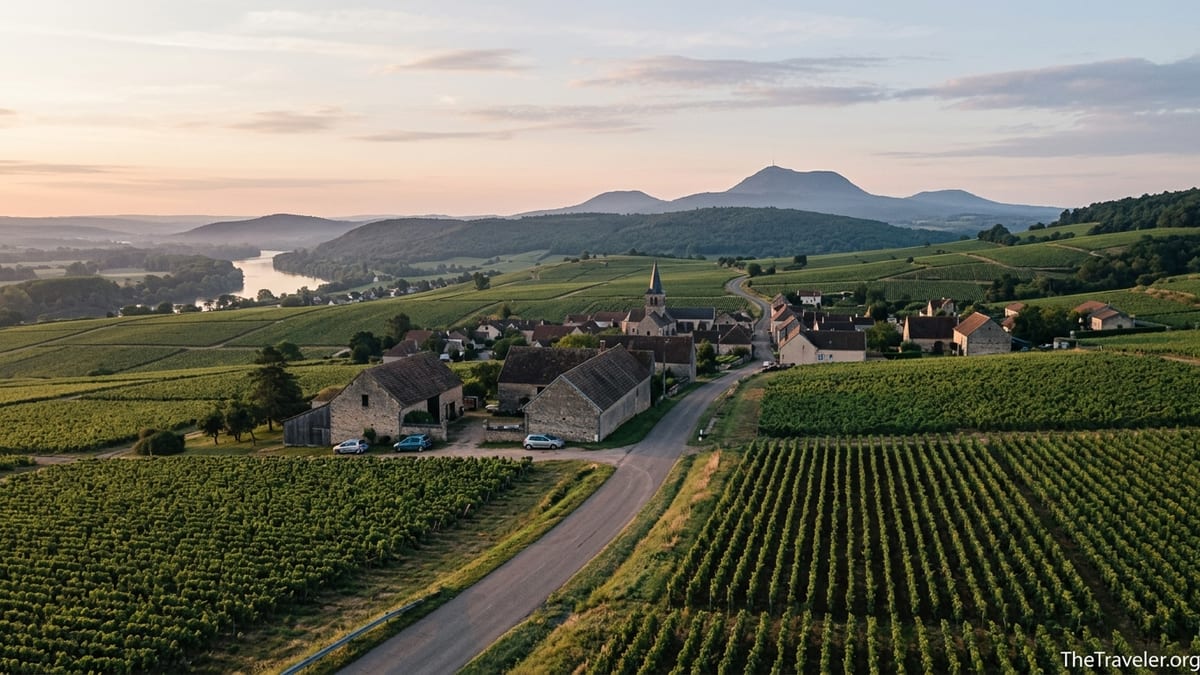
How to structure a central France road trip from Paris
Most travelers start and end in Paris, pick up a rental car on the way out of the city and then loop through two or three regions. A typical pattern is to collect the car near Gare Montparnasse or Orly before heading to the Loire, or near Gare de Lyon if you are driving toward Burgundy. Daily rental rates for a compact automatic booked in advance often start around 45 to 70 euros per day in high season, plus fuel and tolls.
From central Paris to the Loire Valley, the drive to popular bases like Amboise or Blois usually takes about 2 to 2.5 hours via the A10. For Burgundy, the A6 south to Beaune or Dijon is around 2.5 to 3 hours depending on traffic. Clermont Ferrand, gateway to the Auvergne volcanoes, is roughly 4 hours via the A71. These times assume normal motorway conditions and one short rest stop, which is realistic for most visitors.
Because check in and check out eat into sightseeing time, this guide favors two or three night stays in strategic hubs rather than moving every day. In the Loire, towns like Amboise, Blois or Saumur work well as bases. In Burgundy, Beaune and Dijon are the most practical. In Auvergne, Clermont Ferrand makes a strong arrival and departure hub, while smaller places such as Le Mont Dore or Besse et Saint Anastaise are good for mountain nights. Each itinerary below balances drive days with slower days of wine tasting, château visits or hiking.
French motorways in these regions are toll roads. For a Paris to Beaune run, tolls can add roughly 30 to 40 euros each way, while Paris to Clermont Ferrand may run slightly more depending on your exact entry and exit points. Many rental cars include electronic toll tags that let you use the fast “t” lanes and pay later, which is convenient if you are unfamiliar with the booths.
5 day taster: Loire and Burgundy in one short loop
A 5 day trip is tight but still enough for a first taste of both châteaux and vineyards if you do not try to reach Auvergne. The most efficient pattern is Paris to the central Loire, then across to Burgundy and back north. Expect a total of about 900 to 1,000 kilometers of driving spread over three main drive days.
Day 1 and 2 can be based in Amboise in the Loire Valley. Driving from Paris to Amboise takes around 2.5 hours in light traffic. Once there, you can visit Château d’Amboise, the smaller Clos Lucé where Leonardo da Vinci spent his last years, and make a short 45 minute drive to Chenonceau, which arches over the Cher River. Many visitors pair Chenonceau with a stop at a family run Vouvray winery just east of Tours, where tastings might cost 8 to 15 euros per person.
On day 3, cross from the Loire to Burgundy. The drive from Amboise to Beaune via Nevers and the A6 typically takes about 4.5 hours with a break. This is your longest day behind the wheel, so it is worth leaving by mid morning and checking into a hotel or guesthouse in or just outside Beaune for two nights. Parking is simpler if you choose a place on the ring roads just beyond the old town ramparts.
Day 4 in Beaune lets you explore the Hospices de Beaune, stroll the medieval streets and perhaps book a half day small group wine tour that visits two or three Côte de Beaune domains. Tours that include tastings and transport often run from about 80 to 120 euros per person. On day 5, return directly to Paris on the A6 in about 2.5 to 3 hours, dropping your car on arrival and finishing your trip in the capital if you have extra nights.
7 day classic: Loire Valley and Burgundy at a gentler pace
With 7 days you can slow the tempo and add variety within each region. A logical pattern is 3 nights in the Loire followed by 3 in Burgundy, with one night in Paris or another city on either end if your flight schedule requires it. The total distance is similar to the 5 day loop but with more two night stays and less pressure on any single day.
Consider splitting your Loire time between Amboise and Saumur. Spend your first two nights in Amboise as above, then drive about 1.5 hours west along the Loire to Saumur for the third night. Saumur offers riverfront walks, troglodyte wine cellars set into the tufa cliffs and easy access to the abbey of Fontevraud. Here a mid range hotel with parking often starts around 110 to 140 euros per night in summer.
On day 4, travel from Saumur to Beaune, which is around 4 to 4.5 hours of driving via Tours and the A85/A71/A6 combination. If you prefer to break this up, you can stop for lunch in Nevers or at a Loire side village like La Charité sur Loire. Once in Beaune, three nights give you time to drive the Route des Grands Crus between Dijon and Santenay, stopping at villages such as Gevrey Chambertin, Vosne Romanée and Meursault. Many domaines now require advance reservations, especially on weekends, so it is worth emailing or asking the Beaune tourist office for help.
Your second full day in Burgundy could be devoted to Dijon, a 45 minute drive or short regional train hop from Beaune. Dijon’s well preserved center, with its ducal palace and market halls, offers a change of pace from vineyards. A simple lunch of oeufs en meurette or boeuf bourguignon with a glass of local pinot noir in a brasserie will usually cost around 18 to 25 euros per main course in the historic core. On your final day, return to Paris by late afternoon.
10 day immersion: Adding the Auvergne volcanoes
Ten days is the minimum if you want to combine Loire châteaux, Burgundy wines and Auvergne’s volcanic landscapes without rushing every day. A balanced pattern is 3 nights Loire, 3 nights Burgundy and 3 nights in the Auvergne, with the final morning given over to the return drive to Paris. This triangle reduces backtracking by linking Burgundy and Auvergne directly before turning north.
After spending days 1 to 6 as in the 7 day itinerary, drive from Beaune to Clermont Ferrand on day 7. The most straightforward route follows the A6 north for a short stretch, then the A79 and A71 south, or you can choose smaller N roads through the Morvan if you prefer scenery over speed. By motorway, the drive usually takes 3.5 to 4 hours. Plan to arrive in Clermont Ferrand by mid afternoon to check into a central hotel and stretch your legs with a walk around the black lava stone cathedral and surrounding streets.
Use Clermont Ferrand as your base for all three nights, or spend one or two in a mountain resort such as Le Mont Dore if you prefer cool evenings and quick access to trails. From Clermont, the rack railway to the summit of Puy de Dôme is about a 20 minute drive to the base station, plus the 15 minute ride to the top, where paths circle the summit with broad views of the Chaîne des Puys. Tickets are typically in the low tens of euros per adult and can be bought on site or in advance.
On your second full day in Auvergne, drive to the southern Sancy area, about 1 to 1.5 hours from Clermont Ferrand depending on your exact route. Short walks near Lac Pavin or the plateau above Super Besse let you sample the volcanic terrain without committing to long hikes. Cheese lovers can stop at a farm or cooperative around Besse or Saint Nectaire to taste local tommes and the soft Saint Nectaire AOP, often sold in wedges for a few euros. Day 10 is a direct return to Paris via the A71, a journey of around 4 hours to the outskirts plus extra time for traffic when entering the capital.
14 day grand tour: Slow travel across Loire, Burgundy and Auvergne
With two full weeks you can sequence central France in a relaxed arc: Loire eastward to Burgundy, then south into Auvergne before looping back to Paris. A common structure is 4 nights in the Loire, 4 in Burgundy and 5 in Auvergne, leaving one night in Paris on either side depending on your flights or trains. This approach keeps most daily drives to around 2 to 3 hours, with only one or two longer days.
Begin with four nights in the Loire using two bases. Spend the first two in Amboise to see Chenonceau, Chambord and smaller estates like Chaumont sur Loire, then shift for two nights to Saumur or Chinon for a more intimate, less tour bus heavy experience. If you choose Chinon, the fortress above town and the surrounding cabernet franc vineyards make for easy half day excursions, and the drive onward to Burgundy still comes in under 5 hours with a planned lunch stop.
In Burgundy, four nights allow two in Beaune and two in a countryside inn or vineyard guesthouse. This gives you one day for the Côte de Beaune, another for the Côte de Nuits, a day in Dijon and a flexible day for a cooking class, e bike tour through the vines or a side trip to the canal side town of Chalon sur Saône. Many small hotels in the villages close mid afternoon, so aim to check in by around 18:00 when possible.
Continue to Auvergne for five nights split between Clermont Ferrand and the high country. Spend the first and last nights in Clermont Ferrand to simplify logistics and rental car pick up or drop off, and place the three middle nights in Le Mont Dore, Besse or Murol. From these bases you can mix half day hikes to Puy de Sancy or along the crest trails, swims in lakes like Chambon or Aydat in summer, and visits to family oriented attractions such as the Vulcania science park located roughly 30 minutes from Clermont Ferrand. On your final day, the straightforward A71 route returns you to Paris in time for an evening flight or a last dinner in the city.
Choosing smart bases and realistic daily driving times
Good bases in central France share three traits: simple access from major roads, enough restaurants and shops that you do not have to drive every night for dinner, and accommodation with parking that does not require threading medieval alleys. Amboise, Saumur, Beaune, Dijon and Clermont Ferrand meet these criteria for most travelers, while smaller towns like Chinon or Le Mont Dore work well if you are comfortable with a bit more driving.
As a rule of thumb, plan no more than 3 to 4 hours of pure driving on your longest days and 1 to 2 hours on lighter days. For example, the hop from Amboise to Saumur is easily covered in under 2 hours along the Loire, leaving time for a morning château visit before departure and a tasting or abbey visit on arrival. Similarly, the drive from Beaune to Dijon along the Route des Grands Crus can be done in under an hour, but most visitors stretch it into a full day with stops in villages and vineyards.
Shorter loops from Paris are possible if you want to limit driving. A 5 or 7 day trip focusing only on the Loire and Burgundy might use Blois and Beaune as twin bases, with total one way distances from Paris of about 2 and 3 hours respectively. Alternatively, if volcanoes appeal more than châteaux, you could drive Paris to Clermont Ferrand in one day, spend 4 to 6 nights in the region using a single base, and return to Paris by train after dropping the car locally.
Navigation is straightforward with a combination of motorway signs and GPS, but rural turnoffs around vineyards or small Auvergne villages can be easy to miss. Many travelers now rely on offline maps on their phones, which work well as long as you download the regions in Paris before departure. Be aware that speed cameras are common on both highways and secondary roads, and fines are often issued by post via the rental company.
Seasonality, budget and booking tips
Central France is a year round destination, but the experience shifts with the seasons. Late April to June and September to early October usually offer mild weather, open attractions and fewer crowds than peak July and August. In the Loire, large châteaux might open gardens earlier or later depending on the year, while in Auvergne some high walking paths and small mountain roads may still hold snow into spring or close temporarily in winter.
High summer brings long daylight hours that suit extended drives and evening terrace dinners, but accommodation around the Loire and Burgundy vineyards can book out well in advance for weekends. Families from across France also head to Auvergne’s lakes and mountains in late July and August, so expect more traffic on the approach to resorts like Super Besse. If you are planning a 10 or 14 day trip in these months, it is safer to reserve your main bases 3 to 6 months ahead, especially in smaller villages with limited rooms.
Daily budgets vary widely by travel style. A couple staying in mid range hotels, renting a compact car and eating in bistros rather than Michelin starred restaurants might expect to spend in the region of 220 to 320 euros per day across accommodation, food, fuel, tolls and activities. Winery tastings in Burgundy range from basic cellar visits with a few pours included in the bottle price to structured tastings where flights can run to 20 or 30 euros per person, especially for grand cru wines.
For flexibility, consider booking cancellable rates for your overnight bases and leaving individual day plans loose, particularly in Auvergne where weather may influence whether you hike, visit Vulcania or spend a day exploring Clermont Ferrand’s museums and cafés. Trains from Paris to or from Dijon, Tours or Clermont Ferrand can be used to shorten a driving loop if you prefer to return the car outside Paris and finish your trip in the capital without traffic.
The Takeaway
Loire Valley, Burgundy and Auvergne each deserve a dedicated trip, but with smart planning they can be woven into a single itinerary that feels varied rather than rushed. By anchoring yourself in a handful of well connected bases, keeping daily drives realistic and matching the length of your route to the time you have, you can build anything from a compact 5 day introduction to a spacious 14 day grand tour from Paris.
Whether your priority is tasting chenin blanc in a Loire troglodyte cellar, cycling between Côte d’Or vineyards or standing on the rim of an extinct volcano in Auvergne, central France rewards travelers who plan their logistics carefully and leave room for unscripted stops. Use these sample itineraries as a starting framework, then adjust nights and bases to your own pace, knowing that the roads between Paris, the Loire, Burgundy and Auvergne are well maintained and welcoming to unhurried exploration.
FAQ
Q1. Can I do this itinerary entirely by train without renting a car?
It is possible to reach the Loire, Burgundy and Clermont Ferrand by train from Paris, but many châteaux, vineyards and Auvergne villages are not well served by public transport. For the specific multi stop routes described here, a rental car gives far more flexibility, although you could combine trains to hubs like Tours, Dijon or Clermont Ferrand with local day tours if you prefer not to drive.
Q2. Is it better to pick up my rental car in central Paris or at an airport?
For routes heading toward the Loire or Auvergne, many travelers find it easier to collect a car from a location on the edge of the city or from Orly Airport to avoid dense inner city traffic. If you are starting with Burgundy, a central station such as Gare de Lyon can still work, since you join the A6 motorway relatively quickly. Prices do not always differ dramatically, so convenience is often the deciding factor.
Q3. Do I need an international driving permit for France?
Visitors from many countries, including the United States, Canada, the United Kingdom and much of the European Union, can usually drive in France with their standard license if it is in Roman script and valid for the trip duration. Some rental companies and authorities still recommend or require an international driving permit for licenses in other scripts, so it is best to check current rules before departure.
Q4. How much should I budget for fuel and tolls on these routes?
Fuel prices fluctuate, but as a rough guide a compact petrol car might consume 6 to 7 liters per 100 kilometers on mixed roads. Over a 10 to 14 day loop of 1,500 to 2,000 kilometers, that often translates to a few full tanks of fuel. Motorway tolls between Paris, the Loire, Burgundy and Auvergne can add several tens of euros to each long leg, so it is wise to set aside a dedicated amount in your budget for toll booths.
Q5. Can I visit wineries without worrying about drink driving?
French drink driving limits are strict, and enforcement around wine regions is taken seriously. The safest approach is to designate one non drinking driver, spit during tastings or schedule at least some winery visits with a local driver guide or tour company so everyone in your party can taste freely. In villages near Beaune or Dijon, you can also walk or cycle between tasting rooms to reduce time behind the wheel.
Q6. Are these regions suitable for families with children?
The Loire, Burgundy and Auvergne all work well for families, provided you balance adult focused visits with child friendly activities. Châteaux with interactive exhibits, easy cycling paths along the Loire and hands on science centers like Vulcania near Clermont Ferrand can keep younger travelers engaged. Choosing fewer bases and accommodations with outdoor space also helps children adjust to the rhythm of a road trip.
Q7. What type of car is best for this trip?
A compact or midsize hatchback is usually ideal, as it is easier to maneuver and park in medieval town centers while still offering enough space for luggage. Larger vehicles can be useful for families or groups but may feel cumbersome in narrow village lanes or hotel courtyards. When booking, consider automatic transmission if you are not comfortable with manual gearboxes, as French rental fleets still include many manuals.
Q8. How far in advance should I book accommodation in high season?
For July and August, or during major events and harvest periods in Burgundy, it is sensible to secure your main bases two to six months in advance, especially in smaller towns with limited options. In shoulder seasons such as May, June, September and early October, you may find more last minute availability, although popular villages in the Loire and around Beaune can still fill on weekends.
Q9. Is it easy to charge an electric car along these routes?
Charging infrastructure in France has expanded in recent years, particularly along major motorways and around medium sized cities. If you rent an electric vehicle, plan your stops around motorway service areas and check that your hotels in places like Amboise, Beaune or Clermont Ferrand either offer on site chargers or have public stations nearby. Rural coverage exists but can be more limited, so a bit of advance planning is helpful.
Q10. What is the best time of year for combining all three regions in one trip?
Late spring and early autumn work particularly well for a combined Loire, Burgundy and Auvergne itinerary. In May, June, September and early October you are likely to find mild temperatures for outdoor visits, less crowded roads and good odds of open attractions and vineyards. Summer months bring lively festivals and long evenings but also higher prices and more visitors, while winter can be quiet and atmospheric yet less suitable for certain hikes or smaller attractions that close seasonally.