


Central France offers an accessible slice of the country’s best scenery and culture in a compact area: Renaissance castles strung along the Loire, Burgundy’s vineyard-cloaked hillsides, the volcanic peaks of Auvergne, and a lattice of historic market towns connected by reliable trains and quiet country roads. For a first-time visitor, this region is easy to combine with Paris and rewards even a short stay with atmospheric streets, serious food and wine, and landscapes that still feel distinctly French rather than overrun.
Understanding Central France’s Regions
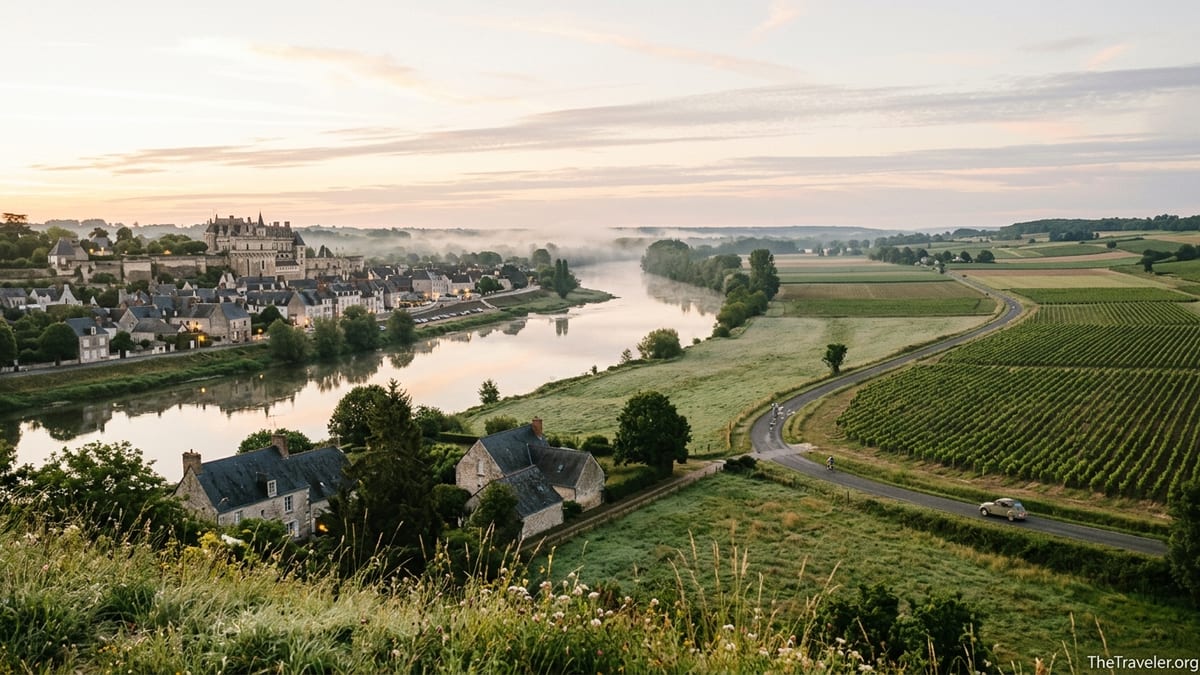
For trip planning, central France usually means three adjoining areas: the Loire Valley, Burgundy, and Auvergne. The Loire Valley runs along the middle stretch of the Loire River from around Orléans past Tours and Saumur, where former royal courts built extravagant Renaissance châteaux now opened to visitors. Burgundy lies to the east, focused on Dijon and Beaune and the vine-covered slopes of the Côte d’Or that produce some of France’s most sought-after pinot noir and chardonnay. South of both sits Auvergne, a sparsely populated upland of extinct volcanoes, deep valleys, Romanesque churches, and hot-spring spa towns centered on Clermont-Ferrand.
Distances are shorter than they look on the map. A high-speed train from Paris to Tours or Dijon typically takes about one hour, and the Intercités service from Paris to Clermont-Ferrand usually clocks in at around three and a half hours. That means you can breakfast in the capital and be checking into a guesthouse in Amboise or Beaune by lunchtime. Many travelers split a week between two bases, such as three nights in the Loire for castles and cycling and three nights in Burgundy or Auvergne for wine or hiking.
The feel on the ground differs between these regions. The Loire can be busy in peak season and has a polished tourism infrastructure with frequent château shuttles and well-marked bike paths. Burgundy is more low-key and grown-up, with small stone villages, quiet wine roads, and restaurants that take their menus seriously. Auvergne remains more rural and budget-friendly, trading grand palaces for crumbling castles on hilltops, waterfalls, and waymarked trails through the Parc Naturel Régional des Volcans d’Auvergne.
Loire Valley: Castles, River Towns and Gentle Countryside
Most first-time visitors start in the Loire Valley for its concentration of marquee sights. Towns such as Tours, Amboise and Blois make practical bases because they are on mainline train routes and within reasonable reach of iconic châteaux like Chambord, Chenonceau, Villandry and Azay-le-Rideau. Tours in particular functions as a regional hub, with frequent high-speed trains from Paris Montparnasse in under an hour and easy day trips by local train or excursion bus to surrounding estates.
Château visits can be surprisingly time-consuming, so be selective rather than trying to “do” the entire valley. A realistic two-day sample might be Chenonceau and Amboise on day one, then Villandry’s gardens and Azay-le-Rideau on day two. Expect to pay around 14 to 17 euros per adult for individual château entry, with small discounts for children and combo tickets if you pair sites. Parking at some big-name castles such as Chambord or Chenonceau typically adds a modest flat fee of a few euros per day, while others like Villandry and Chaumont-sur-Loire still offer free lots, which quickly becomes relevant if you have a rental car.
Experiencing the Loire is not only about stately homes. The Loire à Vélo cycle route threads 900 kilometers along the river, with e-bike rentals widely available in bases like Amboise, Blois and Tours. Even if you are not a serious cyclist, a half-day ride on a nearly flat towpath between two villages, stopping at a riverside guinguette for grilled fish and a glass of local sauvignon blanc, can be a highlight. River towns such as Saumur and Chinon also offer atmospheric old quarters, troglodyte caves once used as wine cellars, and informal tastings at cooperative wine houses where you can sample several appellations for the price of a single glass in Paris.
Burgundy: Vineyards, Historic Towns and Wine Culture
Burgundy’s appeal lies in its layered history and wine-soaked landscape rather than a single blockbuster attraction. The core strip, the Route des Grands Crus, runs roughly 60 kilometers from Dijon down past Nuits-Saint-Georges to Santenay through the Côte de Nuits and Côte de Beaune, passing names that appear on some of the world’s most expensive bottles. In practice, first-timers often split their time between Dijon, a former ducal capital with grand townhouses and museums, and Beaune, a compact medieval town ringed by vineyards that serves as the informal capital of Burgundy wine.
You do not need to be a wine expert to enjoy Burgundy. In Beaune, for example, you can tour the 15th-century Hospices de Beaune, then step into a négociant’s cellars for an introductory tasting that might include a simple Bourgogne rouge, a village-level Pommard, and a premier cru from the same slope. Expect to pay somewhere in the range of 15 to 30 euros for a structured tasting of several wines, sometimes credited against a purchase. Dijon offers another angle, with food markets, mustard boutiques, and the Cité Internationale de la Gastronomie et du Vin, where you can learn about French culinary heritage and sample regional products.
Getting out into the vines is essential. You can rent a regular bike or e-bike in Beaune or Dijon and follow small roads between stone-walled plots with working tractors and vineyard workers at harvest. A relaxed day might involve cycling from Beaune through Pommard and Volnay, stopping at a village café for a plat du jour of boeuf bourguignon or oeufs en meurette, then rolling back in time for a late-afternoon tasting. Those who prefer not to navigate after sampling can book a small-group minivan tour that includes pickups in Beaune or Dijon, cellar visits, and a picnic in the vines. Prices for day tours typically start around 130 to 180 euros per person, depending on group size and how many tastings are included.
Auvergne: Volcanic Landscapes and Underrated Villages
South of the busier wine and castle zones, Auvergne offers a different, more outdoorsy flavor of central France. The Chaîne des Puys, a chain of more than 80 extinct volcanoes near Clermont-Ferrand, forms the heart of a UNESCO-listed landscape of cinder cones, lava domes and crater lakes. The Puy de Dôme, the most famous summit, can be reached via a rack railway from the Col de Ceyssat area, followed by an easy walk along the rim with panoramic views of layered green hills, patchwork farmland and, on clear days, snow-tipped peaks further south.
Auvergne’s towns feel markedly less touristy than their Loire or Burgundy counterparts. Clermont-Ferrand has a dark volcanic-stone cathedral, independent shops and craft beer bars clustered around Place de Jaude, yet relatively modest hotel prices by French city standards. Smaller spa towns such as Vichy or Le Mont-Dore pair 19th-century bath architecture with access to hiking routes and, in winter, small ski stations. In many villages, you are more likely to share the square with local families than tour groups, which can be a relief in peak summer.
Food in Auvergne is hearty and often revolves around cheese and potatoes rather than refined sauces. A typical rural restaurant might serve truffade, a skillet of sliced potatoes bound with melted tome fraîche cheese, alongside charcuterie and a carafe of local red from the volcanic slopes of Côtes d’Auvergne. Prices tend to be forgiving: a three-course lunch menu of the day in a small town can still be found for roughly 16 to 20 euros, while a farmhouse bed-and-breakfast might charge between 70 and 100 euros per night for a double room including breakfast, which compares favorably with coastal or Parisian rates.
Getting Around: Trains, Driving and Local Transport
For most first-time visitors, central France is easiest approached by train from Paris. High-speed TGV services connect Paris with Tours and Dijon in about one hour, with advance second-class fares often starting around 25 to 40 euros for slower-peak departures if booked weeks ahead through official channels. Intercités trains link Paris to Clermont-Ferrand in a little over three hours, providing comfortable regional service without the price premium of top-speed routes. Within each region, slower TER regional trains fan out to smaller towns like Amboise, Blois, Beaune and Vichy, usually without mandatory seat reservations and with fixed, more predictable pricing.
Once you reach a base town, you can rely on a mix of trains, local buses, occasional shuttles, and bikes. In the Loire, for example, a common car-free pattern is to stay in Tours or Amboise, take a morning TER train to a village such as Chenonceaux, walk five minutes from the station to Château de Chenonceau, then return in the afternoon. Schedules can be sparse outside peak times, so it is important to check departure times in advance and plan lunches and château visits around them rather than assuming hourly services. Burgundy is compact enough that short train hops, such as Beaune to Dijon in around 20 to 30 minutes, make easy day trips possible without a car.
Hiring a car, however, opens up much more of the countryside, especially for those interested in smaller wine villages or Auvergne hiking bases. Rental agencies can be found in larger hubs like Tours, Dijon and Clermont-Ferrand, with compact manual cars often starting at roughly 35 to 50 euros per day in low season before fuel and tolls. Driving in central France is generally straightforward, with quieter rural roads, plentiful signposting, and well-maintained motorways between major cities. Be aware of speed limits, especially when passing through villages, and factor in péage tolls on autoroutes, which can add a noticeable but manageable extra cost to long-distance drives between regions.
Where to Stay: Town Bases, Villages and Countryside
Choosing the right base is one of the most important decisions in a central France itinerary. In the Loire, Tours appeals to travelers who want urban amenities, rail convenience and a wide range of hotels from mid-range chains near the station to boutique properties in half-timbered houses in the old town. Amboise offers a smaller-scale, riverfront setting with guesthouses that look directly onto its hilltop château, ideal for slower evenings and walks along the Loire. Blois splits the difference, with a lively center, its own castle, and easy onward access to Chambord and Cheverny by bus or organized excursion.
In Burgundy, Beaune is the classic choice for wine-focused travelers. The town’s cobbled streets hide atmospheric chambres d’hôtes inside 17th-century townhouses, along with modern apartments above wine bars and family-run two-star hotels just outside the medieval walls. Dijon suits those who prefer a bigger city feel, with a broader spread of restaurants and cultural attractions while still being one short train ride from the vineyards. Prices in high season for a comfortable double room in either town frequently land in the 110 to 180 euro range, with simpler rooms or off-season dates often significantly lower.
Auvergne rewards those willing to stay in smaller, rural properties. Farmhouse B&Bs around the Parc des Volcans might offer two or three rooms, homemade jams at breakfast, and direct access to walking trails starting at the garden gate. In spa towns like Vichy, grand old hotels from the Belle Époque have been renovated into mid-range properties with seasonal deals outside major festivals. Self-catering gîtes are common across the countryside and can be excellent value for families or small groups, especially if you plan to cook, with weekly rentals for a simple stone cottage sometimes costing no more than two or three nights in a city hotel.
Food, Wine and Typical Costs
Central France is a rewarding region for food lovers without the sticker shock of Paris’s trendiest addresses. In most towns you can still find a fixed-price lunch menu at neighborhood bistros for around 15 to 20 euros for two or three courses, often featuring regional specialties. In the Loire that might mean rillettes de Tours, river fish in beurre blanc, or a goat cheese from Sainte-Maure-de-Touraine. In Burgundy, local menus lean on escargots in garlic-parsley butter, coq au vin made with pinot noir, and epoisses cheese served with a slice of gingerbread. Auvergne plates tend toward aligot or truffade alongside cured ham and lentils from Le Puy.
Wine is central to both Loire and Burgundy experiences and need not be intimidating or ruinously expensive. Ordering by the glass at a wine bar in Beaune or Saumur might cost 6 to 10 euros for a decent village wine, rising for more prestigious appellations. Many restaurants in wine towns curate short lists that highlight local producers at reasonable markups, so trying a Chinon cabernet franc in Chinon or a Saint-Véran chardonnay in southern Burgundy becomes part of the meal rather than a splurge. Non-drinkers are generally well catered for with sparkling waters, artisanal juices and syrups, and coffee culture is strong, with espressos still typically in the 2 to 3 euro range at the counter.
Overall daily budgets vary widely, but a comfortable mid-range traveler staying in guesthouses, eating one sit-down meal and one simpler meal per day, and doing a couple of paid visits or tastings might expect to spend something in the vicinity of 130 to 200 euros per person per day before shopping. Savings can be found by choosing picnic lunches sourced from markets, traveling outside peak July and August dates, using regional trains instead of renting a car every day, and focusing on a smaller geographic area rather than racing between distant highlights.
Planning Your First Trip: Seasons, Itineraries and Practical Tips
Central France is a viable destination year-round, but seasons shape the experience. Late spring, from May into June, brings long daylight and lush greenery without the heaviest crowds, although some châteaux start to get busy on weekends. September and early October are prized in wine regions, as harvesting begins and vineyard slopes shift to gold and rust colors, though cellar visits can be trickier to arrange on short notice during the busiest days of the vendange. July and August see higher visitor numbers, more family travelers, and warmer temperatures that suit river swims and lakes in Auvergne but may require earlier starts for sightseeing.
For a first-time visitor with one week, a representative itinerary might look like three nights in the Loire and four in Burgundy or Auvergne. You could arrive in Paris, take a direct train to Tours or Amboise, spend your first days visiting two or three major châteaux and trying a short stretch of the Loire à Vélo, then travel by train via Orléans to Dijon or directly from Tours to Lyon and onward to Clermont-Ferrand. A ten-day trip allows you to add a night in a smaller village, like a wine-domain guesthouse near Sancerre or a stone gîte in the Cantal hills, for a taste of truly rural life.
A few simple habits will make the trip smoother. Advance booking of long-distance trains often yields better fares and more departure options, especially on summer weekends and holiday periods when Parisians also head for the countryside. At popular sights such as Château de Chenonceau or Chambord, pre-buying timed tickets where available and arriving at opening or late in the afternoon can dramatically reduce queuing. Carry a light sweater even in summer, as stone churches and château interiors can feel cool compared with outside temperatures, and pack comfortable walking shoes for cobbled streets, vineyard tracks and uneven castle staircases.
FAQ
Q1. How many days do I need in central France for a first visit? For a first trip, plan at least five to seven days, which allows two or three nights in the Loire Valley plus three or four in Burgundy or Auvergne without rushing.
Q2. Is it realistic to visit the Loire Valley without renting a car? Yes, if you base yourself in towns like Tours, Amboise or Blois and focus on châteaux reachable by train, bus or organized excursion, though a car offers more flexibility.
Q3. Which town is best as a base in Burgundy for first-timers? Beaune is ideal for wine-focused travelers who want to be surrounded by vineyards, while Dijon works better if you prefer a larger city with more museums and shopping.
Q4. When is the best time of year to visit central France? Late spring and early autumn are generally the most pleasant, with comfortable temperatures, long daylight, vineyard and countryside color, and fewer peak-season crowds than midsummer.
Q5. Do I need to speak French to get by in these regions? Basic English is widely understood in hotels, main sights and many restaurants, but learning a few simple French phrases will make everyday encounters smoother and more enjoyable.
Q6. How much should I budget per day as a mid-range traveler? A rough mid-range budget of 130 to 200 euros per person per day usually covers comfortable accommodation, trains or car hire, meals, and a couple of paid visits or tastings.
Q7. Is it safe to drive in central France for foreign visitors? Conditions are generally good, with well-maintained roads and considerate drivers; just familiarize yourself with speed limits, roundabouts and village slow zones before setting off.
Q8. Can I combine central France with Paris in one trip? Absolutely; fast trains mean you can spend two or three days in Paris, then head to Tours, Dijon or Clermont-Ferrand in about one to three hours for a contrast with city life.
Q9. Are wine tastings suitable for beginners who know very little? Yes; many cellars and wine bars in Burgundy and the Loire specifically offer introductory tastings and explanations, and staff are used to guiding curious first-time visitors.
Q10. What should I pack for a trip that includes both castles and hiking? Pack layered clothing, a light waterproof jacket, sturdy walking shoes for trails and cobblestones, plus smart-casual outfits for dinners or wine tastings you may want to dress up for.