


Central France is a dream destination for wine travelers, and two names rise above the rest: the Loire Valley and Burgundy. Both regions offer centuries of winemaking tradition, evocative landscapes, and increasingly sophisticated wine tourism, from vineyard guesthouses to guided cycling routes and private drivers. This guide compares real-world experiences in each region and helps you decide how to explore: independently, with a private driver, by bike, or on an organized tour.
Loire Valley vs Burgundy: How the Experiences Differ
The Loire Valley and Burgundy sit less than a half-day’s travel apart, yet they deliver very different wine experiences. The Loire Valley stretches along the midsection of the Loire River, with vineyards scattered between historic towns such as Tours, Saumur and Angers. It is known for Chenin Blanc, Cabernet Franc, Muscadet and Sauvignon Blanc, and for its mix of wine estates and Renaissance châteaux. Burgundy, centered around cities like Beaune and Dijon, is far more compact in its top wine areas and is focused almost entirely on Pinot Noir and Chardonnay from a patchwork of small vineyard plots.
In practical terms, the Loire Valley feels more relaxed and less formal. Many domaines around Chinon, Vouvray, Montlouis and Saumur welcome walk-in tastings, especially from spring to autumn, and a simple 3–5 wine tasting might cost around 10 to 15 euros per person, sometimes refunded if you buy a bottle. Burgundy, by contrast, is more structured and more expensive; you often need to book visits in advance, and a guided tasting at a renowned Beaune or Côte de Nuits producer can easily run 25 to 40 euros per person for 4–6 wines, sometimes more for premier cru or grand cru lineups.
Another key difference is landscape and logistics. In the Loire, vineyards are interspersed with forests, villages and major châteaux; you may drive 20 to 30 minutes between wine stops, which suits travelers who enjoy scenery and a mix of wine and culture. Burgundy’s Côte de Beaune and Côte de Nuits, on the other hand, form near-continuous slopes of vines. From Beaune you can reach Pommard, Meursault, Volnay and Puligny-Montrachet within a short drive or bike ride, making it ideal for concentrated day tours with several cellar visits.
Budget also plays a role. Accommodation on estates or near vineyards in the Loire often starts around 100 to 150 euros per night for a comfortable chambre d’hôtes or small hotel, while high-end château hotels rarely exceed 350 euros outside peak summer. In Burgundy, especially around Beaune and the top villages of the Côte d’Or, wine-country hotels and vineyard guesthouses tend to start a little higher, with many quality stays in the 150 to 250 euro range and luxury options that go well beyond that.
Vineyard Stays and Wine-Country Accommodation
Both regions now offer a wide range of vineyard stays, from rustic gîtes on family estates to polished design hotels among the vines. In the Loire Valley, tourism boards highlight “Vignobles & Découvertes” labeled accommodations, which meet standards for wine-focused hospitality. Around Anjou and Saumur, for example, you can stay at vineyard guesthouses that combine simple, comfortable rooms with on-site cellar tours and tastings, often hosted directly by the vigneron. A typical vineyard B&B night for two, with breakfast and a short tasting included, commonly falls between 110 and 170 euros depending on the season.
In Touraine, near the appellations of Vouvray and Montlouis-sur-Loire, gîtes associated with wine estates allow guests to wake up surrounded by Chenin Blanc vines and walk to the cellar for an afternoon tasting. Some of these properties, listed through regional Gîtes de France networks, are self-catering rentals for small groups or families, with minimum stays of two or three nights. Expect weekly rates in the 700 to 1200 euro range for a small house sleeping four to six people, depending on amenities and proximity to key sights.
Burgundy’s vineyard accommodation has become increasingly upscale. Around Beaune and along the Route des Grands Crus, a mix of boutique hotels, guesthouses and château stays cater to wine travelers. Rooms in a refined wine-country hotel just outside Beaune often start around 220 euros in shoulder season, while small guesthouses in villages like Pommard or Santenay can be closer to 140 to 180 euros per night. Some estates, including working domaines with their own labels, offer a private château experience that bundles accommodation with tailored tastings and cellar visits, particularly appealing to groups of 6 to 10 travelers.
When comparing the two regions, Loire vineyard stays often feel more intimate and budget-friendly, and many properties are integrated with rural life, from small farms to mixed agriculture. Burgundy, in contrast, leans more toward polished hospitality and design, with easy access to high-level dining in Beaune or Dijon. If sleeping truly among the vines is a priority, both regions can deliver, but Loire Valley travelers may find more options that combine vineyard immersion with a softer overall price tag.
Winery Tours and Tastings: What to Expect and Book
Booking winery visits in central France requires different strategies in each region. In the Loire Valley, several appellations still accommodate spontaneous visitors, especially at medium-size family estates. Around Chinon and Bourgueil, for instance, cellar doors posted “dégustation” often welcome travelers without a reservation during set daytime hours. A typical visit might include a short tour of a tuffeau stone cellar followed by a tasting of 4 to 6 wines, usually with a modest tasting fee or on a “tasting free if you purchase” basis.
In Vouvray or Saumur, larger houses sometimes run scheduled English-language tours that explain local grapes and sparkling wine production. These tours might last 60 to 90 minutes and cost approximately 12 to 25 euros per person, including a tasting flight. Visitors with specific interests, such as biodynamic wine or sparkling Chenin, usually benefit from emailing the estate a few weeks ahead to arrange a focused tasting.
In Burgundy, advance planning is essential, particularly if you want to visit small domaines. Many of the most sought-after producers are either closed to the general public or only accept appointments with trade professionals. For travelers, this makes the region well suited to curated tasting experiences. In Beaune’s historic center, for example, several long-established négociant houses offer bookable guided tours of their centuries-old cellars, followed by structured tastings ranging from entry-level village wines to premier cru selections. Prices commonly span 25 to 60 euros per person depending on how many wines and which tiers are poured.
Serious enthusiasts often combine these visits with tastings at specialist wine bars or regional wine centers, where one can sample flights from multiple producers side by side. Spending 30 to 50 euros on such a tasting set is typical, and it allows you to get a handle on the differences between villages like Gevrey-Chambertin and Nuits-Saint-Georges without needing individual appointments at each domaine.
Private Drivers vs Independent Touring
Using a private driver is one of the most important decisions for wine travelers in central France. In both the Loire Valley and Burgundy, rural roads, limited public transport in vineyard zones, and the need for a designated driver all favor hired transport, especially for visitors unfamiliar with French driving laws or country routes.
In the Loire, private drivers and guides often bundle wine and cultural touring. A typical full-day private tour for two to four people, departing from Tours or Saumur, might include pick-up at your hotel, visits to two or three wineries for tastings, a stop at a château such as Chenonceau or Azay-le-Rideau, and lunch in a village bistro. Current prices generally range between 450 and 700 euros per day for the vehicle and guide, depending on the itinerary and whether tasting fees and lunch are included. This works out less expensively per person for groups of three or four, and the combination of wine and châteaux suits first-time visitors.
In Burgundy, private drivers are often wine specialists with deep local contacts. A full-day driver-guide based out of Beaune or Dijon might charge in the region of 550 to 850 euros for the car and commentary, visiting a mix of Côte de Beaune and Côte de Nuits estates. In many cases, the guide arranges winery appointments that are difficult to secure independently and may structure the day around a clear educational theme, such as understanding village, premier cru and grand cru classifications. Tasting fees are sometimes extra, adding another 20 to 50 euros per person per estate.
For independent travelers, self-driving in the Loire Valley is generally easier, with more parking, slightly wider roads around major sites, and a broader choice of budget-friendly hotels that include parking in the nightly rate. In Burgundy, parking is still manageable in towns like Beaune and smaller villages, but driving between the tight-knit vineyard villages requires more attention and can feel stressful if you are trying to observe speed limits, watch for cyclists and look at the vines at the same time. For this reason, some travelers choose a rental car for general mobility but still book a private driver for one or two intensive tasting days.
Cycling the Vineyards: Loire Valley vs Burgundy
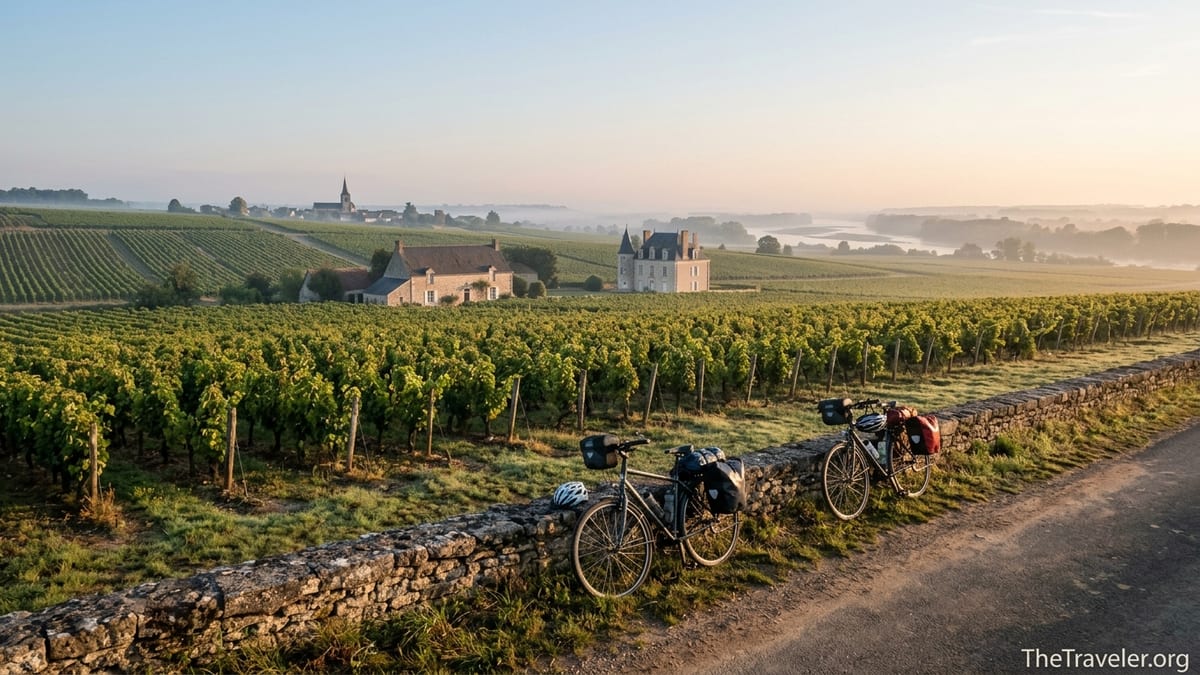
Cycling adds another dimension to wine touring, and both regions have established routes designed for leisure cyclists rather than athletes. The Loire Valley is home to the extensive Loire à Vélo network, with largely flat paths that follow the river and branch into wine areas. Cyclists can, for example, base themselves in Tours, rent regular or electric bikes for around 30 to 45 euros per day, and follow marked routes past Vouvray and Montlouis vineyards with tasting stops en route. Many hotels and B&Bs advertise secure bike storage and packed lunches for cyclists.
Further west, routes near Saumur and Chinon combine river views, troglodyte caves and hillside vineyards. These itineraries often include official “Accueil Vélo” accommodations and services, which cater specifically to bike travelers with early breakfasts and luggage transfer options. Multi-day self-guided packages that include bike hire, accommodation and luggage transfers typically start around 700 to 900 euros per person for a 5- or 6-day itinerary, depending on hotel category.
Burgundy offers a different style of cycling, more compact and occasionally hillier but deeply immersive among the vines. The Voie des Vignes, a signposted route between Beaune and Santenay, passes directly through some of the Côte de Beaune’s most famous villages and crus, with side roads leading uphill toward Puligny-Montrachet and Chassagne-Montrachet. Electric bike rentals in Beaune usually run from about 45 to 70 euros per day, and small-group guided cycling tours that include a winery visit and picnic might cost 150 to 250 euros per person for the day.
For travelers comparing the two regions, the Loire’s cycling is generally friendlier to beginners and families, thanks to flatter paths and wider separation from traffic. Burgundy’s cycling is slightly more demanding but rewards riders with close-up views of legendary parcels of Pinot Noir and Chardonnay. In both areas, combining a vineyard stay with cycling makes it easy to set out on circular routes from your accommodation rather than shuttling to trailheads each morning.
Are Organized Tours Worth Booking?
Whether organized tours are worth the cost depends on your priorities, but several patterns emerge when comparing the Loire Valley and Burgundy. In the Loire, travelers who are comfortable driving or cycling and who speak some French can craft excellent independent itineraries. Many wineries remain approachable, and regional tourism websites clearly list estate opening hours and tasting conditions. For such travelers, booking only a single guided day, perhaps focused on a specific theme like sparkling wines around Saumur, can provide context for the rest of an independently planned trip.
However, for visitors who want to combine multiple experiences without drawing up complex logistics, organized tours in the Loire can be good value. A shared small-group tour from Tours or Amboise that includes two wineries and one château often costs in the region of 130 to 190 euros per person for a full day, including transport and tastings. Given that independent car rental, fuel, tasting fees and parking will already account for a substantial part of that cost, travelers who prefer not to drive may find these packages reasonable.
In Burgundy, organized tours are more clearly worthwhile for most wine-focused travelers. Language barriers, the appointment-only nature of many domaines, and the complexity of the classification system mean that a knowledgeable guide can greatly enhance your understanding and access. Small-group minivan tours departing from Beaune or Dijon typically charge around 160 to 260 euros per person for a day that includes visits to two or three estates and tastings of 8 to 12 wines, often with a village, premier cru and grand cru comparison built in. The guide’s relationships with producers and ability to explain vintages, terroirs and pricing structures can save time and reduce the risk of disappointing visits.
For serious collectors, tailor-made private tours are almost essential in Burgundy. These may cost two or three times as much as a shared group tour but can be structured around specific appellations, styles or producers that match your cellar plans. In the Loire, private high-end wine days exist as well, though they tend to attract travelers seeking an indulgent one-off experience rather than those stocking a cellar with grand cru bottles.
Planning Your Stay: How Long and Where to Base Yourself
The ideal length of stay and choice of base differ between the two regions. In the Loire Valley, distances between major sights mean that three nights is a reasonable minimum if you want to combine châteaux and vineyards. Many travelers choose one base near Tours or Amboise for the eastern Loire châteaux and Vouvray/Montlouis wines, and a second base around Saumur or Chinon for Cabernet Franc, sparkling Chenin and more rural stays. Splitting a week between two vineyard accommodations allows you to see different terroirs without rushing.
In Burgundy, the compact nature of the Côte d’Or means that a three-night stay in Beaune can deliver a rich tasting experience, including side trips to the Côte de Nuits and perhaps a half-day in Dijon. Wine enthusiasts might add another two or three nights in a quieter village such as Nuits-Saint-Georges, Santenay or further south in the Mâconnais to experience different faces of Burgundy. This pattern, one town base plus one village or vineyard base, suits travelers who want a balance of restaurants and nightlife with peaceful evenings among the vines.
Both regions are reachable from Paris in a few hours by train plus short transfer. For example, major Loire gateways such as Tours or Angers and Burgundy gateways like Dijon and Beaune are all served by regular rail connections. Car rental is straightforward at these hubs, and many private drivers and guides offer pick-up directly from train stations. When booking accommodation, confirm whether you need a car. Some in-town stays, especially in Beaune or central Tours, allow a car-free visit, while rural vineyard properties almost always require your own wheels or pre-arranged transfers.
The Takeaway
The Loire Valley and Burgundy both reward travelers who slow down and stay among the vines, but they cater to slightly different styles of wine tourism. The Loire offers diversity of grape varieties, a wide range of relaxed vineyard stays and the chance to blend wine tasting with château visits and long riverside bike rides. Burgundy is more intense and focused, with a compact landscape of world-renowned vineyards, increasingly polished wine-country hotels and a strong case for investing in specialized guides and structured tastings.
For budget-conscious travelers or first-time wine tourists, a Loire Valley itinerary of five to seven nights, split between two vineyard bases and anchored by one guided day, can deliver exceptional value and variety. For enthusiasts of Pinot Noir and Chardonnay who enjoy diving deep into classification systems and terroir, Burgundy justifies higher tasting fees, private drivers and carefully planned appointments, even over a shorter stay.
In the end, the best approach for many visitors is to combine the two regions on a single trip, allocating at least three nights to each. Start in the Loire to settle into a relaxed rhythm of château visits and approachable tastings, then move on to Burgundy for a concentrated immersion in some of the world’s most storied vineyards. With realistic budgets, thoughtful planning and a willingness to let local experts guide at least part of your journey, central France can offer a wine trip that balances learning, pleasure and genuine connection to place.
FAQ
Q1. Is the Loire Valley or Burgundy better for first-time wine travelers?
The Loire Valley is generally easier and more affordable for first-timers, with more walk-in tastings, gentler cycling and a broader mix of wine, châteaux and countryside.
Q2. How many days do I need for a wine-focused trip to each region?
Plan at least three nights in each region. Five to seven nights in the Loire and three to five nights in Burgundy allow a relaxed pace with time for tastings and sightseeing.
Q3. Do I need a car to visit wineries in the Loire Valley and Burgundy?
A car or private driver is highly recommended in both regions. Some tours depart from towns like Tours, Saumur, Beaune or Dijon, but rural vineyard stays almost always require wheels.
Q4. How much should I budget for winery tastings?
In the Loire, expect around 10 to 25 euros per person for basic tastings or tours. In Burgundy, 25 to 60 euros per person is typical for structured cellar visits and comparative flights.
Q5. Are children welcome on wine tours and at vineyard stays?
Many vineyard accommodations in both regions accept children, and some offer family rooms. However, organized wine tours and long tastings tend to be oriented toward adults.
Q6. Can I visit famous Burgundy domaines without a guide?
Some larger houses in Beaune and nearby villages accept direct bookings, but many renowned small domaines see visitors only by appointment or through trusted guides, so a specialist tour often helps.
Q7. Is cycling between wineries realistic for casual riders?
Yes in the Loire, where river paths are mostly flat and well signed. In Burgundy, cycling is feasible for casual riders with e-bikes, though hills and traffic require more confidence.
Q8. When is the best time of year to visit for wine tours?
Late spring to early autumn offers the best combination of open cellars, pleasant weather and cycling conditions. Harvest time is atmospheric but busier and sometimes more restricted at estates.
Q9. Are organized tours in Burgundy worth the cost?
For most travelers, yes. Guides add value by handling appointments, transport and complex explanations of terroir and classifications, and by opening doors at estates that rarely accept walk-ins.
Q10. Should I stay in town or on a vineyard estate?
Staying in towns like Beaune, Dijon, Tours or Saumur offers restaurant choice and easier transport, while vineyard estates give more immersion. Many travelers combine one of each on the same trip.