


Planning a trip to the French Alps can feel surprisingly complex. Distances are short on the map, but each valley has a different character, seasonality and price level. Instead of asking "What are the best places to visit?", it is more useful to ask "Which base actually fits the trip I want to have?" This guide compares the main hubs of Annecy, Chamonix, Megève, Courchevel, Méribel, Val d’Isère, Tignes, Morzine, Les Gets, Grenoble and Briançon, and explains how they work in winter, summer and the quieter shoulder seasons.
How to Think About the French Alps as a Traveler
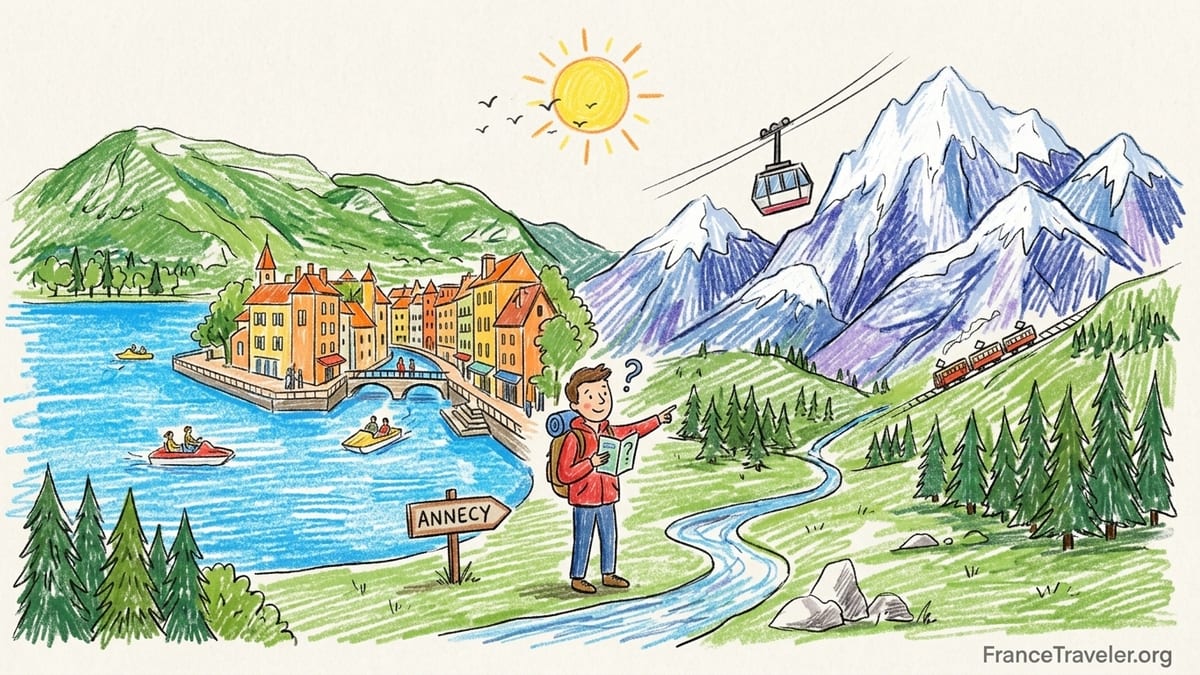
The French Alps are not one single destination. They are a patchwork of lake towns, working cities, purpose-built ski resorts and centuries-old villages. Two locations only 40 kilometers apart can feel like different countries: Annecy has canals and lake beaches, while Chamonix is a vertical world of glaciers and cable cars. Before you book, it helps to be clear on your priorities: lake swimming or skiing, nightlife or quiet nature, car-free or road trip.
A practical way to plan is to choose one or two "bases" and then do day trips from there. For example, a one-week summer trip might split time between Annecy for the lake and Chamonix for Mont Blanc hikes. A winter ski holiday could be a single-resort stay such as Val d’Isère or a twin-center week combining Megève’s tree-lined slopes with a few nights in Chamonix for the Aiguille du Midi cable car.
Seasonality matters more than many first-time visitors expect. Annecy’s lakefront can be packed and hot in late July, while high resorts such as Tignes still have cool nights and snow on surrounding peaks. In May or early November, some resorts feel semi-closed, with many lifts, hotels and restaurants on seasonal breaks. Checking what is open in your specific week often matters more than the name recognition of a place.
Budget is another key filter. A simple double room in a family-run hotel in Briançon might cost roughly what you pay for a single night in a five-star in Courchevel 1850 in peak February. Even within one valley, prices shift: self-catering apartments in Tignes or Les Gets can be considerably cheaper than chic boutique hotels in Megève or lakeside properties in Annecy’s Old Town. Think about where splurging on a view or spa matters to you, and where a simpler base frees up money for activities.
Annecy: Best for Lake-and-Town Travel
Annecy is ideal if you want a mix of historic streets, lake views and easy day trips into the mountains without committing to a full ski resort. The compact Old Town is laced with canals that have earned Annecy the nickname "Venice of the Alps." In summer, you can walk from a cafe in the medieval center to grassy lake beaches such as Albigny or Marquisats in under 20 minutes, rent a pedal boat for an hour, then ride a rental bike along the flat lakeside path to villages like Talloires or Menthon-Saint-Bernard.
Summer is Annecy’s strongest season. From late June to early September, ferries shuttle across Lake Annecy, lake temperatures are usually pleasant for swimming, and beachfront snack bars are open. Families often book apartments a few streets back from the water to keep prices reasonable, then spend on activities such as paddleboarding or paragliding from the Col de la Forclaz above the lake. Expect higher rates and heavy crowds on French school holiday weekends, especially in August, and during big events like the Annecy International Animation Film Festival in June.
Winter in Annecy is quieter but can work well if you want a city-style base with occasional ski days. Local buses and shuttles run to nearby ski areas such as La Clusaz and Le Grand-Bornand, which are around 45 minutes away by road, so you can combine a multi-day ski pass with evenings in town. Christmas markets and festive lights bring atmosphere from late November into December, but many lakeside activities shut down and boat schedules are limited. Shoulder seasons such as late October or March can be pleasant for walking and food-focused trips, but lake swimming and high-mountain hikes are less compelling then.
Annecy is also a strong option if you are reliant on public transport. The city has a mainline train station with regular services from Paris and Lyon, and regional buses fan out to smaller lakeside villages. If you base here, you might not need a car at all, which can offset higher accommodation costs in peak periods.
Chamonix: Gateway to Mont Blanc and High Adventure
Chamonix sits at the foot of Mont Blanc and feels more like an adventure capital than a typical ski resort town. The center has a lively, international atmosphere, with gear shops, cafes and bars open almost year-round. Visitors come as much for big mountain sights as for skiing: the Aiguille du Midi cable car brings you close to 3,800 meters, offering views over the glaciers of the Mont Blanc massif, and the Montenvers rack railway climbs to viewpoints above the Mer de Glace.
Winter is a magnet for experienced skiers and snowboarders. The ski areas are spread along the valley rather than forming a single linked domain, so you shuttle by bus or car to places like Grands Montets, Brévent and Le Tour. This makes Chamonix less convenient for beginners who want ski-in/ski-out accommodation, but a dream for those seeking steep terrain, off-piste and freeride options with guiding. Off the slopes, winter visitors enjoy ice skating, snowshoeing and simply strolling along the pedestrian streets with Mont Blanc looming overhead.
Summer in Chamonix is exceptionally popular and arguably matches winter in appeal. Hikers use the town as a base for stages of the Tour du Mont Blanc and day hikes like Lac Blanc, while climbers and trail runners fill the valley. Cable cars and lifts open from around mid-June to late September, giving easy access to panoramic trails. Prices for accommodation in late July and August can rival winter high season, and trailheads and cable cars can see queues at peak times. For a quieter but still lively experience, consider late June or early September.
Spring and autumn in Chamonix are transitional. In late April or early May, you can have snow higher up and green meadows in the valley, but some lifts close for maintenance and many mountain restaurants shut between seasons. This can be a good time for a budget-friendly, scenic town break, especially if you are more interested in views, cafes and short walks than in specific high-mountain routes.
Megève, Courchevel and Méribel: Classic Resorts and Upscale Village Life
If your vision of the Alps includes cobbled streets, boutique hotels and stylish apres-ski, Megève, Courchevel and Méribel sit near the top of the list. Megève began as a farming village and evolved into an upscale resort, with a central square, horse-drawn carriages and views toward Mont Blanc. In winter, its slopes are largely tree-lined and suited to intermediate skiers, with plenty of long, relaxed runs and mountain restaurants where long lunches are part of the culture.
Megève is one of the few resorts that works almost as well in summer as in winter. Once the snow melts, its pedestrian streets fill with outdoor terraces, and the focus shifts to hiking, mountain biking and golf. Local tourism information regularly highlights that the resort runs on two full seasons rather than simply surviving summer as an afterthought, with activities from family-friendly lakeside walks at Javen to high-altitude trails served by summer lifts. That makes it an excellent base for travelers who want a refined atmosphere but are not fixed on skiing.
Courchevel and Méribel, both part of the vast Three Valleys ski area, lean more heavily toward pure resort travel, especially in winter. Courchevel has several levels, from Courchevel 1850 with its luxury hotels and designer boutiques to more budget-friendly villages lower down. Méribel lies in the central valley, which makes it convenient for exploring the entire linked ski domain. In peak weeks like New Year or February school holidays, you might pay premium prices for central, ski-in/ski-out apartments, while smaller chalets on the edges of the villages can be significantly more affordable.
In summer, Courchevel and Méribel are quieter but not empty. Lifts typically operate on a more limited schedule, catering to hikers and mountain bikers. Some hotels close completely, but self-catering apartments and a core of shops and restaurants stay open. If your priority is long-distance hiking or road cycling rather than nightlife, this can be an excellent value period, with cooler temperatures at altitude than in the valleys below.
Val d’Isère and Tignes: High Mountains and Snow Reliability
Val d’Isère and Tignes form the Espace Killy area, one of the highest major ski domains in France. Their altitude and glacier terrain make them among the most snow-sure options from early December through late April in most years. Tignes’ villages around the lake are largely purpose-built and modern, with plentiful ski-in/ski-out accommodation, while Val d’Isère combines older stone buildings and a traditional church square with more recent chalet-style developments.
For strong skiers and snowboarders chasing steep runs and off-piste, this duo is often a top choice. Long red and black pistes drop from high ridges, and the variety of slopes allows you to chase good snow conditions through different aspects of the mountain during the day. In a typical peak week, a self-catering apartment in Tignes le Lac can be relatively more affordable than a comparable space in central Val d’Isère, which has a reputation for a more classic, village-like atmosphere and a busy apres-ski scene.
High altitude also shapes the shoulder seasons. These resorts are often among the last to close in spring, and in some years offer limited summer skiing on glaciers when conditions allow, though this has become more variable as summers warm. Outside the ski season, both Val d’Isère and Tignes reposition themselves as bases for hiking, mountain biking and road cycling. Tignes in particular promotes activities such as downhill biking served by lifts, lake sports and outdoor events in July and August.
If your main interest is walking between cafes and scenic streets, other resorts may be a better fit. However, if you care most about maximizing ski days in variable snow years, or you want cooler temperatures for summer mountain sports, Val d’Isère and Tignes rank high. They are also well suited to travelers booking packages that include flights, transfers and accommodation bundled together, especially in winter.
Morzine and Les Gets: Family-Friendly and Lower-Altitude Bases
Morzine and Les Gets sit in the Portes du Soleil region, at lower elevations than the likes of Tignes or Val Thorens. That lower altitude has pros and cons. Snow conditions can be more variable in very warm winters, especially on south-facing slopes and late in the season, but tree-lined runs stay attractive in bad weather, and temperatures in the villages are often milder for families with young children.
For a family ski week in January or early February, Morzine or Les Gets can be ideal. Both villages have a friendly, small-town feel with playgrounds, beginner slopes close to the center and ski schools that cater extensively to children. In practical terms, it is common to find ski school group lessons for kids that run from late morning to early afternoon, leaving time for sledging or swimming in local pools. Accommodation ranges from simple apartments over bakeries to catered chalets where breakfast and dinner are included, which can simplify logistics for families.
Summer in Morzine and Les Gets has grown in popularity thanks to mountain biking and outdoor festivals. Lift systems open on a more limited schedule for bikers and hikers, and the villages put on events from weekly markets to music nights. Lower altitude means warmer evenings than in very high resorts, which many travelers appreciate for terrace dinners and evening strolls. Family-friendly activities such as small lakes for swimming, adventure parks and beginner bike trails make these good choices for multi-generational trips.
Shoulder seasons are quiet, with some properties closing between winter and summer operations. If you want a peaceful base to work remotely or hike lower trails in April, May, late September or October, you can often find good value self-catering options, but check in advance which lifts and restaurants will actually be open during your dates.
Briançon and the Écrins/Vanoise: History and Wild Nature
Briançon offers a different flavor from the big-name resorts. This fortified town, perched above the Durance river, is recognized by UNESCO for its Vauban-era mountain fortifications and historic upper town. Staying here feels more like basing yourself in a small provincial city than in a pure resort: you walk steep cobbled streets between pastel houses, visit the old fortified gates and explore nearby forts such as Fort des Têtes and Fort du Randouillet in the surrounding hills.
In winter, Briançon is one of the access points for the Serre Chevalier ski area, with lifts rising directly from the modern lower town. This makes it attractive for travelers who want to combine skiing with urban comforts like larger supermarkets, a choice of casual restaurants and non-ski activities. Prices for hotels and apartments in Briançon itself are often lower than in purpose-built ski villages, so it can be a budget-wise base if you do not need slopes outside your door.
For hikers and nature lovers, Briançon is also a gateway to the Écrins National Park, a region of rugged peaks, glaciers and high valleys that sees fewer international visitors than the Mont Blanc area. In summer, you can drive from town to trailheads in valleys such as Vallouise or Clarée and be on alpine paths within an hour. The mood is more about long hikes, wildlife watching and quiet refuges than about nightlife or glossy apres-ski.
Vanoise National Park, further north, offers a similarly wild feel from bases like Pralognan-la-Vanoise or smaller villages near the edges of the park. These areas work best from late June to mid-September, when most mountain refuges are staffed and higher trails are free of snow. Outside those months, some facilities close and snow can linger on passes, so travelers focused on serious hiking should time their trips carefully.
Grenoble and Practical Gateways
Grenoble is not a ski resort but a major gateway city, surrounded by three mountain ranges: Vercors, Chartreuse and Belledonne. It functions as a transport hub for many Alpine trips. Trains connect it with Lyon and Paris, and buses and private shuttles fan out to resorts such as Alpe d’Huez, Les Deux Alpes and the massifs around it. For travelers arriving from overseas, an overnight in Grenoble at the start or end of a trip can reduce stress and make it easier to catch early transfers.
As a base in its own right, Grenoble suits visitors who want a blend of city life and day trips into the mountains. In winter, you can spend a few days visiting museums and markets, then book day-return trips to nearby ski areas, using public buses or tour operators. This approach works particularly well if only part of your group wants to ski, or if you prefer not to commit to a full week of lift passes and equipment hire.
In summer, Grenoble becomes a center for hiking, road cycling and climbing. Day trips to the Vercors plateau or Chartreuse ridges allow you to sample limestone cliffs, gorges and balcony trails, returning in the evening to a wide range of restaurants and bars. It is not the place for traditional village charm, but it is practical, accessible and often more affordable than staying in a high resort, particularly in shoulder seasons when some mountain lifts are closed.
For road trips, Grenoble also serves as an anchor point. Travelers often rent a car here, drive a loop taking in Annecy, Chamonix and a resort such as Megève or Morzine, then return to the city before catching a train or flight onward. This pattern allows you to mix lakes, high mountains and historic towns in one itinerary without backtracking too much.
The Takeaway
Choosing the "best" place to visit in the French Alps is less about rankings and more about matching a destination to your season, budget and style of travel. Annecy shines for lake-and-town holidays, especially from late June to early September. Chamonix is your obvious base if seeing Mont Blanc up close, hiking iconic trails or tackling serious off-piste skiing is non-negotiable. Megève, Courchevel and Méribel appeal to travelers who value a polished resort atmosphere and comfortable village life as much as the pistes themselves.
If you prioritize snow reliability and high-mountain terrain, particularly in early or late winter, Val d’Isère and Tignes deserve a close look. Families and those who prefer lower-key villages often gravitate to Morzine and Les Gets, where slopes and summer activities are wrapped in a friendly, accessible package. For history lovers and hikers, Briançon and the nearby Écrins and Vanoise areas offer fortifications, quiet valleys and a more local feel. Practical hubs such as Grenoble tie the region together, making it easier to combine multiple valleys in a single trip.
Start by deciding what a successful week in the Alps looks like for you. Picture a typical day: Are you on a lakeside promenade with an ice cream, riding a high-altitude cable car above glaciers, or walking through a fortified old town after a day on the slopes? Once that picture is clear, the right base in the French Alps becomes much easier to choose, and the region’s complexity turns from confusion into choice.
FAQ
Q1. What is the best time of year to visit the French Alps for a first trip?
The most balanced periods for a first visit are late June to early September for hiking and lakes, or January and early February for skiing before peak school holidays.
Q2. If I want mostly sightseeing with a little skiing, where should I base myself?
Consider Annecy or Grenoble with day trips to nearby ski areas, or Chamonix if you want big mountain views and the option to ski without committing to a full resort stay.
Q3. Which destination is best for families with young children learning to ski?
Morzine and Les Gets are strong choices thanks to gentle slopes near the villages, good ski schools, playgrounds and a relaxed, small-town atmosphere.
Q4. I am an advanced skier looking for challenging terrain and good snow. Where should I go?
Chamonix for off-piste and freeride, or Val d’Isère and Tignes for high, snow-sure pistes with plenty of red and black runs are usually the best fits.
Q5. Can I visit the French Alps without renting a car?
Yes. Bases like Annecy, Chamonix, Grenoble and some larger resorts have train or bus connections and local shuttles, so you can manage comfortably on public transport.
Q6. How many bases should I combine in a one-week trip?
One base is simpler, but two can work well. A common pairing is three or four nights in Annecy for the lake, then three or four nights in Chamonix or Megève for the high mountains.
Q7. Are Alpine resorts worth visiting in summer if I do not hike much?
Yes, especially places like Megève, Chamonix and Morzine, where you can ride lifts for viewpoints, enjoy spas, pools and terraces, and take short, easy walks.
Q8. Which area is best for a tighter budget?
Briançon, Morzine, Les Gets and some lower villages around major resorts often offer better value than headline names like Courchevel 1850 or central Val d’Isère.
Q9. What should I consider in shoulder seasons like May or October?
Expect some lifts, hotels and restaurants to be closed in high resorts. Towns such as Annecy, Grenoble or Briançon usually have more year-round life and services.
Q10. Is it realistic to see both the French Alps and another region of France in one trip?
Yes. Many travelers pair a week in the Alps with time in Paris, Lyon or Provence, using fast trains to connect city stays with mountain bases.