


Northern France folds centuries of history, dramatic coasts and quietly elegant cities into a compact region that is remarkably easy to explore on a first trip. From the brick-and-art-nouveau streets of Lille and the Gothic spires of Amiens and Rouen, to the white cliffs of Étretat, the D-Day beaches and the tidal island of Mont-Saint-Michel, this is a corner of France where each day can feel completely different from the last. This guide focuses on the three key regions for first-time visitors – Hauts-de-France, Normandy and Brittany – and offers grounded advice on where to go, how to get around, how much things cost and how to plan a realistic itinerary.
Understanding Northern France’s Regions
For trip planning, it helps to think of northern France in three main blocks. To the northeast, Hauts-de-France borders Belgium and includes Lille, Amiens and a string of former industrial and mining towns that are reinventing themselves with culture and food. West of Paris, Normandy combines soft countryside, half-timbered villages, cider orchards, Rouen’s medieval streets, the white-cliff coast around Étretat and the D-Day landing beaches. South and west of Normandy, Brittany curves into the Atlantic with fortified ports such as Saint-Malo, fishing towns and long sandy beaches.
Distances are shorter than many visitors expect. Lille to Amiens is around one hour by regional train, Lille to Rouen around three hours with a change in Amiens, and Rouen to Saint-Malo typically four to five hours by train with one or two changes. This makes it realistic to see at least two regions in a week, for example combining Hauts-de-France and Normandy, or Normandy and Brittany. With 10 to 12 days, many travelers choose a loop from Paris through Normandy to Mont-Saint-Michel and Saint-Malo, then back via Rennes.
Each region has its own character. Hauts-de-France feels more Flemish, with brick townhouses and beer-focused bars in Lille’s Vieux-Lille. Normandy is associated with Impressionist painters and Second World War history, while Brittany carries a more rugged maritime identity, with Celtic traditions and strong tides that sculpt the coasts around Saint-Malo and the bay of Mont-Saint-Michel. Building your route around these differences can help you avoid “church fatigue” and keep the trip varied.
Seasonality matters. Summer from late June to August is peak season on the Normandy and Brittany coasts and around Mont-Saint-Michel, when crowds are heaviest and hotel rates rise significantly. Late April to June and September are often more comfortable for first-timers, with milder temperatures, good light for photography and easier restaurant bookings, especially around the D-Day beaches and Saint-Malo’s ramparts.
Key Cities: Lille, Amiens and Rouen
Lille, the unofficial capital of northern France, makes a strong base for a first glimpse of Hauts-de-France. High-speed trains connect Lille with Paris in about one hour and with London and Brussels in roughly similar times, which is why many visitors use it as a first or last stop in France. The compact old quarter, Vieux-Lille, mixes 17th century brick facades with design shops, beer bars and traditional “estaminets” where you can try carbonnade flamande, a beer-braised beef stew. A typical main course in a mid-range estaminet runs around 18 to 25 euros, while a lunch “plat du jour” can still be found for around 15 euros away from the busiest squares.
Amiens, around one hour from Lille or 70 to 90 minutes from Paris on regional trains, is best known for its immense Gothic cathedral and the hortillonnages, a network of floating gardens that you can visit by small boat in warmer months. The city feels manageable for nervous first-time travelers: the station sits close to the center, hotels cluster within a 10 to 15 minute walk, and the riverside Saint-Leu district offers a choice of casual restaurants where a two course dinner with a glass of wine typically costs 25 to 35 euros per person. On a short northern France itinerary, Amiens works well as an overnight stop between Lille and Rouen.
Rouen, the historic capital of Normandy, is an excellent base for exploring both the Seine Valley and the Alabaster Coast. Trains from Paris Saint-Lazare take around 1 hour 30 minutes, and from Amiens the journey is around 2 hours 30 minutes with a change. The old town centers on the cathedral and Gros-Horloge clock, with streets of half-timbered houses. Accommodation ranges from simple two star hotels near the station from about 80 to 120 euros per night in shoulder season, up to design and boutique options in the old town that can exceed 200 euros in summer. First-time visitors often enjoy one full day here to walk the medieval core and a second to take a day trip to Étretat’s cliffs or Honfleur’s harbor.
For short trips, it is usually easiest to rely on trains between these cities. Regional TER networks in Hauts-de-France and Normandy run several times per day on main routes, though late evening services can be sparse. Car rental becomes more useful once you want to explore villages and coastlines that sit beyond simple rail links, especially between Rouen, the D-Day beaches and the Mont-Saint-Michel area.
Coastal Highlights: Étretat, D-Day Beaches and Mont-Saint-Michel
Étretat on Normandy’s Alabaster Coast is one of northern France’s most photographed sights, famous for its white chalk cliffs and natural arches. It is usually reached by car in around 1 hour 30 minutes from Rouen, or by regional buses from Le Havre and Fécamp. Many visitors come for a half-day hike: you can walk from the pebbly beach up marked coastal paths on either side, with views over the Porte d’Aval arch and the needle rock. Sturdy shoes and a windproof layer are advisable even in summer, as the clifftop weather can change quickly. In high season, paid car parks near the center can fill by late morning, so early starts or evening visits tend to be more relaxed.
Further west, the D-Day landing beaches stretch along the Normandy coast in the Calvados and Manche departments. Major sites such as Utah Beach, Omaha Beach, Gold, Juno and Sword now form a landscape of quiet dunes dotted with museums, memorials and military cemeteries. Many first-time visitors base themselves around Bayeux or Arromanches for one or two nights, then join a small group tour that includes the American cemetery at Colleville-sur-Mer, Pointe du Hoc and at least one museum. As a rough guide, full-day small group tours from Bayeux or Caen commonly cost in the region of 110 to 160 euros per person, depending on group size and inclusions.
For travelers without a rental car, it is still possible to see the D-Day area using trains to Bayeux or Caen and then joining an organized tour or arranging a private driver. Public buses do run along sections of the coast, but services are limited outside high summer and timetables can make it difficult to see more than one or two key sites in a day. If the D-Day beaches are a priority, structuring your itinerary to include at least one overnight near Bayeux will make the experience far less rushed.
Mont-Saint-Michel, though geographically in Normandy, is often paired with Brittany in itineraries because it is so frequently combined with Saint-Malo. Visitors reach the island via a causeway from the mainland village, where large car parks and shuttle buses are located. The tides that surround the mount are among the highest in Europe, which means the view changes dramatically several times per day. To experience both a “dry” access and the island seemingly afloat at high tide, many travelers plan to arrive mid-afternoon, stay overnight and wander the lanes again early the next morning before day-trip crowds arrive from Paris and Rennes. Accommodation on the island itself is limited and often expensive, so a common compromise is to stay in nearby Pontorson or in a country guesthouse within a 20 to 30 minute drive.
Gateway to Brittany: Saint-Malo and the Emerald Coast
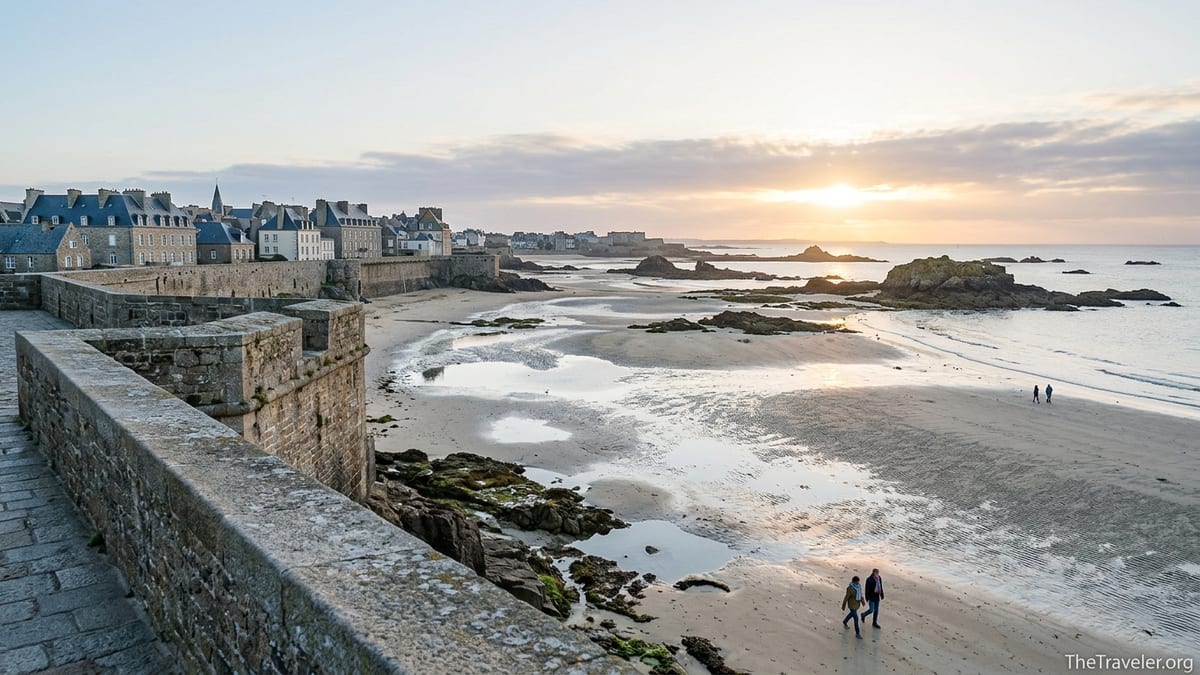
Saint-Malo, in Brittany’s Ille-et-Vilaine department, is a walled port city that makes an atmospheric introduction to the region. The Intra-Muros old town sits within granite ramparts that you can walk in about one hour, with views over sandy beaches and rocky islets exposed at low tide. High-speed trains link Paris to Saint-Malo with a change in Rennes in roughly 2 hours 20 minutes to 2 hours 40 minutes, making it realistic for a three night stay on a first trip. Many travelers pair Saint-Malo with a day trip to Mont-Saint-Michel or to the medieval town of Dinan.
The old town has a dense mix of hotels, apartments and small guesthouses. In shoulder seasons such as May or late September, double rooms in mid-range properties inside the walls often start around 130 to 180 euros per night, with sea-view rooms at a significant premium. Breakfast is commonly an additional 10 to 18 euros per person. Because Saint-Malo is a popular holiday and ferry port, booking well ahead for July and August is almost essential, especially on weekends and during French school holidays.
Food in Saint-Malo leans heavily on seafood and Breton specialities. Around the harbor and along Rue Jacques Cartier, restaurants serve mussels with fries, seafood platters and fish of the day; a main course typically costs 20 to 30 euros, with full seafood platters rising higher. Creperies are a more budget-friendly option and a good introduction to local cuisine. A savory buckwheat galette filled with ham and cheese and a sweet crêpe with salted caramel, plus a glass of Breton cider, will usually come to around 15 to 22 euros per person at a simple sit-down creperie.
Saint-Malo is also a good practical base for exploring the Emerald Coast. Without a car, you can reach nearby Dinard by a short ferry ride in season or by local bus, while organized small group excursions cover Mont-Saint-Michel, Cancale’s oyster farms or the Cap Fréhel headland. With a rental car, a classic day out might combine a morning walk on the ramparts, a drive to Cancale for a plate of fresh oysters around lunchtime and an afternoon at one of the broad beaches between Saint-Lunaire and Saint-Briac-sur-Mer, returning to Saint-Malo for dinner inside the walls.
Accommodation, Transport and Typical Costs
Accommodation in northern France ranges from simple family-run hotels and chambres d’hôtes to business hotels and upscale boutiques. In smaller cities such as Amiens and Bayeux, it is still possible to find comfortable three star rooms from around 90 to 140 euros per night for two people in shoulder season. In high-demand spots like Étretat, Mont-Saint-Michel and Saint-Malo’s walled town, comparable rooms can cost 40 to 60 percent more in July and August. Apartments through rental platforms are common in Lille, Rouen and Saint-Malo, and may be more economical for families or stays of three nights or more, though cleaning fees can narrow the savings for shorter visits.
For transport, first-time visitors typically rely on trains between major hubs and then decide whether to rent a car for specific sections. High-speed TGV or equivalent trains between Paris and Lille, Rennes or Caen are usually cheaper if booked several weeks in advance and can range roughly from 30 to 80 euros one way in second class depending on timing and demand. Regional TER trains, for example between Lille and Amiens or Rouen and Le Havre, are usually fixed-price and more affordable, often in the 10 to 25 euro range for common routes. Car rental in northern France often starts around 40 to 60 euros per day for a compact manual vehicle before fuel, tolls and insurance, with higher prices at peak times or for automatics.
Day-to-day costs will vary by city, but some ballpark figures can help with budgeting. A standard café espresso is commonly around 1.50 to 2.50 euros at the counter, rising on terrace service in tourist hot spots. A glass of house wine in a casual bar can range from 4 to 7 euros, and a local beer in Lille or Saint-Malo is often priced similarly. At bakeries, a fresh baguette might cost just over 1 euro, while filled sandwiches usually sit between 5 and 8 euros. Eating a bakery picnic at least once a day is a practical way to offset the cost of nicer sit-down dinners.
Within cities such as Lille, Amiens and Rouen, local public transport is generally reliable but often not essential for central sightseeing, as historic cores are compact. Lille has a metro and tram network, while Rouen operates trams and buses that can be useful for reaching newer neighborhoods or park-and-ride lots. In coastal zones, services can be more seasonal. For instance, summer-only shuttle buses sometimes connect villages along the D-Day coast, while around Mont-Saint-Michel, dedicated shuttles run regularly between the mainland parking and the causeway from early morning until late at night, and are included in the parking fee.
Food, Drink and Local Specialities
Northern France’s food reflects its climate and history. In Hauts-de-France, hearty dishes and beer pairings are common. In Lille, you will encounter carbonnade flamande, waterzooi-style stews and local cheeses such as Maroilles used in tarts and gratins. Typical estaminets offer set menus at lunch that might include a soup starter, a main such as chicken in Maroilles sauce and a dessert like crème brûlée for 19 to 25 euros. Portions tend to be generous, which makes sharing a starter or dessert a sensible option for light eaters.
Normandy’s reputation rests on dairy, apples and seafood. Menus along the coast near Honfleur, Étretat and the D-Day beaches often feature moules marinières, sole meunière and scallops in season, sided by Normandy cream and butter-rich sauces. Inland, you will see bottles of cider and Calvados on many tables and in shop windows. A glass of local cider at a traditional restaurant commonly costs around 3 to 5 euros, while Calvados and other apple-based spirits are often sold as after-dinner digestifs. Many small producers open their cellars and orchards for tastings, especially from spring to autumn, which can be a memorable break on a driving day between Rouen and the coast.
In Brittany, buckwheat galettes and sweet crêpes dominate casual dining. First-timers quickly learn the difference between the savory galette, often filled with combinations such as egg, ham and cheese, and the dessert crêpe, which might come with butter and sugar, chocolate or salted caramel. In Saint-Malo or Dinan, a traditional creperie may offer fixed-price menus where you choose one savory and one sweet option plus a bowl of cider for around 15 to 20 euros at lunch on weekdays. Seafood is also excellent along the Breton coast, with Cancale near Saint-Malo particularly famous for oysters that many visitors sample by the dozen at simple waterfront stands.
Vegetarians and vegans will find options in larger cities such as Lille, Rouen and Rennes, but choice can narrow in small coastal towns and traditional restaurants. In practice, many visitors assemble meat-free meals from a mix of salads, cheese or vegetable galettes, soups and sides, and increasingly from Asian, Middle Eastern or North African eateries that are present in regional capitals. If you have strict dietary needs, carrying a short explanation in French on your phone and confirming ingredients when ordering can reduce surprises, especially in rural inns where recipes lean heavily on cream, butter and meat stock.
Weather, When to Go and Practical Tips
Weather in northern France tends to be mild rather than extreme, but it can be changeable. Winters from December to February are cool and damp, with daytime highs often in the single digits Celsius and frequent overcast skies. Coastal winds around Étretat, Saint-Malo and the bay of Mont-Saint-Michel can make it feel colder than the thermometer suggests, so good waterproof layers and a warm hat are useful if you visit outside late spring and summer. Snow is possible but not common along the coasts, and coastal towns remain active year-round, though some small hotels and restaurants may close in January.
Spring, from late March to early June, is usually a comfortable time for first-time visitors, with lengthening daylight and blooming countryside around Amiens, Rouen and Bayeux. By May, average daytime highs in cities like Lille and Rennes often reach the mid-teens Celsius, climbing into the low 20s in July and August. Unlike Mediterranean France, northern coastal areas rarely become uncomfortably hot, but heatwaves do occasionally push temperatures higher in cities. Summer also brings the highest visitor numbers to Normandy’s beaches and Brittany’s resorts, which is important to factor in if you want quieter experiences at places such as Mont-Saint-Michel or the American cemetery at Colleville-sur-Mer.
Autumn can be especially appealing. September and early October often provide stable weather, sea temperatures that are still pleasant for hardy swimmers and fewer crowds on the D-Day coast. Vineyard regions are farther south, but apple harvest festivals and markets in Normandy and Brittany give the season a distinctly local flavor. Rain is possible at any time of year, so packing a light, compact umbrella or rain jacket is wise. Because northern France is windy, especially on exposed headlands around Étretat and Cap Fréhel, umbrellas are best combined with a hooded jacket.
Practical details are straightforward. Card payments are widely accepted, though carrying some cash in small notes and coins is helpful for market purchases, small bakeries and rural parking meters. Tap water is drinkable throughout, and restaurants are required to provide a carafe of water on request. Shops in smaller towns may close on Sunday afternoons and Monday mornings, so plan supermarket stops accordingly if you are self-catering. Finally, early booking is important for peak-season stays in Saint-Malo, Étretat and near Mont-Saint-Michel, as well as for guided D-Day tours, which can sell out weeks in advance during June and July.
The Takeaway
A first trip to northern France rewards travelers who balance headline sights with slower moments in small cities and coastal towns. Anchoring your journey around hubs such as Lille, Rouen, Bayeux, Mont-Saint-Michel and Saint-Malo allows you to experience the industrial heritage and Flemish-influenced culture of Hauts-de-France, the layered history and dramatic coastlines of Normandy, and the maritime character of Brittany, all within a relatively compact area. Using trains for long stretches and reserving a few days of car rental only where it simplifies coastal or rural exploration can keep logistics manageable and costs under control.
Whether you are standing below Amiens’ vaulted nave, looking out from Étretat’s cliffs, walking quietly along Omaha Beach or watching the tide race around Mont-Saint-Michel at dusk, northern France tends to leave its imprint through atmosphere more than spectacle. Thoughtful timing, realistic pacing and a willingness to explore beyond one or two famous names will help you discover a region that feels both deeply French and subtly distinct from the rest of the country, and that often tempts visitors back for a second, slower journey.
FAQ
Q1. How many days do I need for a first trip to northern France?
For a first visit that includes at least one city, the D-Day beaches and Mont-Saint-Michel or Saint-Malo, plan on 7 to 10 days. This allows you to spend two nights in Lille or Amiens, three nights in Normandy with one full day for D-Day sites and another for Étretat or Rouen, and two to three nights around Mont-Saint-Michel or Saint-Malo without rushing.
Q2. Is it necessary to rent a car to see the D-Day beaches and Mont-Saint-Michel?
A car is not strictly necessary but is very helpful. You can reach Bayeux or Caen and Mont-Saint-Michel by train, then join organized tours or use shuttles. However, if you want to visit several D-Day sites independently in one day or combine small villages and viewpoints along the coast, a rental car for two or three days gives far more flexibility.
Q3. When is the best time of year to visit Normandy and Brittany?
Late April to June and September are often the most comfortable months, with milder temperatures, long daylight and fewer crowds than July and August. Winter visits can be atmospheric in cities like Rouen, Lille and Saint-Malo, but expect shorter days, cooler weather and occasional seasonal closures in smaller coastal resorts.
Q4. How expensive is northern France compared with Paris?
On average, accommodation and restaurant prices in cities such as Lille, Rouen and Saint-Malo are a little lower than in central Paris, though top coastal locations in high summer can feel similarly priced. A reasonable mid-range daily budget for two people, including a hotel, train tickets between a couple of cities, local transport and two restaurant meals, might fall roughly in the 200 to 300 euro range, depending on travel style.
Q5. Can I visit Mont-Saint-Michel as a day trip from Paris?
It is possible but makes for a very long day, often 13 to 15 hours door to door. Many visitors who attempt this join an organized coach tour that includes transport and a few hours on the island. For a less rushed experience, consider staying at least one night near Mont-Saint-Michel or in Saint-Malo or Rennes, so you can see the island in the evening or early morning when it is quieter.
Q6. What clothes should I pack for a summer trip to northern France?
Even in July and August, weather can shift quickly, especially along the coast. Pack light layers such as T-shirts, a thin sweater or fleece, a windproof and waterproof jacket, comfortable walking shoes and a scarf. Coastal evenings can feel cool, and it is wise to bring at least one slightly smarter outfit for dinners in city restaurants or nicer hotels.
Q7. Is English widely spoken in northern France?
In major tourist areas such as the D-Day beaches, Mont-Saint-Michel, Saint-Malo and central Lille, many people in hotels, museums and restaurants have at least basic English. In smaller towns and rural inns, English may be less common. Learning a few key phrases in French and being patient and polite usually goes a long way and can make interactions more enjoyable.
Q8. How far in advance should I book accommodation and tours?
For travel in late June, July, August and around major commemorations such as early June in Normandy, book hotels and D-Day tours several months ahead if possible. For shoulder seasons, booking three to eight weeks in advance usually provides a good balance between choice and flexibility, though Mont-Saint-Michel and Saint-Malo can still fill quickly on holiday weekends.
Q9. Are the cliffs at Étretat and coastal paths safe for children?
The main paths at Étretat and along much of the Normandy and Brittany coasts are well used, but there are unprotected drops in places. Families should keep children close, respect warning signs and stay behind safety barriers and away from cliff edges, especially in windy or wet conditions. Good footwear and close supervision make the experience safer and more enjoyable.
Q10. What is the best way to combine Lille, Normandy and Brittany in one trip?
A popular route is to arrive in Paris, take the train to Lille for one or two nights, continue by train via Amiens to Rouen, then move on to Bayeux or Caen for the D-Day beaches. From there, travel to the Mont-Saint-Michel area for one night and finish with two or three nights in Saint-Malo before returning to Paris via Rennes. This keeps backtracking to a minimum and balances cities, coast and countryside.