


Northern France mixes grand squares in Lille, quiet villages in Picardy and some of Europe’s most moving First World War and Second World War sites. It is also one of the easiest regions for visitors to explore independently from Paris, yet costs can vary widely depending on how you move around and how deeply you dive into the battlefields. This guide looks at real-world prices in 2025–2026 for trains, hotels, rental cars, battlefield tours, food and daily spending, so you can build a realistic budget for a few days or a full week in northern France.
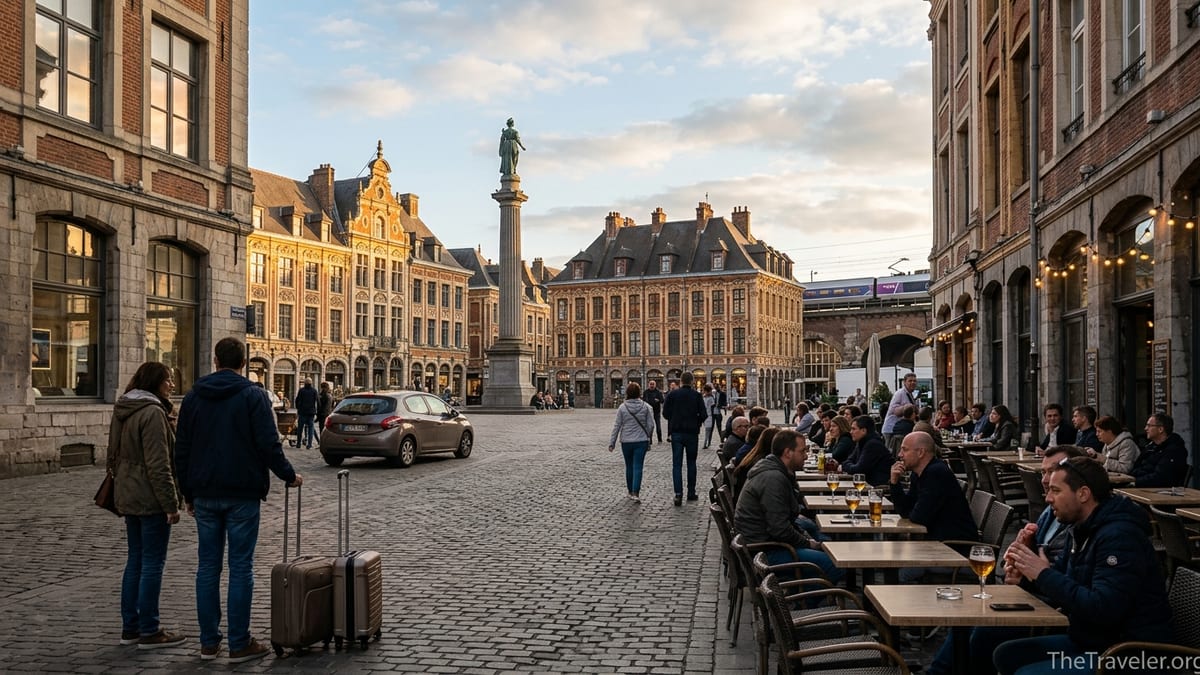
How Much Does a Northern France Trip Really Cost?
For most travelers focusing on hubs like Lille, Arras, Amiens and the Somme and Flanders battlefields, a reasonable total daily budget in 2025–2026 starts around 110 to 150 euros per person for a frugal trip using trains and simple hotels. That figure rises to roughly 170 to 230 euros per person for a comfortable mid-range stay with some guided battlefield touring, and 280 euros or more for higher-end hotels, private tours and frequent dining in well-known restaurants. These ranges assume two people sharing a room; solo travelers should expect to pay about 25 to 40 percent more per person because you do not split accommodation and car costs.
Transport is often the biggest swing factor. If you base yourself in Lille and use regional trains to visit Arras, Dunkirk or Amiens, daily transport can stay under 25 to 30 euros per person. If you rent a car to explore scattered battlefield sites, toll motorways and fuel can easily double that. The other key variable is whether you book organized battlefield tours. Group day tours from Ypres or Arras often run in the region of 150 to 220 euros per person, while entirely private, tailor-made tours of the Somme or Flanders can cost several hundred euros for a couple, turning a modest day into a major splurge.
Season matters as much as style. Hotel market data for France in late 2025 showed national average room prices around the mid‑120 euros mark, with Lille slightly below that level on average over the year. In practice, quiet midweek nights outside major events can still yield simple double rooms under 90 euros, while dates that coincide with big trade fairs or sports tournaments in Lille can push even ordinary hotels well beyond 180 euros per night. It pays to check what is happening locally when you plan.
Hotels and Accommodation: What You Get at Each Price Point
Lille is the most common base for trips into northern France. Tracking prices across more than 200 properties, hotel comparison tools put the average double room in Lille at roughly 110 to 130 US dollars per night, with a median around 100 to 110 dollars. In euro terms that often translates to about 95 to 120 euros for a standard double, though 2‑star and basic 3‑star options on quieter nights can still drop closer to 70 to 90 euros. Four‑star hotels in central Lille tend to cluster in the 180 to 230 US dollar range, particularly around the Old Town and the area between Lille‑Flandres and Lille‑Europe stations.
In smaller towns such as Arras or Amiens, prices are often a little lower. It is usually possible to find chain hotels or independent 2‑ and 3‑star properties near the station or historic center from around 75 to 110 euros per night for two people. Country inns and chambres d’hôtes around the Somme villages sometimes charge closer to 90 to 130 euros for a double including breakfast, particularly when they cater for battlefield visitors and cyclists. These rural places may have less competition, so prices do not always fall as much as travelers expect compared with the cities.
At the budget end, hostel beds and low‑cost chains can still keep you below 50 to 60 euros per person per night. For example, a couple might book a basic double in a budget chain hotel on the outskirts of Lille or Arras, park for free and take the tram or walk into town. At the top end, Lille and Arras both have characterful boutique hotels in restored townhouses whose rates can run from about 220 to more than 300 euros per night in peak periods, especially for larger rooms or suites with views over places such as the Grand’Place in Lille or the Grand’Place in Arras.
As a planning rule, you can expect a realistic nightly budget (for two people) of roughly 80 to 120 euros for simple but decent rooms, 130 to 200 euros for comfortable central 3‑ and 4‑star hotels, and 220 euros and up for the best located boutique or upscale properties. Booking at least several weeks ahead, avoiding major conferences and weekends with large football matches, and targeting Sunday nights can all help bring those numbers down.
Trains, Regional Transport and Getting Around Without a Car
France’s high‑speed and regional train network makes it straightforward to reach northern France without driving. The classic route is Paris to Lille. The direct high‑speed journey covers about 250 kilometers in roughly one hour. Discount operators on that corridor advertise adult fares that can drop as low as around 10 to 20 euros one way when booked well in advance for off‑peak trains, while flexible same‑week tickets on regular TGV services are more commonly in the 40 to 70 euro range in second class. Traveling at business peaks such as Friday evenings usually costs more than mid‑morning or late‑evening departures.
Once in Lille, regional TER trains connect to nearby cities and many battlefield gateways. Short hops such as Lille to Arras or Lille to Dunkirk typically take 35 to 50 minutes and often cost in the rough range of 10 to 20 euros each way, depending on timing and fare type. Lille to Amiens, another common route for Somme visitors, usually comes in a little higher but still tends to be well under 30 euros in second class. Buying tickets a few days in advance using official rail apps often yields modest discounts compared with same‑day station purchases, but the difference within northern France regional services is often smaller than on long‑distance TGV routes.
Local transport within cities is an additional but manageable cost. Lille has a compact center you can walk around, but its metro and tram network is handy for budget hotels or park‑and‑ride areas. A single public transport ticket typically costs just a few euros, with 10‑journey books and day passes providing better value for intensive sightseeing days. Arras and Amiens are more walkable still, though occasional buses or taxis may be helpful when arriving or leaving with luggage or visiting suburban museums and memorials. Budget around 5 to 10 euros per person per day for in‑town transport if you are staying centrally, rising to 15 euros or so if you rely heavily on city transit.
Travelers combining northern France with Belgium sometimes use cross‑border trains between Lille and cities like Kortrijk, Tournai or Brussels. Advance deals on these services can offer fares from around 15 to 25 euros each way. However, for travelers whose main focus is battlefield touring rather than city breaks, it is often more efficient either to base in Ypres in Belgium and day‑trip into France or to rent a car directly in Lille or Arras to gain full flexibility over rural stops.
Rental Cars, Tolls, Parking and Fuel
Many of the most evocative battlefield sites in northern France sit in small villages or countryside far from rail stations, so a rental car can be worthwhile if you want to explore beyond the main memorials. Base rental prices in France vary by season and location, but travellers routinely report compact manual cars in the rough range of about 30 to 50 US dollars per day for short bookings, with automatic transmissions often costing noticeably more. Official tariff guides for major rental brands in France in 2025 show surcharges of around 13 percent when picking up at airports or major railway stations such as Lille‑Europe, Paris Gare du Nord or regional TGV hubs, so collecting a vehicle in the city can sometimes save money.
In practical terms, a typical visitor renting a small car in Lille for three days to tour the Somme might pay in the region of 40 to 60 euros per day including basic insurance but excluding fuel. Extras such as young driver fees, additional drivers, automatic transmission, GPS units or cross‑border permissions into Belgium can push the price higher. Some travelers secure longer‑term mini‑leases for multi‑week trips which can bring the per‑day rate down toward the mid‑20 euros range, but this usually requires arranging well in advance and meeting specific conditions.
Fuel and tolls are the hidden costs. Motorway tolls between Paris and Lille or between Lille and Calais are not extreme by French standards yet will still add perhaps 15 to 30 euros to a day of heavy motorway driving, depending on routes. Within the immediate Somme and Artois regions, many visitors choose to use toll‑free secondary roads which are slower but more scenic and help keep costs down. Parking in central Lille commonly runs at perhaps 20 to 30 euros per 24 hours in secure garages, while many smaller towns and villages still offer free or very inexpensive parking close to memorials and cemeteries.
A reasonable daily budget for a couple using a rental car in northern France, assuming moderate driving, is around 30 to 40 euros for the car itself, 15 to 25 euros for fuel, 5 to 15 euros for tolls and 10 to 20 euros for occasional parking. That puts typical car‑related costs in the approximate 60 to 90 euros per day range for two people. If you compare that with two people buying multiple regional train tickets plus local buses and taxis, the car becomes financially attractive once you value the extra time and flexibility, particularly for intensive battlefield days.
Battlefield Tours and Major Attractions: What You Can Expect to Pay
Northern France is one of the world’s key regions for battlefield tourism, especially around the Somme, Vimy Ridge, Arras and the Channel coast. Prices vary widely between large group bus tours, small‑group minivan excursions and private guides crafting personalized itineraries. For example, a full‑day Canadian First World War tour combining Vimy and the Somme, sold through major travel platforms and departing from nearby Ypres, can cost close to 500 US dollars for one adult, effectively a high‑end small‑group or semi‑private experience.
Dedicated battlefield operators working out of the Somme list starting prices for private vehicle tours of around 275 euros for a full day covering key Somme sites for up to four people, with similar rates for private walking tours over the same ground. In the Ypres Salient just across the border, private half‑day tours from Bruges or Ypres commonly start around 450 euros per group, rising to over 550 euros for full‑day itineraries. These figures include the guide and transport but not your meals. For two or three travelers sharing, that can work out at roughly 160 to 250 euros per person for an intensive, personalized day on the battlefields.
Small‑group tours, where you share a minivan with other visitors, usually come in lower. Some operators advertise per‑person rates from about 165 euros for standard half‑ or full‑day Ypres battlefield tours. Mixed Somme and Ypres itineraries running over several days from the United Kingdom, including accommodation, can be priced upwards of 700 pounds per person, reflecting hotel costs and ferry or tunnel crossings in addition to the guiding.
If you are on a tighter budget, self‑guided battlefield days are entirely possible at a fraction of these prices. Major memorials such as Thiepval on the Somme and many Commonwealth cemeteries have free entry. Some excellent local museums charge only modest admission, often around 8 to 15 euros per adult. With a hire car and good mapping, a couple could explore all day for the price of fuel and a museum ticket or two each. However, what you save in money you may spend in time and research effort, since many smaller sites have limited interpretation on the ground.
Food, Drink, Museums and Everyday Spending
Day‑to‑day costs away from transport and hotels are fairly predictable in northern France. For breakfast, many hotels include a buffet in the room rate, otherwise expect around 7 to 12 euros per person for a simple coffee, pastry and juice in a café. A quick bakery lunch of a baguette sandwich and a drink can easily come in under 10 euros, while a sit‑down lunch formula in a brasserie in Lille or Amiens might run 15 to 22 euros excluding drinks. Ordering tap water is normal and helps keep costs down.
For dinner, mid‑range restaurants in central Lille often charge around 22 to 30 euros for a main course, with set menus starting in the high 20s or low 30s. In smaller towns like Arras or Albert near the Somme, you can still find hearty regional dishes for slightly less, though popular places with good reviews tend to charge similar prices to the cities. Adding a glass of wine or a local beer typically adds 5 to 8 euros. Travelers willing to assemble picnics from supermarkets, markets and bakeries can keep daily food spending under 25 to 35 euros per person, while those who enjoy a restaurant meal most days may average more like 45 to 65 euros per person.
Museum admissions are generally reasonable. The Musée des Beaux‑Arts in Lille, one of France’s major fine art museums outside Paris, often charges a standard adult ticket around the low to mid‑teens of euros. Smaller regional museums and many battlefield interpretation centers are in a similar price band, frequently 8 to 14 euros per adult. A budget of 10 to 20 euros per day per person for cultural admissions is usually sufficient for travelers who visit a couple of paying sights over a two‑ or three‑day stay.
Other minor costs include café coffees at 2 to 4 euros, local beers at 4 to 7 euros in bars, and occasional taxis, which can be expensive over longer distances. From a practical standpoint, allocating a cushion of 10 to 20 euros per day for incidental spending on snacks, postcards, public toilets and unexpected small expenses keeps your budget honest and reduces the need to track every coin.
Sample Daily Budgets: Budget, Mid‑Range and Higher‑End
Putting all of this together, it is helpful to consider three archetypal daily budgets per person for a trip to northern France, based on two people traveling together and sharing a room. At the budget level, imagine two friends staying in a simple 2‑ or 3‑star hotel or guesthouse at roughly 90 to 110 euros per night total, sharing breakfast in bakeries, using regional trains and buses, and focusing mainly on free sites and a few low‑cost museums. Their daily numbers might look like 45 to 55 euros each for accommodation, 25 to 35 euros for food, 15 to 25 euros for local transport and occasional admissions, and 10 to 15 euros for incidentals. That produces a realistic budget in the region of 95 to 130 euros per person per day.
A mid‑range couple willing to pay for more central hotels, at say 140 to 180 euros per night including breakfast, dine most evenings in brasseries and schedule one or two small‑group battlefield tours in a week would see a different picture. Their per‑person share of accommodation would be around 70 to 90 euros, food perhaps 40 to 60 euros, daily averaged tour costs (factoring in two or three days with 170‑euro tours) around 25 to 50 euros, plus 15 to 25 euros for regional trains, buses or modest car use and 10 to 15 euros for incidental spending. That lands them roughly in the 170 to 230 euros per person per day band.
At the higher‑end, travelers staying in 4‑ or 5‑star hotels in Lille or in atmospheric boutique properties in Arras, booking private battlefield guides for multiple days, sampling top restaurants and using rental cars for convenience might expect to spend substantially more. A hotel bill of 230 to 300 euros per night, private tours priced in the 300 to 500 euros per day band shared between two, car costs of 60 to 90 euros per day and generous food and drink spending can easily push the daily total toward or above 280 to 350 euros per person, especially once extras such as shopping or side trips into Belgium are added.
These figures are not strict rules but practical planning frames based on current price patterns. The same trip can be nudged down by booking accommodation early in shoulder seasons, self‑guiding some battlefield days and making intelligent use of regional trains, or nudged up by traveling at short notice during major sports or cultural events when hotels in Lille and Arras fill rapidly.
The Takeaway
Northern France remains a region where travelers can experience powerful history, grand Flemish‑influenced architecture and relaxed small‑town life without the intense price pressures of Paris or the Riviera. Yet the spread between a basic and a more indulgent visit is considerable, driven above all by hotel choice, how you travel between towns and how you choose to explore the battlefields. A modest yet comfortable stay built around trains, simple hotels and a mix of self‑guided and small‑group tours can be kept inside the mid‑hundreds of euros per person for several days, while trips anchored around upscale lodging and repeated private guiding can reach costs more typical of long‑haul expedition travel.
For most visitors, the sweet spot lies in planning ahead, deciding where you truly value expert guidance and where you are happy to explore independently, and striking a balance between city comforts in Lille or Arras and quieter overnights closer to the Somme or Vimy Ridge. With a clear sense of realistic daily costs and a willingness to adjust plans as prices and availability shift in 2025 and beyond, you can build a northern France itinerary that respects both your interests and your budget.
FAQ
Q1. How many days do I need in northern France to see key battlefields without rushing?
Most travelers find that three to five full days is enough to visit Lille or Arras, spend at least one full day on the Somme, another at Vimy Ridge and Arras, and optionally include a day trip to Dunkirk or cross into Belgium for Ypres.
Q2. Is it cheaper to visit the Somme and Vimy Ridge with a rental car or on guided tours?
Self‑guiding with a rental car is usually cheaper overall, especially for two or more people, but guided tours provide context that many visitors value, so a common compromise is to book one key guided day and explore the rest independently.
Q3. Can I base entirely in Lille and visit the battlefields on day trips by train?
You can reach Arras and Amiens from Lille by train and then take local taxis or limited buses to some sites, but many cemeteries and smaller memorials are hard to reach without a car or organized tour, so purely train‑based visits work best if you focus on major memorials and museums.
Q4. When are hotel prices lowest in northern France?
Prices are often lower in late autumn and winter outside Christmas and New Year, and midweek in shoulder seasons such as March, April, October and November, though specific dates with trade fairs or football matches in Lille can still push rates up.
Q5. Are battlefield museums and memorials suitable for children, and do they get discounts?
Many museums and interpretation centers are designed for a broad audience and often offer reduced or free admission for children and teenagers, but parents should be prepared for emotionally heavy content, particularly around trenches, cemeteries and photographic displays.
Q6. How far in advance should I book battlefield tours in the Somme or Ypres area?
In peak months from late spring through early autumn, it is sensible to book popular small‑group or private tours at least several weeks in advance, and even earlier around major anniversaries or long holiday weekends, while off‑season dates can sometimes be arranged at shorter notice.
Q7. Do I need cash, or is card payment widely accepted in northern France?
Cards are widely accepted in hotels, restaurants, train stations and larger museums, but carrying some euros in cash is useful for small village cafés, local markets, church donations and the occasional unmanned parking machine that may not accept foreign cards.
Q8. Is driving and parking difficult in Lille and around battlefield areas?
Driving in central Lille can feel busy and parking is mostly in paid garages, but rural roads around the Somme, Vimy and Dunkirk are generally quiet and straightforward, with many memorials offering free or low‑cost parking nearby.
Q9. Can I combine northern France with a short visit to Belgium on the same trip?
Yes, many travelers pair a base in Lille or Arras with one or two nights in Ypres or Bruges, using trains or a rental car to cross the border, which adds variety but increases accommodation and transport costs slightly.
Q10. How much should I budget per day as a solo traveler in northern France?
Solo travelers paying full room and car costs themselves typically need to budget around 30 to 40 percent more per person than couples; a realistic solo figure in 2025–2026 for a mid‑range, mostly train‑based trip is often around 190 to 250 euros per day, depending on how many guided tours and restaurant meals are included.