


Linking Paris, Provence and the French Riviera in a single trip is one of the classic France itineraries. With high speed trains, reliable regional services and straightforward highways, it is now relatively simple to combine the Louvre and Eiffel Tower with lavender-scented villages and Mediterranean promenades in a week to two weeks, provided you choose smart bases and do not overpack the schedule. This guide sets out realistic 7, 10 and 14 day routes that connect Paris with either Avignon or Aix-en-Provence and finish in Nice or Cannes, with concrete examples of train times, when to rent a car, and where it makes sense to stay.
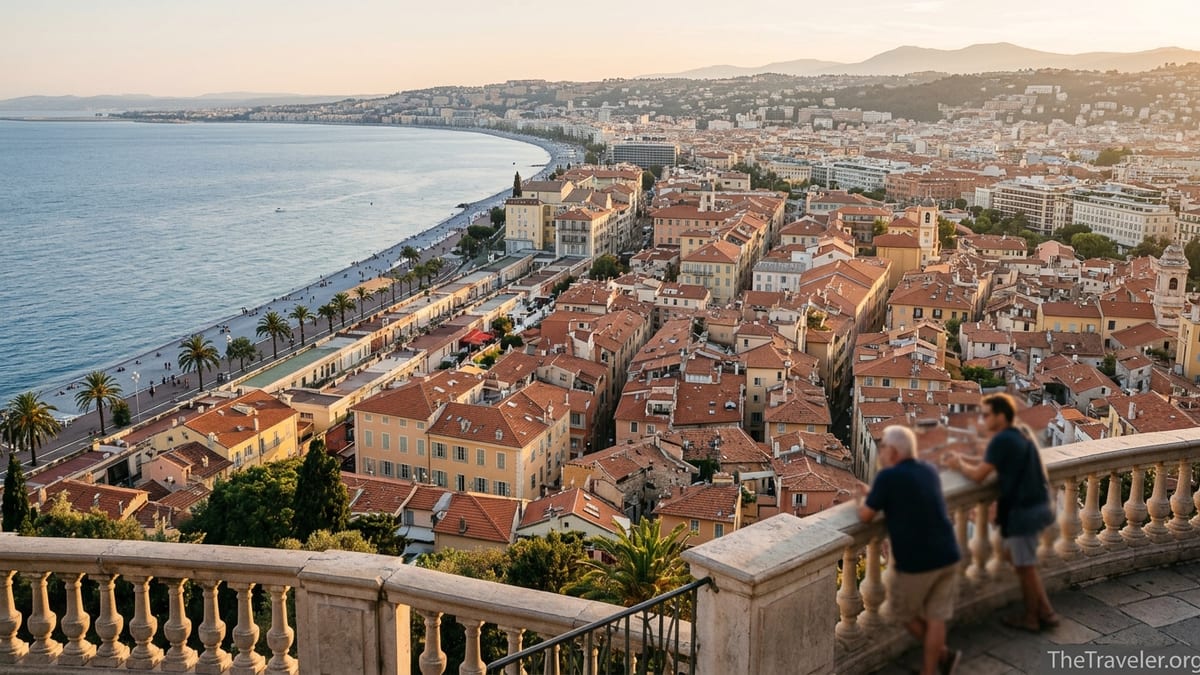
How to Structure a Paris, Provence and French Riviera Trip
The first decision is how many bases you want. For most travelers, three main bases work best for this route: Paris, one hub in Provence such as Avignon or Aix-en-Provence, and one hub on the Riviera such as Nice or Cannes. This limits hotel changes while keeping day trip options wide. For example, a 10 day trip might reasonably break down as four nights in Paris, three in Avignon and three in Nice.
Next, decide whether to prioritize trains or driving. Between major cities, high speed TGV services are usually faster and more relaxing than driving. The TGV from Paris to Avignon TGV station typically takes around 2 hours 40 minutes, and Paris to Aix-en-Provence TGV is often about 3 hours. From Provence to the coast, you can either continue by rail or pick up a rental car to explore hill towns and the Var countryside before dropping the car in Nice or Cannes.
Season matters too. In July and August, both Provence and the Riviera can be crowded and hot, with heavy traffic on the A8 motorway that links Aix-en-Provence, Cannes and Nice. Shoulder seasons such as May, June, September and early October usually offer more comfortable temperatures and easier driving and parking. Winter brings quieter streets, lower hotel prices and fewer crowds in places like Avignon and Aix, while the Riviera remains relatively mild and lively.
Budget also shapes choices. High speed train fares on routes like Paris to Avignon or Paris to Aix can vary widely depending on how far in advance you book and whether you choose flexible tickets or discounted options. Rental cars for Provence and the Riviera may start around the equivalent of 40 to 60 euros per day from major brands at Marseille Provence Airport or city agencies, before fuel, tolls and insurance. Choosing apartment-style stays in cities like Aix or Nice, rather than multiple rural properties, can trim costs on short stays.
Train Versus Rental Car: What Works Best Where
On this itinerary, use trains for long intercity hops and consider a car only where it unlocks clear benefits. High speed TGV trains link Paris-Gare de Lyon with Avignon TGV and Aix-en-Provence TGV in roughly three hours or less, with several departures each day. Many travelers will simply step off their transatlantic flight in Paris, spend three or four nights in the city, then board a morning TGV south after breakfast, arriving in Provence in time for a late lunch.
Once in Provence, the choice becomes more nuanced. If you stay in central Avignon and plan only a few easy day trips, regional TER trains and local buses are usually sufficient. For instance, frequent regional trains connect Avignon with Arles and Nîmes in under an hour, and buses head into wine country around Châteauneuf du Pape. However, if you want to reach smaller villages in the Luberon such as Gordes, Roussillon or Lourmarin, or explore back roads around Mont Ventoux, a rental car gives you significantly more flexibility.
On the stretch between Provence and the Riviera, both train and car work. Direct trains from Avignon TGV to Nice Ville generally take around three and a half hours, with several services per day. From Aix-en-Provence TGV or Marseille, you can connect east towards Cannes and Nice in a similar time frame. Driving along the A8 motorway from Aix to Nice is typically a two to two and a half hour journey in normal conditions, covering roughly 175 to 180 kilometers, but summer or weekend traffic can extend that. Drivers pay tolls on this highway and should expect fuel and toll costs to be a noticeable line in the budget.
On the Riviera itself, public transport is stronger than many first-time visitors expect. Trains run frequently between Nice, Antibes, Cannes, Monaco and Menton along the coastal line, often taking under 40 minutes between neighboring cities. Inside Nice, trams and buses cover most visitor needs, and in Cannes the central area is walkable from the train station. Because of this, many travelers choose to return their rental car when they reach Nice or Cannes, relying on rail and local transport for the rest of their stay to avoid parking hassles and tight streets.
Choosing Your Bases: Paris, Avignon vs Aix, Nice vs Cannes
Paris is the natural starting point, especially for visitors flying in from North America or Asia. Aim for three to four nights to adjust to the time zone and see core sights. Staying in central districts such as the 1st, 4th, 5th, 6th or 7th arrondissements places you within easy reach of the Seine, the Louvre, the Latin Quarter and the Eiffel Tower. Hotels near Gare de Lyon, such as midrange chains and independent boutiques around the Bastille area, can be convenient if you plan to catch a morning TGV to Avignon or Aix.
In Provence, Avignon and Aix-en-Provence each offer distinct advantages. Avignon, on the Rhône River, is on the main TGV line and has a walled medieval center dominated by the Palais des Papes. A couple might stay in a small guesthouse inside the walls and use Avignon as a gateway to the vineyards of the Rhône and Roman sites like the Pont du Gard. Aix-en-Provence is a university and market town with fountains, plane trees and a strong café culture on the Cours Mirabeau. It is slightly further from the main TGV line, served by the outlying Aix-en-Provence TGV station, but well positioned for day trips to Marseille, the Calanques coast, and inland villages.
On the Riviera, Nice and Cannes are the two most practical hubs for this itinerary. Nice offers a mix of city life, Old Town charm and a long seafront promenade, along with an international airport that often makes it the exit point for return flights. Areas around the Promenade des Anglais, the Carré d’Or and the edge of the Old Town provide a large range of hotels and apartments, from business hotels with sea views to smaller pensions on side streets. Cannes is smaller and more focused on its seafront boulevard and film festival culture. Travelers who prefer a compact, resort feel might stay near La Croisette and use the regional trains for day trips to Antibes, Grasse or even Monaco.
Consider logistics when choosing bases. For example, a family arriving in Paris, traveling on to Avignon, then finishing in Nice before flying home to the United States might deliberately choose hotels within 10 to 15 minutes’ walk of major train stations to simplify luggage handling. Real world examples would include a midrange hotel near Avignon Centre station, then an apartment within walking distance of Nice Ville for easier arrival with suitcases from the TGV.
A Realistic 7 Day Paris, Provence and Riviera Itinerary
A seven day route works best if you accept that you will only sample each region. One efficient structure is two nights in Paris, two in Avignon or Aix and three on the Riviera, with high speed trains linking the three hubs and little or no driving. This suits travelers who prefer not to rent a car and who are comfortable prioritizing a few key experiences over exhaustive coverage.
On days one and two, explore Paris. After landing, drop luggage at a central hotel and spend the afternoon walking the Seine, perhaps moving from Notre Dame’s surroundings to the Louvre courtyard and into the Tuileries Gardens. The second day might focus on the Eiffel Tower area in the morning and the Musée d’Orsay in the afternoon, followed by an evening in Saint-Germain-des-Prés. Many visitors prebook timed entry tickets at major museums to avoid long lines, especially in summer.
On day three, take a morning TGV from Paris-Gare de Lyon to Avignon TGV or Aix-en-Provence TGV, aiming to arrive around lunchtime. Check into a hotel inside Avignon’s walls or near Aix’s Cours Mirabeau, then spend the afternoon exploring markets and historical streets. Day four can be a focused day trip by regional train or organized tour: for example, from Avignon to Arles for Roman ruins and Van Gogh sites, or from Aix to Marseille’s Vieux-Port and the Notre Dame de la Garde basilica, returning by early evening.
On day five, travel to the Riviera. From Avignon TGV, ride a direct or one-change train to Nice Ville in roughly three and a half hours, or from Aix-en-Provence connect via Marseille or Toulon to reach Cannes or Nice. After checking into a seafront hotel or Old Town apartment, spend the rest of the day strolling the Promenade des Anglais in Nice or La Croisette in Cannes. Days six and seven can be devoted to short rail-based trips, such as an afternoon in Antibes from either Nice or Cannes, or a half day in Monaco from Nice, with plenty of time left for swimming, markets and terrace dining.
A 10 Day Itinerary With Time for Day Trips
With 10 days, travelers can slow the pace and add more varied day trips. A balanced template is four nights in Paris, three in Avignon or Aix and three in Nice or Cannes. This allows for a Versailles visit from Paris, at least one rural or wine-focused excursion in Provence, and two or three Riviera side trips without feeling rushed. Couples and small groups often find this length ideal for a first France visit.
On days one to four, base in Paris. In addition to classic sights, set aside one full day for a trip to the Palace of Versailles, using the RER commuter train from central Paris and allowing time for both the palace and the gardens. Another day might include a food tour in a neighborhood such as the Marais or Montmartre, which can be booked through established operators that limit group sizes and arrange tastings at local bakeries and cheese shops. Evenings can be relatively unstructured, with simple bistro dinners and relaxed walks along the river.
On day five, board a late morning TGV to Avignon or Aix and settle into your Provence base. Days six and seven can feature deeper excursions. From Avignon, a real world day could involve renting a car for 24 hours from a local branch near the station, driving to Gordes and Roussillon in the Luberon, picnicking with market produce and returning by evening. From Aix, another option is to drive or take a guided tour to the Calanques near Cassis, where small boats depart for limestone inlets with turquoise water, conditions permitting. In both cases, building one car day into a mostly train-focused trip provides access to smaller villages without committing to a full week of driving.
On day eight, travel east to the Riviera. A direct Avignon TGV to Nice Ville train in around three and a half hours lets you arrive mid afternoon. After checking in, you might explore Nice’s Old Town and market square, then climb to the Colline du Château viewpoint before sunset. Day nine could be spent on a round trip to Monaco or Villefranche-sur-Mer by regional train, while day ten serves as a final coastal day, perhaps visiting Antibes in the morning and finishing with a sunset swim back in Nice or a farewell dinner overlooking the harbor in Cannes, depending on your base.
Stretching to 14 Days: Deeper Provence and a Slower Riviera
A 14 day itinerary opens up more of the countryside between Provence and the Riviera and permits longer stays in each base. One workable structure is four nights in Paris, five in Provence and five on the Riviera, with a mix of train and rental car. This length suits travelers who enjoy lingering in markets, cafes and smaller villages rather than checking off a long list of major sights every day.
After four days in Paris, day five becomes your travel day to Provence, as in the shorter itineraries. With five nights in Avignon or Aix, you could split your stay between a city base and a rural property if you do not mind an extra hotel change. For example, spend three nights in Aix at a central hotel, then two nights at a countryside inn or vineyard guesthouse in the Luberon, rented car in hand. Over these days, you might visit hill towns like Bonnieux and Ménerbes, tour wineries in the Côtes du Luberon, and walk short trails at the foot of Mont Sainte-Victoire.
Between Provence and the Riviera, a rental car allows you to turn a simple transfer into a mini road trip. Leaving Aix in the morning on the A8 motorway, you can detour toward the Verdon Gorge, stopping for viewpoints and a lakeside lunch if you are comfortable with mountain roads, then continue toward the coast for an evening arrival in Nice or Cannes. Alternatively, drivers can exit near Fréjus or Saint-Raphaël and follow slower coastal roads through seaside towns before looping into their final base. Travelers who prefer not to drive this segment can still use a direct or connecting TGV service from Avignon or Aix to Nice Ville and then rent a car locally for one or two day trips into the surrounding hills if desired.
Once on the Riviera for five nights, you will have time for both coastal relaxation and interior excursions. From Nice, one day might focus on eastward destinations such as Monaco and Menton by train, another on westward stops like Antibes and Cannes, and a third on hilltop villages like Èze, reached with a combination of trains and local buses or a short taxi ride. Additional days can be left mostly unplanned to adapt to weather and energy levels, with simple routines like morning market visits, afternoon beach time and evening aperitifs overlooking the sea.
Practical Planning Tips on Timing, Booking and Budget
When planning this route, it is helpful to work backwards from fixed dates such as flights and events. For example, if you already hold tickets to the Avignon Theatre Festival, usually in July, you might anchor your Provence days around those performances and fit Paris and the Riviera around them. Travelers who want to avoid heat and crowds often look instead at May, early June, late September or early October, when hotel prices and rental car availability can be more favorable than in peak season.
Booking transport early usually saves money. For high speed trains like Paris to Avignon or Aix, advance purchase tickets often go on sale several months ahead, with the lowest prices selling out first. Travelers can compare first and second class fares for specific days; on some off peak dates, a slightly higher first class ticket can offer more space and quieter cars for only a modest difference. For the Avignon to Nice or Aix to Cannes segments, checking both direct and one-change options can reveal faster or cheaper combinations, especially outside weekends.
On the accommodation side, many visitors now mix hotels and apartments. In Paris and Nice, centrally located apartments with kitchens can be cost effective for families or groups staying four nights or more, especially when they cook simple breakfasts and a few dinners with local ingredients. In Provence, where check in times and rural locations can make self-catering more complex, compact hotels and guesthouses close to historic centers are often more practical. It is wise to confirm whether your lodging offers air conditioning and soundproofing, particularly in city centers where cafes and bars keep late hours in summer.
Budget wise, this itinerary can flex widely. A couple traveling in shoulder season might spend moderately on midrange hotels, second class train tickets and occasional rental car days, while splurging on a few memorable experiences such as a tasting menu in Paris, a private wine tour from Avignon or a seaside restaurant in Antibes. Conversely, those watching costs closely can rely more on picnic lunches from markets, free walking routes, and inclusive museum passes in Paris or Nice to keep daily expenses in check.
FAQ
Q1. Is it better to start in Paris or on the French Riviera?
For most international travelers it is easier to start in Paris, adjust to the time zone there, then continue south by high speed train. Those finding good flight options into Nice could reverse the route, finishing with Paris before flying home.
Q2. Do I need a rental car for this itinerary?
You do not need a car for the entire trip. Most travelers use trains between Paris, Provence and the Riviera, then rent a car only for one or more days in Provence if they want to reach smaller villages that are not well served by public transport.
Q3. Should I base in Avignon or Aix-en-Provence?
Avignon is better if you prioritize easy TGV access and excursions to Roman sites and Rhône vineyards. Aix-en-Provence suits travelers who enjoy a lively café scene, markets and access to Marseille and the Calanques, though it involves a short transfer from the out-of-town TGV station.
Q4. Is Nice or Cannes a better base on the Riviera?
Nice generally works better for first-time visitors thanks to its larger accommodation choice, strong transport links, Old Town and airport. Cannes is a good choice if you prefer a compact resort feel and plan to spend more time along its beach and promenade.
Q5. How far in advance should I book TGV tickets?
It is sensible to start checking prices a few months before travel and to book once you have fixed dates. The cheapest advance fares often sell out first, especially for popular morning and weekend departures.
Q6. What is a realistic budget for a 10 day trip on this route?
Budgets vary widely, but many midrange travelers plan on a moderate daily amount per person to cover accommodation, meals, activities and local transport, then add line items for intercity trains and any rental car days. Adjust up or down based on lodging style and restaurant choices.
Q7. Is this itinerary suitable for children?
Yes, with some adjustments. Families might slow the pace, choose apartment stays with kitchen and laundry facilities, and build in more park, beach and pool time, especially on the Riviera. Shorter museum visits and centrally located accommodations also help with younger children.
Q8. Can I visit lavender fields on this trip?
In late June and early July, travelers based in Provence can often reach lavender areas on the Valensole plateau or in parts of the Luberon by rental car or organized tour. Outside that window, fields are usually green or harvested, though hill towns and landscapes remain attractive.
Q9. Is driving on the A8 motorway difficult for foreign visitors?
The A8 is a modern multi-lane toll motorway, but it can be busy, especially in summer and on weekends. Visitors should be comfortable with European highway driving, paying tolls and navigating potentially heavy traffic around cities like Cannes and Nice.
Q10. How many nights should I spend in each place on a 14 day trip?
A common pattern is four nights in Paris, five in Provence and five on the Riviera. Travelers who are more focused on countryside and sea might reduce Paris to three nights and add the extra night to Provence or the coast.