


Choosing where to stay in France is the decision that shapes your entire trip. The right base can turn a busy itinerary into a relaxed adventure, whether you are planning a first visit to Paris, a slow week in Provence, a beach break on the Riviera, or a countryside road trip through Normandy, the Loire or Bordeaux. This guide compares France’s major regions as bases, with concrete suggestions for couples, families, beach lovers, luxury breaks and self-drive itineraries.
How to Choose Your Base in France
Before you zoom in on a specific city or village, be clear on how you will move around. If you are relying on trains and public transport, bases like Paris, Nice, Avignon and Bordeaux give you direct TGV connections and frequent regional trains. If you are renting a car, you can consider smaller towns and countryside stays such as Saint-Rémy-de-Provence, Bayeux in Normandy or Luberon hilltop villages, which offer more character but require driving on rural roads.
Think about what you want most from your days. First-time visitors often do best in compact, walkable centres with plenty of restaurants and sights on the doorstep. Couples may prioritize atmosphere and views, from a Left Bank boutique hotel with Eiffel Tower glimpses to a stone farmhouse surrounded by vineyards in Provence. Families usually benefit from space, pools and easy logistics, which often points to apartment rentals or family resorts on the Riviera, Atlantic coast or in the Alps.
Budget plays a big role. In Paris or on the Côte d’Azur, central, well-reviewed hotels in high season can easily start around 250 to 350 euros per night for a standard double, while comfortable countryside chambres d’hôtes and small hotels in regions like the Loire or Dordogne may be closer to 120 to 180 euros outside peak summer. Prices also swing sharply between July and August school holidays, shoulder seasons in May, June, September and October, and quieter winter months outside the Alps.
Finally, consider whether you want a single base or a split stay. For example, many travellers pair four nights in central Paris with three nights in the Loire or Normandy, or combine a few nights in a Provençal town such as Aix-en-Provence with three or four nights in a Luberon village or a Riviera seaside town. Two well-chosen bases often work better than packing and unpacking every night.
Paris: Best Areas for First-Timers, Couples and Families
For a first trip to Paris, staying in or close to the central arrondissements 1 through 7 makes it easier to explore on foot. Travel writers and recent 2026 city guides consistently highlight the Marais in the 3rd and 4th, Saint-Germain-des-Prés in the 6th, and the area around the Eiffel Tower in the 7th as reliable bases for first-time visitors, balancing character, safety and access to landmarks. A typical mid-range boutique hotel in these districts often costs roughly 250 to 400 euros per night in spring or autumn, and more during major events or summer.
Couples often gravitate to Saint-Germain and the Ile Saint-Louis for their narrow streets, historic facades and classic cafés. Here, you can find small design hotels in 18th-century townhouses, many with breakfast courtyards or tucked-away lounges that feel more intimate than large chains. If you want more local, less touristy nightlife, look at the upper Marais around the 3rd, the 9th near rue des Martyrs, or the 11th near Bastille and Oberkampf, which have dense clusters of bistros and wine bars while still offering fast metro connections.
Families may appreciate slightly larger rooms, kitchenettes and calmer streets. Areas such as the 15th around La Motte-Picquet, parts of the 16th near Jardins du Trocadéro, or the 12th near the Coulée verte often have more residential buildings and supermarkets, plus playgrounds within walking distance. Apartment-style hotels and serviced apartments are increasingly common; a two-bedroom unit with a small kitchen can sometimes be found for around 300 to 450 euros per night in shoulder season, which can be better value than booking two hotel rooms.
Paris also offers excellent options for tight budgets if you are willing to stay a bit further out, such as parts of the 10th near Canal Saint-Martin or the 19th near Buttes-Chaumont. In these neighbourhoods, you can sometimes find simple but clean hotels and hostels around 120 to 180 euros per night for a double, or under 50 euros per person in dorms, while remaining 15 to 25 minutes by metro from the Louvre or Notre-Dame.
Provence: Towns, Villages and Countryside Mas
In Provence, the choice is usually between basing in a small city with good transport, a postcard-perfect village, or a countryside farmhouse known locally as a mas. Recent regional guides and local specialists tend to recommend Avignon and Aix-en-Provence as the most practical hubs if you are arriving by train and want to take day trips without driving every day. Avignon’s walled centre places you near the Palais des Papes and frequent trains toward Arles, Nîmes and the Luberon, while Aix offers elegant streets, markets and easy road access to the coast and inland villages.
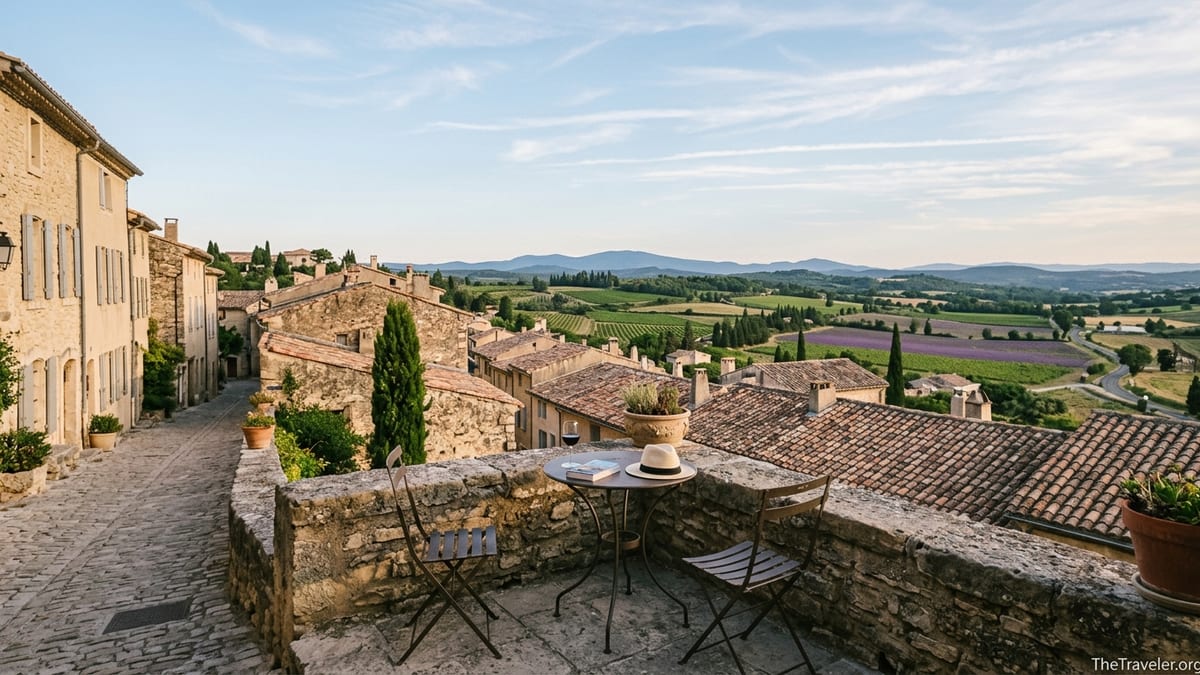
If you are renting a car and want that “under the plane trees” Provence feeling, the Luberon valley is a classic choice. Hilltop villages such as Gordes, Bonnieux, Ménerbes and Lourmarin feature stone houses, weekly markets and sweeping views. Many travellers now prefer to sleep in slightly less famous but still beautiful bases like Lourmarin or Bonnieux, which stay a little quieter than Gordes once day-trippers leave. A mid-range guesthouse with a pool in high summer often starts around 220 to 300 euros per night, with more modest village hotels sometimes dipping under 180 euros in shoulder season.
For families or groups, renting a self-catering farmhouse with a pool for a week in Provence can be surprisingly competitive. Around Saint-Rémy-de-Provence, L’Isle-sur-la-Sorgue or near Uzès, three- or four-bedroom stone houses with gardens frequently rent weekly rather than nightly, with prices that can average 2,000 to 4,000 euros in July and August, falling outside school holidays. These stays give you space for children to play, garages or driveways for rental cars, and the option to cook with ingredients from local markets.
Couples seeking a more luxurious countryside escape often look for boutique hotels set in converted bastides or wine estates. In central Provence, several properties near villages like Le Paradou, Eygalières or Moustiers-Sainte-Marie combine infinity pools, on-site bistros and vineyard or mountain views. Nightly rates in peak season can run from 400 euros upwards, but shoulder-season specials in May, June and late September sometimes offer better value with breakfast and spa access included.
Côte d’Azur: Where to Stay on the French Riviera
The Côte d’Azur stretches from roughly Saint-Tropez to the Italian border, and most visitors choose a base on the main rail line between Cannes and Menton. Recent 2026 Riviera planning guides are clear that Nice is the best all-round base without a car, thanks to its tram from the airport, central train station, and frequent coastal trains. A sea-view room on the Promenade des Anglais often runs from 300 euros in shoulder season to significantly more in mid-summer, while solid mid-range hotels a few streets back from the seafront can stay closer to 180 to 250 euros.
If you prefer a smaller, more resort-like feel, Antibes and Juan-les-Pins offer sandy beaches, old-town streets and a family-friendly atmosphere. Many repeat visitors recommend Antibes for trips with children because of its ramparts, marina and relatively gentle beaches. Budget-conscious travellers sometimes base in residential parts of Antibes and use local buses or regional trains to reach Cannes, Nice or Monaco for day trips, avoiding higher prices in those cities.
Cannes suits short, polished breaks focused on shopping, beach clubs and hotel comforts. Here, you will find a dense strip of luxury and upper-midrange hotels along the Croisette, often charging 350 euros and up per night in May during festivals and July or August. For a romantic splurge, smaller clifftop villages between Nice and Monaco, such as Èze or villages on the Cap-Ferrat peninsula, offer hotels with panoramic terraces and fine dining. These stays can easily cross 600 euros per night in peak periods but reward you with sunset views over the Mediterranean and quieter evenings once day visitors leave.
For travellers planning road trips into the hinterland, bases such as Grasse, Vence or inland villages above Cannes combine access to beaches within a 30- to 45-minute drive and cooler temperatures in summer. Rural guesthouses here are often more affordable than seafront hotels, with doubles from roughly 140 to 200 euros in July and August, making them a smart choice for families who do not need to be right on the sand every day.
Normandy, Loire and Bordeaux: Bases for Countryside and Road Trips
Normandy is ideal for travellers interested in World War II history, coastal scenery and half-timbered towns. For visiting the D-Day beaches, many guides and tour operators recommend basing in Bayeux, a compact medieval town with a famous tapestry, a walkable centre and frequent small-group tours that depart directly from town. Mid-range hotels and B&Bs here often range between 120 and 200 euros per night outside major commemorations, rising around key anniversaries in early June.
If you are driving, coastal towns such as Honfleur, Deauville and Cabourg make good bases for long weekend breaks from Paris. Honfleur, with its harbour and galleries, is well-suited to couples, while Deauville appeals to those looking for grand seafront hotels, casinos and horse racing. Self-catering cottages in the Normandy countryside, especially in the Pays d’Auge with its apple orchards, are popular with families who want gardens and easy parking; weekly rentals can be competitive compared with three or four hotel nights for a family of four.
The Loire Valley is France’s classic château region and a natural choice for first-time countryside trips. Many travellers split between Amboise and Blois, both on the Loire River with rail links to Tours and Paris, or stay around smaller towns such as Chinon or Saumur. In these towns, comfortable two- or three-star properties can still be found for around 100 to 160 euros per night in spring and autumn, with higher rates in July and August. Vineyard guesthouses around Vouvray or Montlouis-sur-Loire offer tastings on site, making them an attractive choice for wine-focused couples’ trips.
Bordeaux itself is a strong base for first-timers exploring southwest France thanks to its walkable centre, tram network and TGV link to Paris. From there, day trips fan out to Médoc châteaux, Saint-Émilion’s limestone streets and the Atlantic beaches near Arcachon. Some visitors choose to split their time between a few nights in the city and two or three nights on the coast near Biscarrosse or Lacanau, where surf schools, campsites and holiday villages cater to families and active travellers during summer.
French Alps and Corsica: Mountains and Island Escapes
For mountain scenery, alpine villages and winter sports, the French Alps offer a long list of resort bases. Well-established hubs like Chamonix, Annecy and Grenoble work for both winter skiing and summer hiking. Chamonix is typically the most atmospheric for first-timers, with Mont Blanc views and a dense selection of hotels and rental apartments, though it can be busy and relatively expensive, particularly in February and August. Annecy, set on a lake with a preserved old town, is excellent for families and couples wanting outdoor activities such as cycling and boating combined with a relaxed small-city base.
If your focus is skiing, purpose-built resorts such as Les Arcs, Tignes, Val Thorens or La Plagne offer ski-in/ski-out convenience, apartment-style accommodation and extensive lift systems. A week in a self-catering ski apartment in January can sometimes be found from 800 to 1,200 euros for a one-bedroom, while February school holidays and late December typically cost far more. Traditional villages such as Megève, Morzine or Samoëns blend chalet-style hotels and cosy guesthouses with easier year-round access to restaurants and non-ski activities.
Corsica, reached by ferry or short flights from mainland France, feels like a different country altogether, with mountains rising straight from the sea. First-time visitors often choose between three main bases: Ajaccio on the west coast, Bastia in the north, and Porto-Vecchio in the southeast. Ajaccio combines a small-city feel, beaches within walking distance and boat excursions, making it a balanced base without a car. Porto-Vecchio is more resort-oriented, with access to renowned beaches such as Palombaggia and Santa Giulia, and caters strongly to couples and families seeking clear turquoise water in summer.
Driving in Corsica opens up smaller bases such as Calvi or mountain villages like Corte, where you can split your time between coastal swims and inland hikes. Accommodation ranges from simple seaside campgrounds and bungalows to luxury hotels clinging to headlands. Summer prices are high across the island, particularly in August, so budget-conscious travellers may prefer late May, June or September, when sea temperatures are pleasant but nightly rates are often significantly lower than peak season.
Matching Regions to Travelers: First-Timers, Couples, Families and Road Trips
For a first trip to France, a common pattern is four nights in Paris paired with three nights in either the Loire, Normandy or Provence. Paris plus Normandy suits those interested in history and cooler coastlines, while Paris plus the Loire or Bordeaux appeals to wine and château enthusiasts. Paris plus Provence or the Riviera works well for travellers seeking a mix of culture and Mediterranean light, especially between May and early October. High-speed trains connect Paris to Avignon, Aix, Nice, Bordeaux and major Loire gateways, allowing you to cover long distances in a few hours.
Couples looking for romance have plenty of options beyond Paris. In Provence, a stone guesthouse near Saint-Rémy or a small hotel in Lourmarin can feel wonderfully secluded while still placing you within a 20- to 40-minute drive of markets and restaurants. On the Riviera, choosing a smaller town like Villefranche-sur-Mer or Antibes rather than Nice gives you more intimate streets and slower evenings. In wine country, stays on working estates outside Saint-Émilion or in the vineyards above the Loire provide quiet sunsets and on-site tastings.
Families might prioritize space, pools and calmer settings more than iconic addresses. For beach holidays, the Riviera, Atlantic coast near Arcachon or the Vendée, and parts of Corsica offer wide beaches, holiday villages and apartment complexes with kids’ clubs. For countryside adventures, weekly rentals in Normandy farmhouses, Dordogne stone cottages or Provençal villas with fenced pools let children roam while adults enjoy terraces and barbecues. Proximity to supermarkets, bakeries and medical services can matter more than being in the prettiest village centre when travelling with younger children.
Self-drive road trips open up even more options. Travellers often fly into Paris, spend a few nights, then pick up a rental car and loop through Normandy and the Loire before returning the car in Bordeaux or back in Paris. Another popular itinerary combines Nice, a Luberon base in Provence, and the Verdon Gorge before dropping the car in Marseille. When planning, keep daily driving distances realistic, ideally under three hours, and use one- or two-night stops such as Colmar in Alsace or Lyon between major bases to break up long stretches.
The Takeaway
There is no single “best” place to stay in France, only bases that fit different trips. Paris works beautifully for first-timers and culture lovers, but pairing it with a second, contrasting region such as Provence, Normandy, the Loire, Bordeaux, the Alps or Corsica gives your itinerary more texture. Towns and small cities like Avignon, Nice, Bayeux, Amboise and Bordeaux are ideal entry points if you prefer not to drive, while villages and countryside properties shine when you have a car and want slow days.
Think first about your travel style, transport and budget, then choose one or two hubs that minimize packing and unpacking while keeping day trips within comfortable reach. From a balcony overlooking Parisian rooftops to a mas set among lavender, from a Riviera seafront promenade to an alpine chalet or Corsican cove, France offers a base for every kind of traveller. With a clear plan and realistic expectations about distances and prices, your chosen home base will feel less like a compromise and more like the heart of your trip.
FAQ
Q1. Where should I stay in France for my very first visit?
For a first visit, many travellers spend at least four nights in central Paris, then add three nights in either Normandy, the Loire Valley, Provence or the French Riviera for contrast.
Q2. Is it better to have one base in France or move every night?
It is usually more relaxing to choose one or two well-placed bases and take day trips, rather than packing and unpacking every night, especially in regions like Provence or Normandy.
Q3. Which area in Paris is best for first-time visitors?
Neighbourhoods in the central arrondissements such as the Marais, Saint-Germain-des-Prés and the Eiffel Tower side of the 7th are popular because they are walkable and close to major sights.
Q4. Do I need a car in Provence?
You can base in cities like Avignon or Aix-en-Provence and use tours and local transport, but a car gives you much more flexibility to explore villages and countryside at your own pace.
Q5. Where on the French Riviera should I stay without a car?
Nice is usually the best base without a car thanks to its tram from the airport, central train station and frequent coastal trains to Antibes, Cannes, Monaco and Menton.
Q6. What is a good base for visiting the D-Day beaches in Normandy?
Bayeux is widely recommended because it has a walkable centre, several accommodation options and many D-Day tours that depart directly from town.
Q7. Which Loire Valley town is best as a base for château visits?
Amboise and Blois are both strong bases with good access to major châteaux, while smaller towns like Chinon or Saumur suit those who prefer quieter streets and nearby vineyards.
Q8. Is Bordeaux a good base for exploring southwest France?
Yes, Bordeaux works well as a base, with a walkable centre and tram network, plus organised tours and trains to Saint-Émilion, Médoc wine areas and the Atlantic coast.
Q9. Where should I stay in the French Alps if I am not skiing?
Chamonix and Annecy are excellent bases for non-skiers, offering lake or mountain scenery, walking paths, boat trips, markets and plenty of cafés and restaurants year-round.
Q10. When is the best time to visit Corsica and where should I base?
Late May, June and September often offer warm weather with fewer crowds; Ajaccio and Porto-Vecchio are popular bases, with smaller towns like Calvi appealing if you have a car.